Larry Penberthy tested the strength of wood ice axe shafts and concluded that wood shafts were too weak for safety. MSR's Eagle and Thunderbird were among the first metal-shaft ice axes to address the issue.
Many traditional climbers resisted the transition away from wood shafts. Yvonne Chouinard reportedly even went so far as to call the Thunderbird a "day-glo metal monster more suitable for assassinations than ice climbing."
Nevertheless, the advantages of metal (and later fiberglass and other composite) ice axe shafts over wooden shafts intimately drove the latter from the serious climbing market.
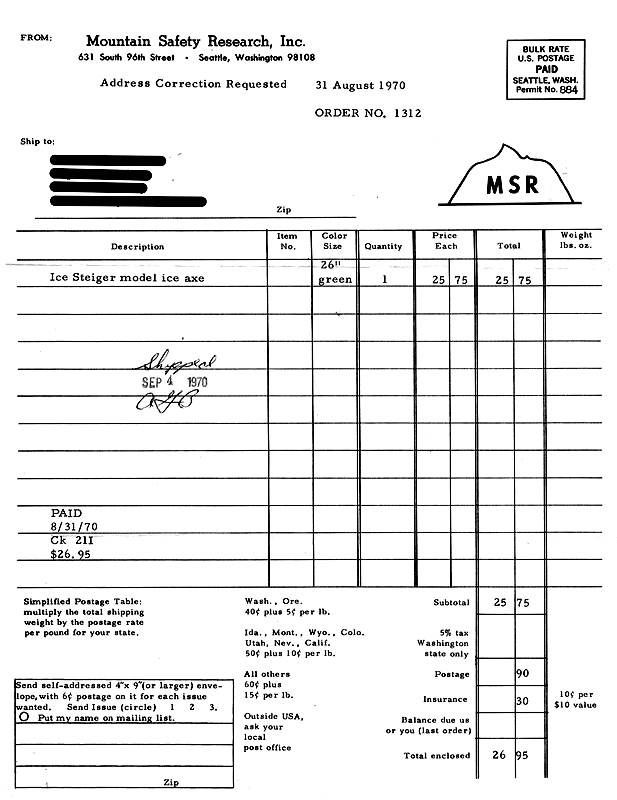 The fourth (February 1971) MSR Newsletter describes their early attempts to offer metal-shafted ice axes as follows:
"We tried hard to get the well-known ice axe makers to improve the strength of their shafts. The uptake of our proposals was underwhelming. We then tried to buy heads, planning to shaft them with our own aluminum tubes . The makers were willing to sell heads only, and we did get a few in June-July 1970 from Stubai; but the few we could sell would not meet the general need for stronger axes for all climbers. The main production of the old makers would still be the same old wood that breaks.… In desperation, then, we turned to another process…"
That "other process" led to the Eagle, followed by the Thunderbird and other axes.
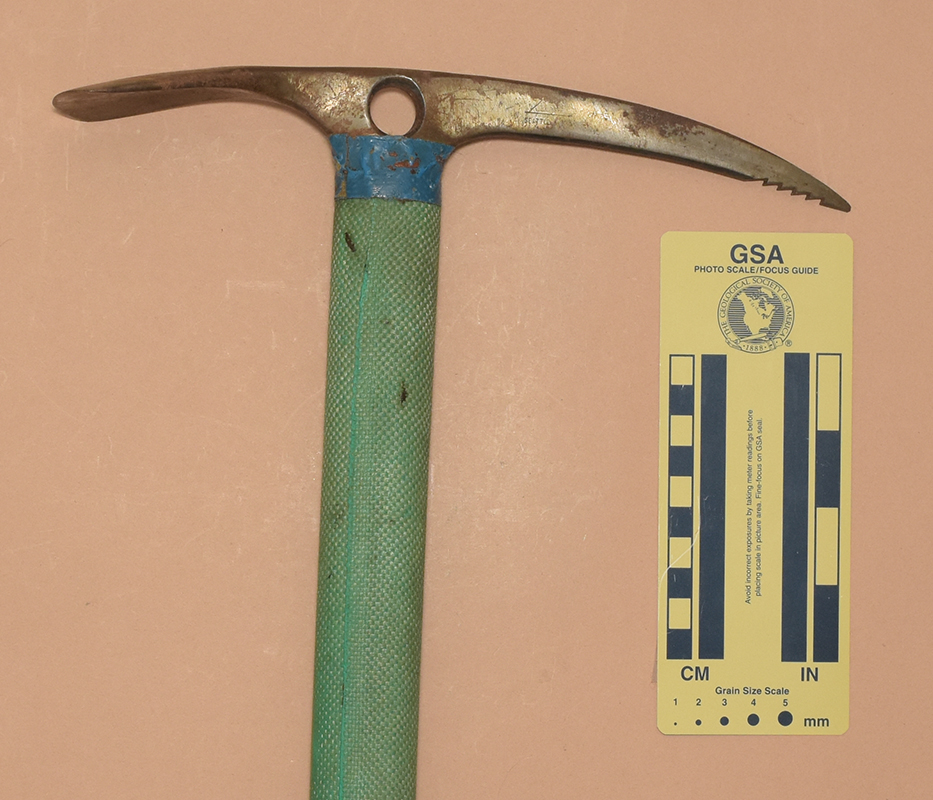
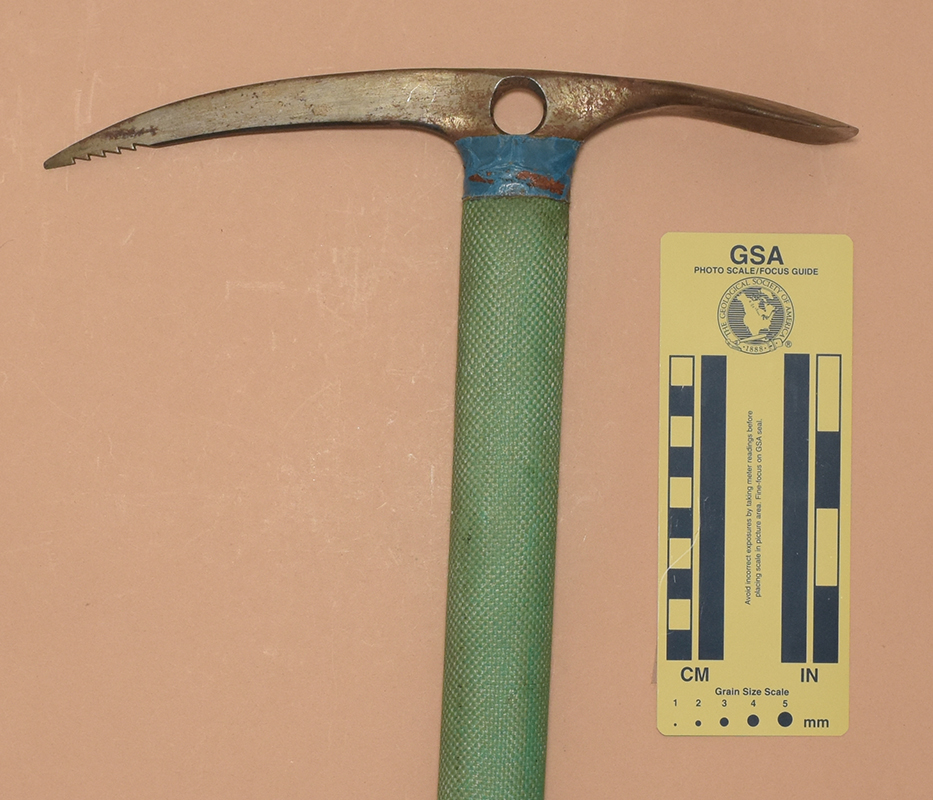
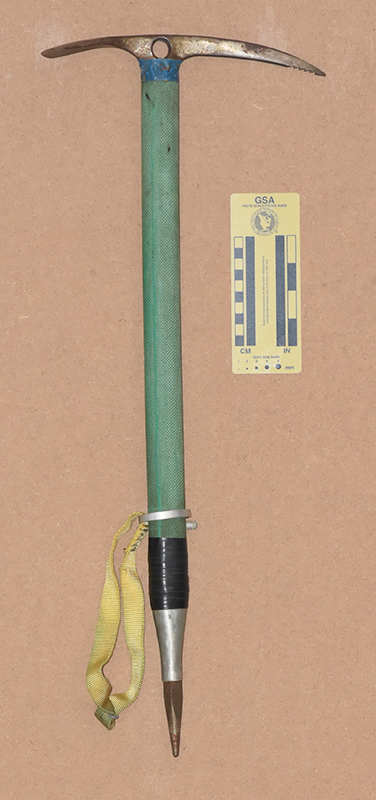
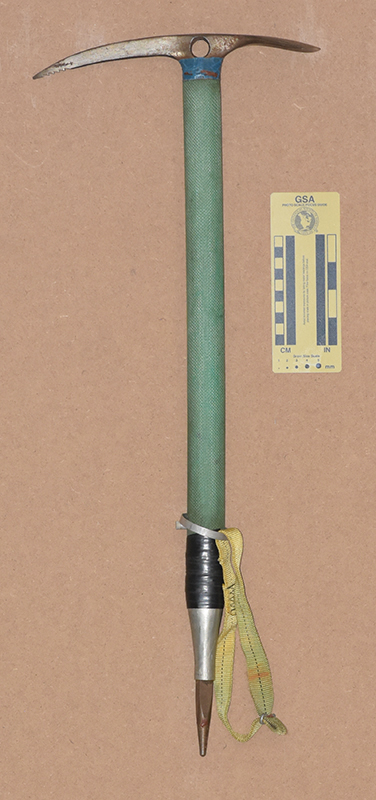
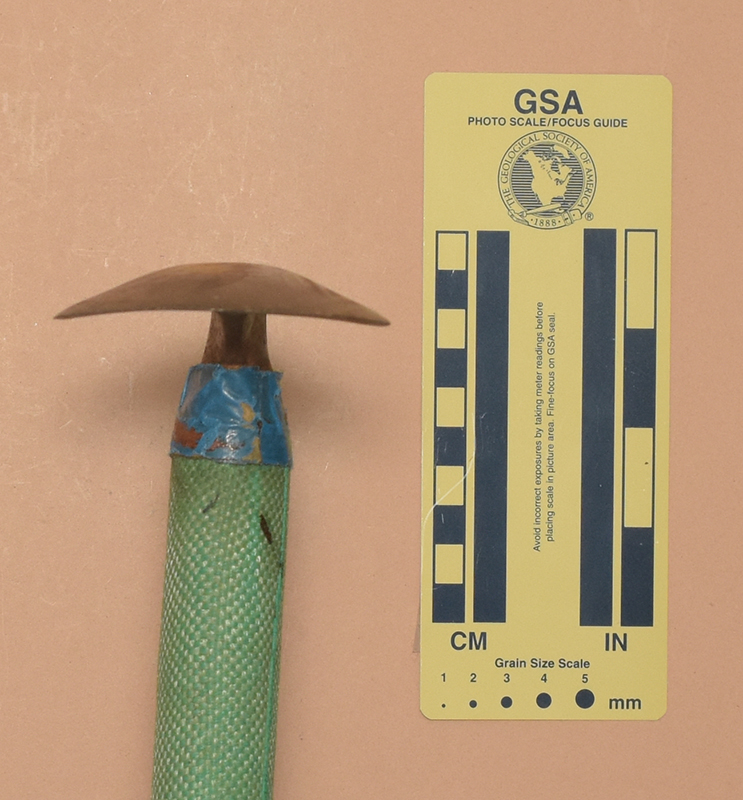
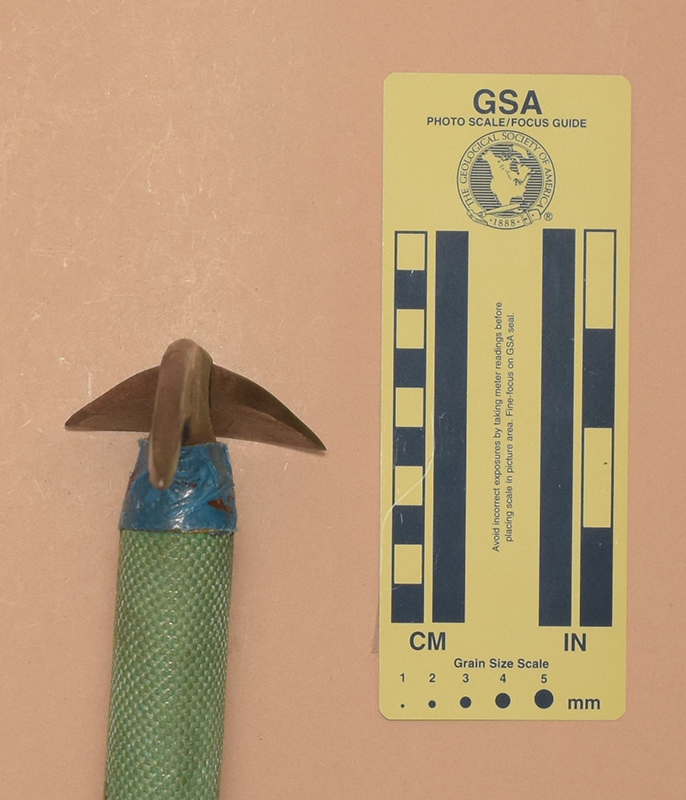
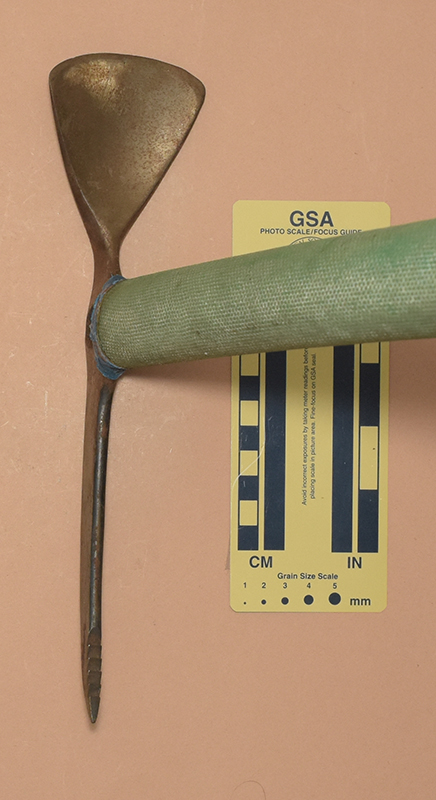
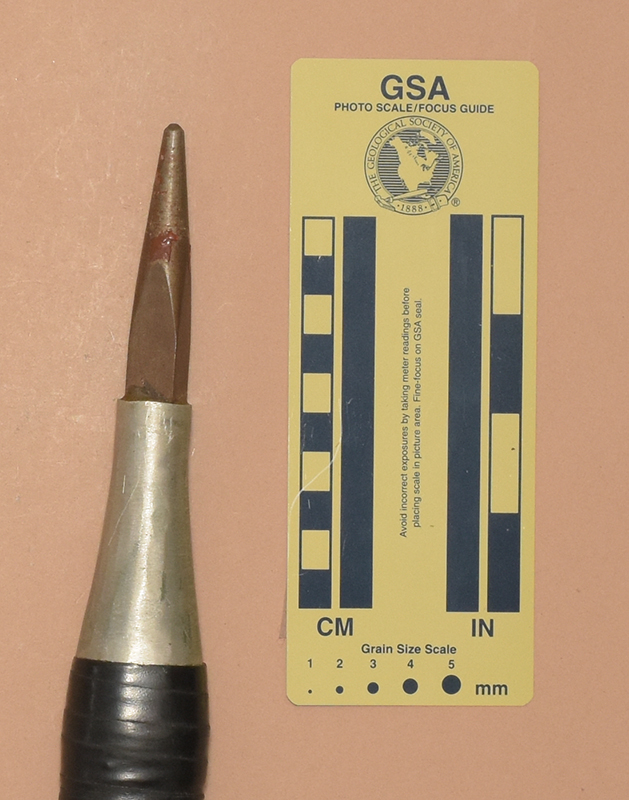
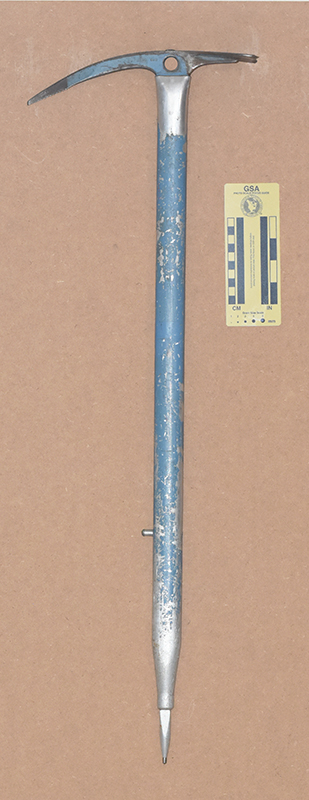
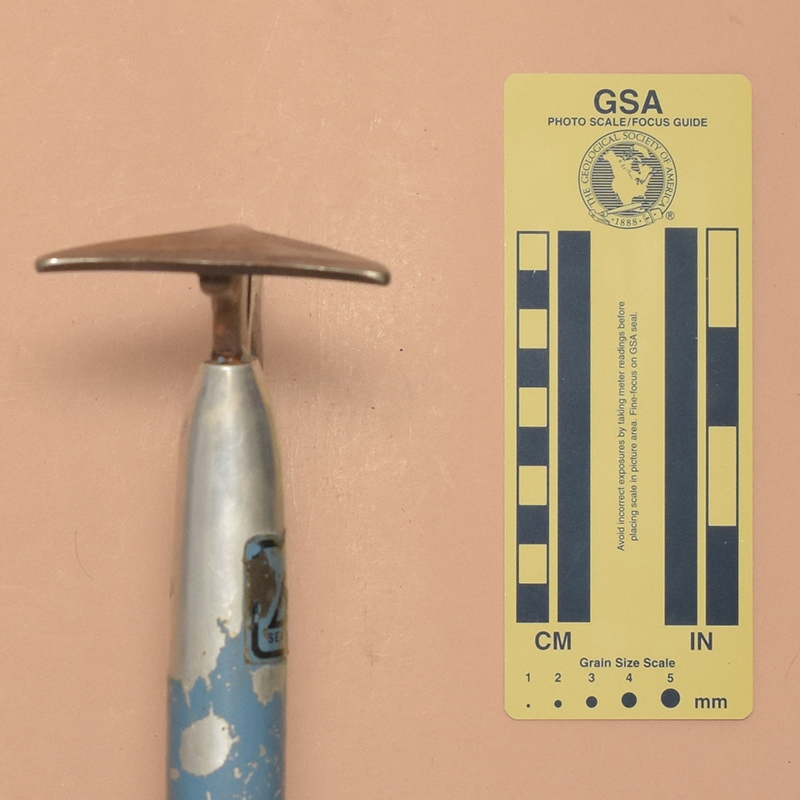
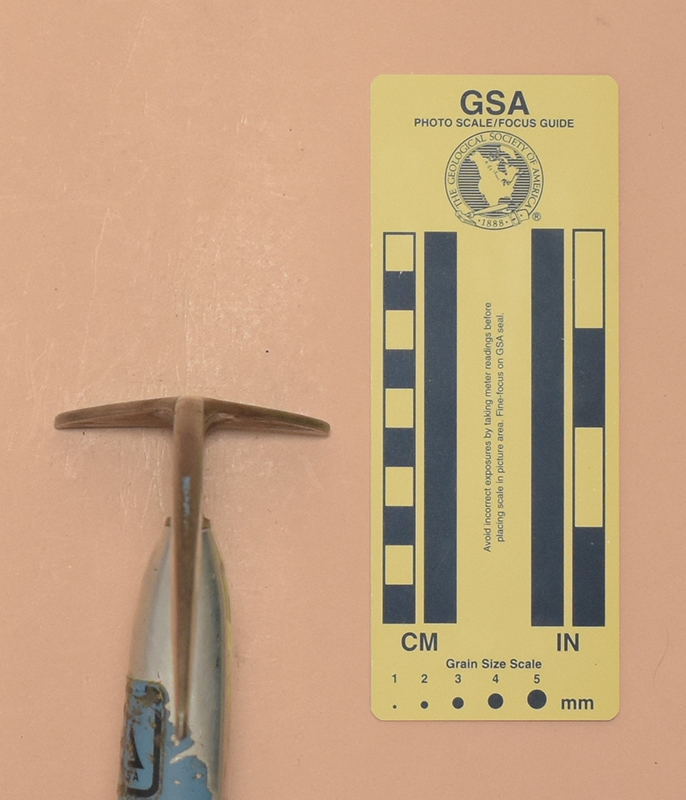
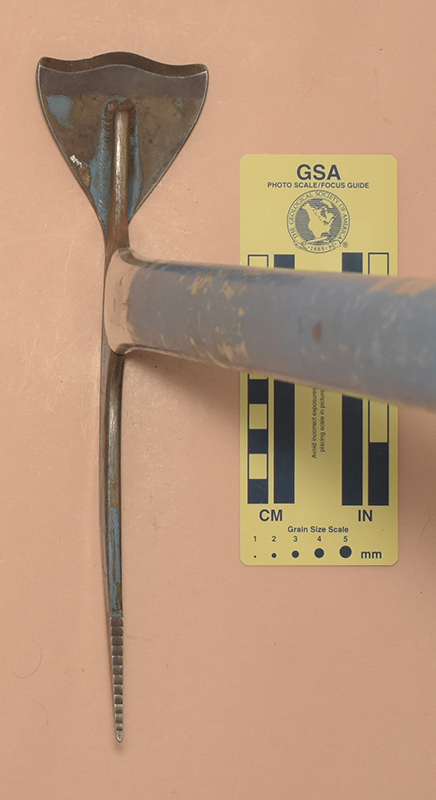
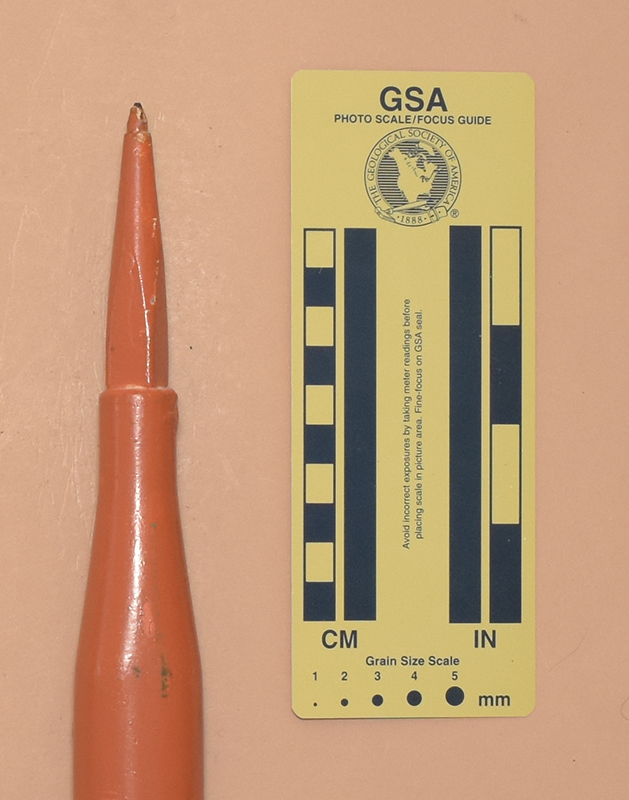
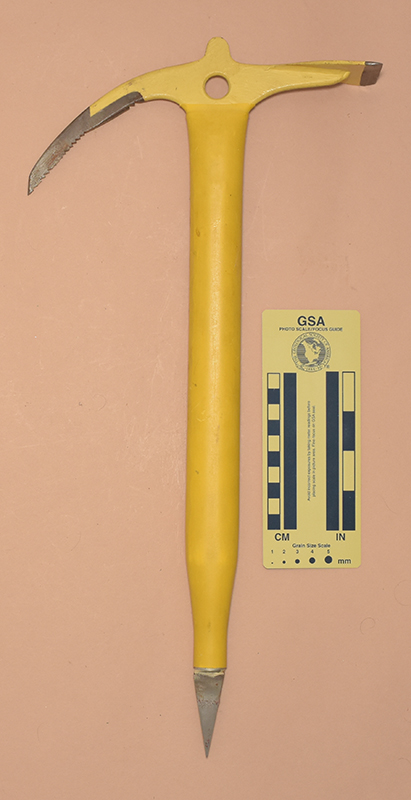
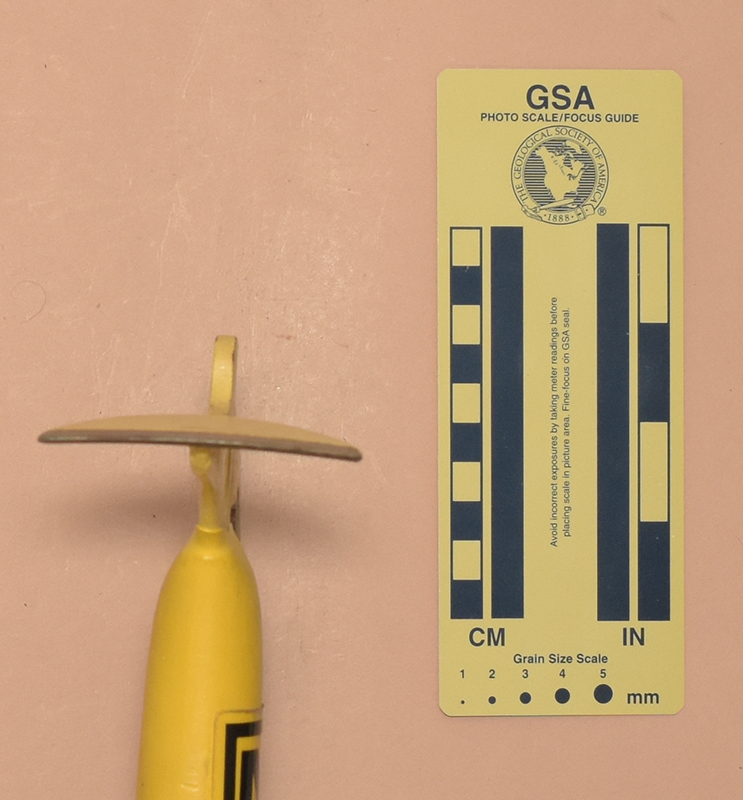
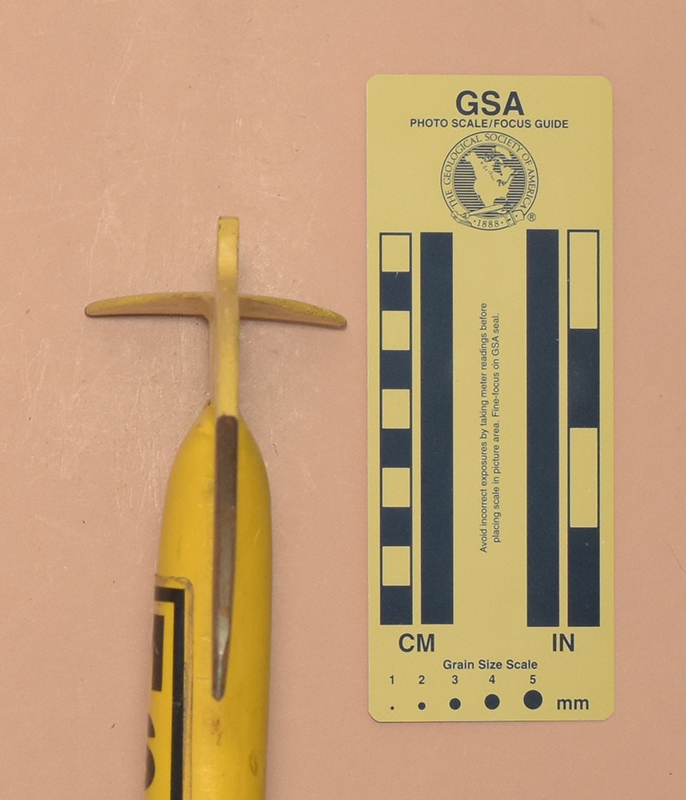
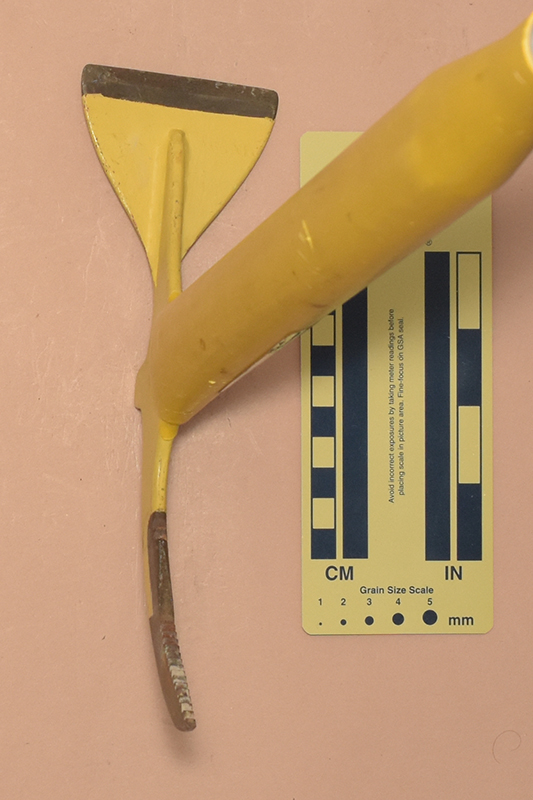
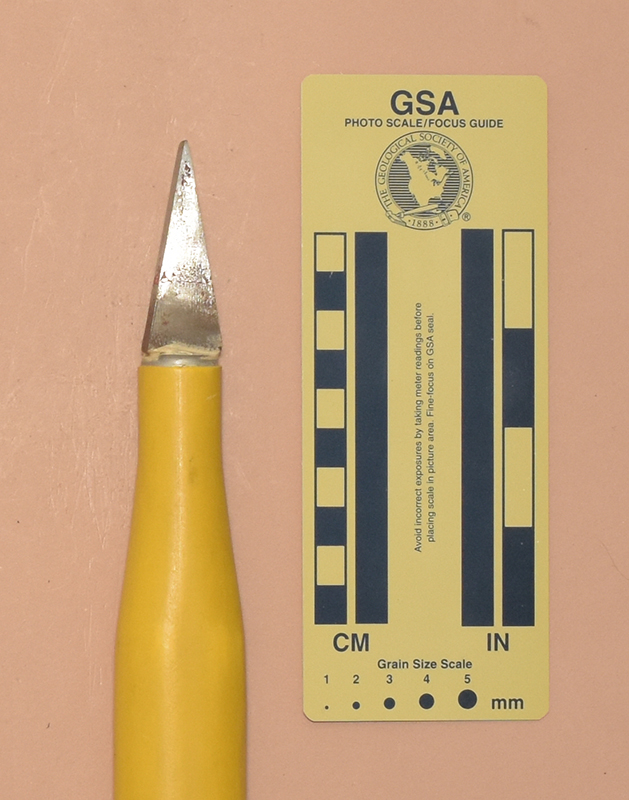
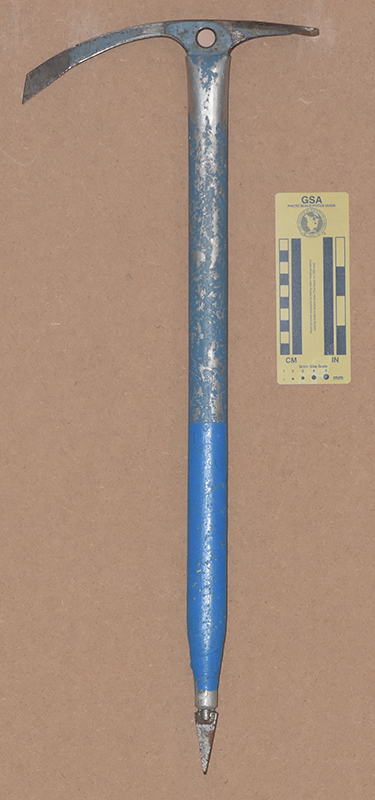
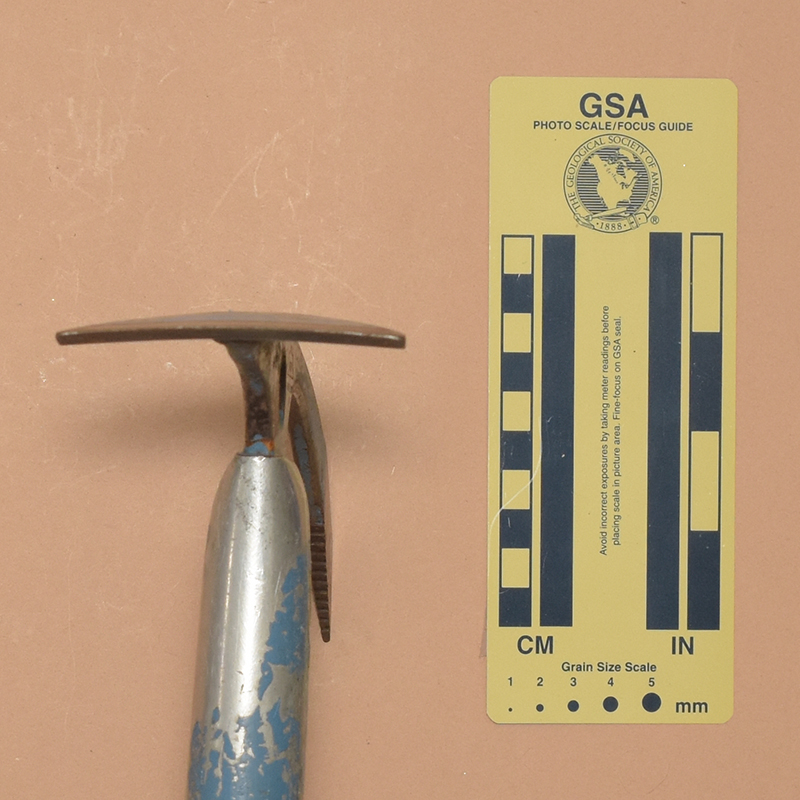
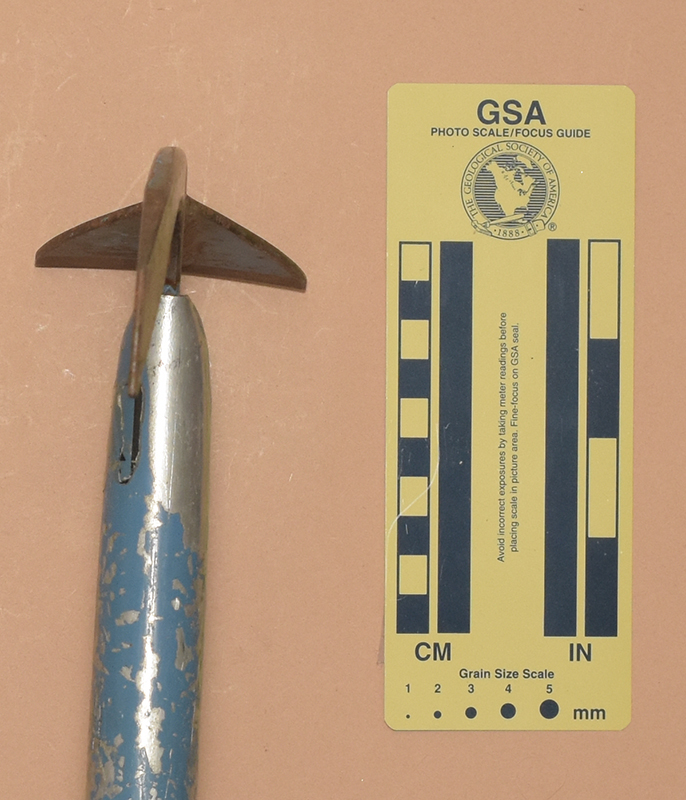
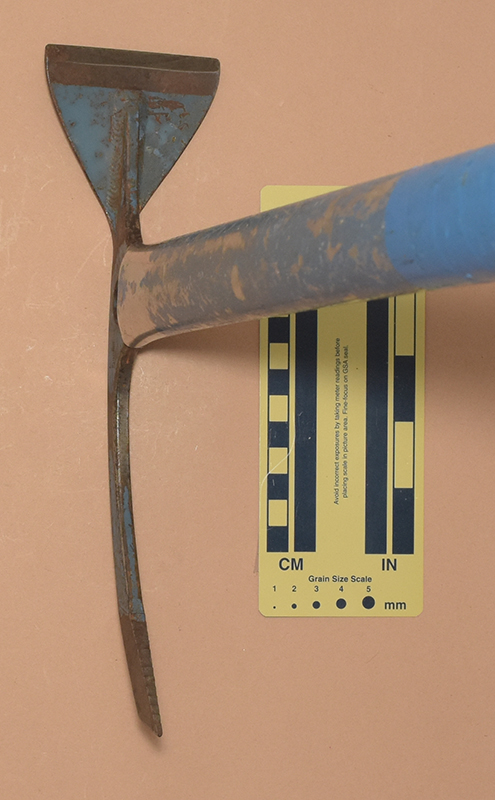
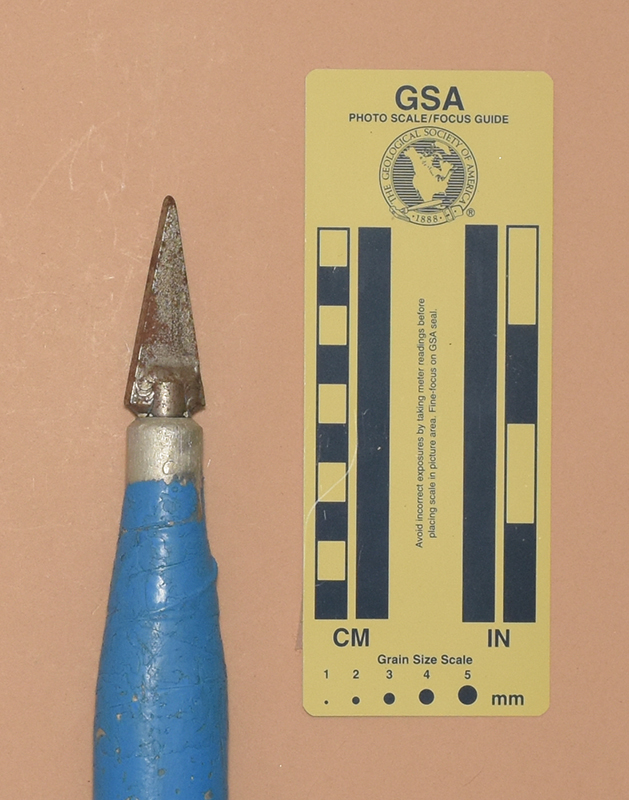
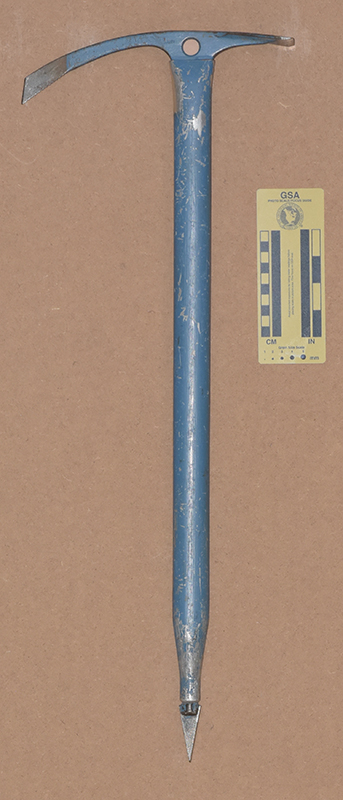
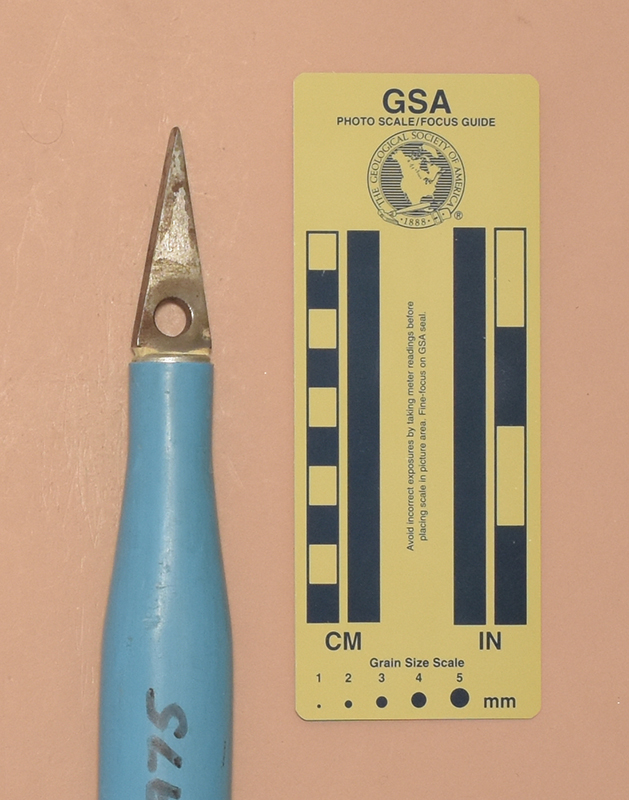
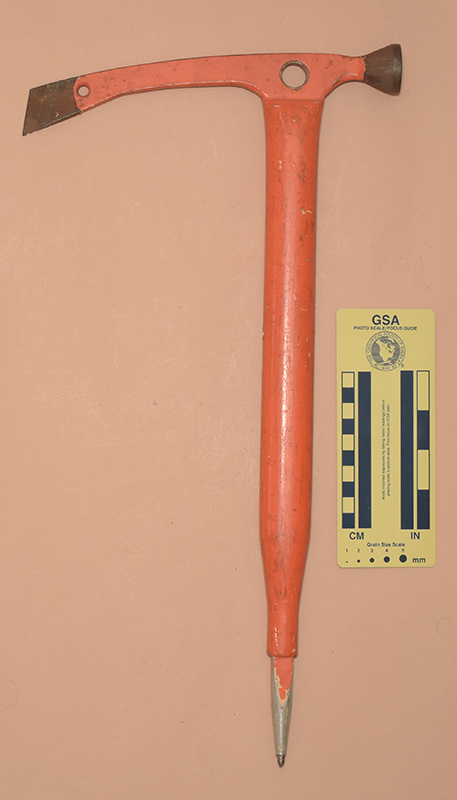
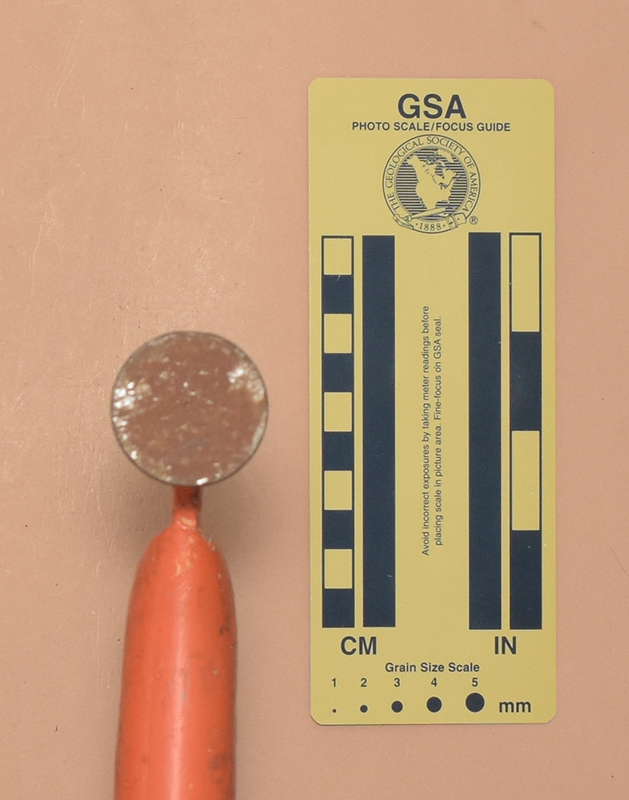
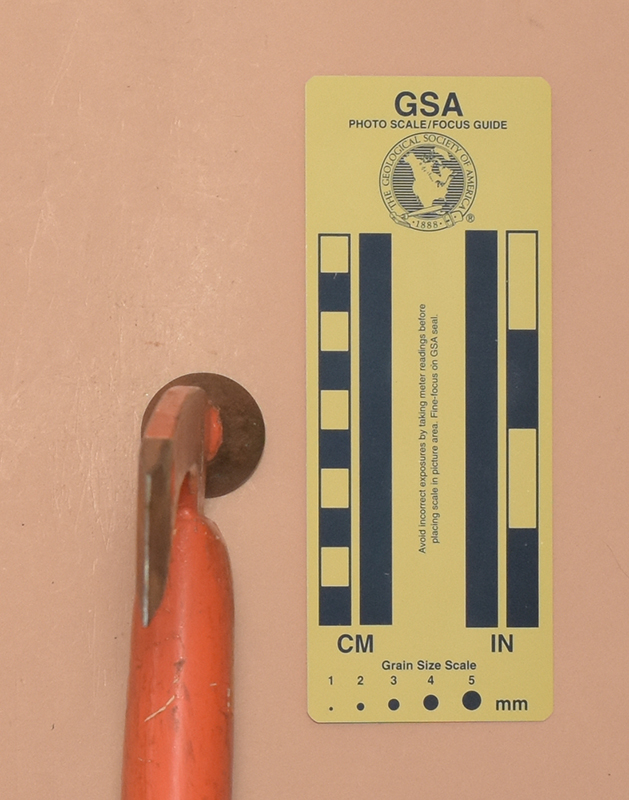
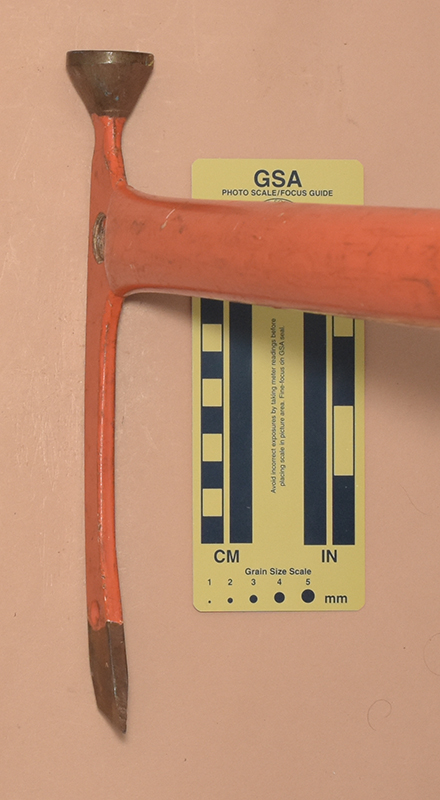
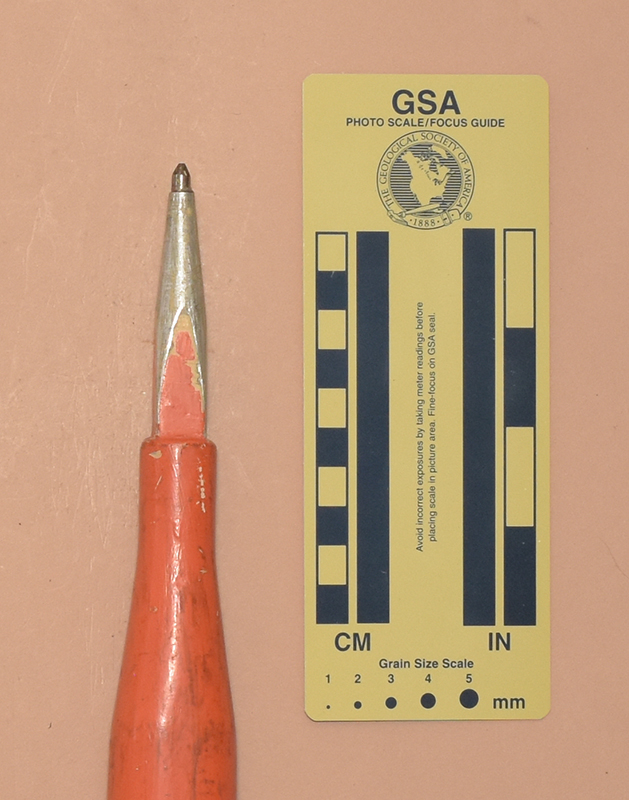
My Ice Steiger is one of the rare early axes made from the Stubai heads mentioned in the Newsletter. I bought it from the original owner in December 2025, along with the original sales receipt from MSR. He bought it mail-order from MSR on August 30, 1970.
MSR's experience with using European heads showed that that approach was not economically viable. They needed a new process. The fourth (February 1971) MSR Newsletter describes the process and the resulting Eagle ice axe:
"The new process is simple. The pick and tang portions are flame-cut as one piece from 1/4" plate, and the adze is stamped from 1/8"" plate. The two are welded together by the TIG (Tungsten-inert gas) process. The steel is chrome-moly Type 4130 including the weld metal, the same as used in pitons and aircraft. The final shaping and finishing are done by conventional milling, grinding, and drilling.
"Our initial thought was to make a reliable axe that would have excellent self-arrest capability on hard snow and ice, which would cut steps with the adze, but not with the pick. This axe head was named the EAGLE. It has a good hooking angle, 68°, and has a 30° included-angle point. Its main use will be for ice climbing specialists."
MSR's Thunderbird was derived from the MSR Eagle. The fourth (February 1971) MSR Newsletter tells the story:
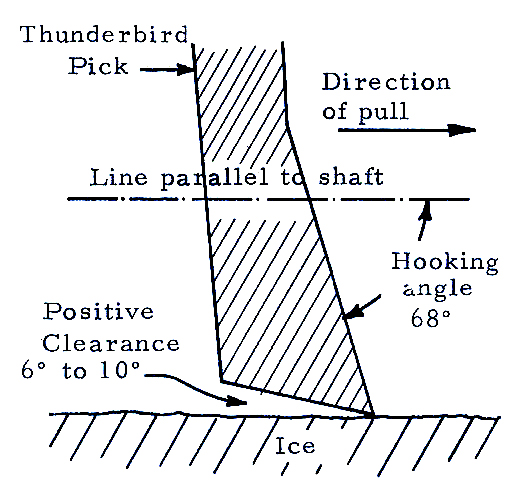 "Suddenly, while testing the Eagle, came the dawn! By lengthening the radius of the upper edge of the pick, retaining the same hooking angle of the lower edge, the pick could also be used for cutting steps In appearance, the upper edge and the lower edge of the pick diverge as they approach the point. By providing positive clearance of the cutting edge, self-arrest capability is retained. This is the design concept called THUNDERBIRD.
"Field testing quickly showed the THUNDERBIRD advantages : Kick (bounce, vibration) is gone! Steps can be cut with greater precision, both with the pick and with the adze. When cutting with the pick, the ice chips spurt to the right and left, not into your face. There is 6° to 1 o• less tendency of the ice below the step to flake out because the splitting force is uni-directional, not 360° around the point. Excellent hooking power is retained.
"This name, Thunderbird, comes from its resemblance to the beak of mythical thunderbirds on the totem poles of Western American Indians."
MSR also offered a lighter aluminum Thunderbird that I do not have.
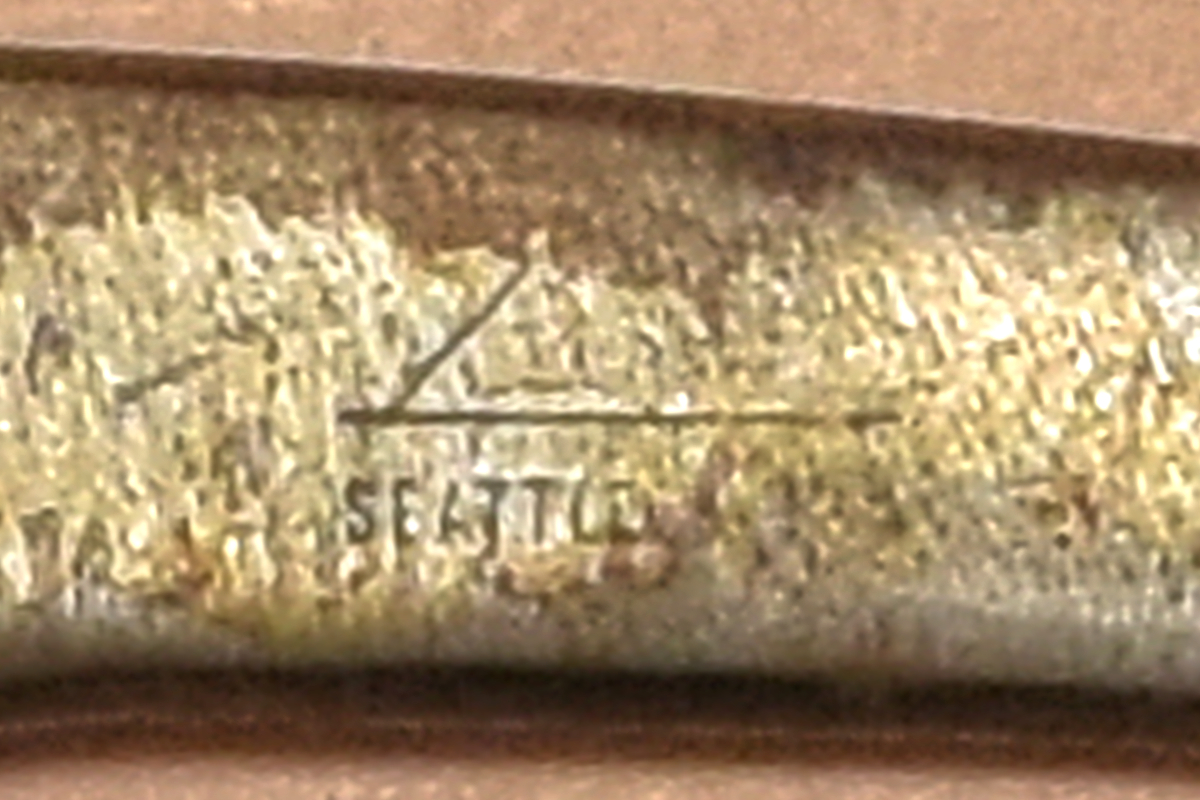
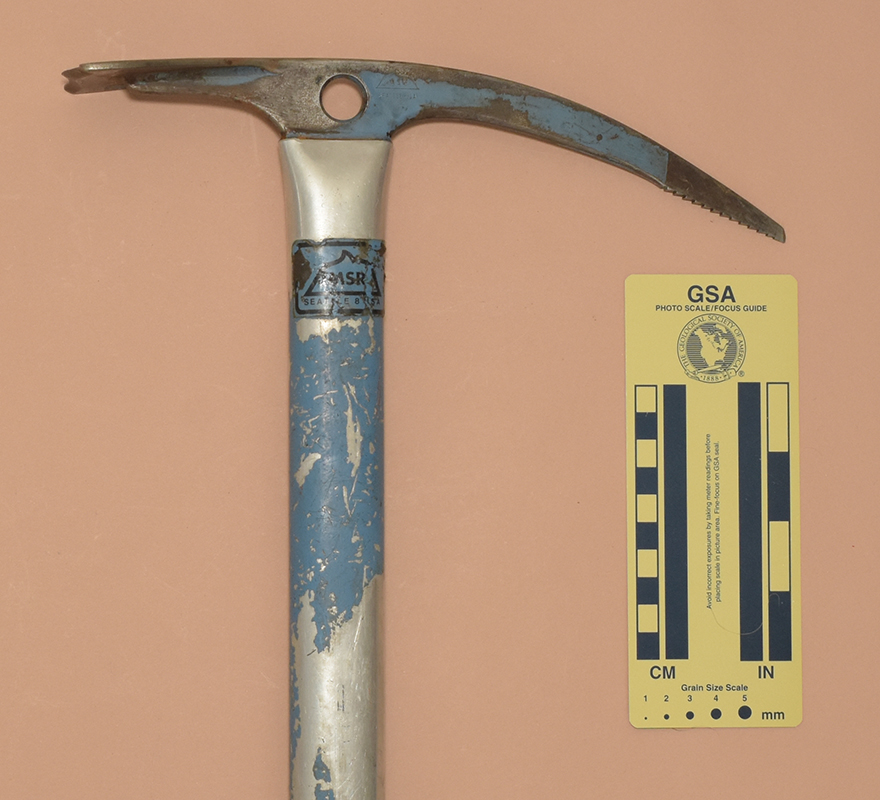
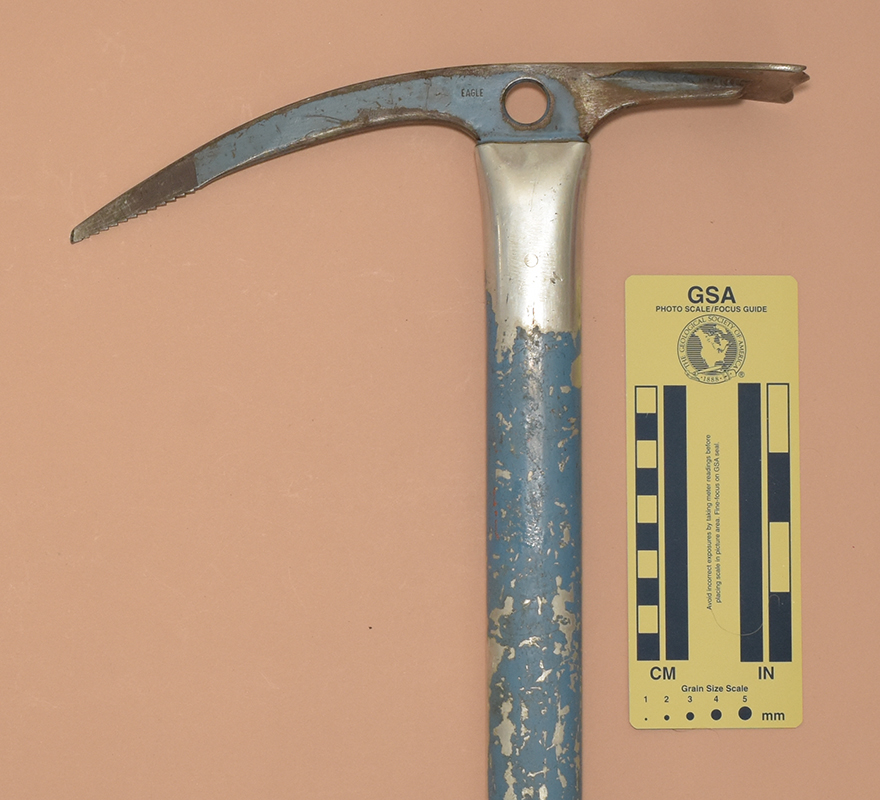
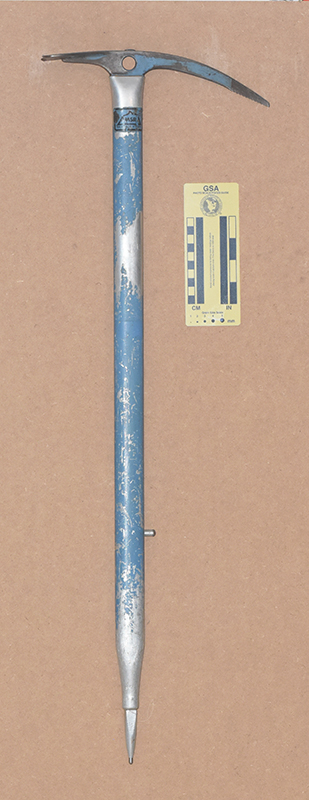
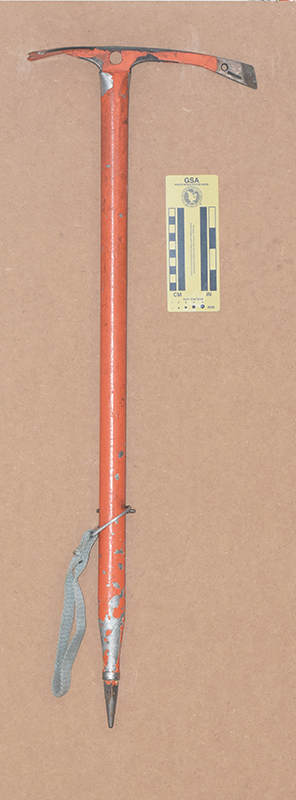
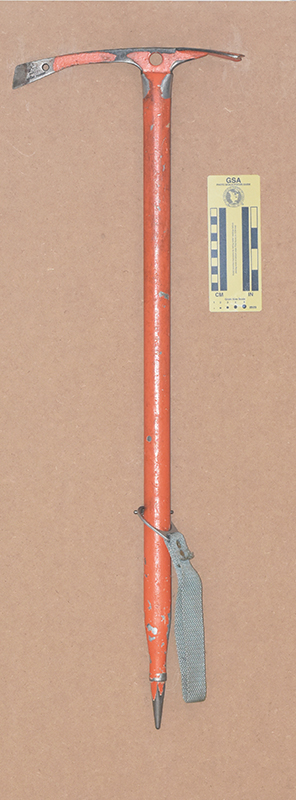
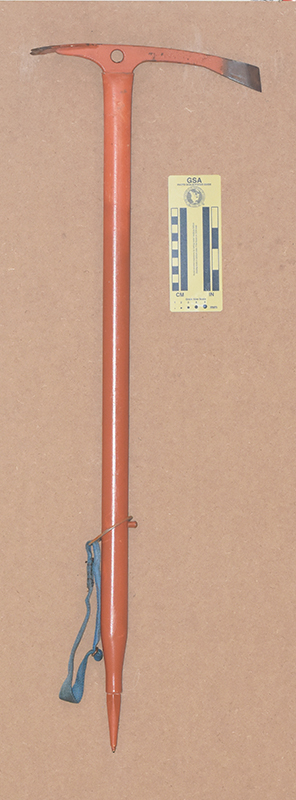
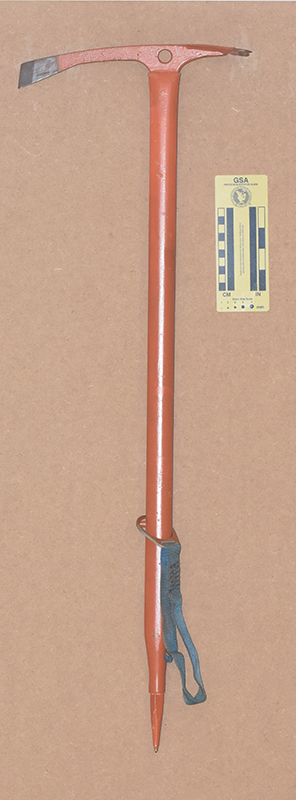
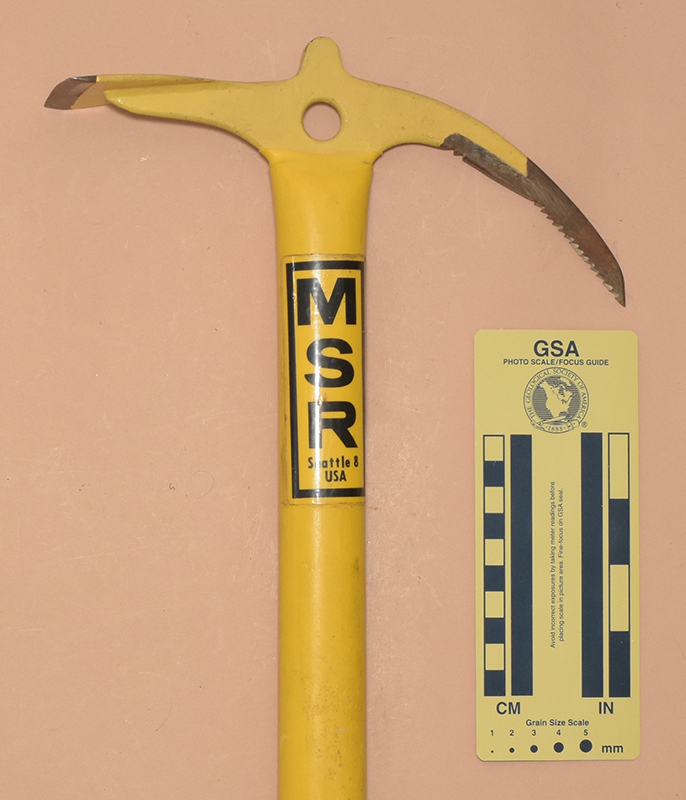
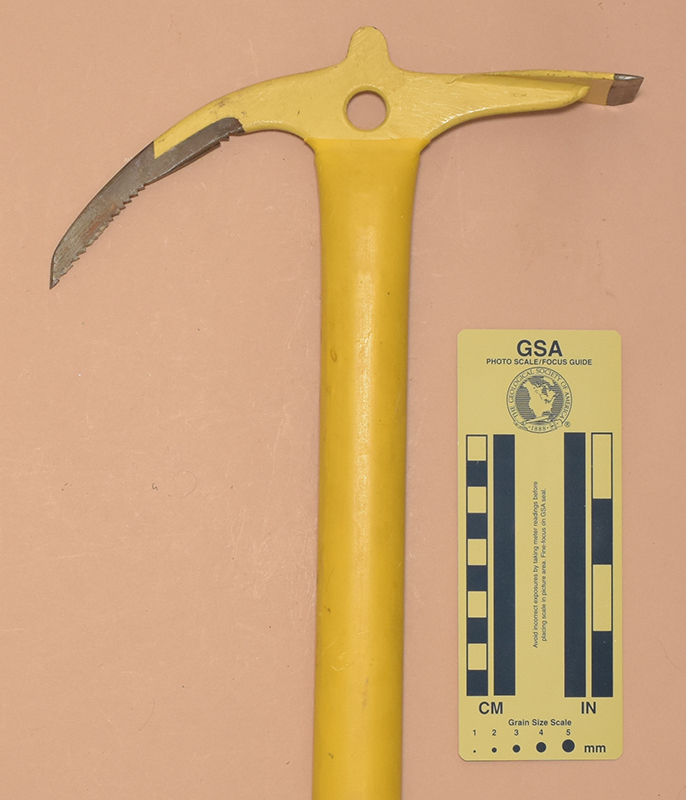
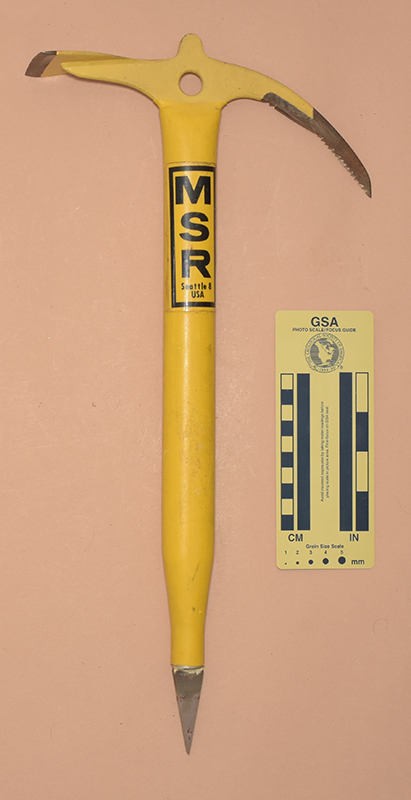
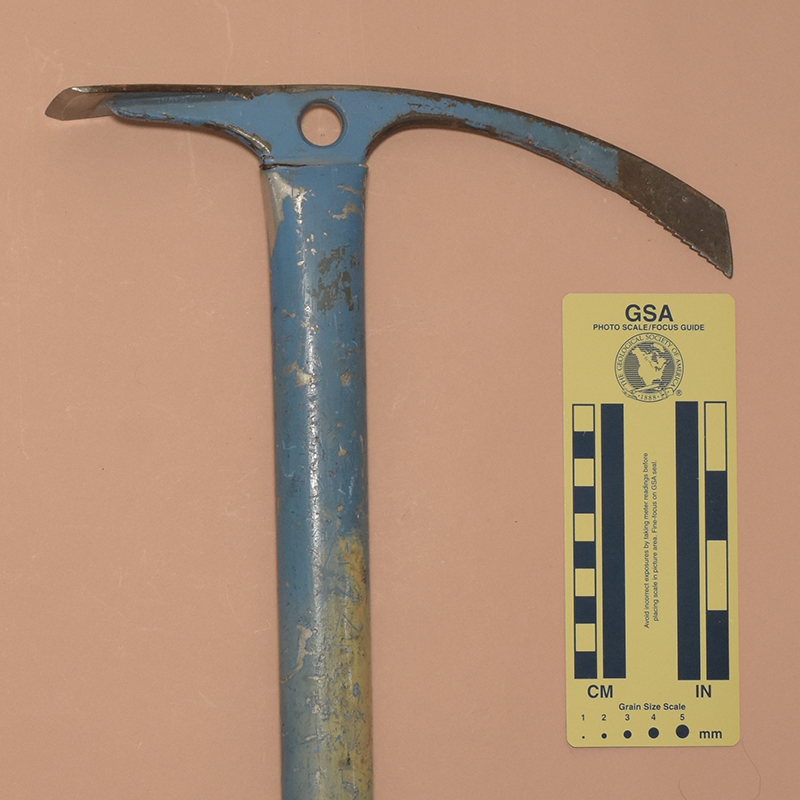
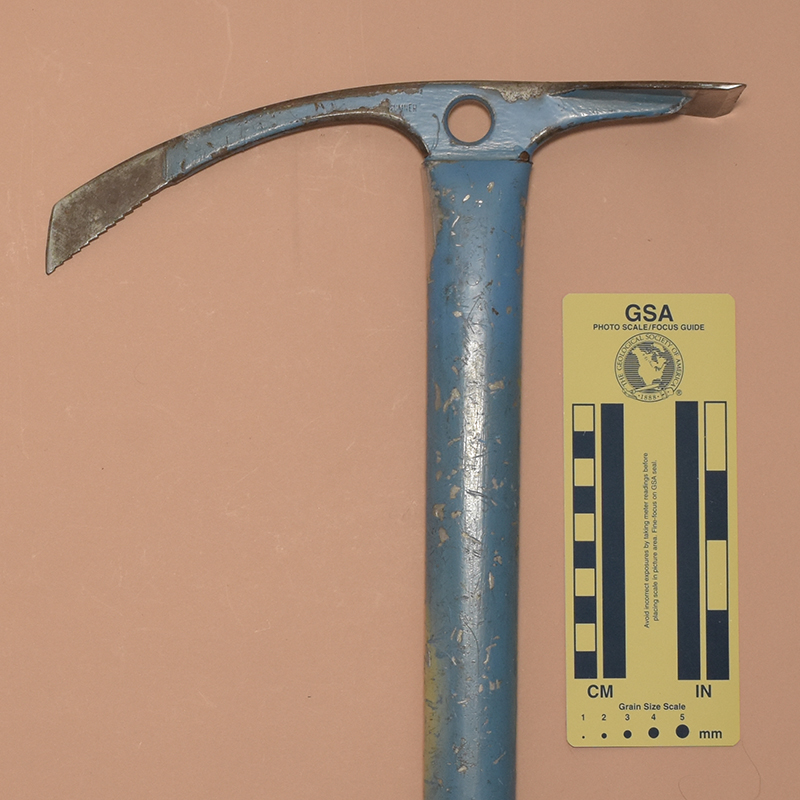
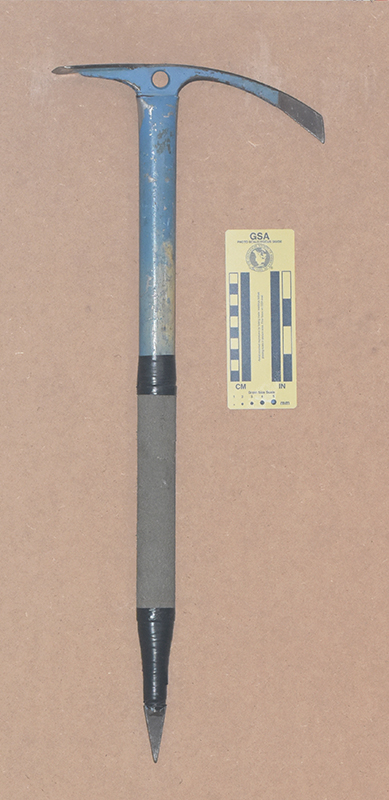
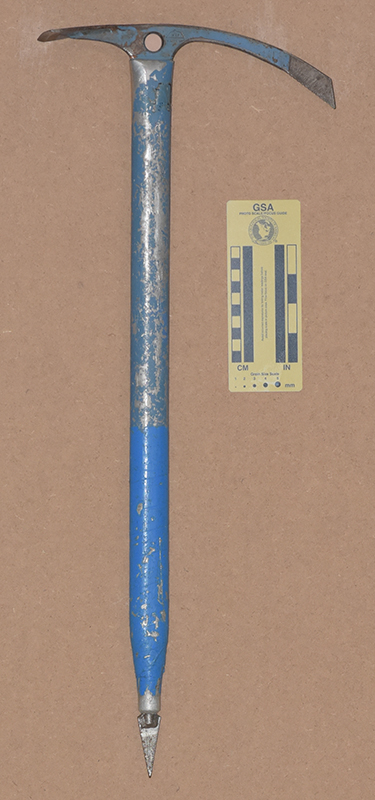
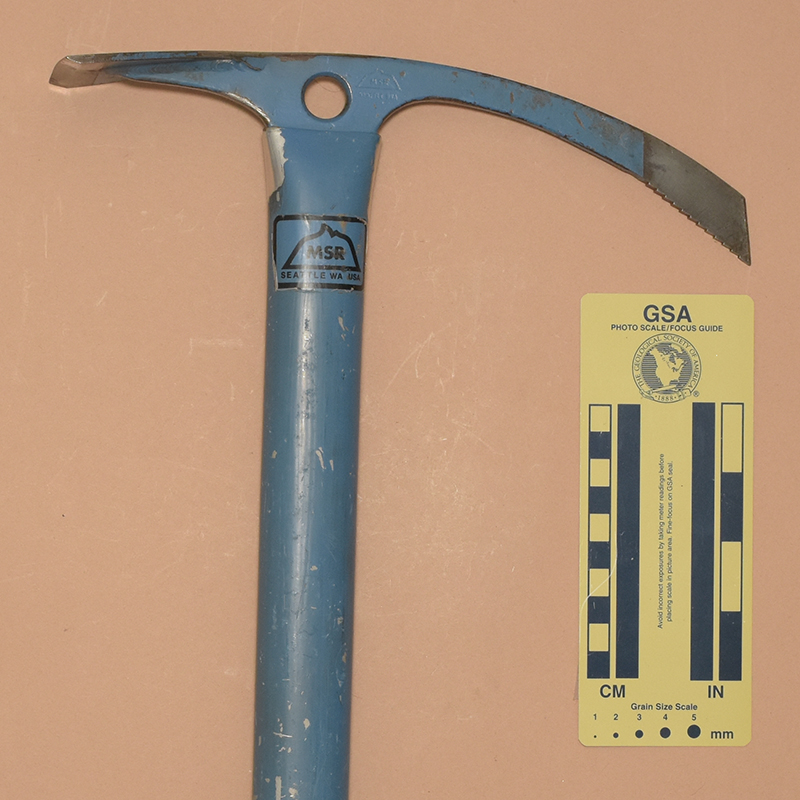
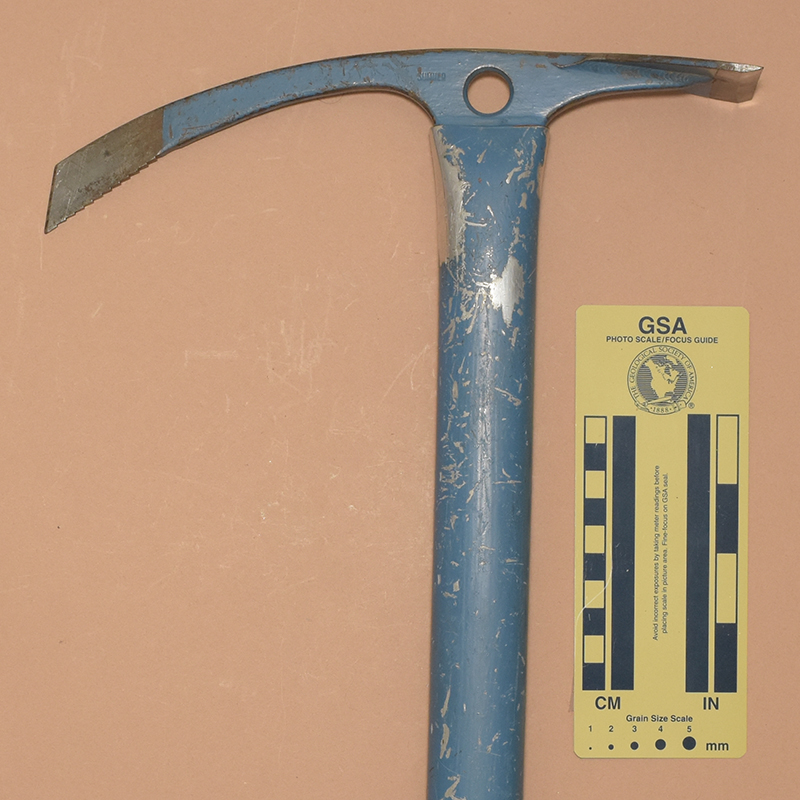
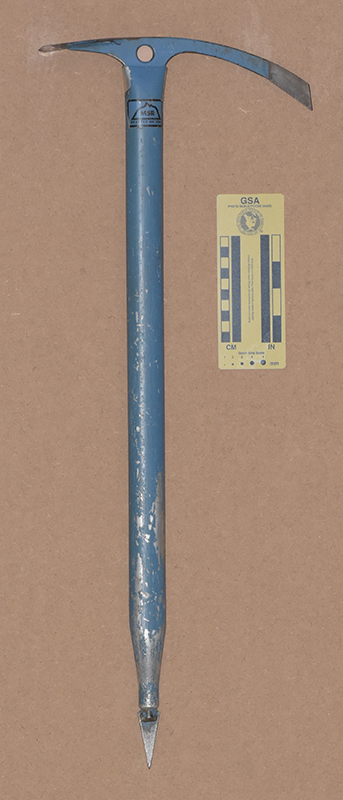
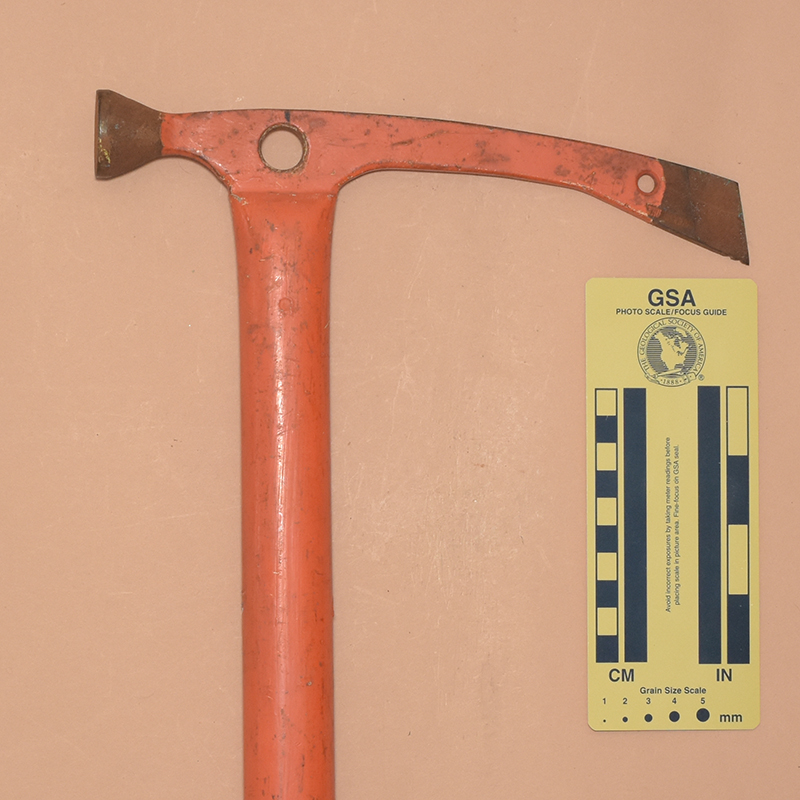
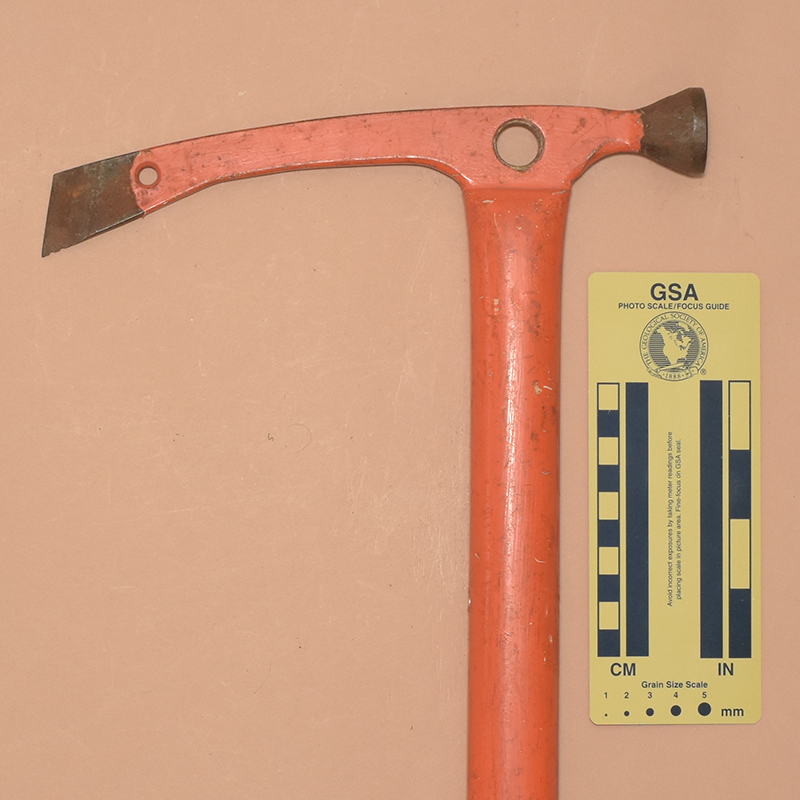
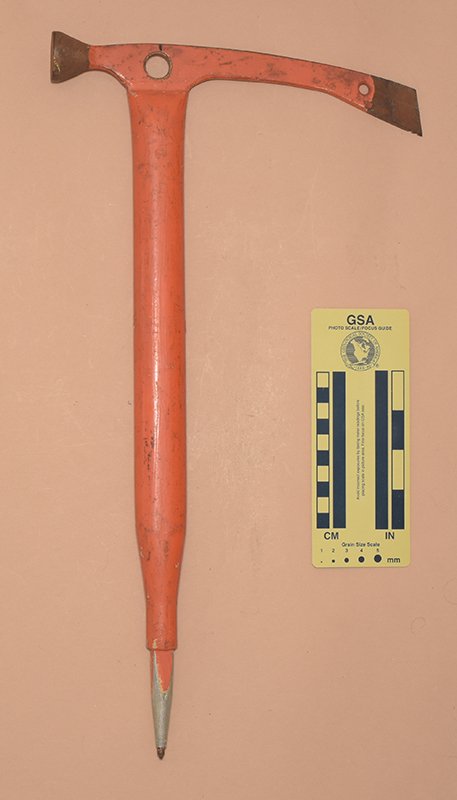
↑ 124: MSR Thunderbird
- Made in USA [1970s].
- 750x275 mm.
- Weight: 910 g.
- Aluminum Shaft.
- Shaft: 33x27 mm.
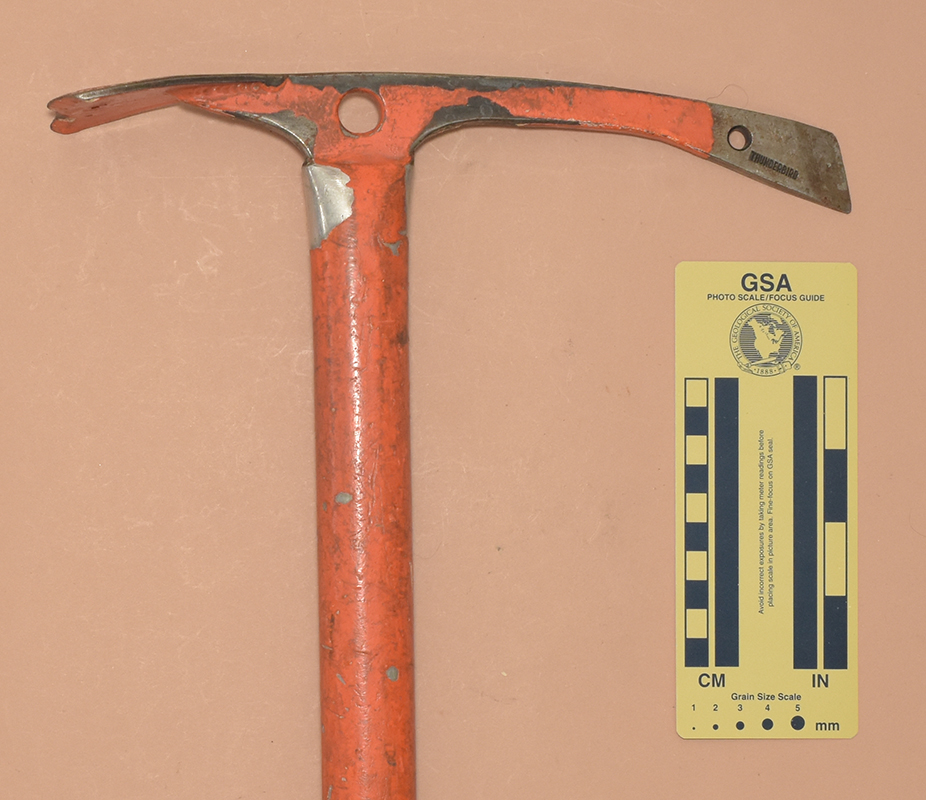
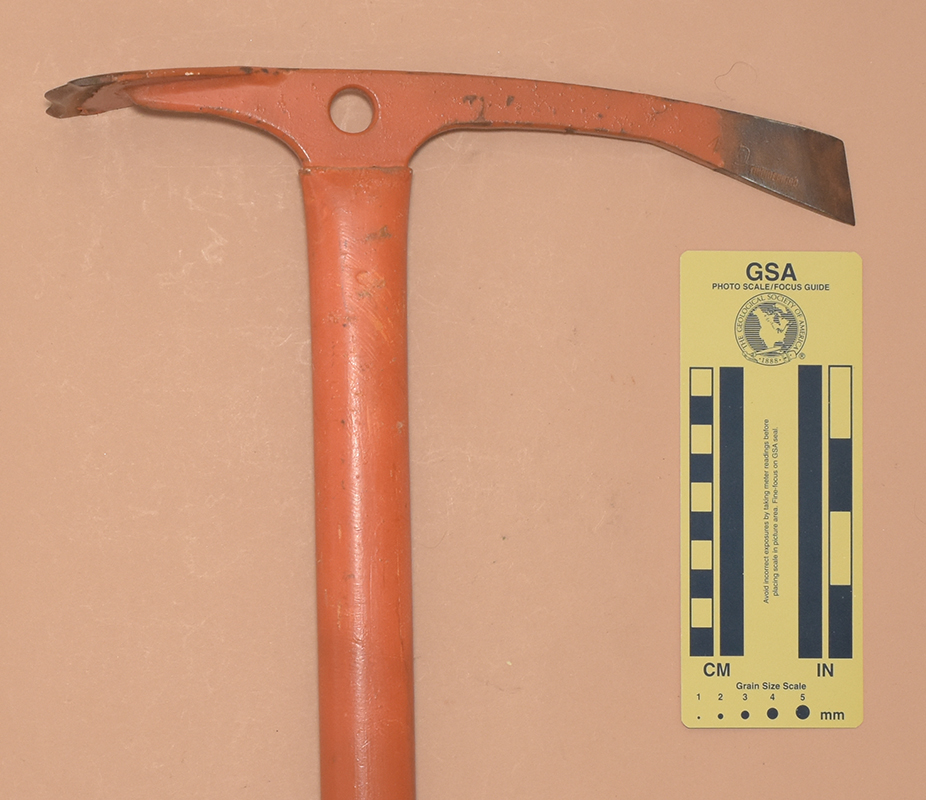
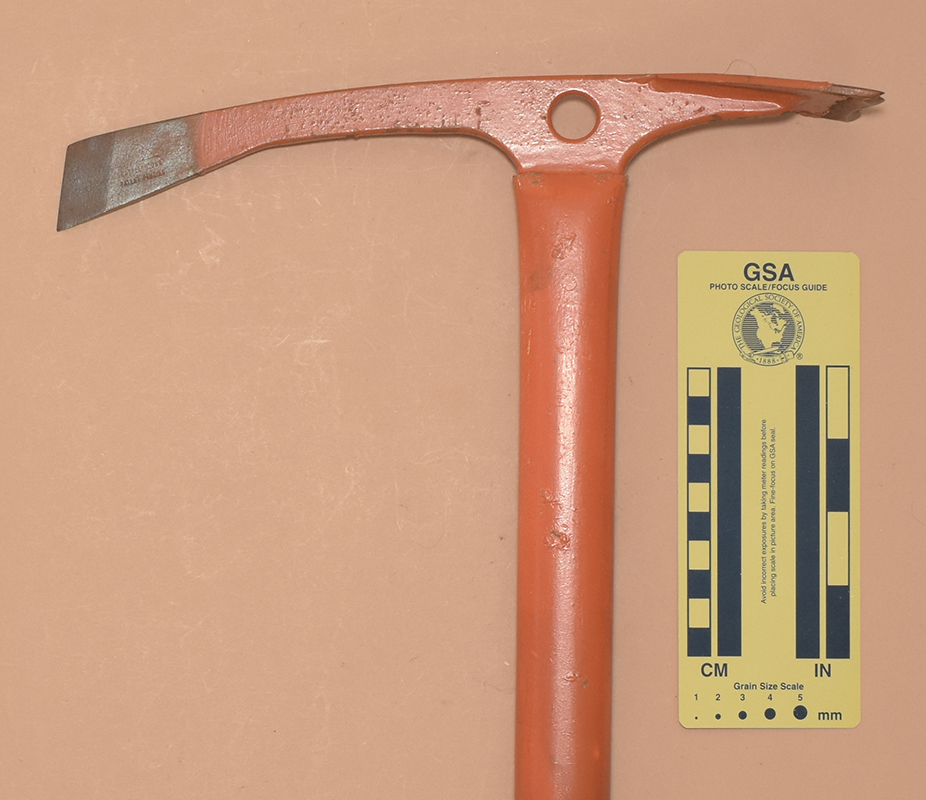
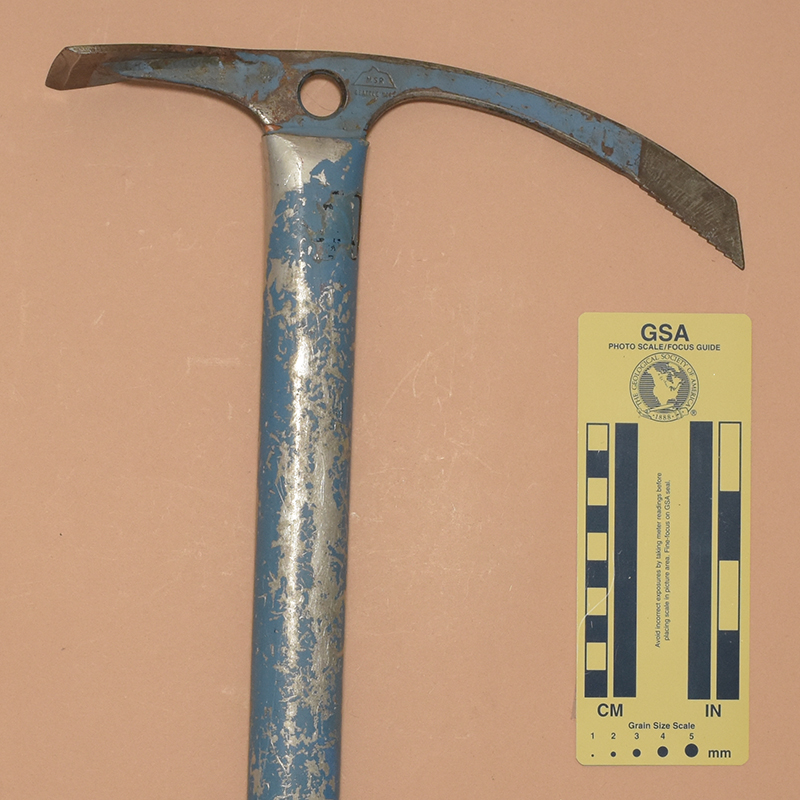
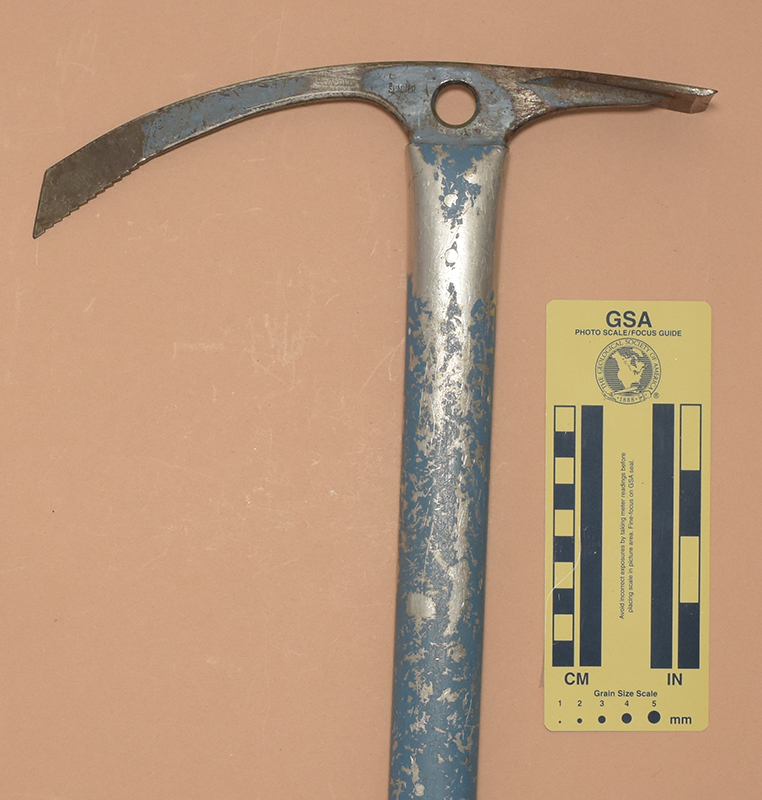
- Fixed Head with carabiner hole.
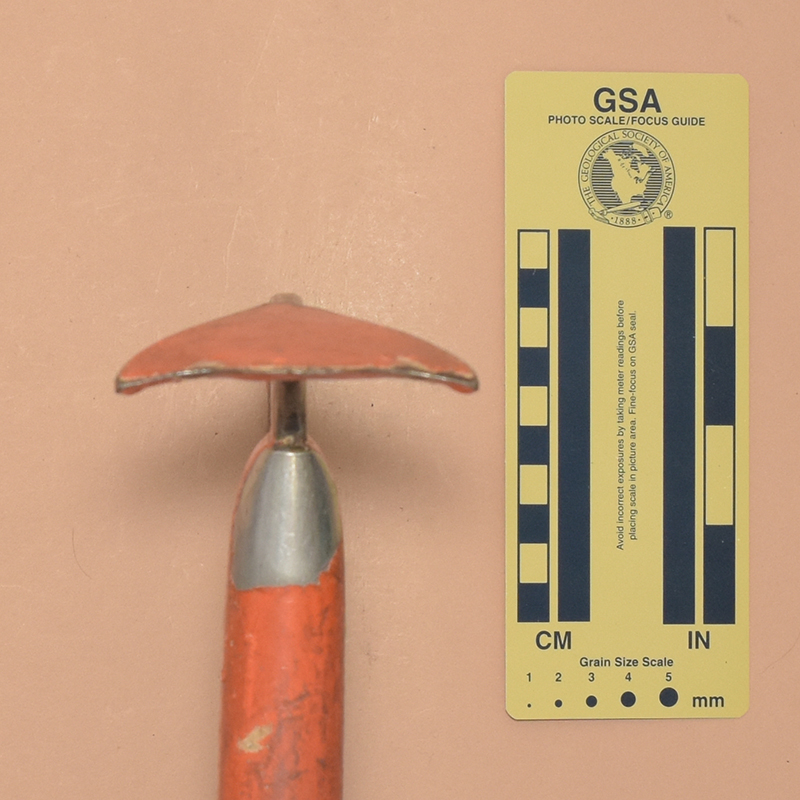
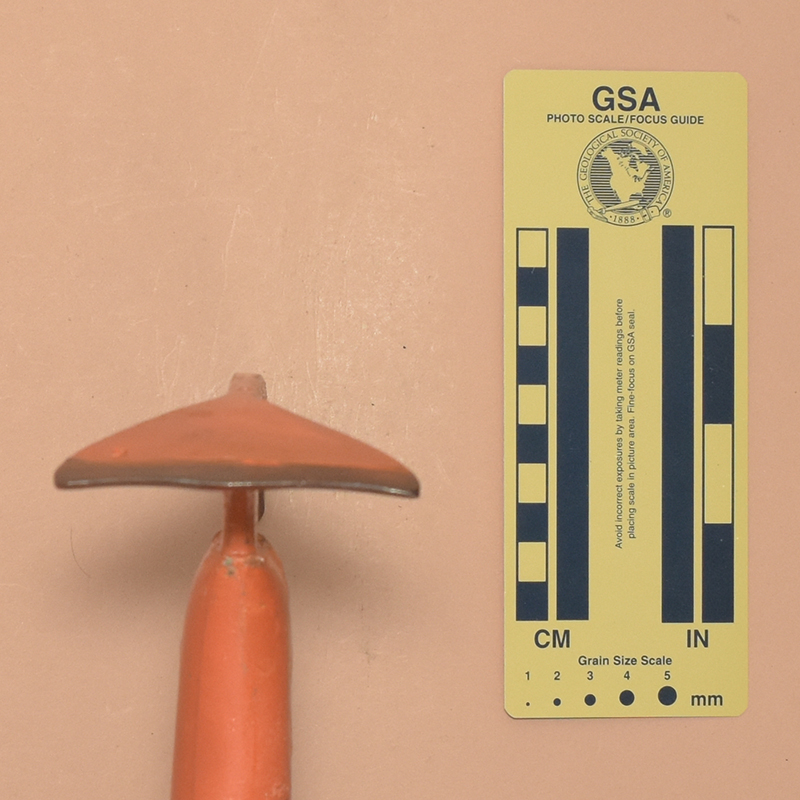
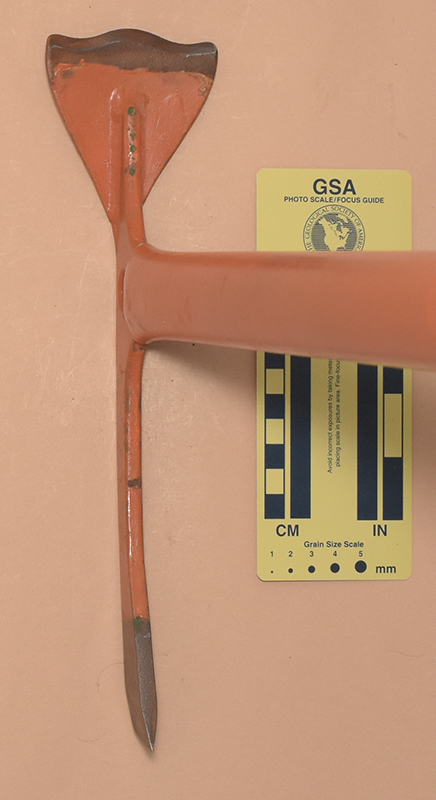
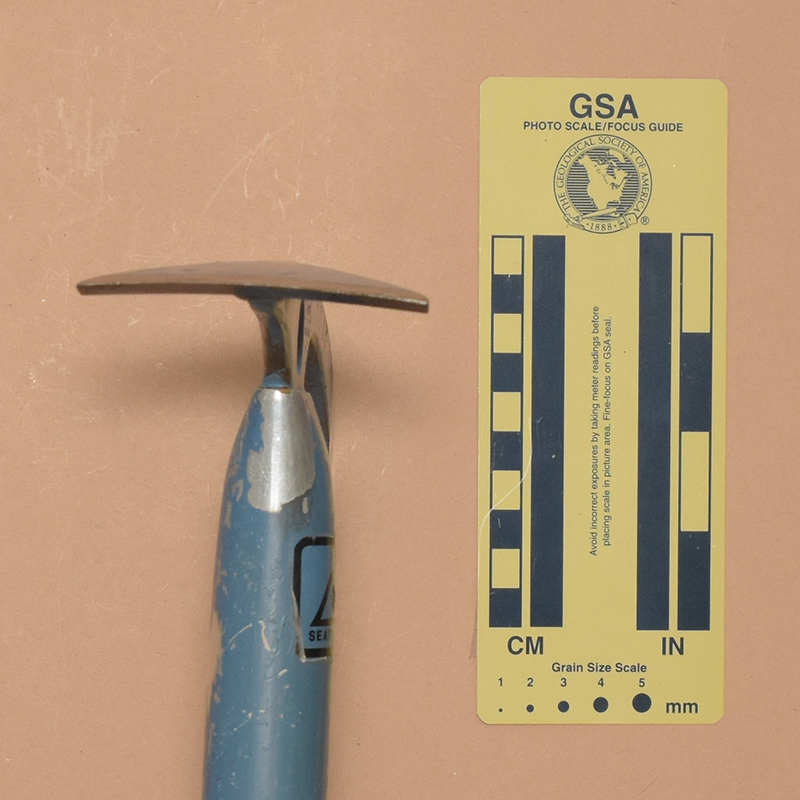
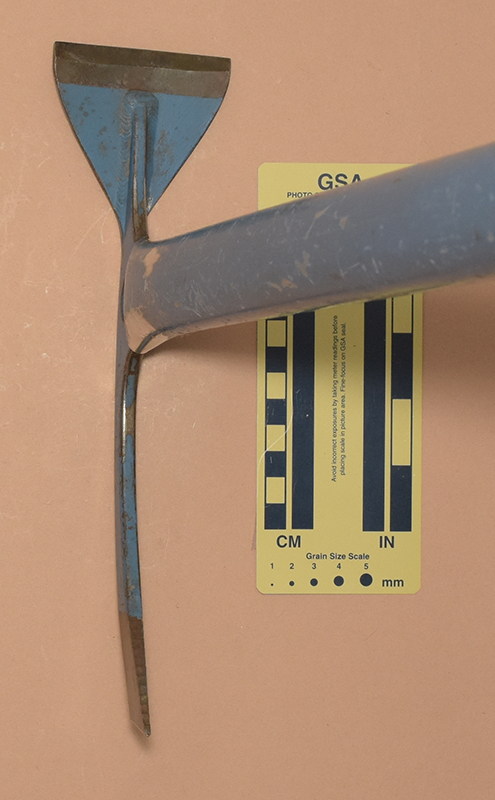
- Straight adze with a scalloped edge and a moderate arch.
- Adze: 75(l)x70(w)x3(arch) mm.
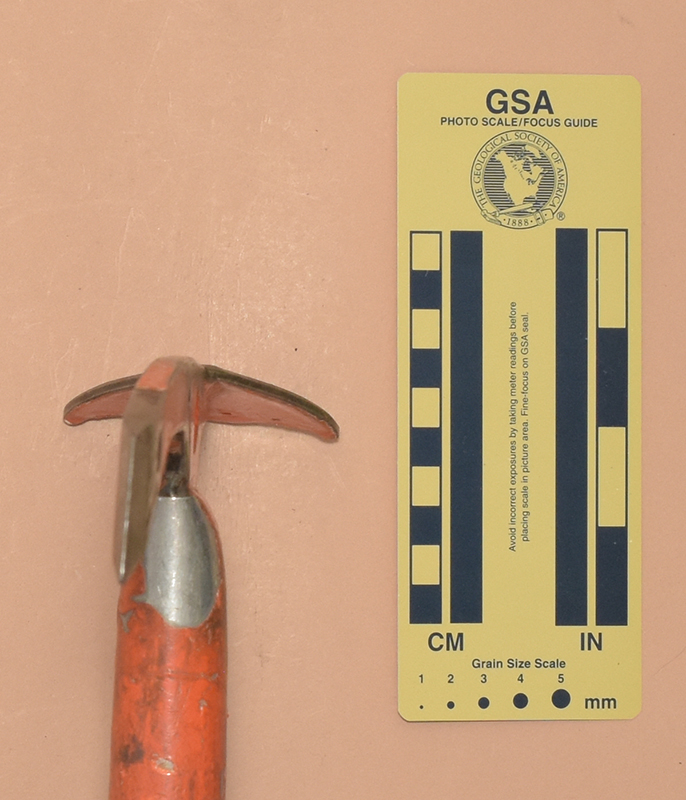
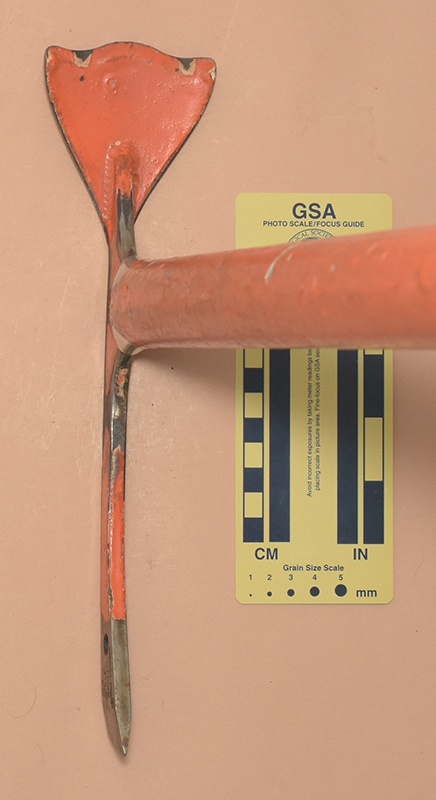
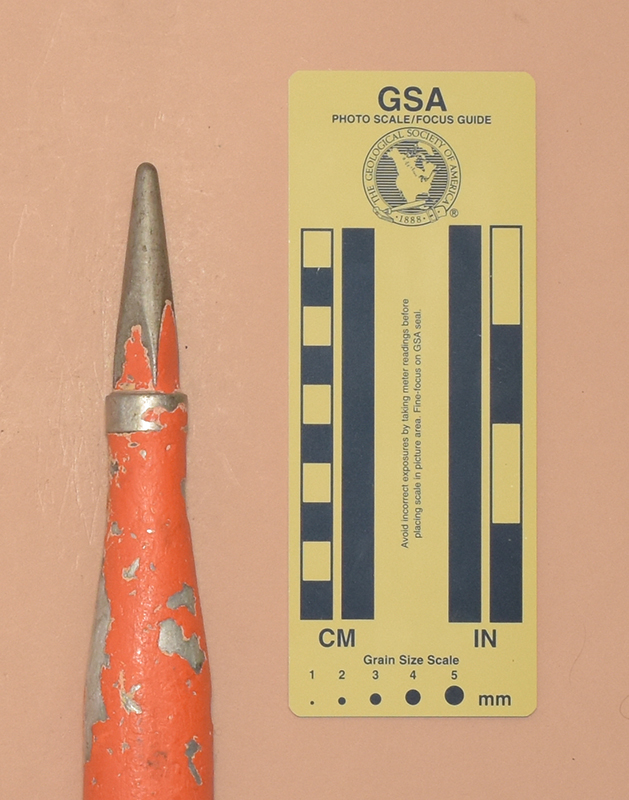
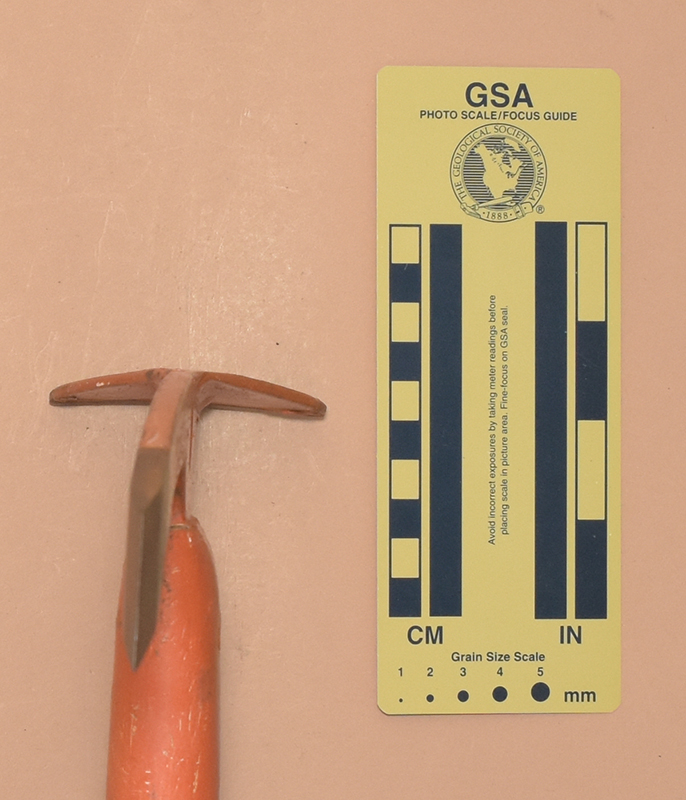
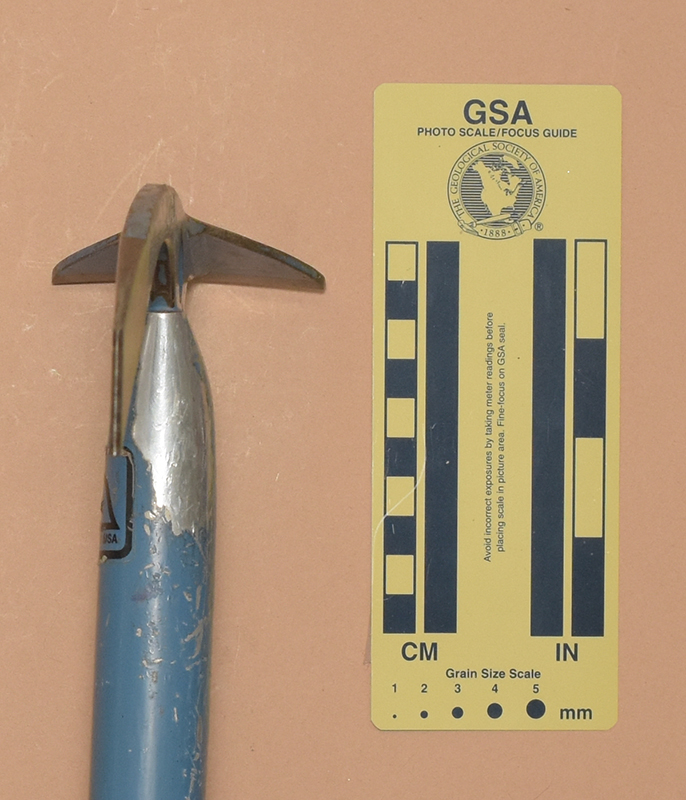
- Straight swallowtail pick with a positive-clearance chisel tip.
- Pick: 135(l)x18-30(h)x7(t) mm.
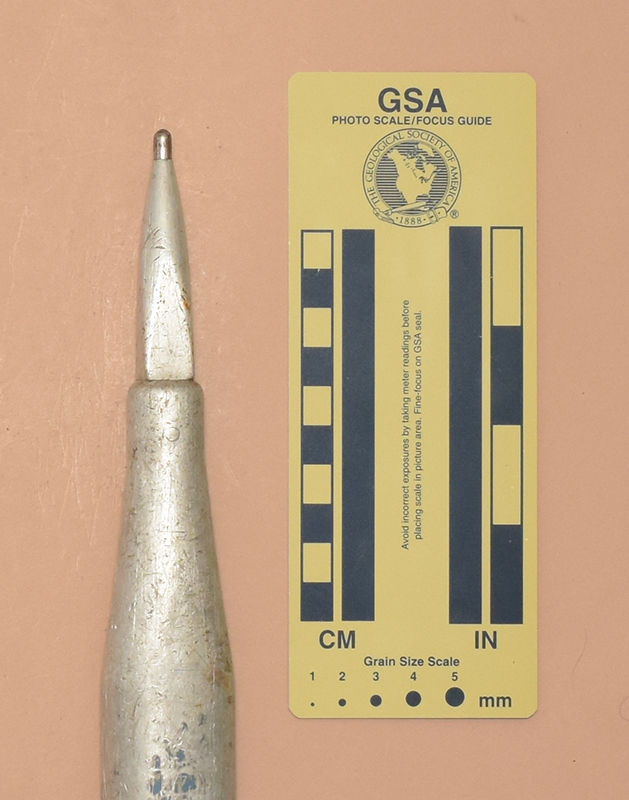
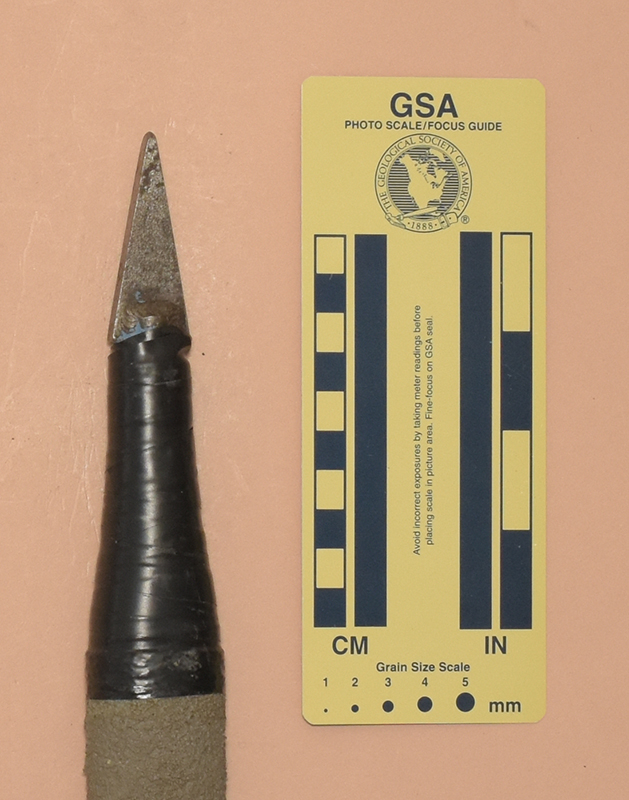
- Round spike with square base.
- Spike: 71(l)x13(w)x13(t) mm.
- Glide ring with adjustable web strap.
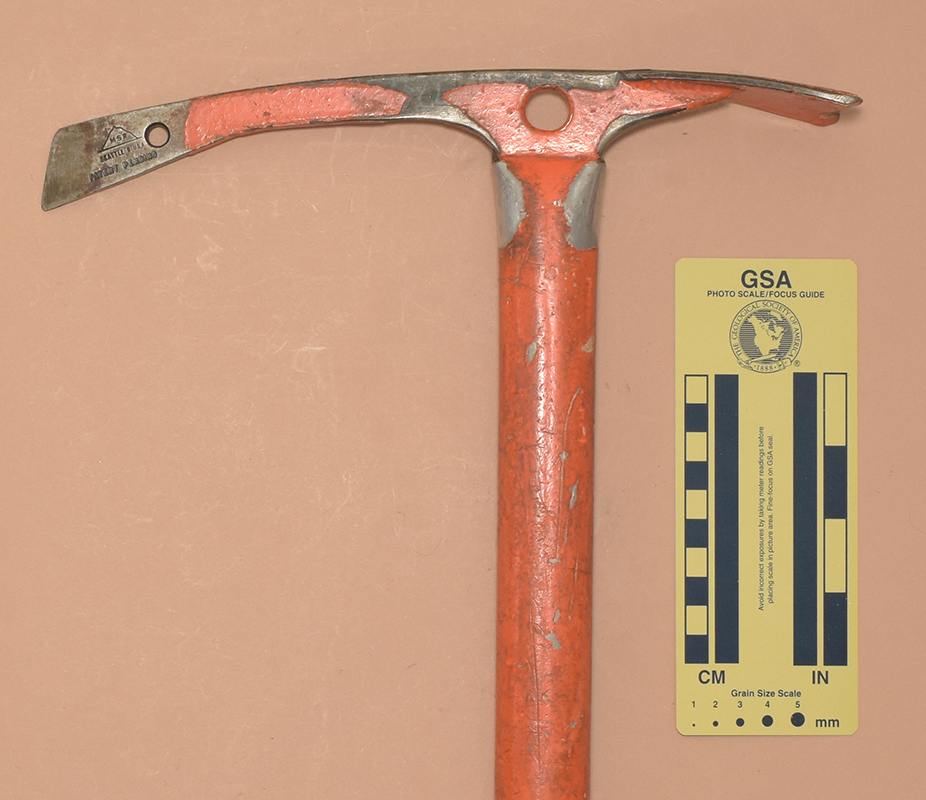
- The rib supporting the adze is smaller than the one on my Thunderbird #106.
- This version has a small hole near the end of the pick. I don't know what the hole accomplishes placed so far from the shaft. Perhaps it aided manufacturing.
- MSR introduced the Thunderbird in their February 1971 newsletter.
- The hole near the pick appears in MSR's newslette r photos of the Thunderbird up through the May 1972 issue.
↑ 106: MSR Thunderbird
- Made in USA [ca. 1970].
- 750x275 mm.
- Weight: 910 g.
- Aluminum Shaft.
- Shaft: 33x27 mm.
- Fixed Head with carabiner hole.
- Straight adze with a scalloped edge and a moderate arch.
- Adze: 75(l)x70(w)x3(arch) mm.
- Straight swallowtail pick with a positive-clearance chisel tip.
- Pick: 135(l)x18-30(h)x7(t) mm.
- Round spike with square base.
- Spike: 71(l)x13(w)x13(t) mm.
- Glide ring with adjustable web strap.
- The Thunderbird pick was designed with a focus on self arrest. It also performs well cutting steps. Current mountaineering doctrine focuses more on self belay and modern crampons have reduced the need to cut steps.
- This version does not have the small hole near the end of the pick that is fund in #124.
- MSR introduced the Thunderbird in their February 1971 newsletter.
- The hole near the pick found on #124 does not appear in MSR Newsletter photos of the Thunderbird from April 1973 onward.
Stilletto / Stiletto
MSR introduced the Stiletto Ice Axe and Hammer in their March 1975 newsletter. They spelled it "Stilletto" in 1975 but changed to "Stiletto" in the March 1976 Newsletter. In the earlier newsletter they wrote the following:
"These new axes are made specifically for hard snow and ice climbing. The picks are needle pointed for instant hooking without need for hard impact, Stirrups can be connected between the carabiner hole and the foot for climbing as if on Jumars. Please be top-roped while you learn the technique."
The bump above the carabiner hole allows looping the rope or a webbing over a placed axe.
The Stiletto Ice Axe and Hammer were not listed in their March 1977 or later newsletters.
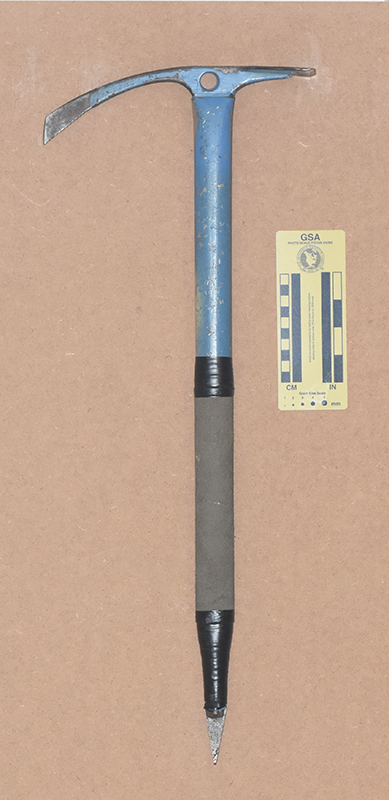
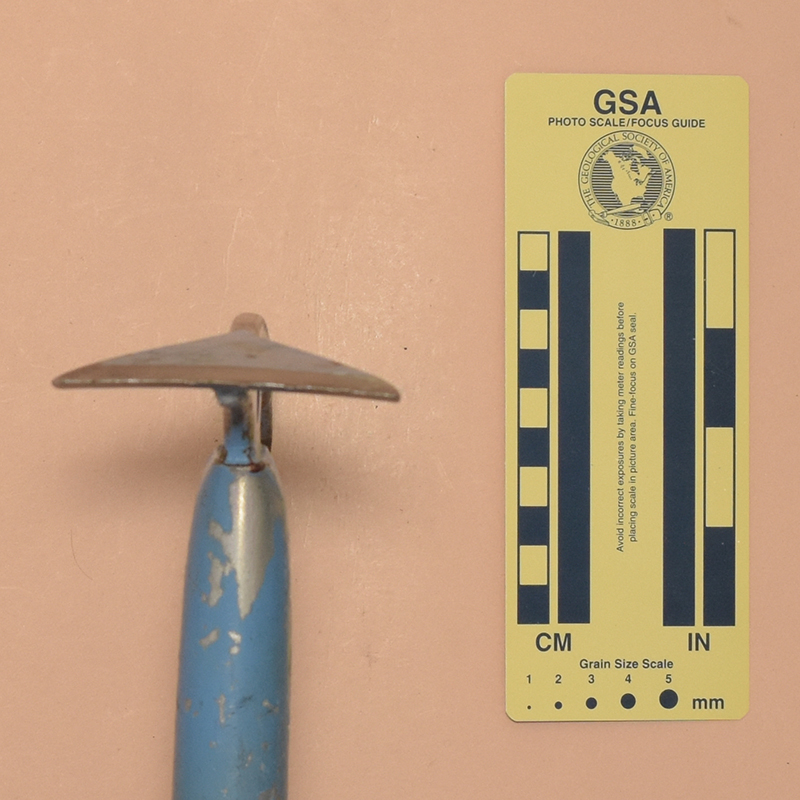
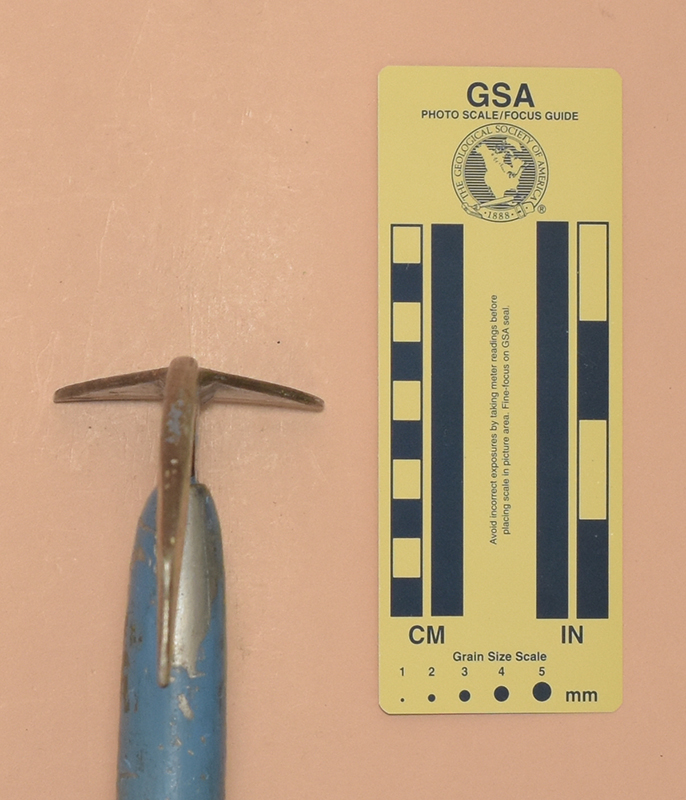
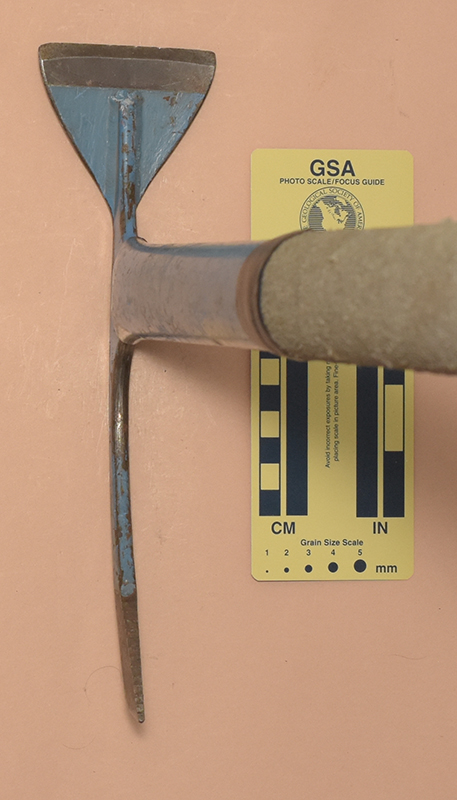
↑ 296: MSR Stiletto
- Made in USA [1975].
- 455x225 mm.
- Weight: 620 g.
- Aluminum Shaft.
- Shaft: 33x28 mm.
- Fixed Head with carabiner hole.
- Straight adze with a straight edge and a slight arch.
- Adze: 60(l)x66(w)x1(arch) mm.
- Curved waterfall pick with a neutral-clearance chisel tip and with 15 fine teeth near tip and two mid-pick.
- Pick: 100(l)x19(h)x5(t) mm.
- Triangular spike.
- Spike: 55(l)x18(w)x7(t) mm.
- The short length and strongly-drooped pick (similar to the Snowdon Mouldings Curver) make this axe better suited for technical ice than for general mountaineering.
- The bump above the carabiner hole allows looping the rope or a webbing over a placed axe.
- The handle taper above the spike forces me to grip this axe higher on the shaft to prevent slipping, effectively shortening this axe's swing radius.
- MSR introduced the Stiletto Ice Axe and Hammer in their March 1975 newsletter. It was not listed in the March 1977 or later newsletters.
- From Mike Gerbman, who got it from Brian Morgan in the summer of 1975.
Sumner
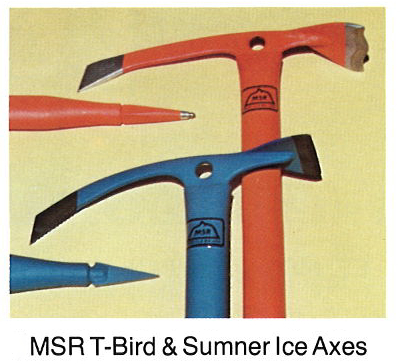 MSR described the Sumner as follows:
"The Sumner is based on the T-Bird axe and is named for Bill Sumner who had us make a special model for technical ice climbers . The hooking angle is 53 ° (instead of 68°') for superior holding power. The pick is thinner and the cleaving angle is narrower for easy penetration and less fracture in ice. The adze is flat and straight for step cutting. The steel edged spike does not skid on ice. We think this is the best technical ice axe there is."
↑ 207: MSR Sumner
- Made in USA [1976–1979].
- 640x255 mm.
- Weight: 745 g.
- Aluminum Shaft.
- Shaft: 33x27 mm. (Grip: 35x29 mm.)
- Fixed Head with carabiner hole.
- Straight adze with a straight edge and a slight arch.
- Adze: 60(l)x69(w)x2(arch) mm.
- Curved swallowtail pick with a positive-clearance chisel tip and with 12 ventral teeth.
- Pick: 125(l)x11(h)x7(t) mm.
- Triangular spike.
- Spike: 50(l)x20w)x7(t) mm.
- The hook angle is 53° for superior holding compared to 68° for the Thunderbird.
- The pick is thinner and the cleaving angle narrower than that on the Thunderbird, resulting in easier penetration and less fracturing in hard ice.
- A previous owner added a nice textured tape to the grip. This provides an excellent grip and some well-appreciated insulation as well.
- Bill Summer had MSR make this model specifically for technical ice climbers.
Introduced in the MSR's May 1972 newsletter as the "Model S" Thunderbird, it was renamed the Sumner in the next (April 1973) newsletter.
The 1979 MSR catalog stated that it would no longer be available after May 31, 1979. - Sumners sold before May 1976 had forged spikes.
Axes sold from May through September 1976 had spikes made by butt-welding the "spear head" to a round shank. These were recalled after one broke during field testing.
Later axes (including this one) had the "spear head" welded into a slot in the round shank.
Sumner - Prototype Spikes
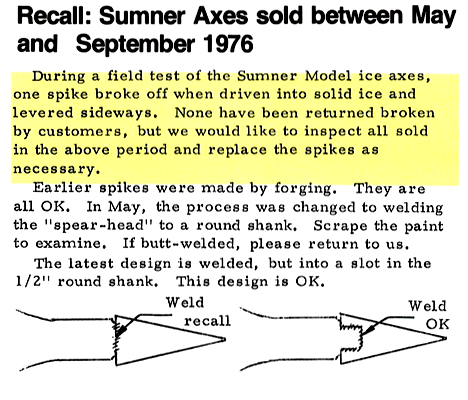 Sumners sold before May 1976 had forged spikes. MSR changed the design and Sumners sold from May through September 1976 had spikes made by butt-welding the "spear head" to a round shank. One of these broke during field testing. MSR issued a recall notice on the March 1977 Newsletter.
These prototypes were made and used to test a new spike design. After testing, this design was incorporated into all Sumner axes sold after September 1976.
↑ 375: MSR Sumner (prototype spike)
- Made in USA [1975].
- 650x255 mm.
- Weight: 730 g.
- Aluminum Shaft.
- Shaft: 33x26 mm. (Grip: 34x26 mm.)
- Fixed Head with carabiner hole.
- Straight adze with a straight edge and a slight arch.
- Adze: 60(l)x69(w)x2(arch) mm.
- Curved swallowtail pick with a positive-clearance chisel tip and with 12 ventral teeth.
- Pick: 125(l)x13(h)x7(t) mm.
- Triangular spike.
- Spike: 56(l)x21w)x7(t) mm.
- The hook angle is 53° for superior holding compared to 68° for the Thunderbird.
- The pick is thinner and the cleaving angle narrower than that on the Thunderbird, resulting in easier penetration and less fracturing in hard ice.
- A previous owner added the tape to the grip.
- Bill Summer had MSR make this model specifically for technical ice climbers.
Introduced in the MSR's May 1972 newsletter as the "Model S" Thunderbird, it was renamed the Sumner in the next (April 1973) newsletter.
The 1979 MSR catalog stated that it would no longer be available after May 31, 1979. - Sumners sold before May 1976 had forged spikes.
Axes sold from May through September 1976 had spikes made by butt-welding the "spear head" to a round shank. These were recalled after one broke during field testing.
This particular axe had a prototype spike designed to solve the breakage issue. After testing, this design was incorporated into Sumner axes sold after September 1976. - From Mike Gerbman, who got it from Brian Morgan in the summer of 1975.
↑ 376: MSR Sumner (prototype spike)
- Made in USA [1975].
- 690x255 mm.
- Weight: 755 g.
- Aluminum Shaft.
- Shaft: 35x27 mm. (Grip: 36z28 mm.)
- Fixed Head with carabiner hole.
- Straight adze with a straight edge and a slight arch.
- Adze: 60(l)x69(w)x2(arch) mm.
- Curved swallowtail pick with a positive-clearance chisel tip and with 12 ventral teeth.
- Pick: 125(l)x13(h)x7(t) mm.
- Triangular spike.
- Spike: 56(l)x21w)x7(t) mm.
- The hook angle is 53° for superior holding compared to 68° for the Thunderbird.
- The pick is thinner and the cleaving angle narrower than that on the Thunderbird, resulting in easier penetration and less fracturing in hard ice.
- Bill Summer had MSR make this model specifically for technical ice climbers.
Introduced in the MSR's May 1972 newsletter as the "Model S" Thunderbird, it was renamed the Sumner in the next (April 1973) newsletter.
The 1979 MSR catalog stated that it would no longer be available after May 31, 1979. - Sumners sold before May 1976 had forged spikes.
Axes sold from May through September 1976 had spikes made by butt-welding the "spear head" to a round shank. These were recalled after one broke during field testing.
This particular axe had a prototype spike designed to solve the breakage issue. After testing, this design was incorporated into Sumner axes sold after September 1976. - From Mike Gerbman, who got it from Brian Morgan in the summer of 1975.
North Wall Hammers
Eagle Hammer
MSR introduced the Eagle Hammer in their April 1973 newsletter. It was not listed in the March 1977 or later newsletters.
In 1975 and 1976, MSR also offered a the similar "Stilletto"/"Stiletto" hammer. It had a more steeply-drooped pick made specifically for hard snow and ice climbing. I do not have a Stiletto hammer in my collection.
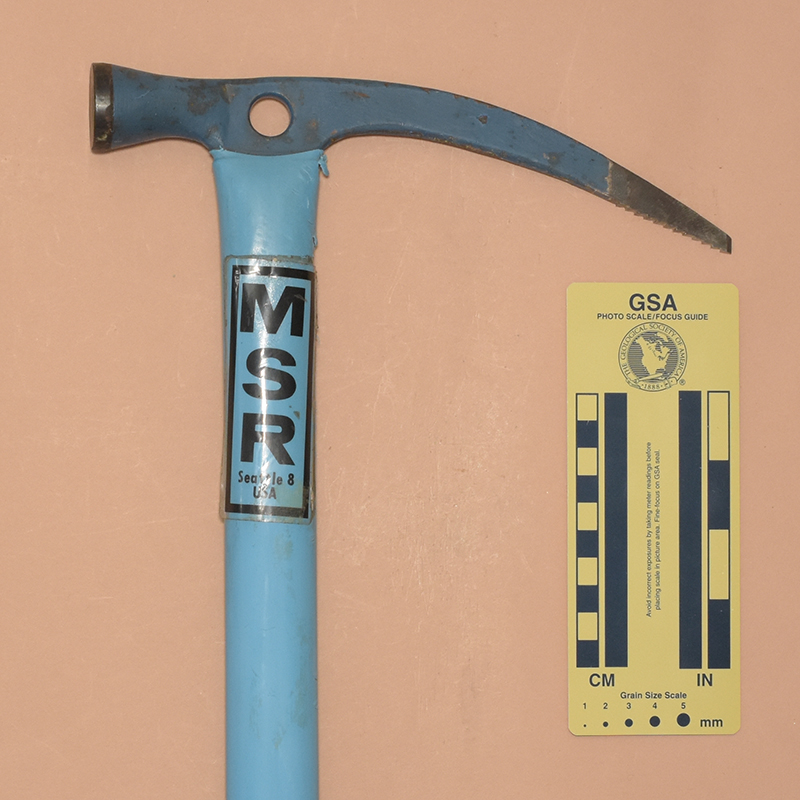
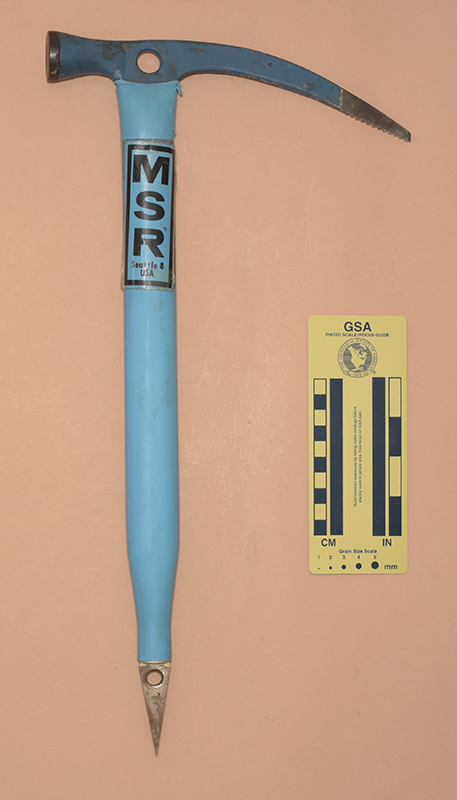
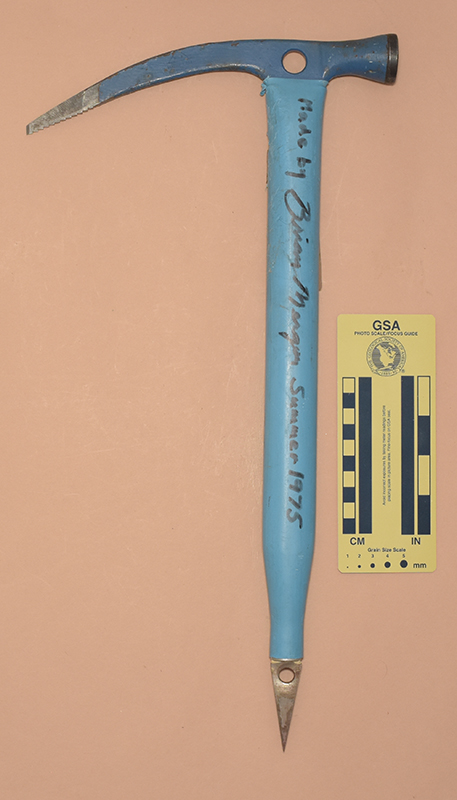
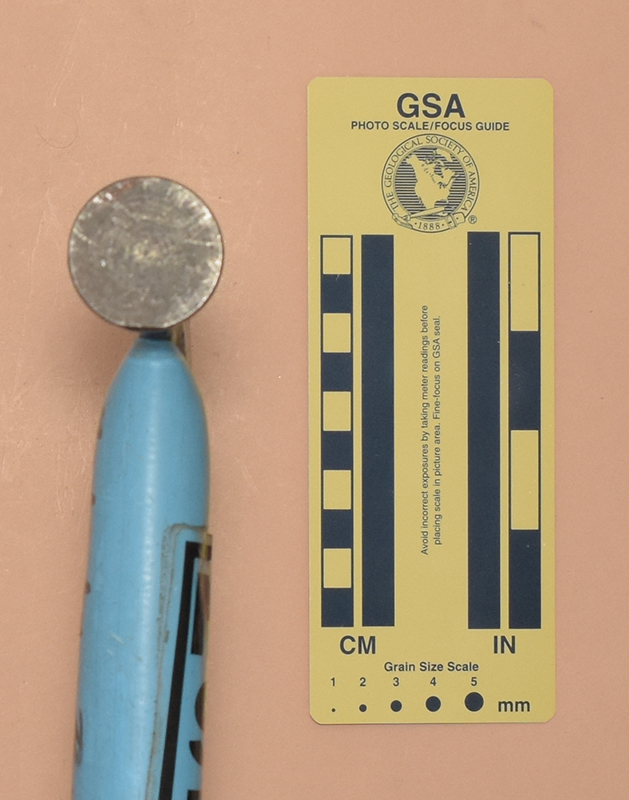
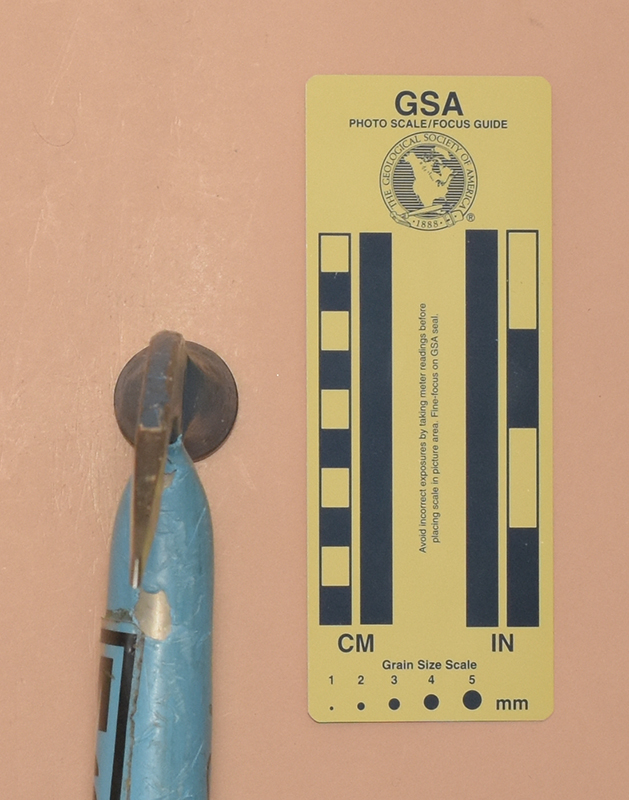
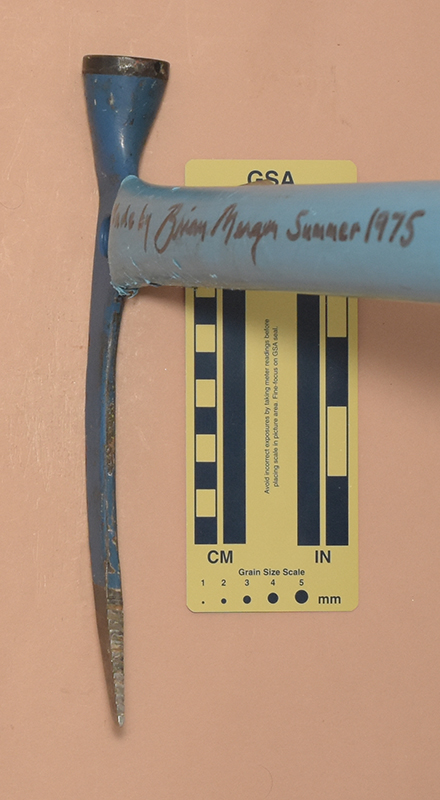
↑ 298: MSR Eagle Hammer
- Made in USA [1975].
- 450x235 mm.
- Weight: 815 g.
- Aluminum Shaft.
- Shaft: 33x27 mm.
- Fixed Head with carabiner hole.
- Hammer: 49(l)x18)d) mm.
- Hammer head.
- Curved alpine pick with a neutral-clearance chisel tip and with 12 ventral teeth.
- Pick: 135(l)x19(h)x7(t) mm.
- Triangular spike.
- Spike: 57(l)x19(w)x7(t) mm.
- The short length and drooped Eagle-style pick make this axe better suited for technical ice than for general mountaineering.
- This hammer is one-third heavier than #297.
- The handle taper above the spike forces me to grip this axe higher on the shaft to prevent slipping, effectively shortening this hammer's swing radius.
- MSR introduced the Eagle Hammer in their April 1973 newsletter. It was not listed in the March 1976 or later newsletters.
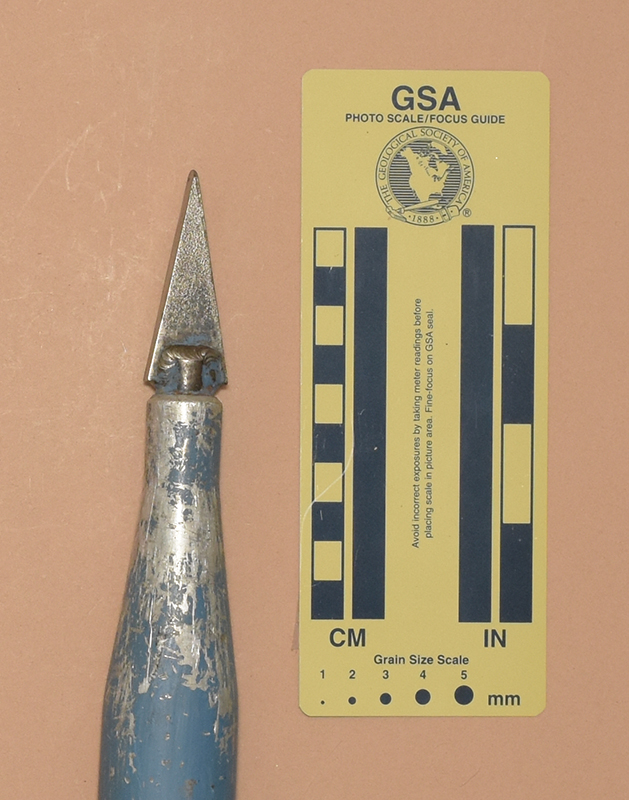
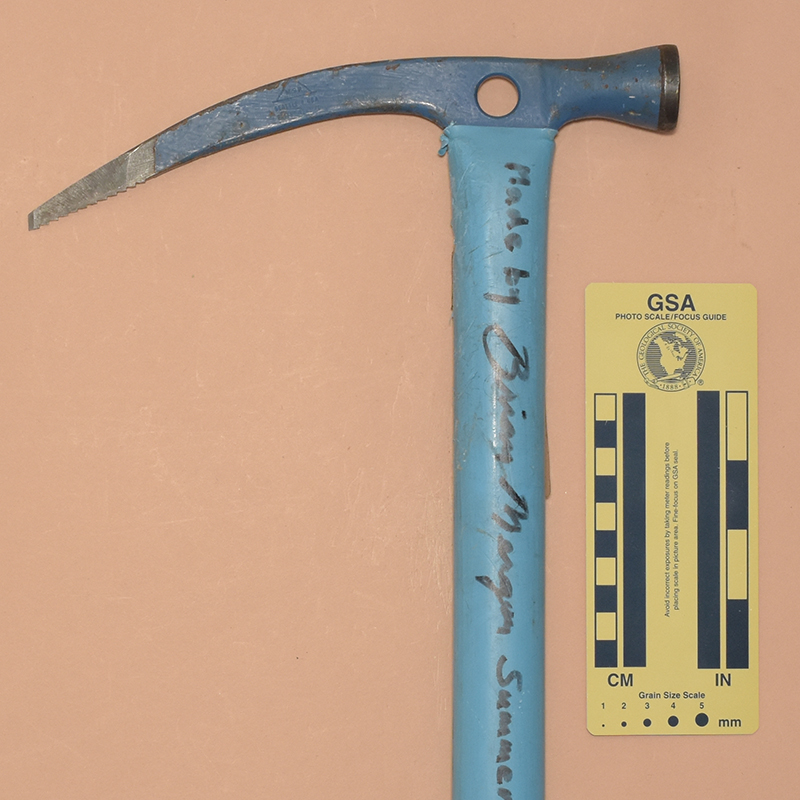
- This one was made and signed by Brian Morgan in the summer of 1975.
- From Mike Gerbman, who got it from Brian Morgan in the summer of 1975.
Thunderbird Hammer
MSR introduced the Thunderbird Hammer in their February 1971 newsletter. It was not listed in the March 1977 or later newsletters.
↑ 297: MSR Thunderbird Hammer
- Made in USA [1975].
- 450x235 mm.
- Weight: 615 g.
- Aluminum Shaft.
- Shaft: 33x27 mm.
- Fixed Head with carabiner hole.
- Hammer: 46(l)x18)d) mm.
- Hammer head.
- Curved swallowtail pick with a positive-clearance chisel tip and with 3 shallow teeth.
- Pick: 135(l)x18-30(h)x7(t) mm.
- Round spike with square base.
- Spike: 66(l)x13(w)x13(t) mm.
- The short length make this axe better suited for technical ice than for general mountaineering.
- The Thunderbird-style pick was designed for mountaineering self-arrest, and is less suited for technical ice.
- The handle taper above the spike forces me to grip this axe higher on the shaft to prevent slipping, effectively shortening this axe's swing radius.
- MSR introduced the Thunderbird Hammer in their February 1971 newsletter. It was not listed in the March 1976 or later newsletters.
- From Mike Gerbman, who got it from Brian Morgan in the summer of 1975.