This page will not fit into a tiny viewport. Please choose a full-size monitor with a full-width window or select the abridged New Wave pages.

Version A

Buddy

Hornet

Shuttle
|
|
|
|
|
| Version A | Buddy |  Hornet |
Shuttle |
Singing Rock is a climbing equipment manufacturer in the Czech Republic. The headquarters, production, training and testing centre is located in Poniklá. Our textile production plant is situated in Semily. The production of metal products and components is placed in Sudkov. The Kladno training centre for work at height is just 20 min from Prague. Singing Rock supplies products to more than 65 countries worldwide through its network of distributors and agents.
The Singing Rock company was founded in 1992. Before starting Singing Rock, one of its founders, Vladimír Křapka, was earning his living by sewing the backpacks and sandals which became very popular in former Czechoslovakia under the name Tucan. The Tucan brand was at the very beginning of the new company's activities, from the backpacks and sandals to the climbing harnesses. After founding Singing Rock in 1992 and starting the partnership with Jan Goddefroy from Belgium, a new company name and logo were chosen in cooperation with a British advertising agency. Thus the "Tatrman" who was the initial representative of the Singing Rock's identity was brought to life. It showed an Indian during the traditional Sun dance at the place where the rock really does sing thanks to the wind – and that is where the name Singing Rock came from.
The "Tatrman" logo was in use until 2000 when it was replaced by the "arrow." The company logo got this unique shape by accident – their longterm graphic designer Jiří Mělnický from the H.R.G. printing house used the symbol of an American road sign on the cover of the catalogue. Vláďa Křapka liked this idea so much that he had a new company logo created using this sign. Like the "Tatrman," the "Singing Rock arrow" is inspired by Western culture and stands for a clear, straight direction, sense of purpose and, most of all, the vertical – a direction connected with everything that Singing Rock creates.
The private financial fund ARX Equity Partners bought Singing Rock in 2009. At the same time Singing Rock s.r.o. and Lanex a.s. merged. The successor company had the business name Lanex a.s. They acquired Raveltik s.r.o. in 2011 to extend the portfolio with the metal products; expansion to the market with products for ice climbing and mountaineering. Two years later, in 2013, the Singing Rock division split from Lanex a.s. and reorganized back to Singing Rock s.r.o.
[ Top | Buddy | Hornet | Shuttle | Return to Belay Tubes ]
|
|
 |
 |
| Front | Rear | Top |
 |
 |
 |
| Left | Right | Bottom |
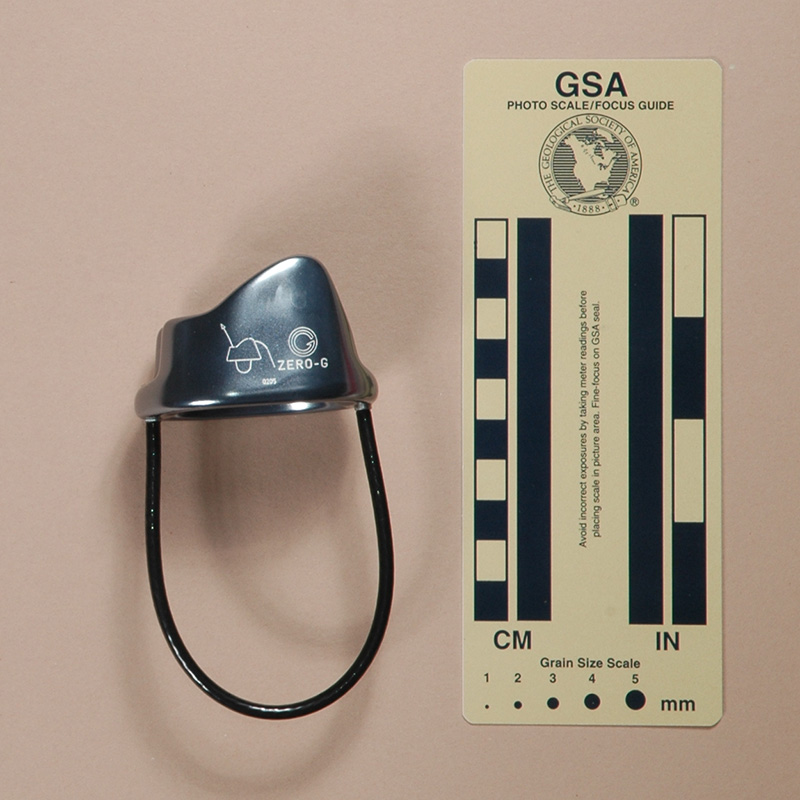
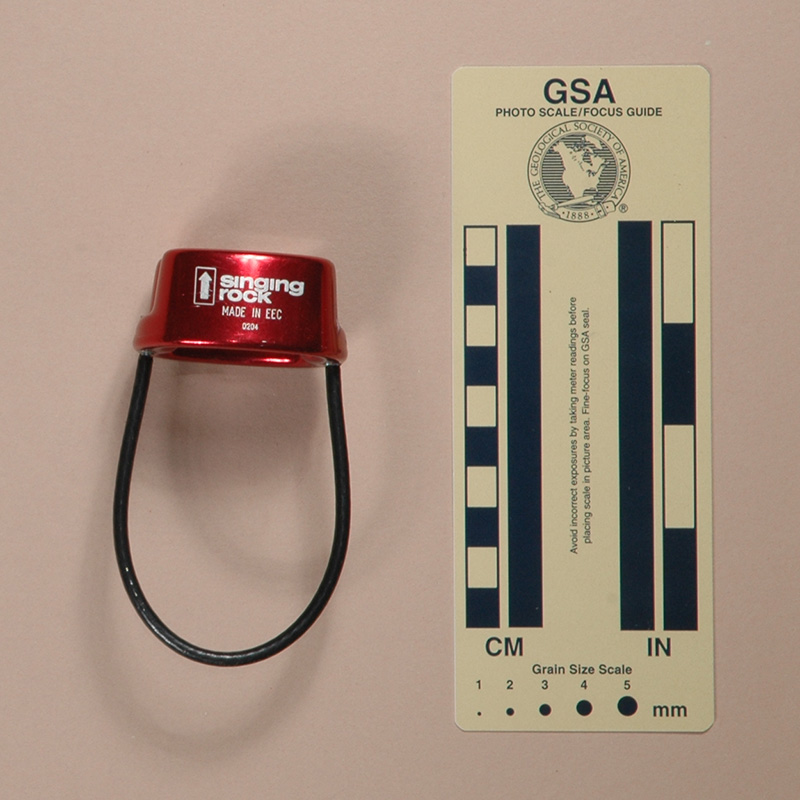
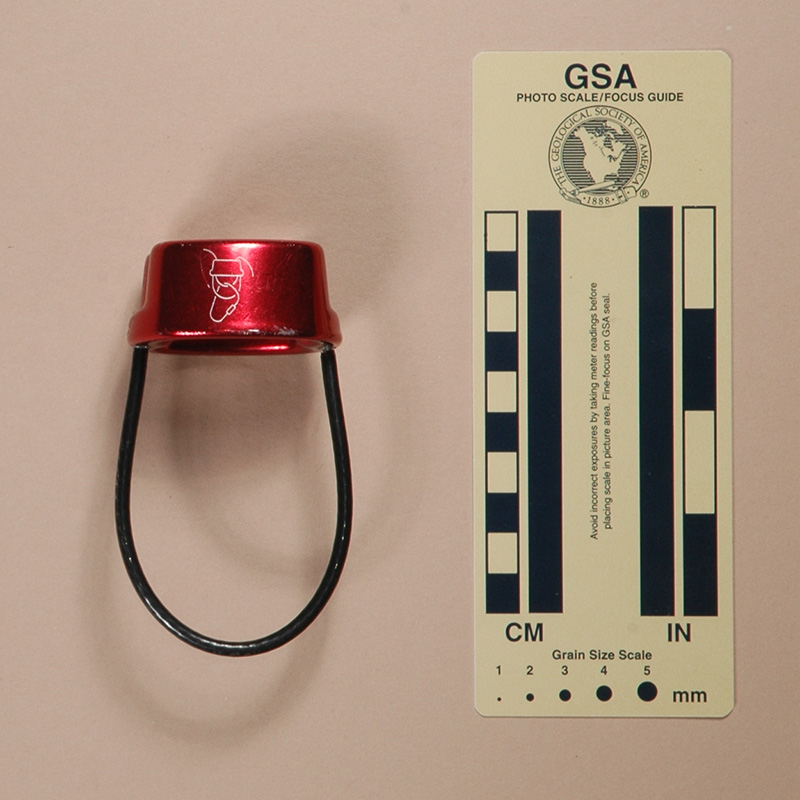
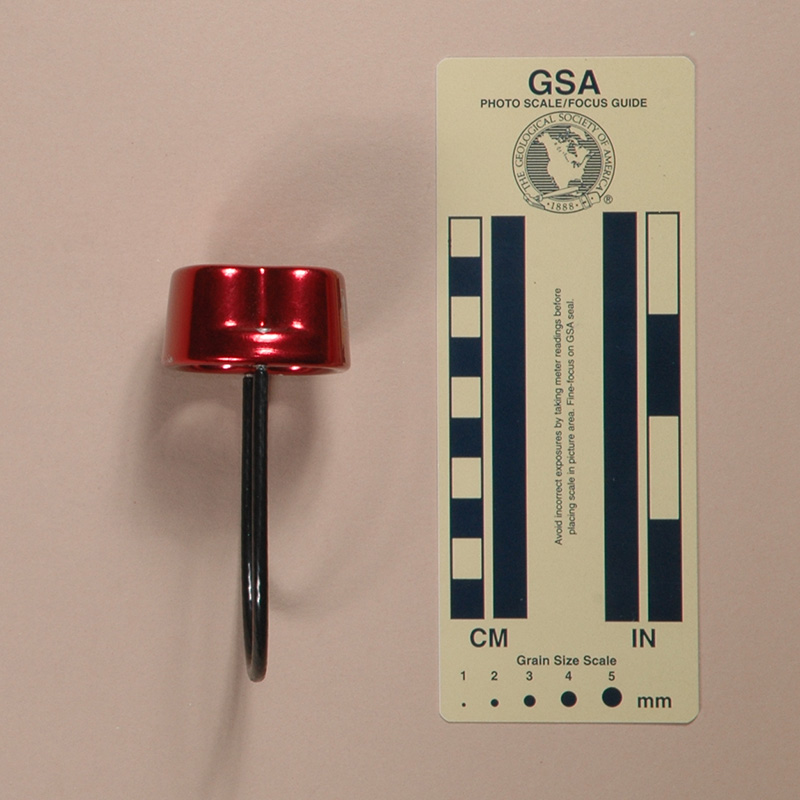
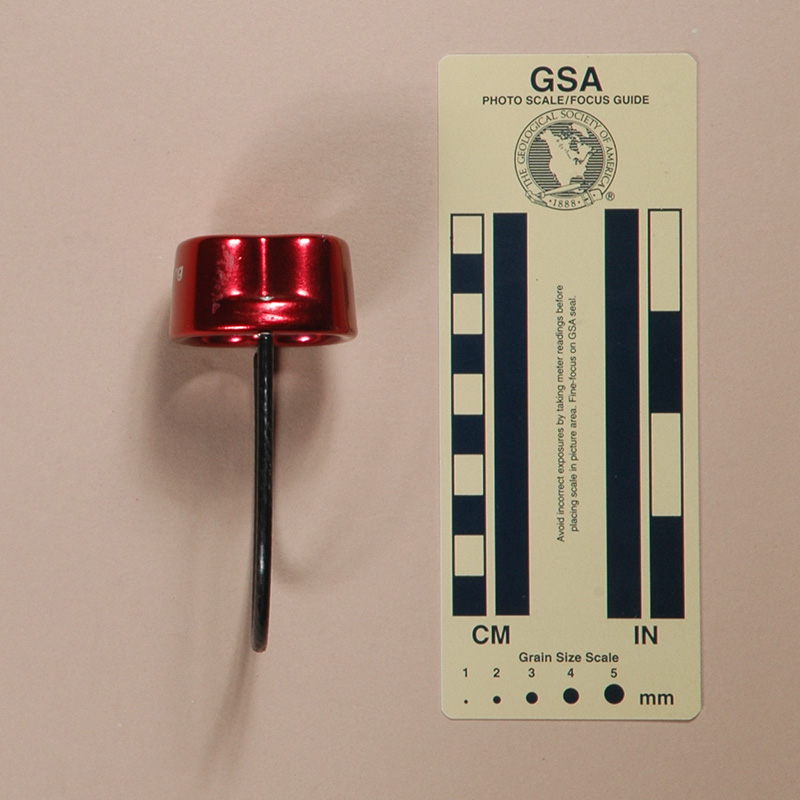
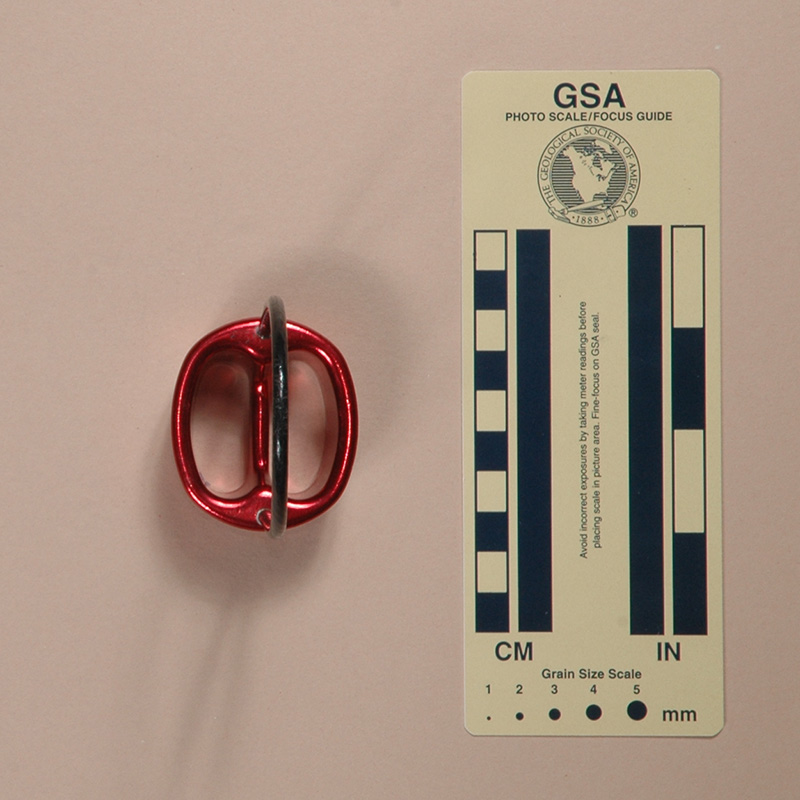
 I acquired my Singing Rock on eBay in 2008.
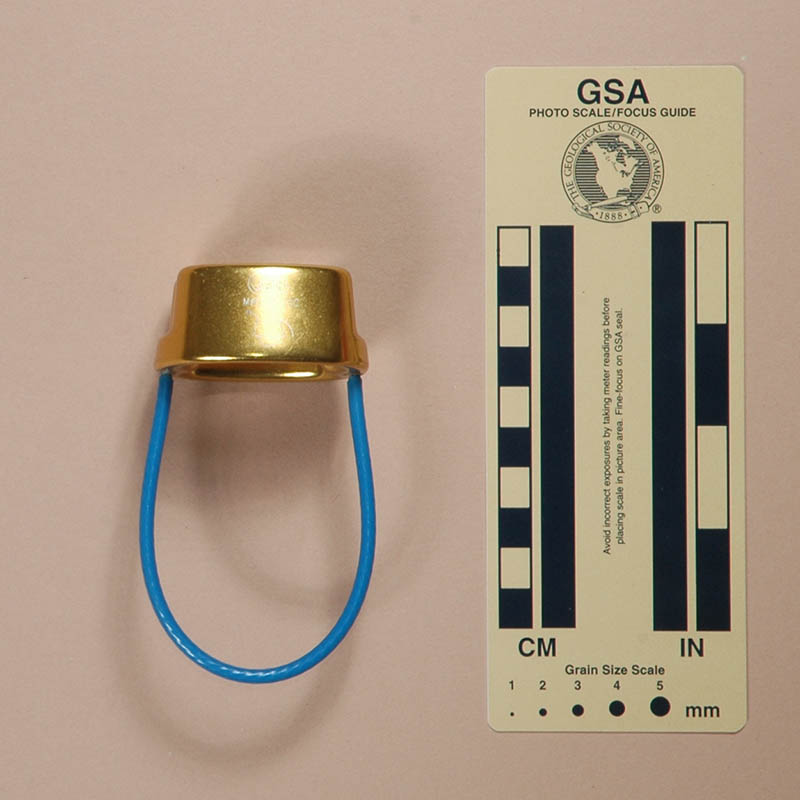
This Singing Rock belay tube is forged from aluminum alloy and then soft anodized. Mine is 53 mm. long, 46 mm. wide, 100 mm. high, and weighs 58 g. The slots are 33 mm. long and 14 mm. wide. The top of the Omega oval carabiner that I use for comparing belay tubes sits 15 mm. below the ends of the slots. The keeper is a stiff plastic-covered cable.
One side of the tube is printed with arrow pointing up inside a rectangle, "singing rock," "MADE IN EEC," and "0204." The other side is printed with an illustration showing how to rig the device.
I saw my first Singing Rock belay tube in a climbing shop in Prague in December 2000, on one of my last days in the Czech Republic. The salesman was busy, I was in a hurry, and I assumed that I could easily find another one once I got home. I didn't think that it would take nearly eight years!
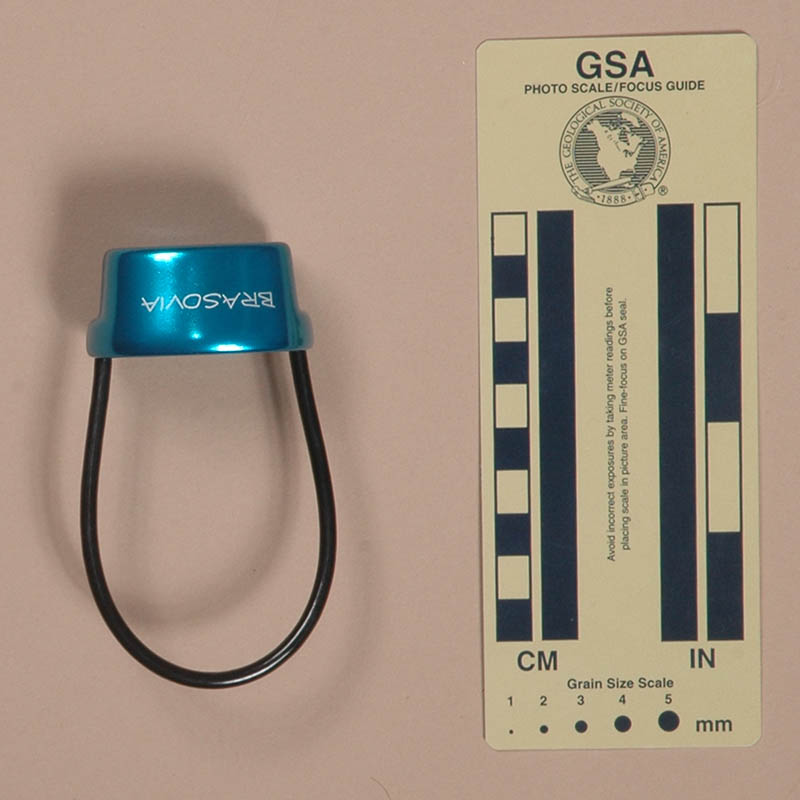
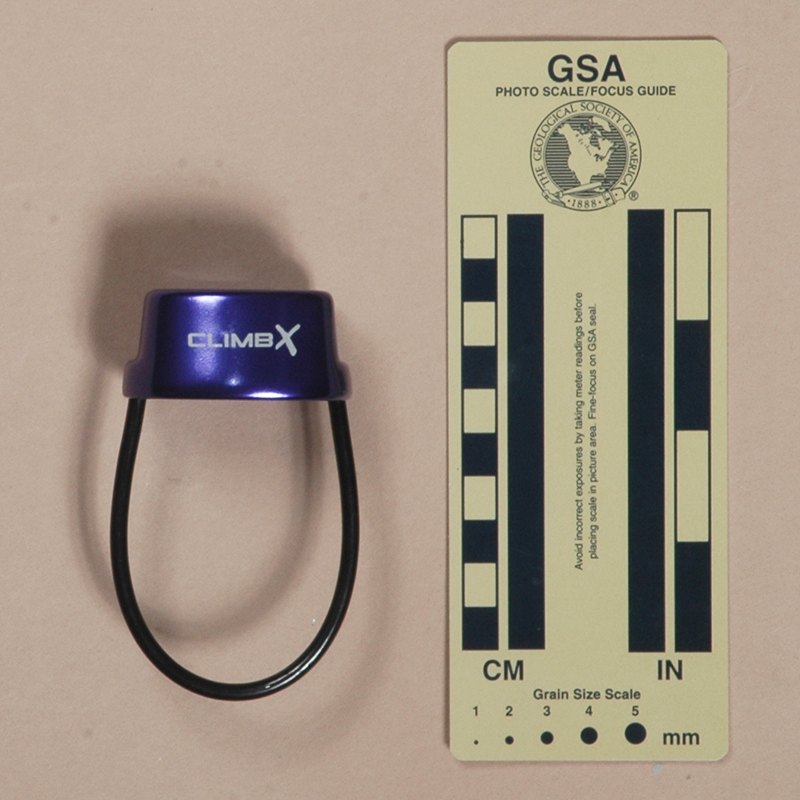
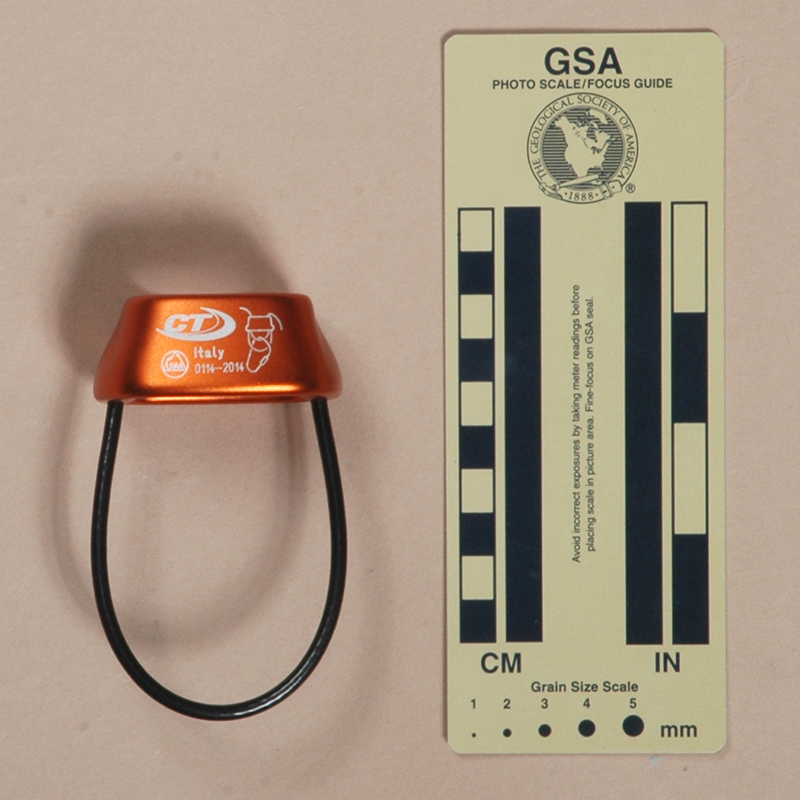
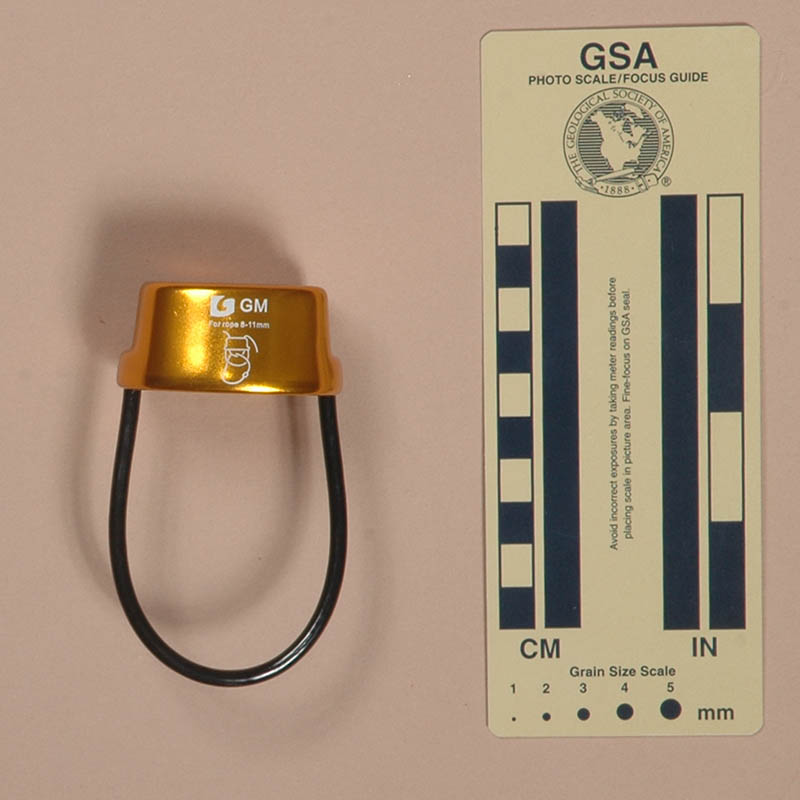
The Singing Rock is one of the following closely-related belay tubes, all called "ATCs" after the original Black Diamond Air Traffic Controller:
Each of these is 54±3 mm. long, 46±1 mm. wide, and weighs 59±9 g. Their slots are all 32±1 mm. long and 14±1 mm. wide. They all have plastic-covered cable keepers.
The Black Diamond ATC was the first of these to appear, by many years. The basic design evolved and similar devices appeared from others.
The ATC is a lightweight,popular belaying device among climbers. Rigging is simple: insert a bight of operand clip it with a suitably anchored carabiner, making sure that the rope is not running over the keeper. Two-rope rigging is similar. On thinner ropes, adding another carabiner helps.
My biggest complaint is that none of these give me enough friction when rappelling with a heavy load on fast 9 mm. rope. I also prefer more friction while belaying, unless my partner is particularly lightweight. For these reasons, I prefer using a Trango Jaws or one of its equivalents.
Any of these will overheat badly on long rappels. Overheating is not an issue when belaying, but can be a concern when lowering someone more than a short distance.
There are four different shell styles in use::
The differences between the styles are cosmetic rather than functional.
None of the keepers-to-shell are strong enough to support body weight, so don't be stupid enough to rely on a keeper to protect you.
There are also several different diameter keeper cables used on these. Cable keepers are a compromise between a cord that stows easily but tends to get tangled in use, and a rigid rod that stands up to the rope running over it (by accident,of course). I prefer a stiff keeper, but any of these are stiff enough to be used without significant problems.
[ Top | Version A | Hornet | Shuttle | Return to Belay Tubes ]
|
|
 |
 |
| Front | Rear | Top |
 |
 |
 |
| Left | Right | Bottom |
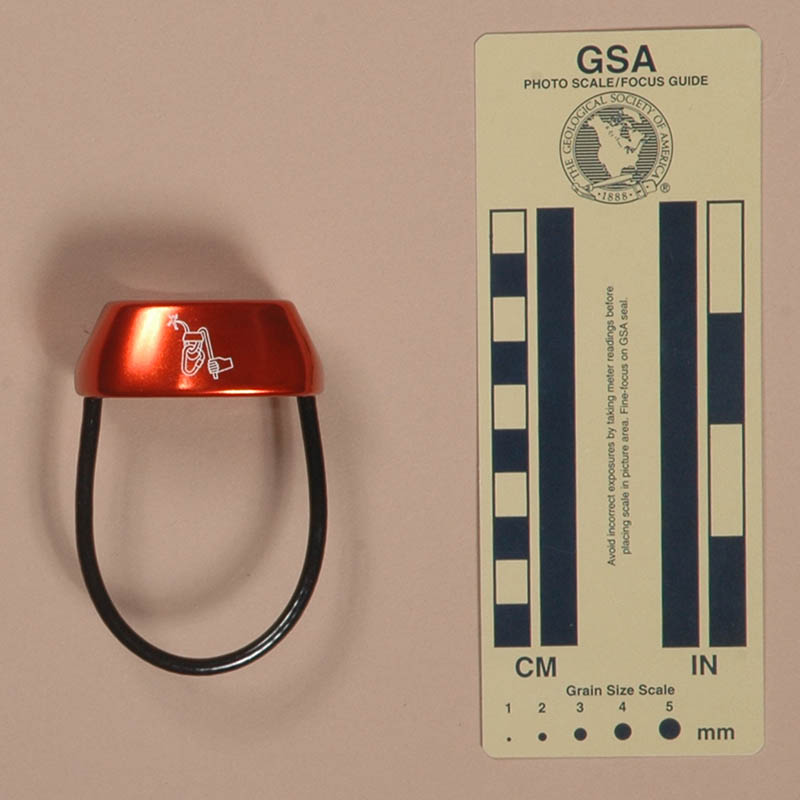
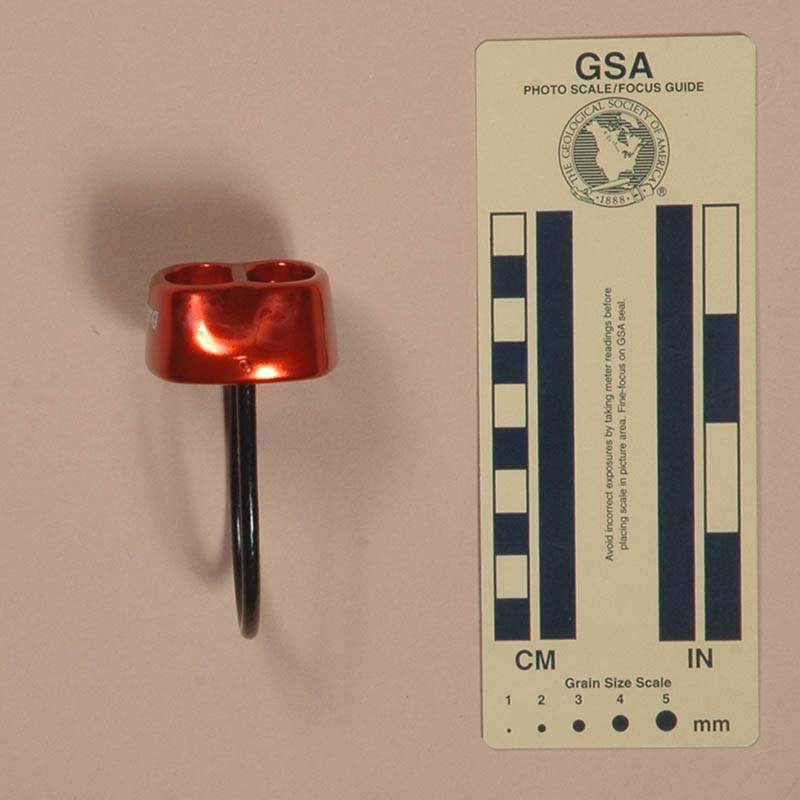
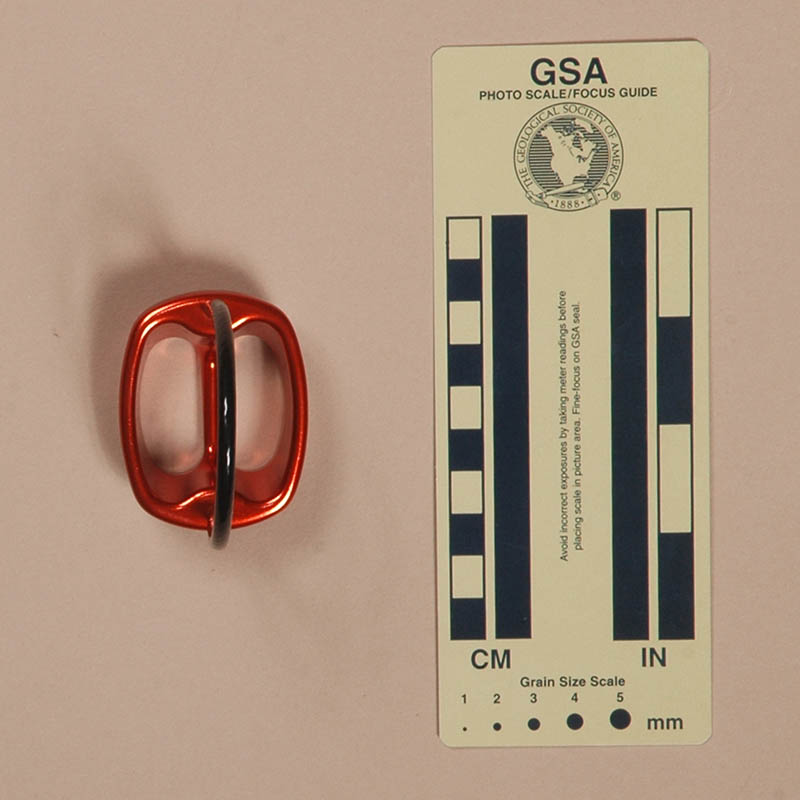
I acquired my Singing Rock Buddy from Above the Ridge in 2012.
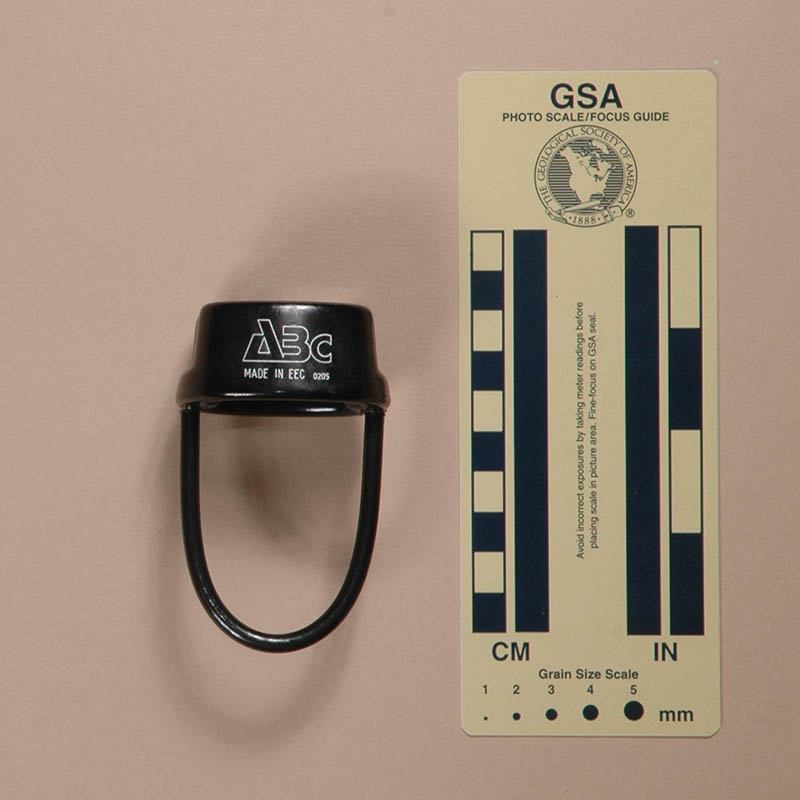
The Singing Rock Buddy is a plain belay tube. Mine is 56 mm. long, 44 mm. wide, 74 mm. high, and weighs 54 g. It is forged from aluminum ally and then soft anodized. It has two slots and a plastic-covered cable keeper. The slots are 33 mm. long and 15 mm. wide. The top of the Omega oval carabiner that I use for comparing belay tubes sits 13 mm. below the ends of the slots.
One side is printed with the Singing Rock logo (an up-pointing arrow), "Singing Rock," and "0410."
The Buddy is another ATC-type belay tube with a low profile and a moderately stiff cable keeper.
[ Top | Version A | Buddy | Shuttle | Return to Belay Tubes ]
Hornet|
|
 |
 |
| Front | Rear | Top |
 |
 |
 |
| Left | Right | Bottom |
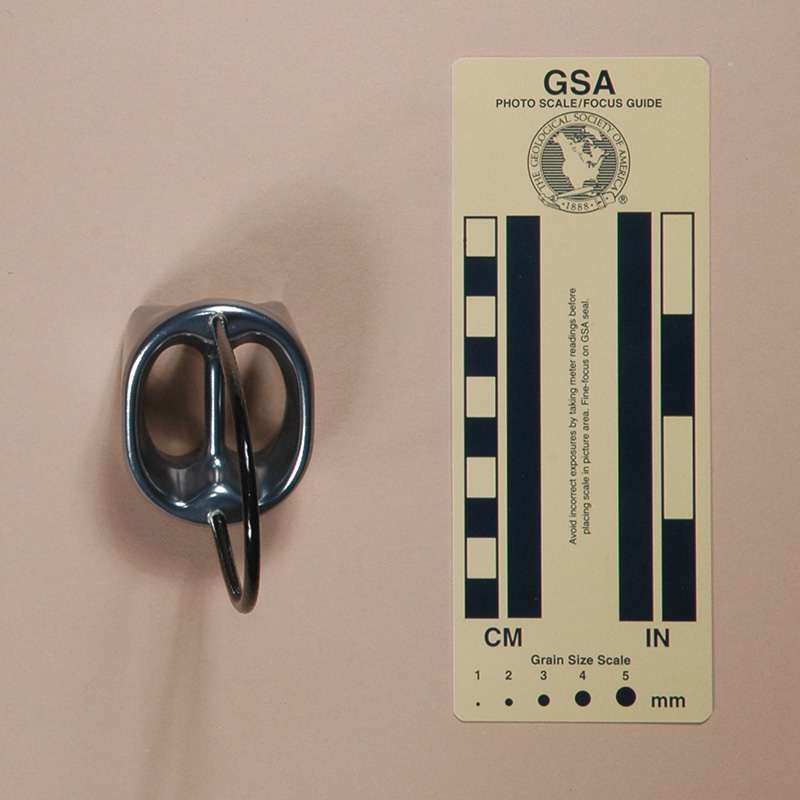
I bought my Singing Rock Hornet new on eBay in 2006.
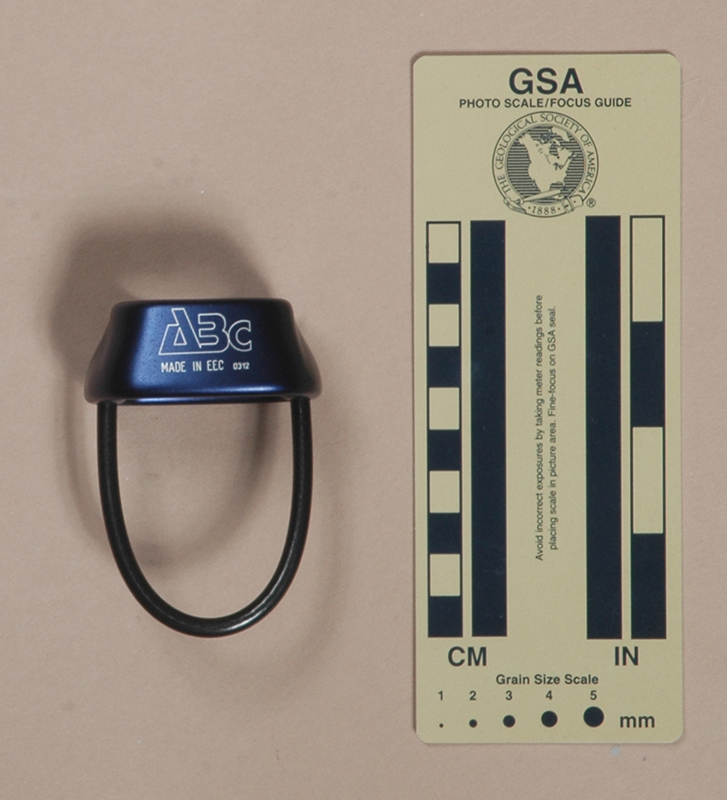
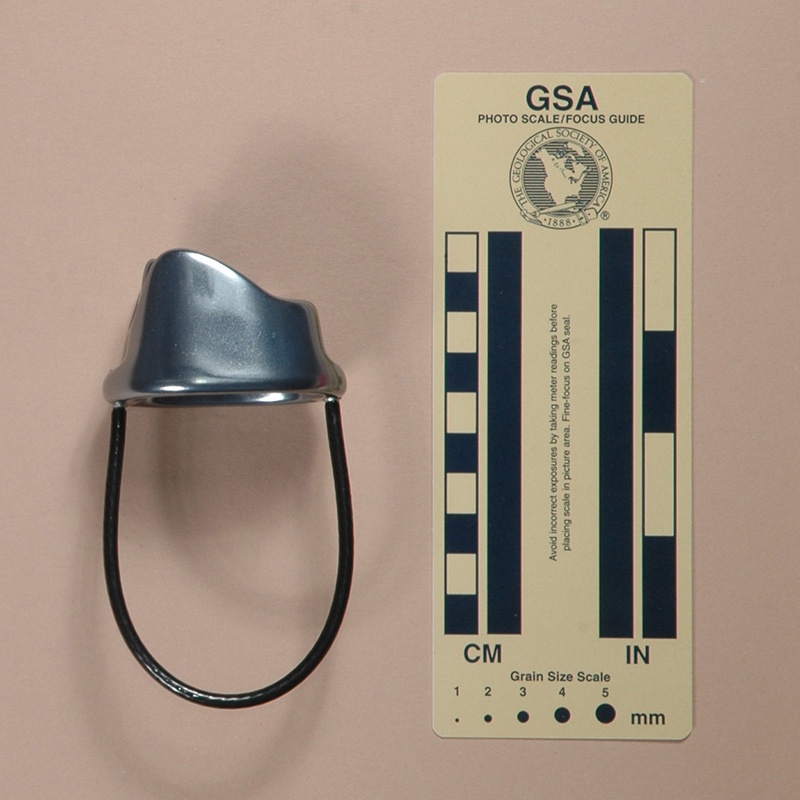
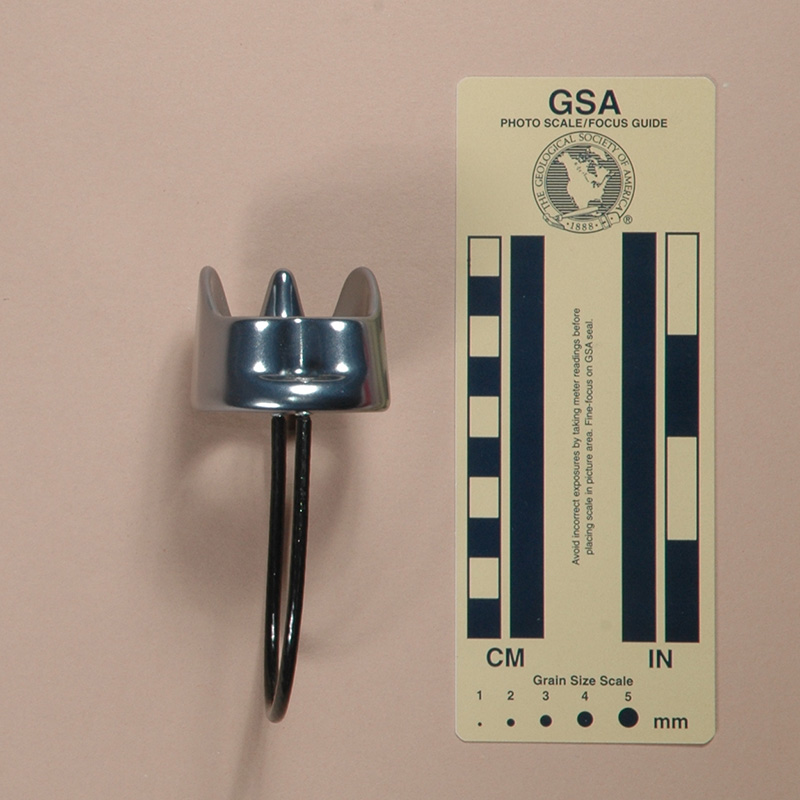
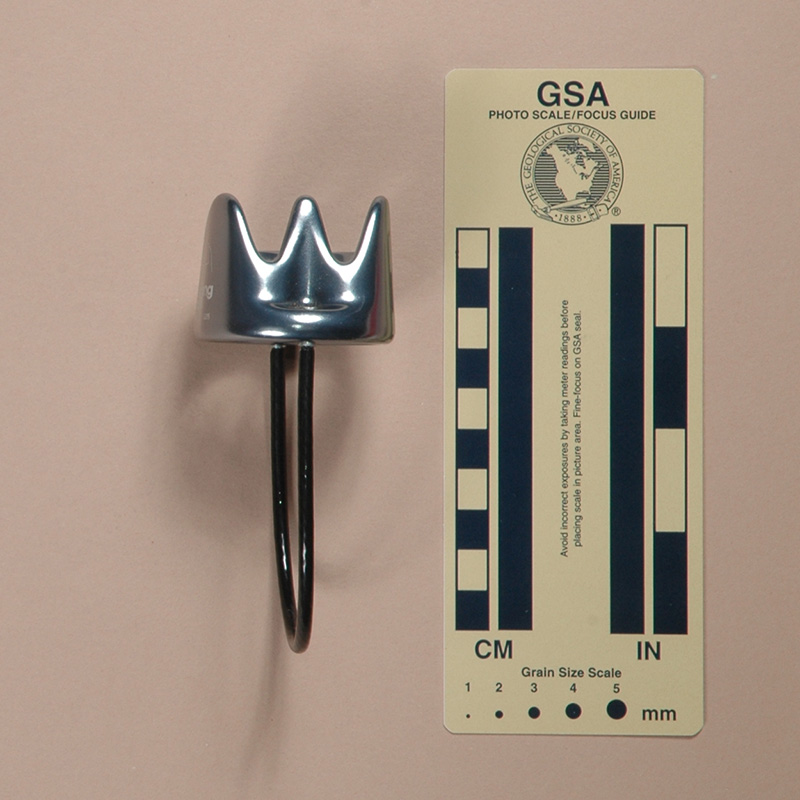
The Hornet is a notched belay tube. It is forged from aluminum alloy and then hard anodized. Mine is 60 mm. long, 47 mm. wide, 111 mm. high, and weighs 73 g. The slots are 33 mm. long and 15 mm. wide. The top of the Omega oval carabiner that I use for comparing belay tubes sits 9 mm. below the ends of the slots. The keeper is a stiff plastic-covered cable.
One side of the Hornet is printed with an illustration showing how to rig the device, and arrow pointing up inside a rectangle, "singing rock," "MADE IN EEC," and "0205."
I like this design enough to give it three stars:
The following notched belay tubes, including the Singing Rock Hornet, are essentially the same device:
|
|
|
||||||||||||||||||||||||||||||
Each of these is 60±1 mm. long and 48±1 mm. wide, and has a weight in the 76±3 g. range. Their slots are all 33 mm. long and 15 mm. wide.
 These are just like many other devices except for one little difference, but that difference makes any of these a much better device than those others. The special feature is the teeth. First of all, if you don't need them, turn the device 180 degrees and they are out of the way. On the other hand, if you want more friction, then these teeth can provide it. This is the only device design of this size and weight that I feel comfortable rappelling my 9 mm. haul line on. With any others, I never really felt completely in control (to be fair, I haven't tried this on the the Omega Pacific SBG or the Simond Cubik). The extra control is well worth carrying the extra 15 or 20 grams. One caution: like all belay tubes and tubers, these can get very hot on rappels.
I borrowed the following paragraphs from Trango's web site, although they should apply to any of the devices in the table:
Jaws stops better than most belay/rappel devices. The addition of the V notches really grabs the rope, assisting in slowing down the fall. In lab tests using a UIAA drop tower, an 11 mm. rope, an 80-kg weight with a fall factor of 1.2, and a clutch holding the rope with a 50-lbf slip threshold, we found the following results:
Pyramid/ATC/Tuber style devices 16" - 20" slip, no rope damage Grigri 1" - 3" slip, no rope damage Jaws 6" - 8" slip, no rope damage Jaws allows you to adjust the rope friction during a rappel. By flipping the rope out of the notches and over the side plates at the start of a long rappel, you can reduce the friction the device gives you at the start. When the rappel begins to speed up as you get closer to the ground, flip the ropes back into the notches to slow it down.
You must rig Jaws correctly. It's not symmetrical so you need to be sure the notches are on the brake hand side of the rope, not on the side which goes to the leader. Also, because of the additional friction provided by the device you'll find that the beginnings of long rappels can be a bit jerky. The solution is to allow rope to slide through by varying the angle of your brake hand rather than just letting rope slip through. On low angle slab rappels, turn Jaws around so the notches are on the anchor side and your brake hand is on the smooth side.
[ Top | Version A | Buddy | Hornet | Return to Belay Tubes ]
 |
|
 |
| Front | Rear | Top |
 |
 |
 |
| Left | Right | Bottom |
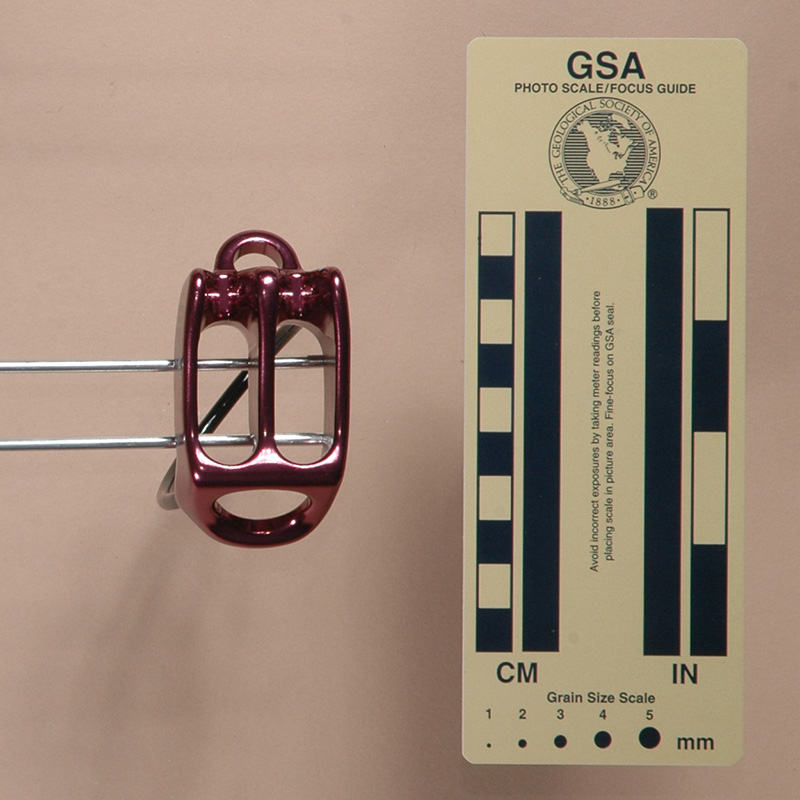
I acquired my Singing Rock Shuttle from Outfitter’s Outlet in 2011.
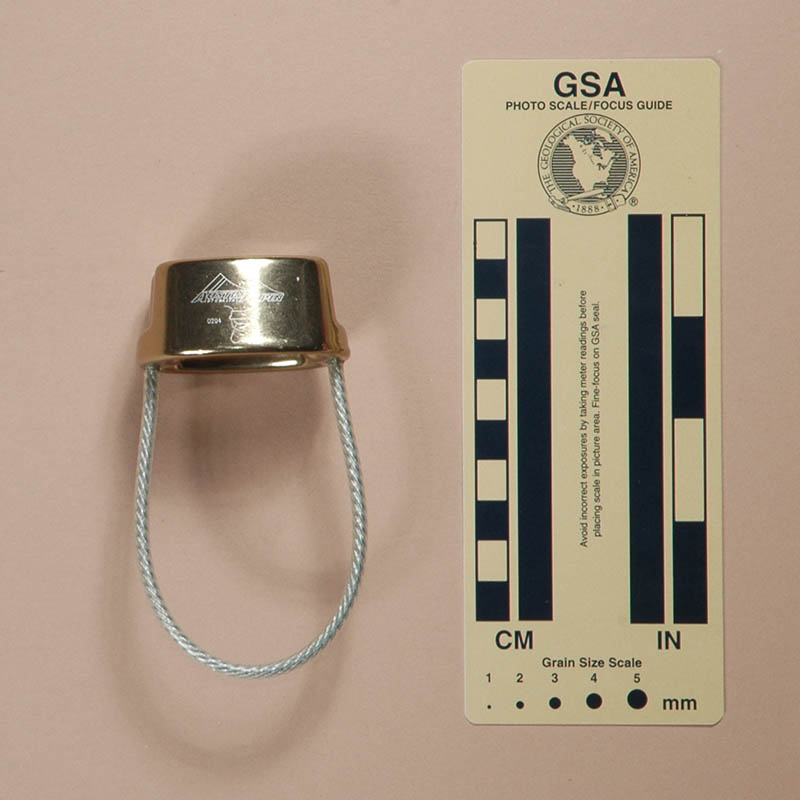
The Singing Rock Shuttle is a notched belay tube. It is forged from aluminum alloy and then soft anodized. Mine is 74 mm. long, 39 mm. wide, 83 mm. high, and weighs 63 g. The slots are 34 mm. long and 14 mm. wide. The top of the Omega oval carabiner that I use for comparing belay tubes sits 20 mm. below the ends of the slots. The plastic-covered cable keeper is moderately flexible.
One side is printed with an up-pointing arrows in a box, "singing rock," "shuttle," and a rigging illustration. The other side is printed with a different rigging illustration that shows the guide mode, a book-with-an-"i" icon, and "0510."
The shuttle is more compact than most other guide-type belay tubes. The keeper is angled with respect to the slots, a feature that seems to have no advantage or disadvantage. The central rib is relieved on the bottom to facilitate getting a carabiner into the carabiner eye.
 |
 |
 |
 |
 |
[ Top | Version A | Buddy | Hornet | Shuttle ]