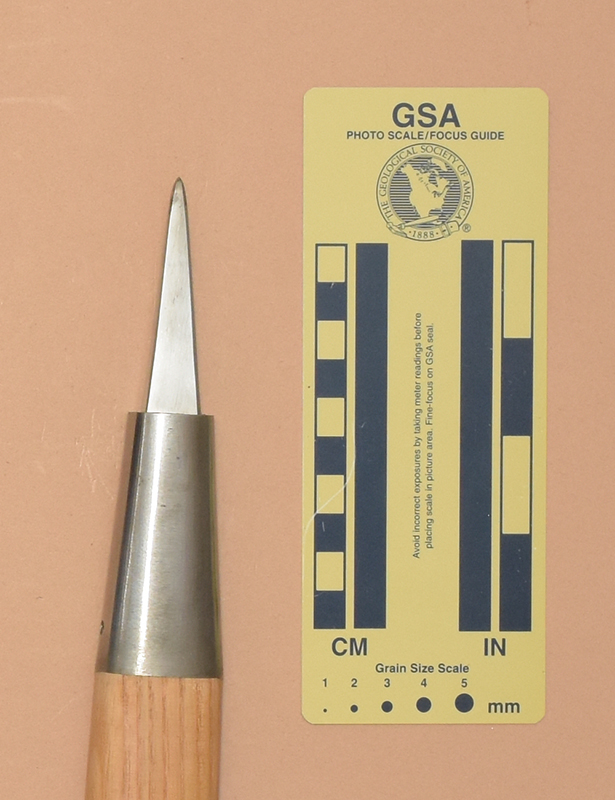
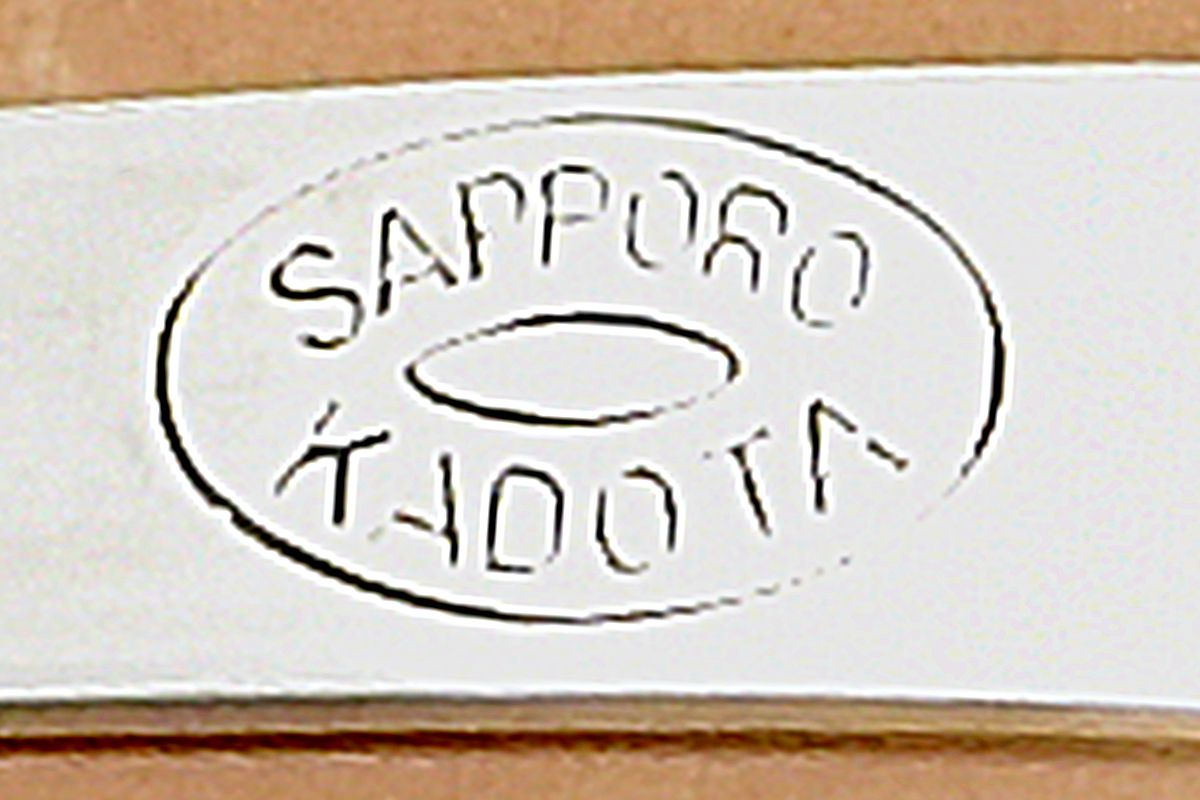
Kadota Naoma (1877-1954) moved to Sapporo in 1922 where he opened his Kadota Iron Works, making agricultural products. In 1929 a student, Koichi Wakuda, brought in a pair of crampons and asked him to make a duplicate pair. These were well-received, and the following February a sporting goods store ordered 50 sets. Wakuda returned in July 1930 with a Schenck ice axe and asked for four copies. Naoma and his son Kadota Shigeru (1910-1998) filled the order, producing the first Kadota ice axes.
In 1937 outside investors launched Kadota Tool Manufacturing with Naoma as president. Two years later and tired of the executives, Shigeru resigned. Naoma was forced out shortly afterward. Quality declined, and Kadota ice axes and crampons gained an inferior reputation.
Shigeru resumed crampon production in Kotonni in March 1940, but had to stop climbing equipment production in November due wartime restrictions. After the war, he resumed manufacturing agricultural machinery. Around 1947 demand for ice axes and crampons returned. In 1951 the company stopped manufacturing agricultural machinery and focused on making ice axes and crampons.
Shigeru welcomed Tadashi (1932-1992) as his craftsman. Tadashi married into the Kadota family in 1959. The two continued making ice axes and crampons. Around 1980 they began making metal-shafted axes with forged heads. Health issues forced them to stop around 1986. The total number of Kadota ice axes produced is unclear due to a lack of accurate records, but it is said to be around 50,000.
Ice Axes
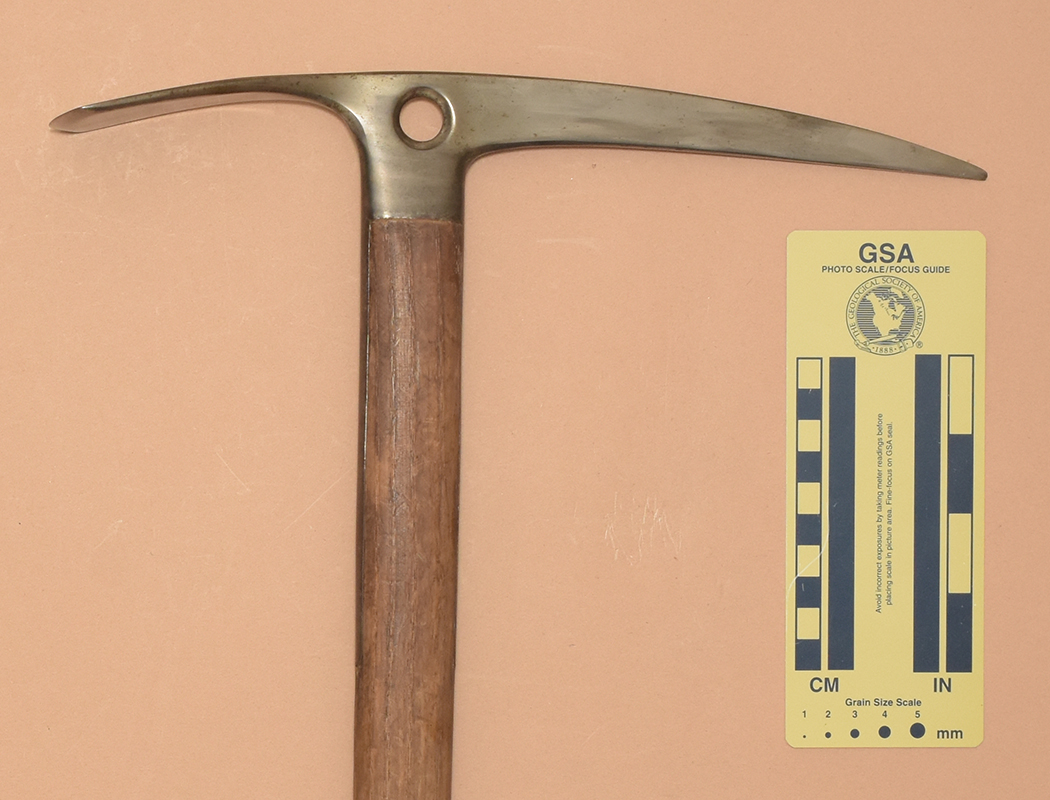
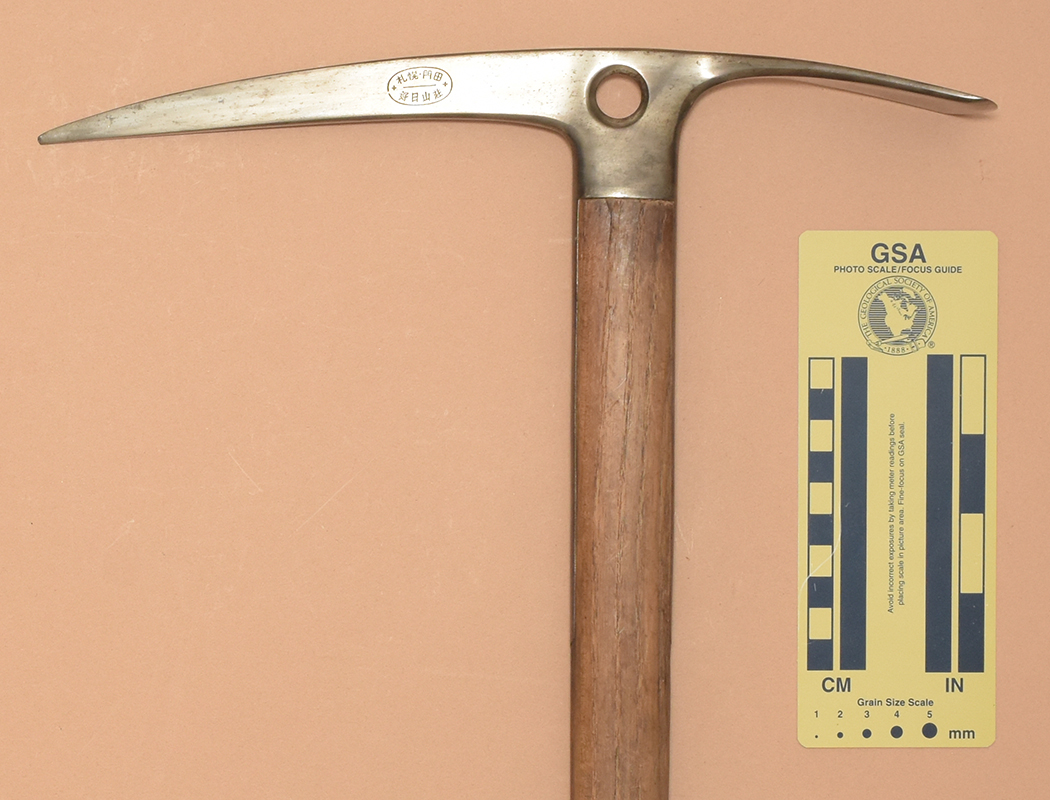
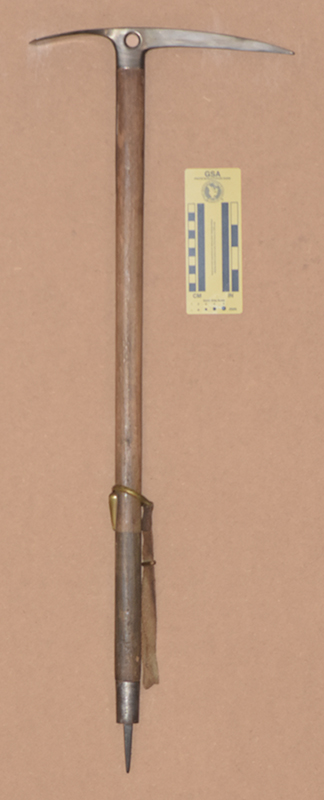
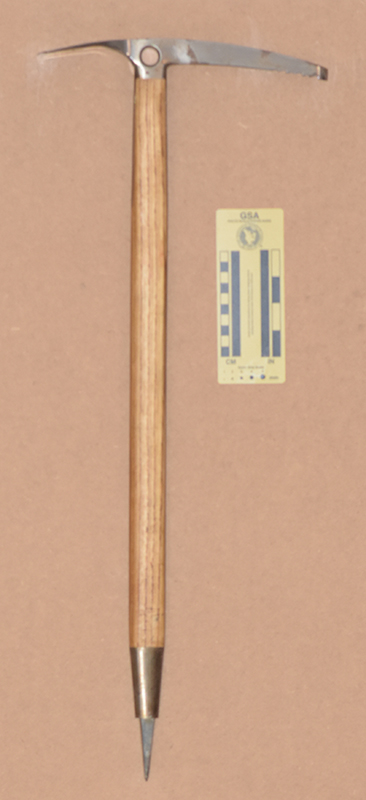
Kojitu Sanso (好日山荘)
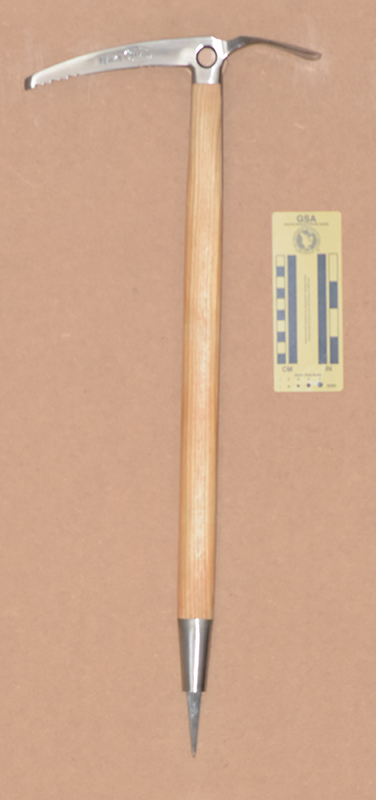
↑ 460: Kadota Iron Works Kōjitsu Sansō
- Made in Japan [1960s].
- 845x300 mm.
- Weight: 785 g.
- Wood Shaft.
- Shaft: 31x20 mm.
- Fixed Head with carabiner hole.
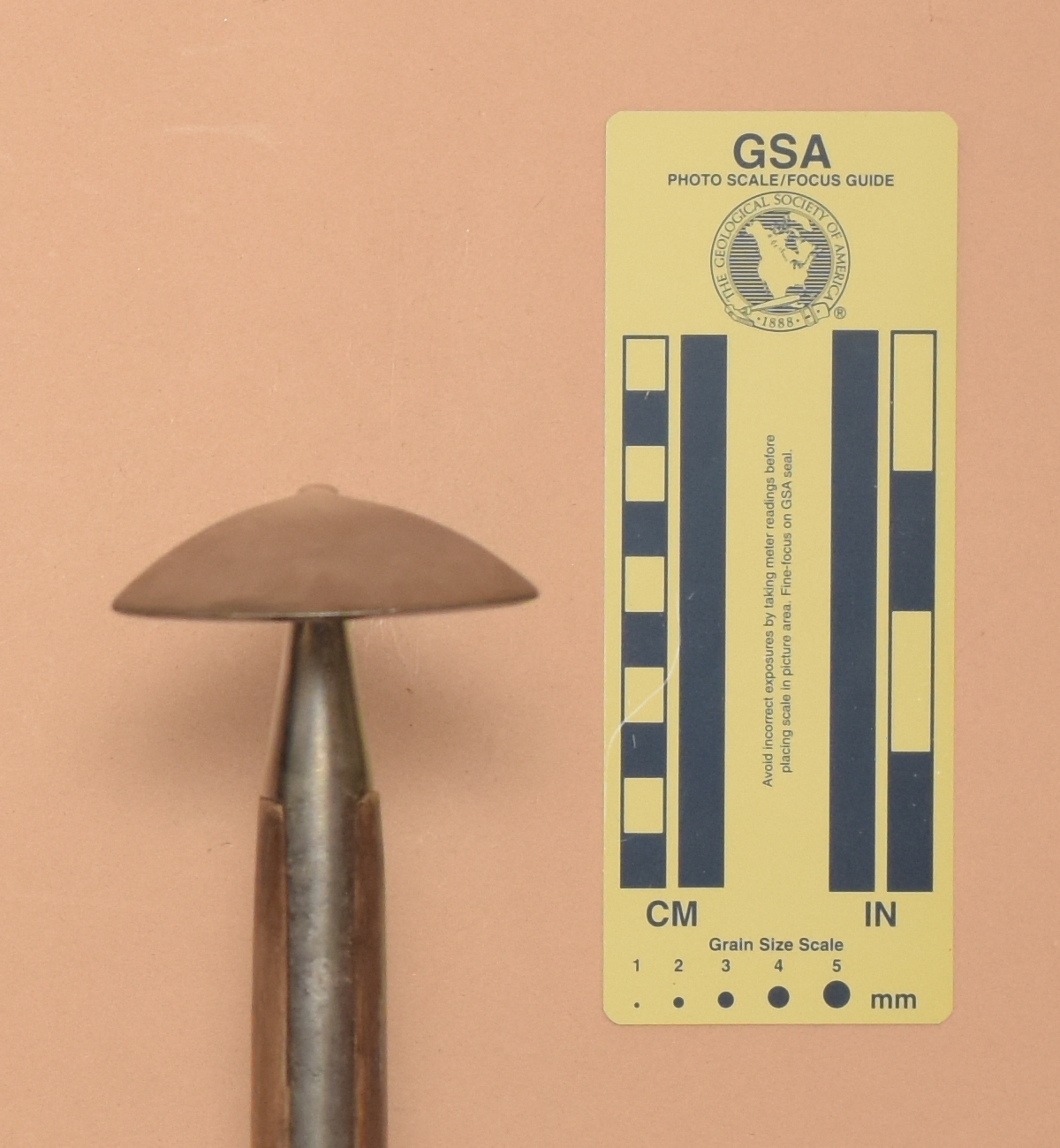
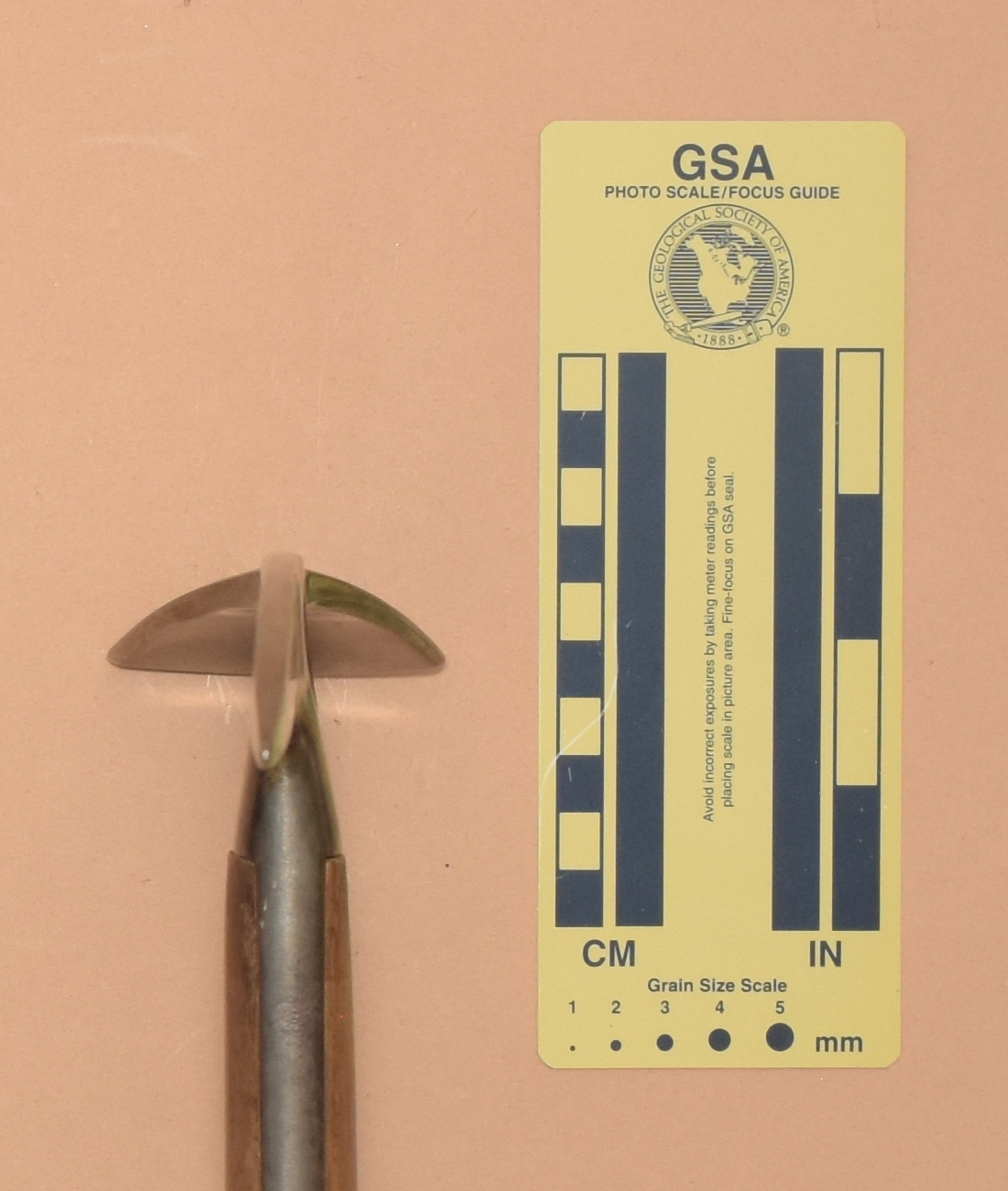
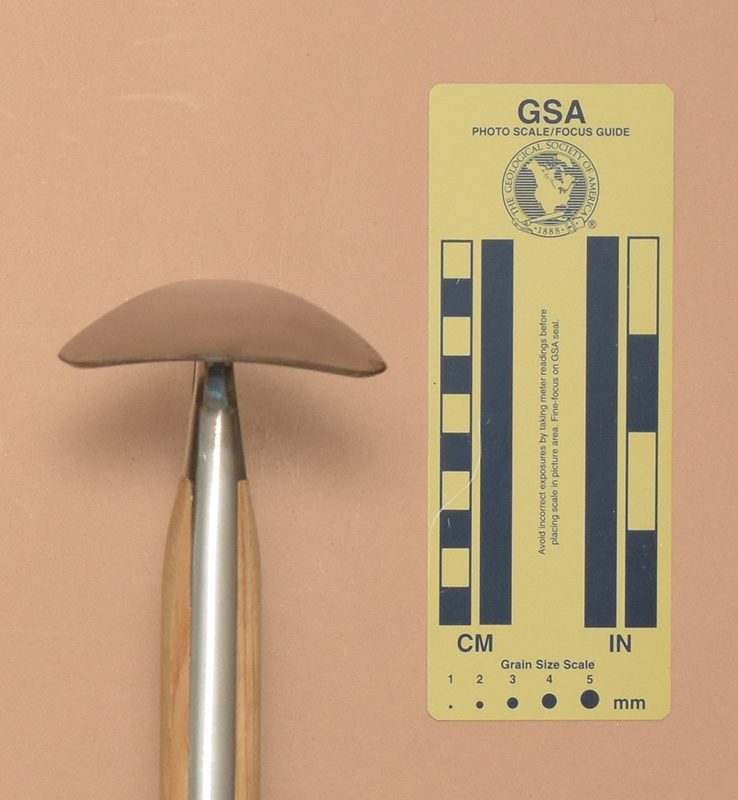
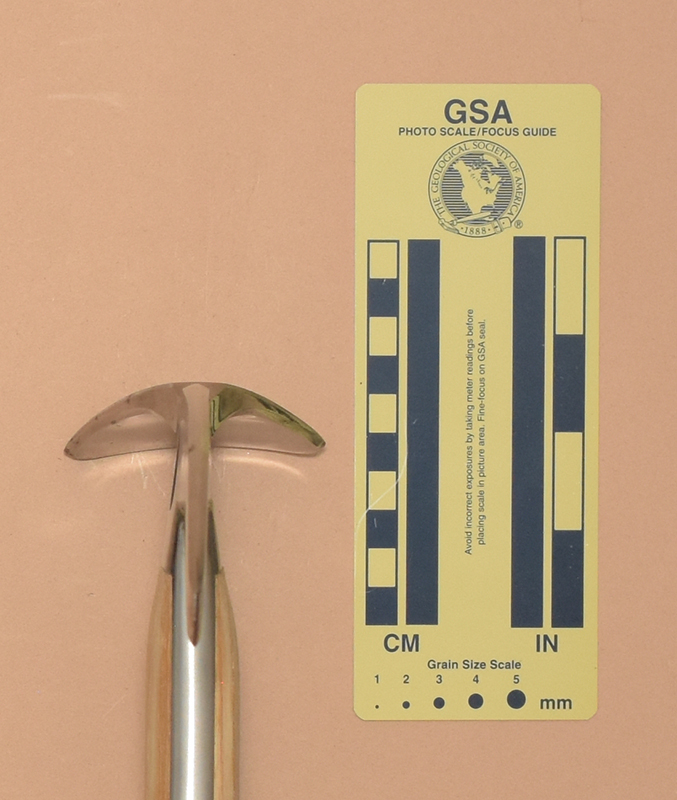
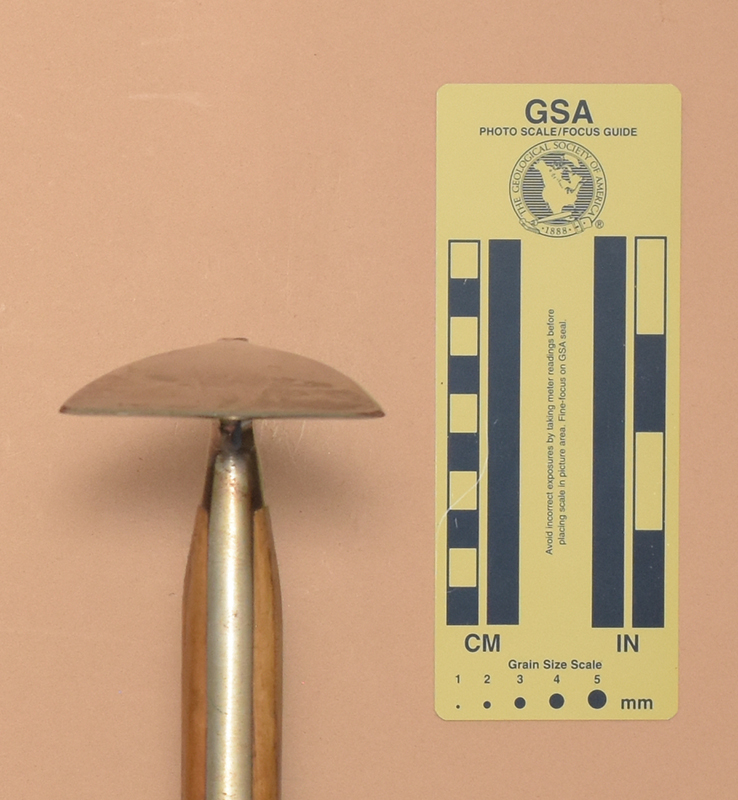
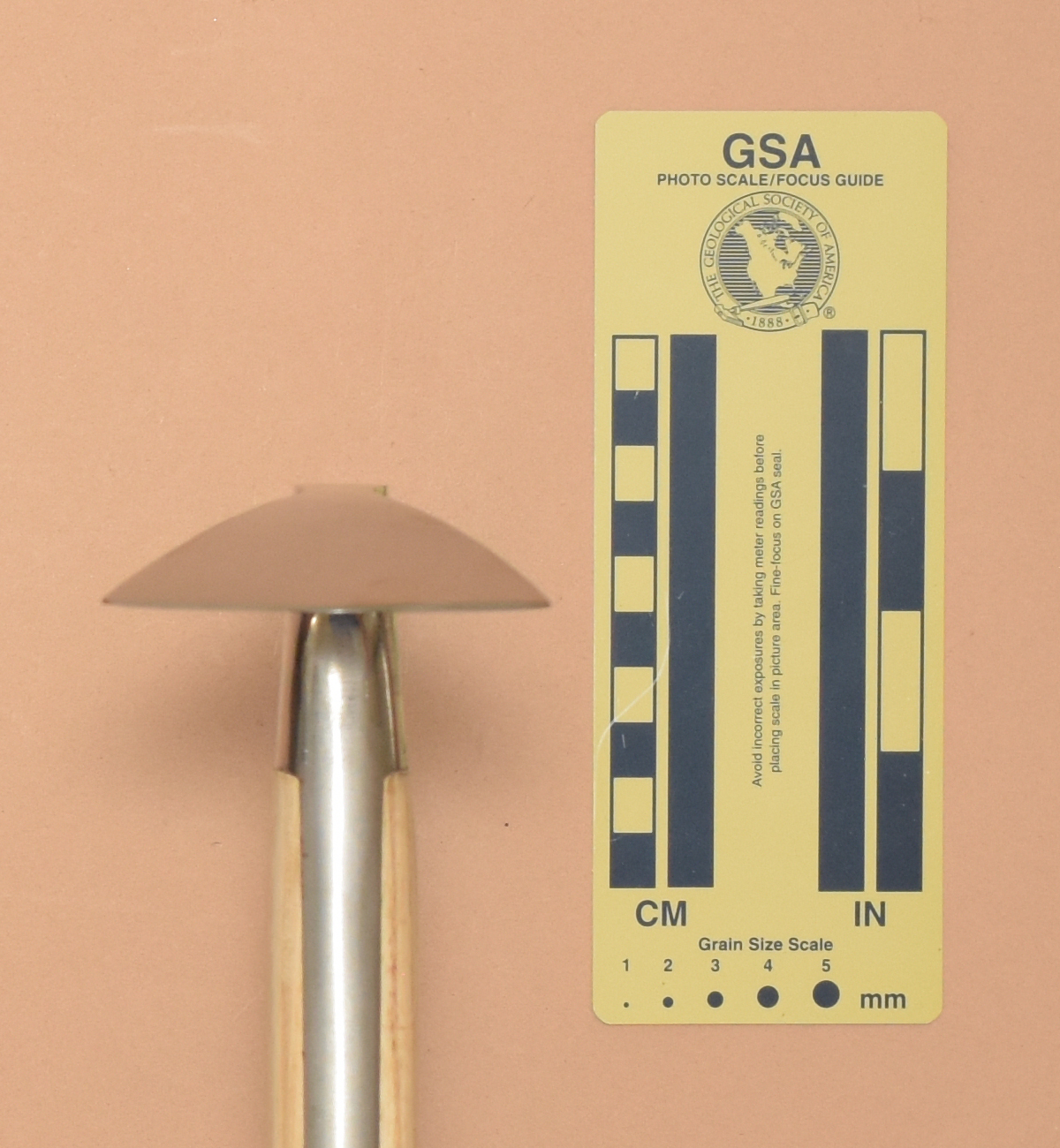
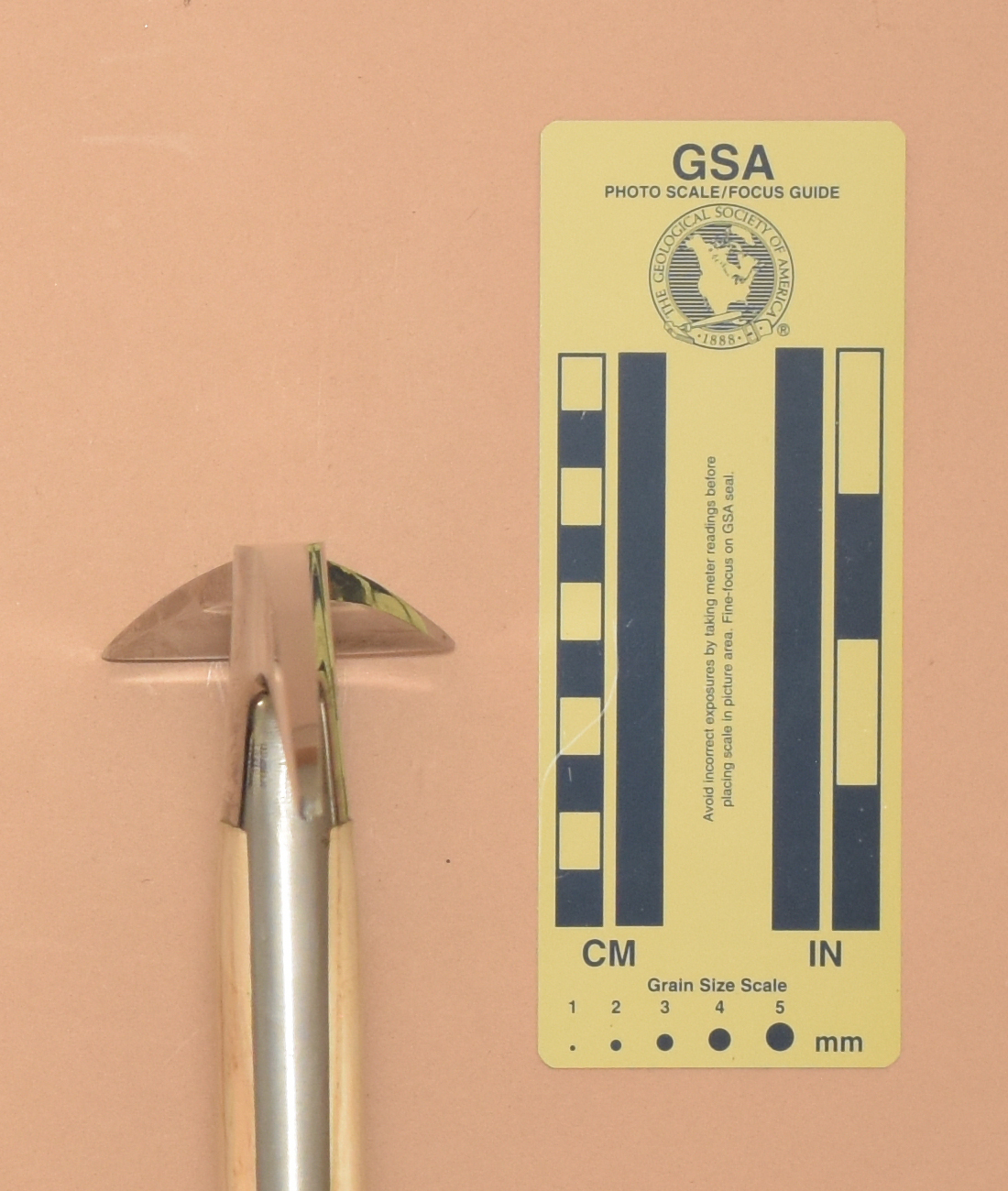
- Straight adze with a curved edge and no arch.
- Adze: 85(l)x58(w)x0(arch) mm.
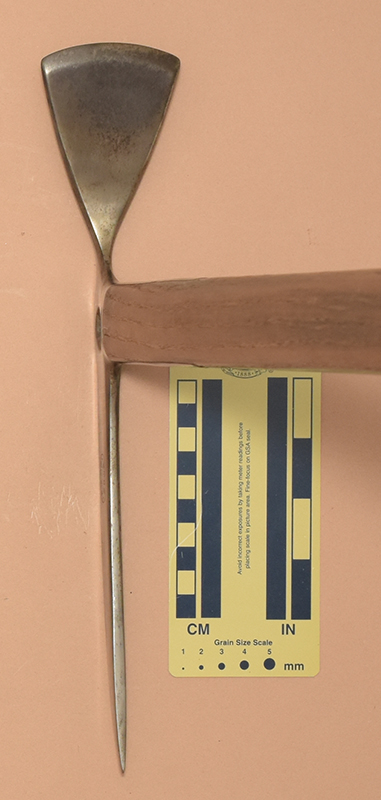
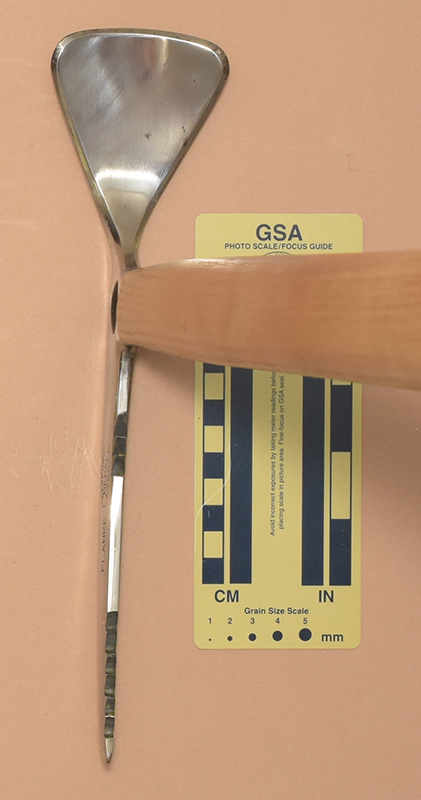
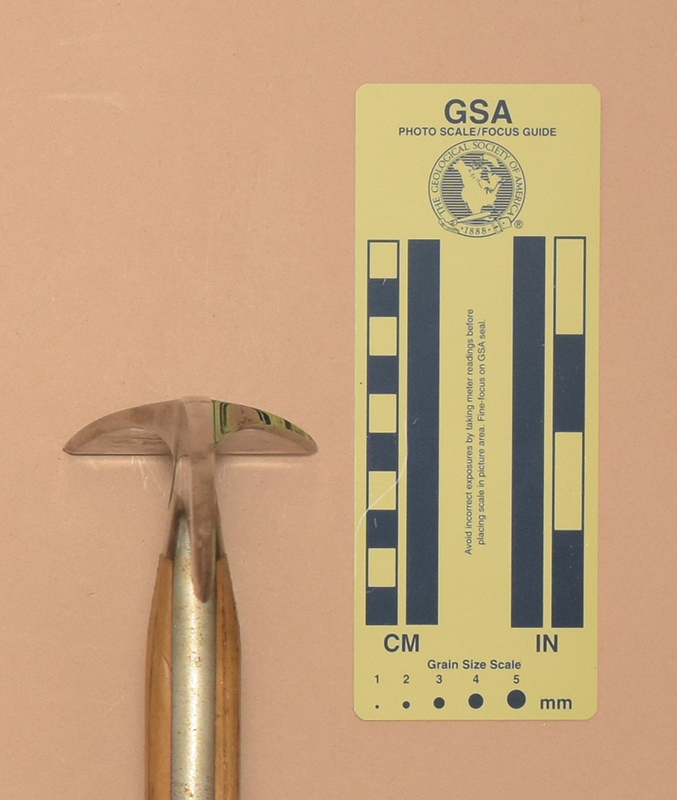
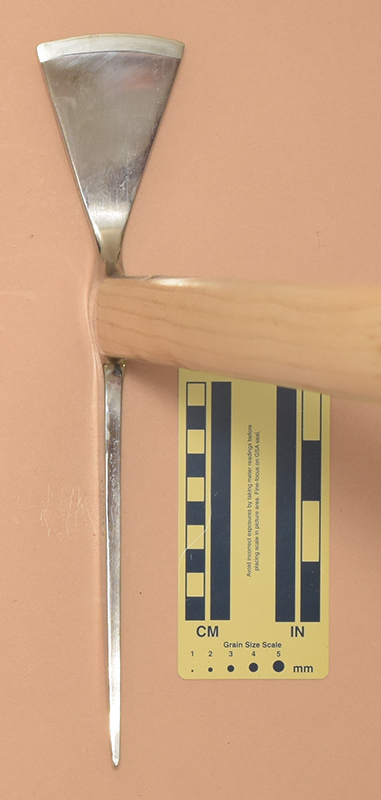
- Curved alpine pick with a pointed tip.
- Pick: 150(l)x22(h)x6(t) mm.
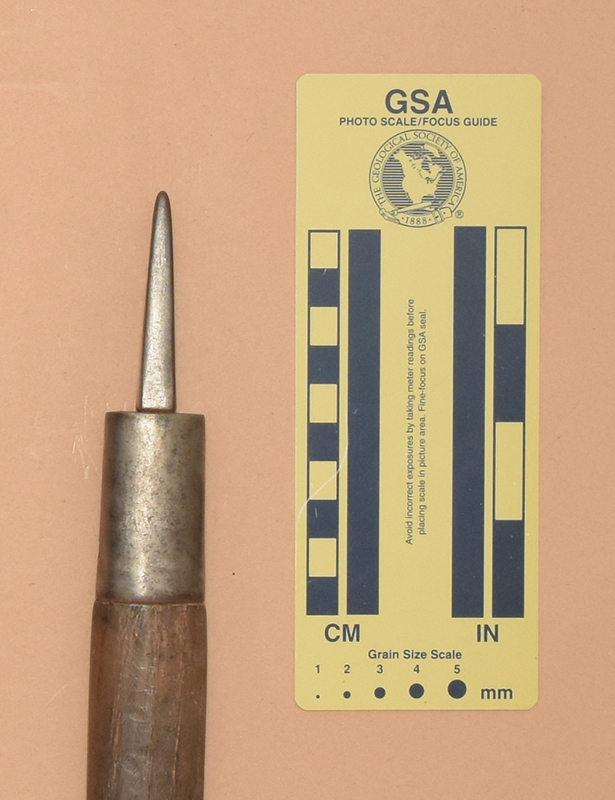
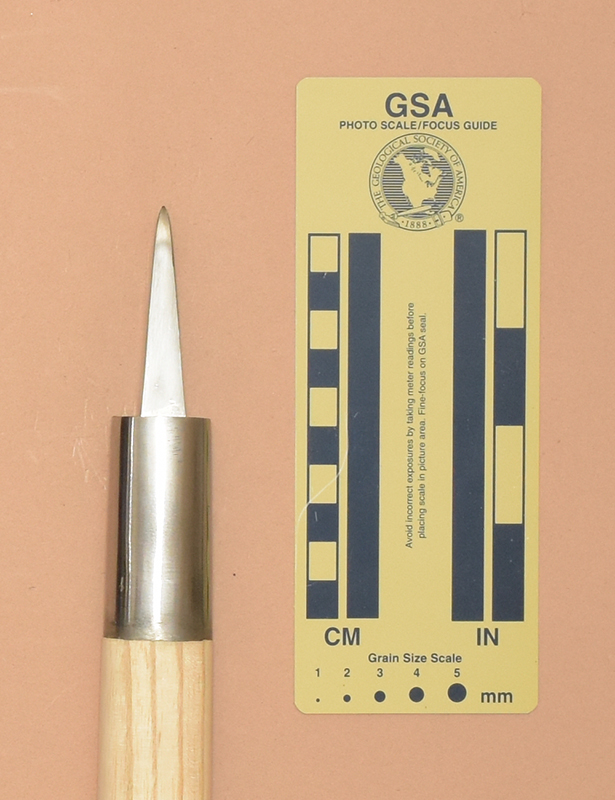
- Square spike.
- Spike: 57(l)x10(w)x10(t) mm.
- Brass glide ring with adjustable sewn cloth strap. Teardrop-shaped brass stop secured by two screws.
- Flat, sharp–cornered adze and pointed pick specialized for step cutting.
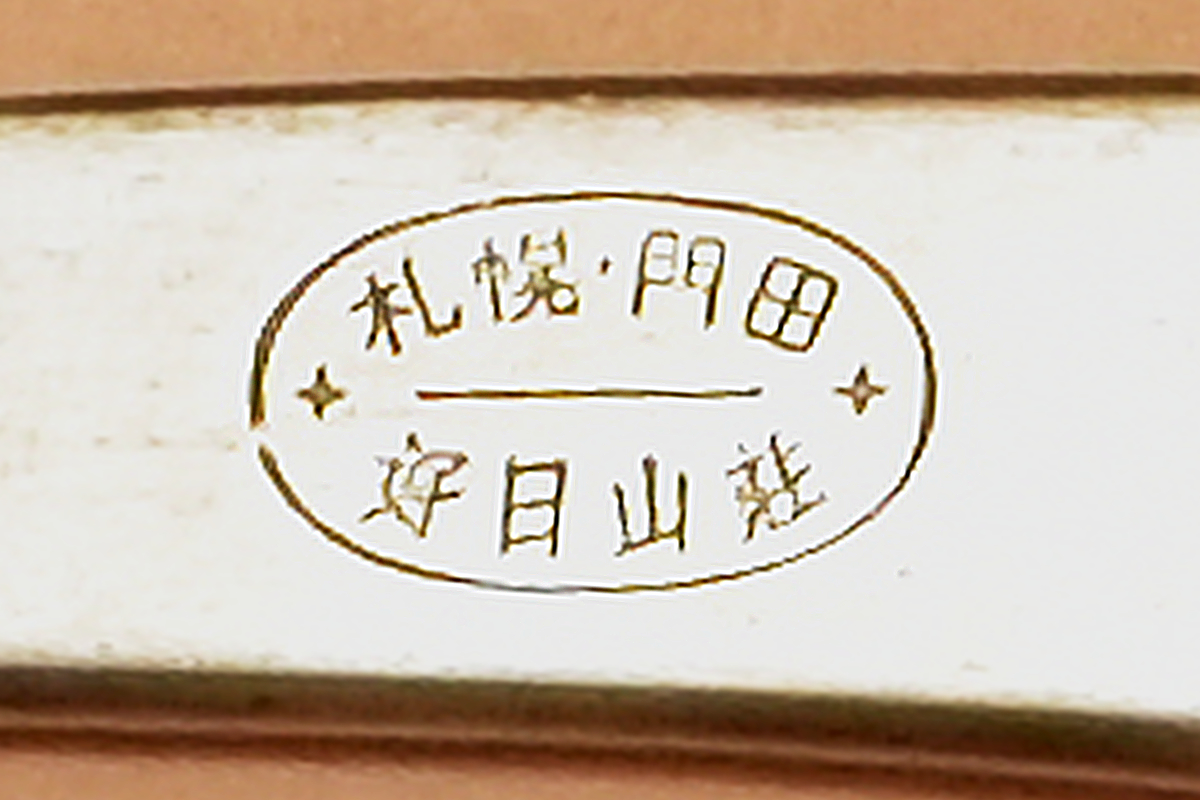
- Stamped with "札幌" (Sapporo), "門田)" (Kadota), and "好日山荘" (Kōjitsu Sansō).
- Kadota wholesaled products stamped with the logos of various climbing stores.
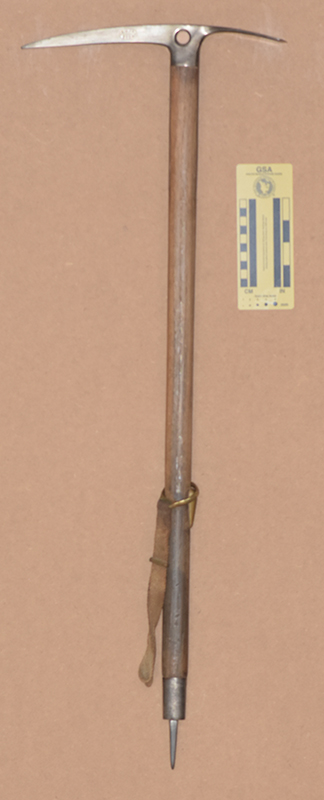
Kojitsu Sanso is a general specialty store for mountaineering, climbing, and outdoor equipment. Founded in 1924, they still operate.
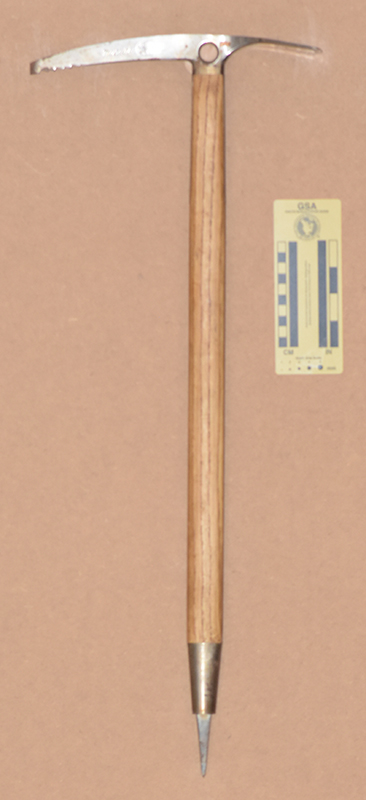
↑ 364: Kadota Iron Works Kōjitsu Sansō
- Made in Japan [1960s].
- 750x275 mm.
- Weight: 785 g.
- Wood Shaft.
- Shaft: 35x23 mm.
- Fixed head with carabiner hole.
- Straight adze with a straight edge and no arch.
- Adze: 80(l)x62(w)x0(arch) mm.
- Curved alpine pick with a negative-clearance chisel tip and with 5 ventral teeth near tip, 3 dorsal teeth mid-pick, and 3 ventral teeth near shaft.
- Pick: 140(l)x27(h)x6(t) mm.
- Triangular spike.
- Spike: 60(l)x14(w)x9(t) mm.
- Glide ring with canvas strap.
- Flat, sharp–cornered adze for step cutting.
- Drooped pick with aggressive dorsal and ventral teeth suitable for steep alpine ice.
- Shaft has a more rounded–rectangular cross section than most axes that use oval cross sections.
- Kadota wholesaled products stamped with the logos of various climbing stores.
Kojitsu Sanso is a general specialty store for mountaineering, climbing, and outdoor equipment. Founded in 1924, they still operate.
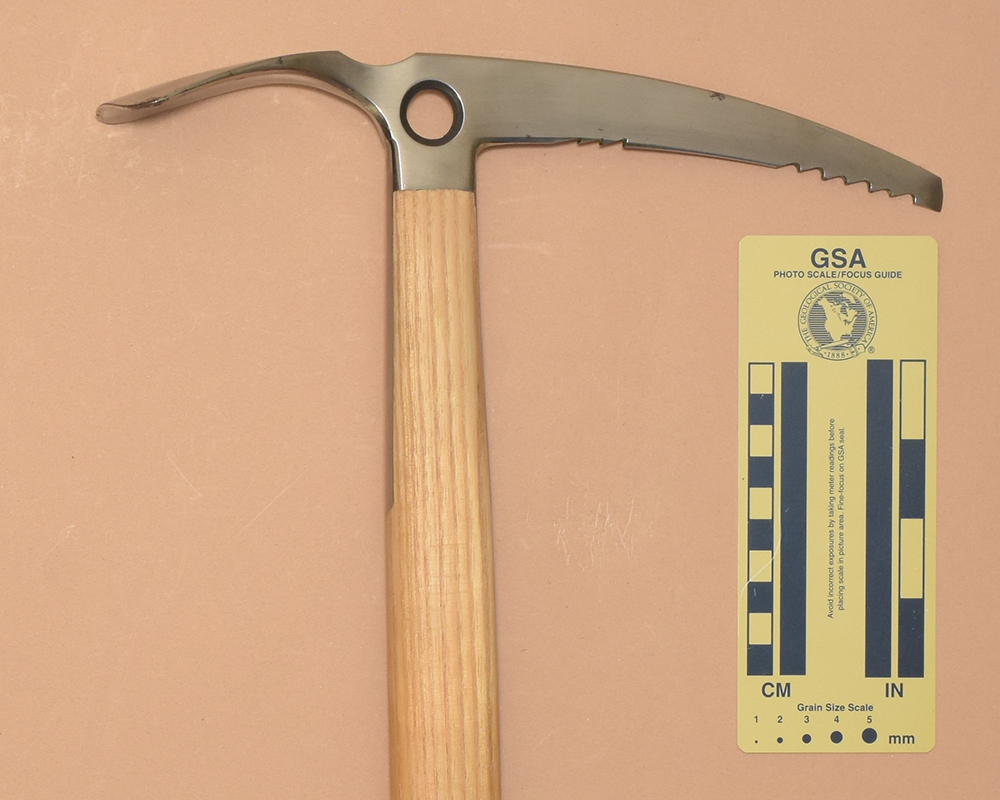
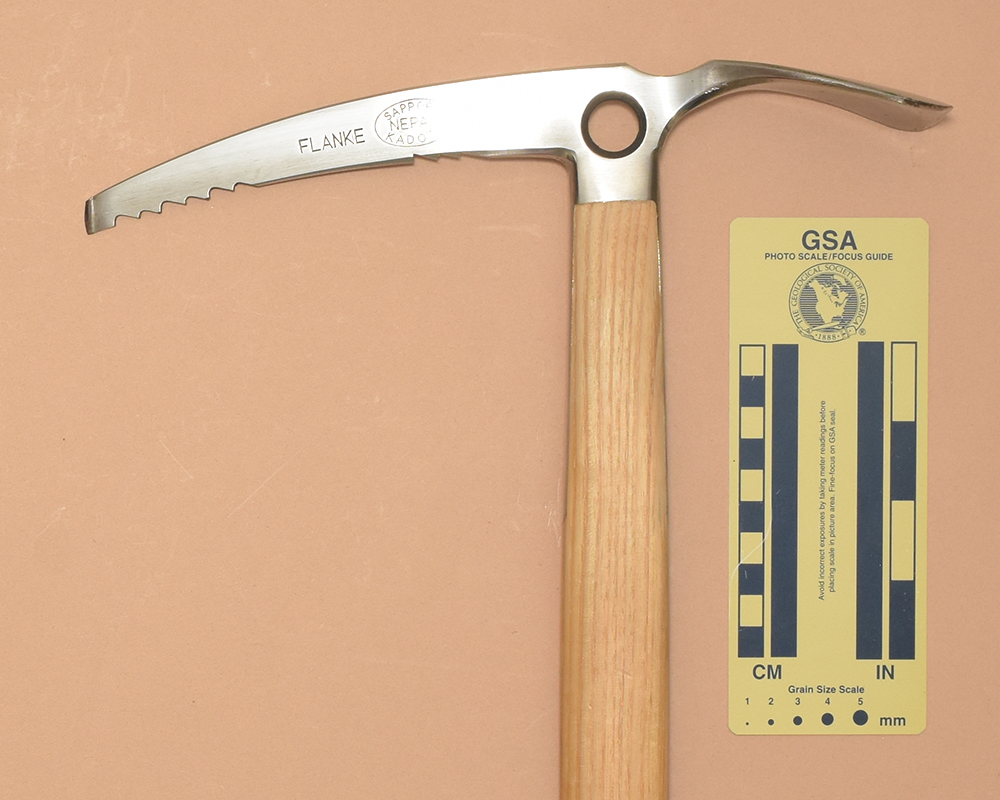
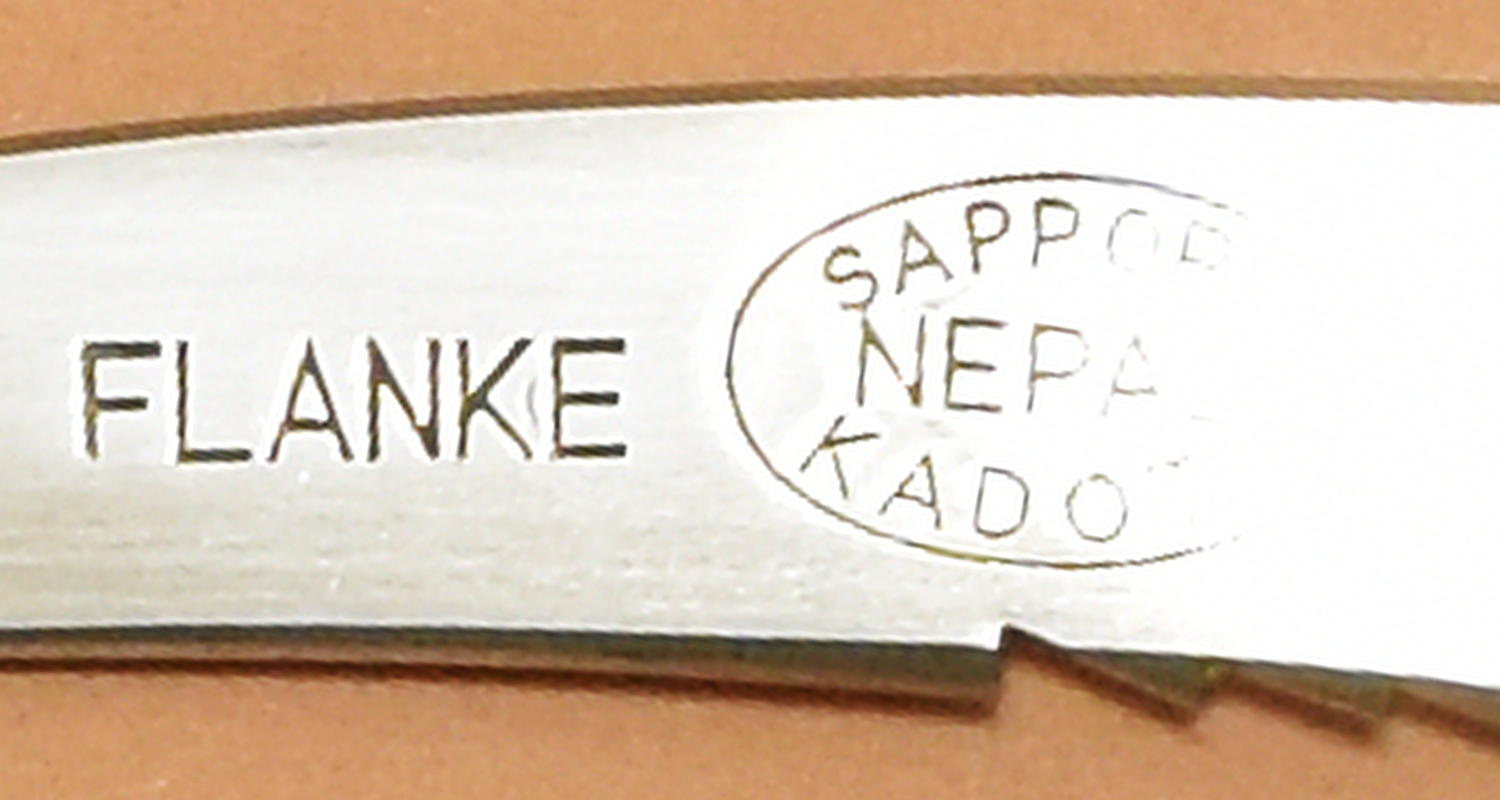
Nepal Flanke
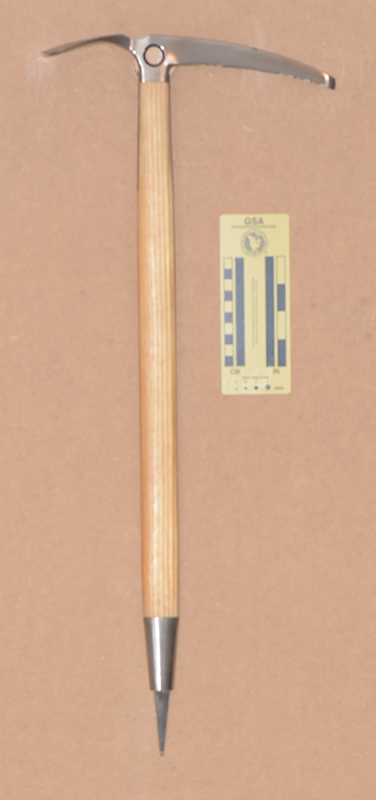
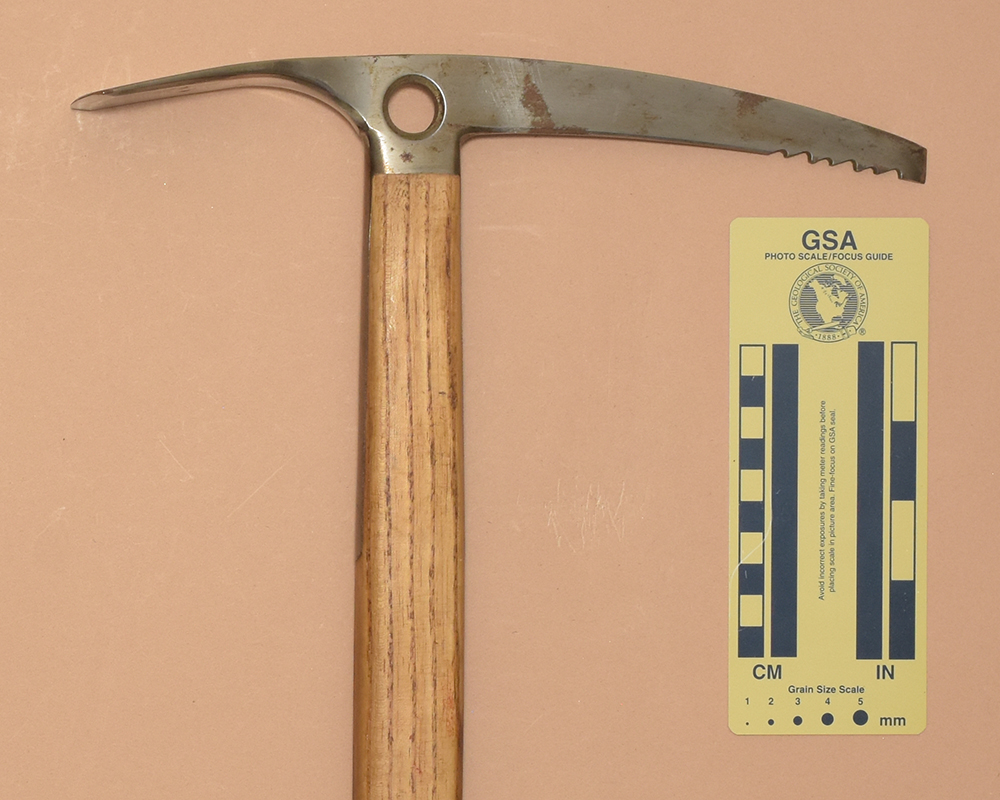
↑ 483: Kadota Iron Works Nepal Flanke
- Made in Japan [Late 1960s].
- 660x275 mm.
- Weight: 680 g.
- Wood Shaft.
- Shaft: 34x23 mm.
- Fixed head with carabiner hole.
- Curved adze with a curved edge and a moderate arch.
- Adze: 75(l)x66(w)x4(arch) mm.
- Curved alpine pick with a neutral-clearance chisel tip and with Six teeth near tip and three closer to shaft.
- Pick: 150(l)x28(h)x8(t) mm.
- Triangular plate spike.
- Spike: 61(l)x15(w)x9(t) mm.
- This is a very nicely balanced axe in near–mint condition featuring superior craftsmanship.
- The Nepal Series was a limited–production series that commanded a premium price.
- The Nepal series consisted of three distinct models: the Führer (mountain guide, ~500 sold), the Flanke (flank, ~200 sold), and the Turm (rock pinnacle, ~300 sold).
Nupuri
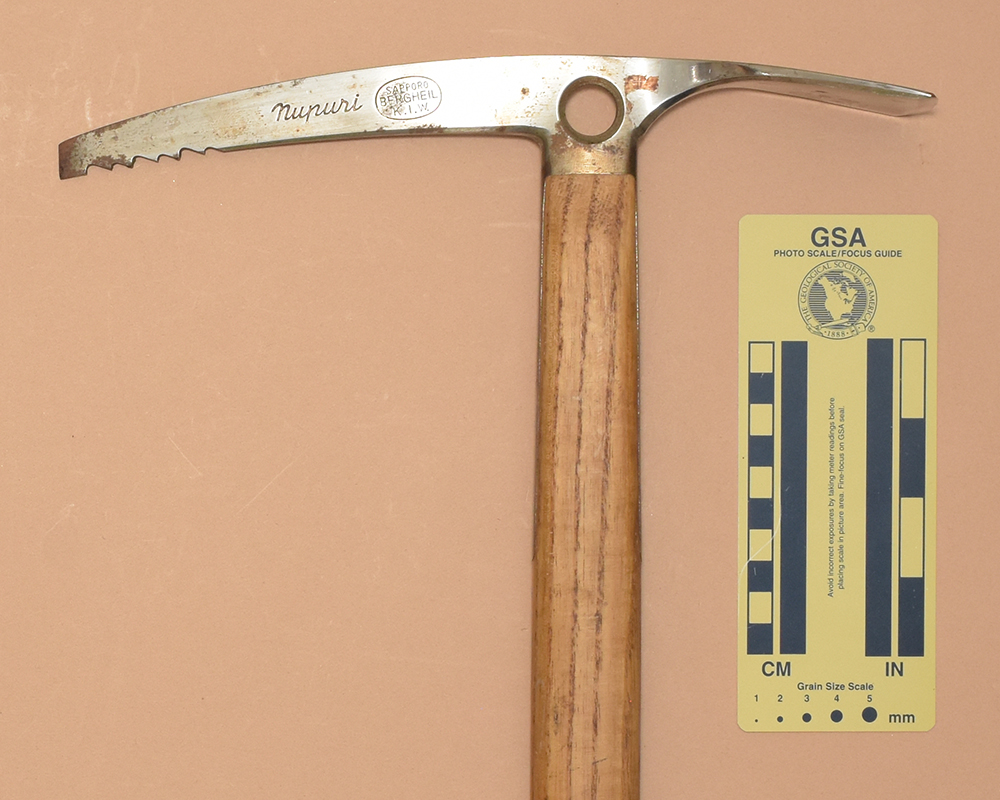
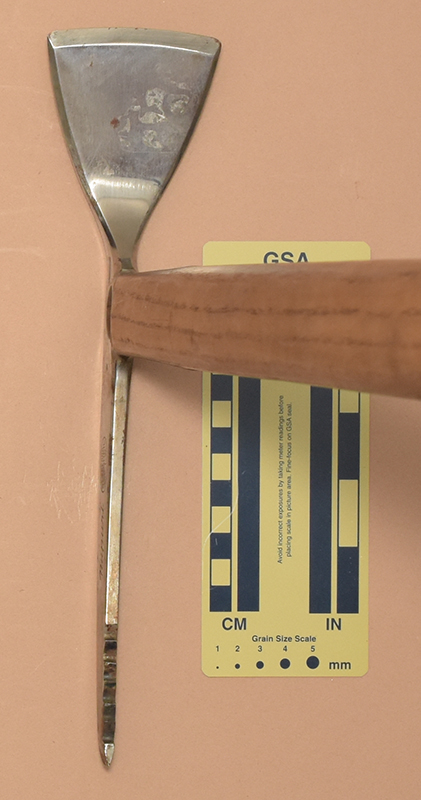
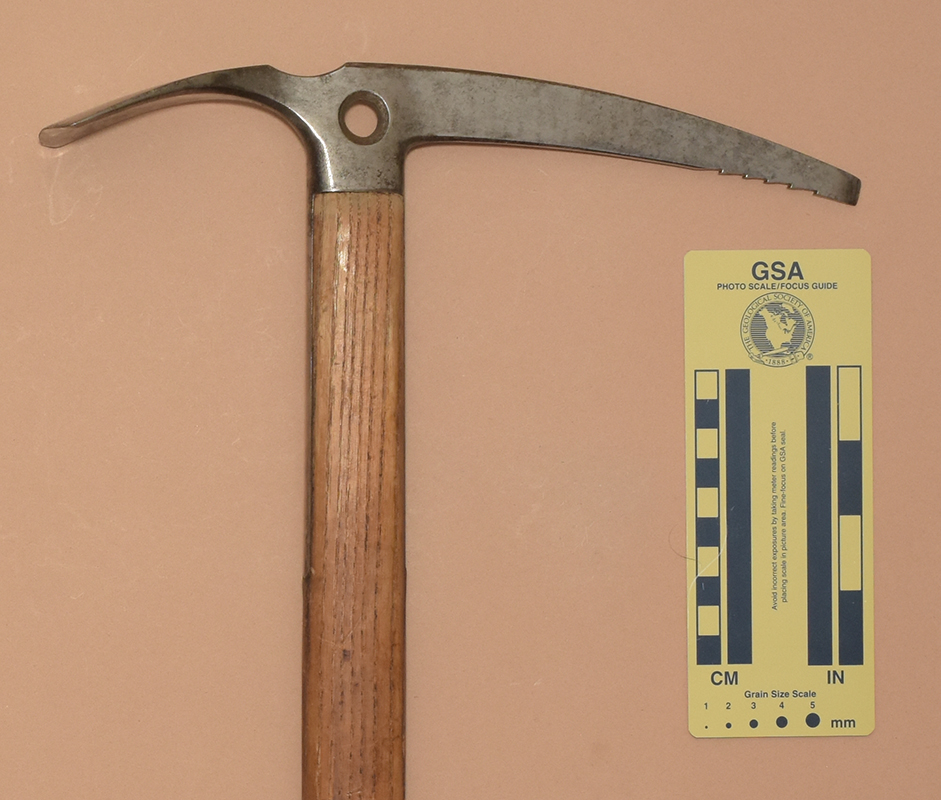
↑ 212: Kadota Iron Works Nupuri
- Made in Japan [1970s–1980s].
- 760x285 mm.
- Weight: 800 g.
- Wood Shaft.
- Shaft: 37x23 mm.
- Fixed Head with carabiner hole.
- Curved adze with a curved edge and no arch.
- Adze: 85(l)x65(w)x0(arch) mm.
- Curved alpine pick with a negative-clearance chisel tip.
- Pick: 155(l)x23(h)x7(t) mm.
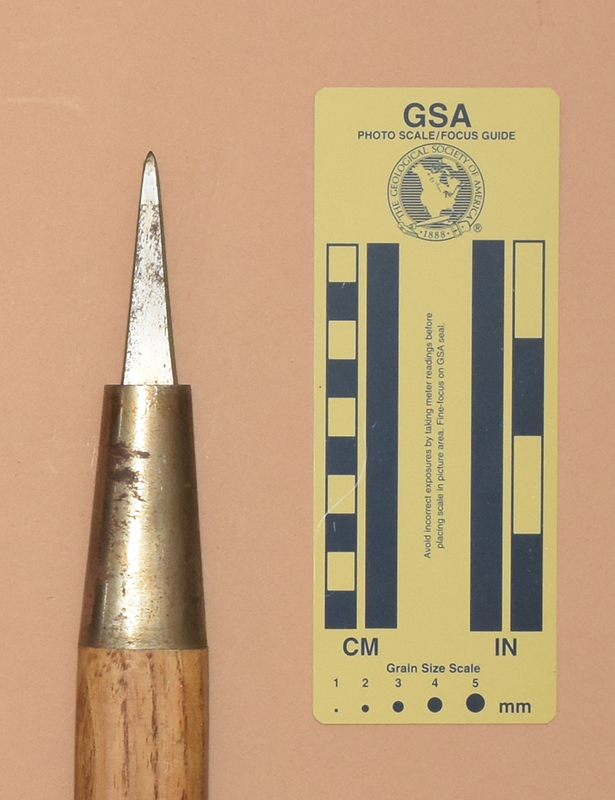
- Square spike.
- Spike: 47(l)x13(w)x13(t) mm.
- This is a nicely balanced axe with a sturdy pick.
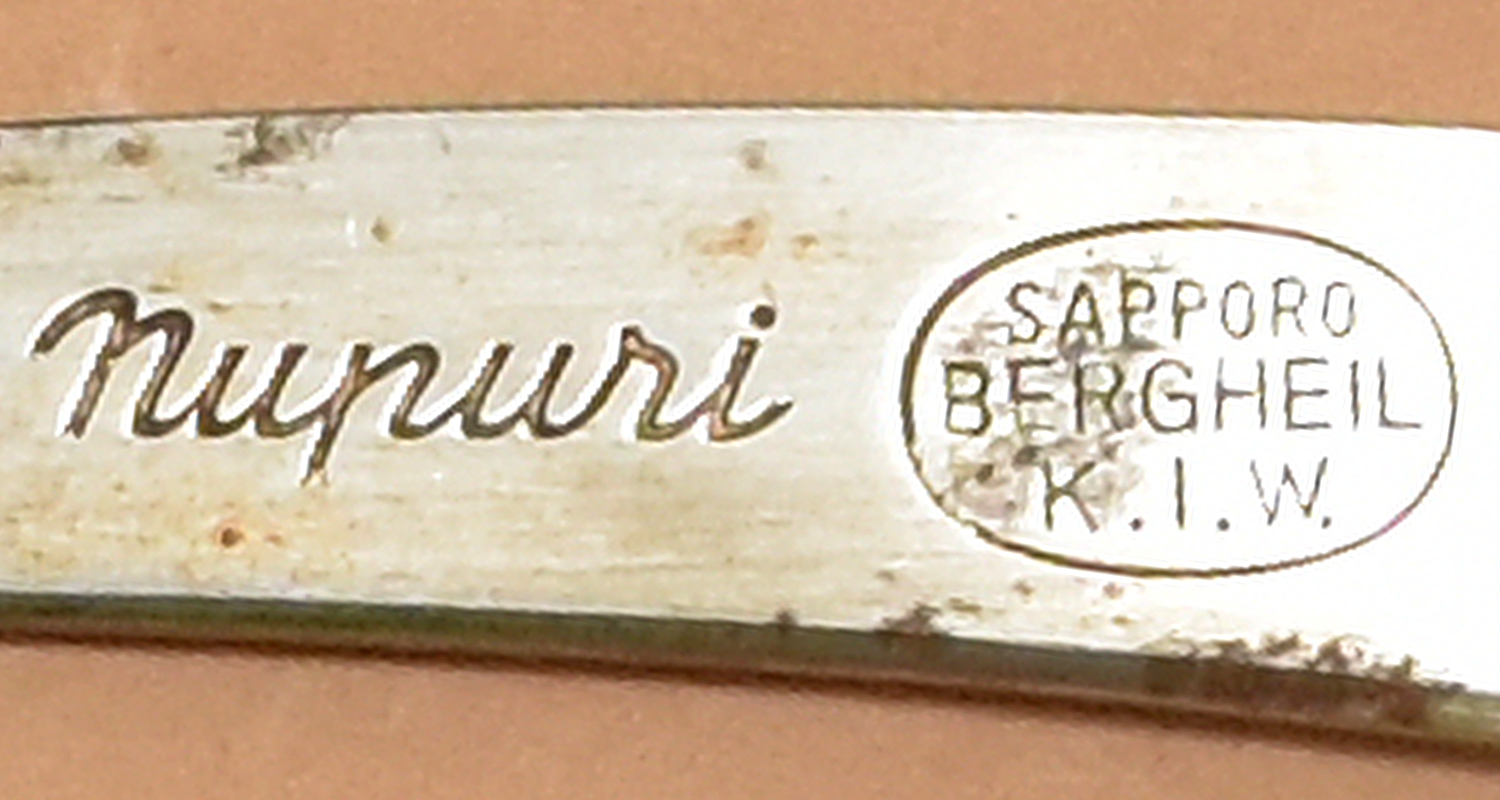
- Axes made of carbon steel were stamped SAPPORO BERGHEIL K.I.W.
- Napuri means "mountain" in the Ainu language.
↑ 484: Kadota Iron Works Nupuri
- Made in Japan [1970s–1980s].
- 700x276 mm.
- Weight: 780 g.
- Wood Shaft.
- Shaft: 35x22 mm.
- Fixed Head with carabiner hole.
- Curved adze with a curved edge and no arch.
- Adze: 80(l)x64(w)x0(arch) mm.
- Curved alpine pick with a neutral-clearance chisel tip and with 6 ventral teeth.
- Pick: 150(l)x25(h)x9(t) mm.
- Triangular spike.
- Spike: 60(l)x15(w)x19(t) mm.
- This is a nicely balanced axe with a sturdy pick.
- This axe features several improvements over Nupuri #212, suggesting this axe is a later version. Changes included a larger carabiner hole, a heavier pick, six teeth below the pick, and a triangular spike.
- Axes made of carbon steel were stamped SAPPORO BERGHEIL K.I.W.
- Napuri means "mountain" in the Ainu language.
Special
↑ 235: Kadota Iron Works Special
- Made in Japan [1960s].
- 820x300 mm.
- Weight: 815 g.
- Wood Shaft.
- Shaft: 32x21 mm. (Grip: 33x22 mm.)
- Fixed Head with carabiner hole.
- Curved adze with a curved edge and a moderate arch.
- Adze: 75(l)x65(w)x4(arch) mm.
- Straight alpine pick with a rounded tip and with 6 ventral teeth.
- Pick: 165(l)x27(h)x7(t) mm.
- Triangular spike.
- Spike: 59(l)x17(w)x9(t) mm.
- General purpose mountaineering axe with a sturdy pick that has a wider base.
- Shaft thickens toward the bottom
- Nice triangular spike gives support when bracing during traverses on moderately steep ice.
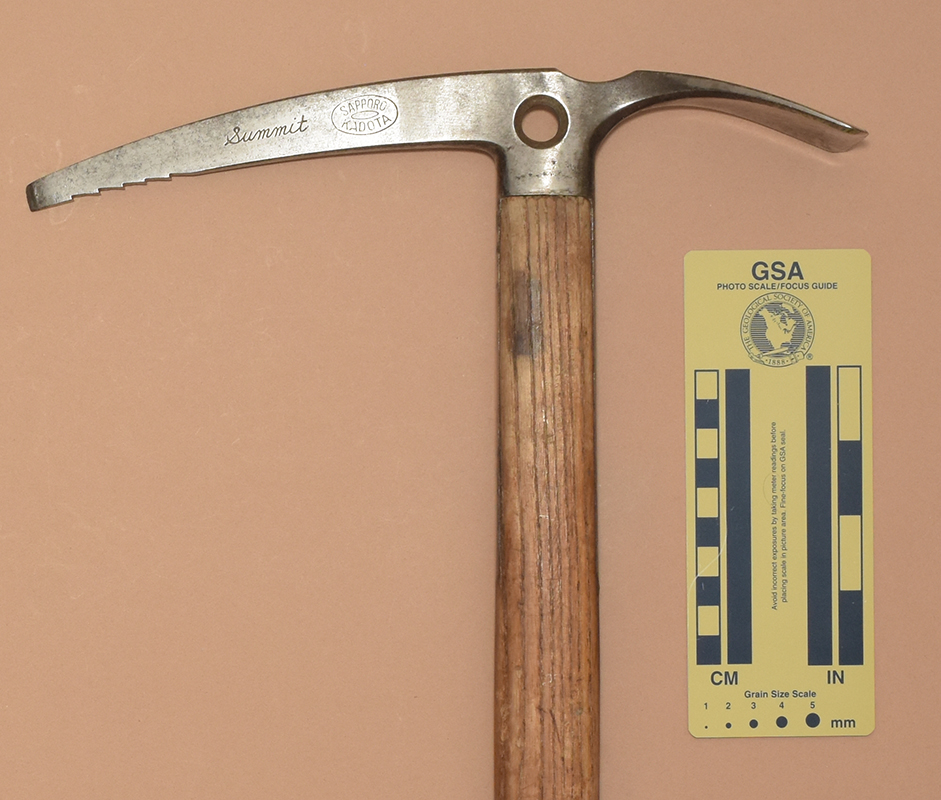
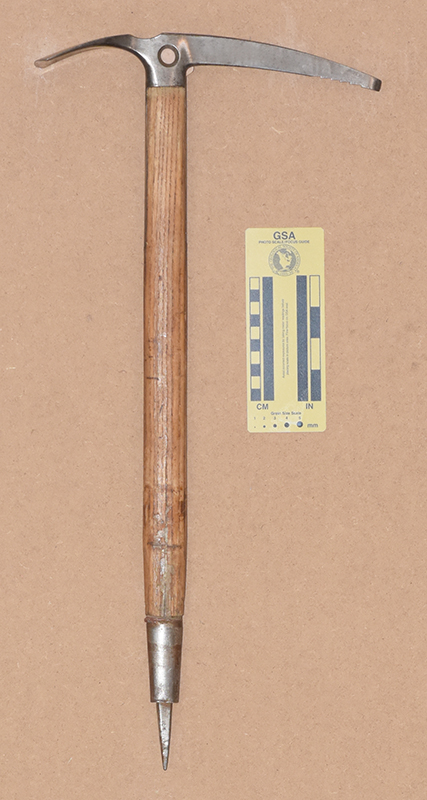
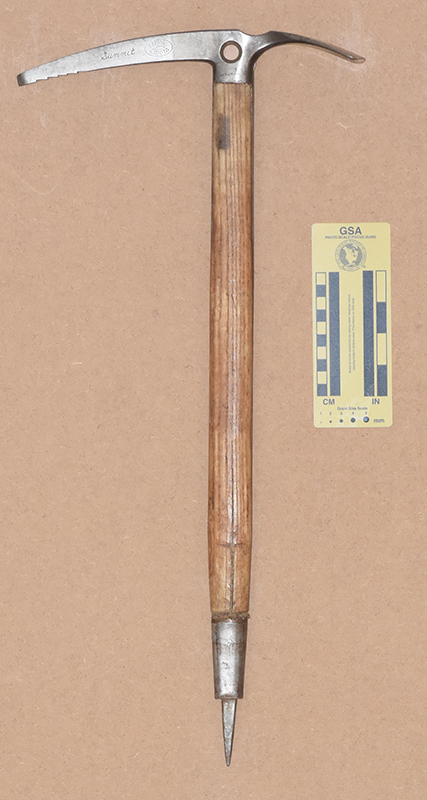
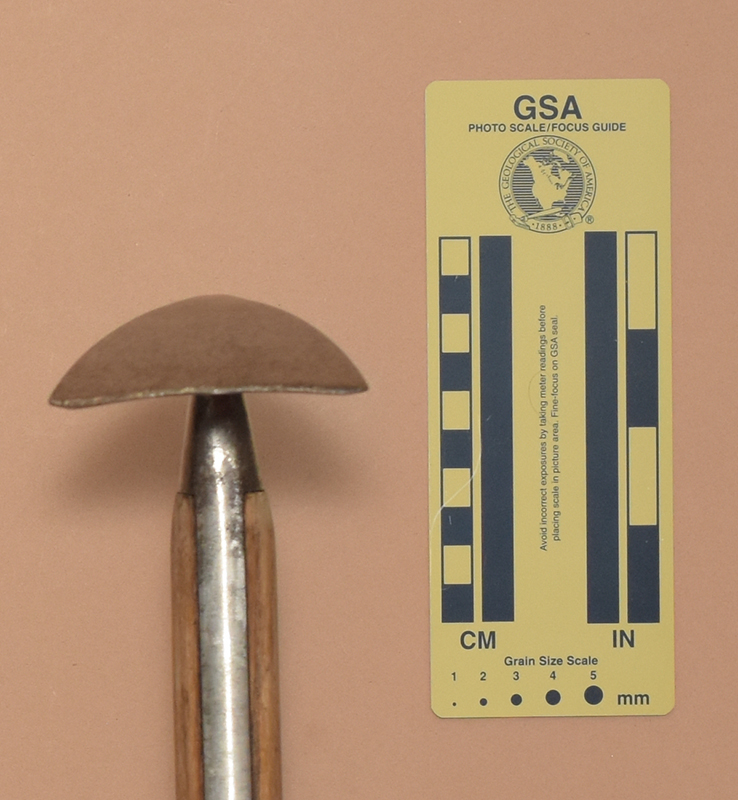
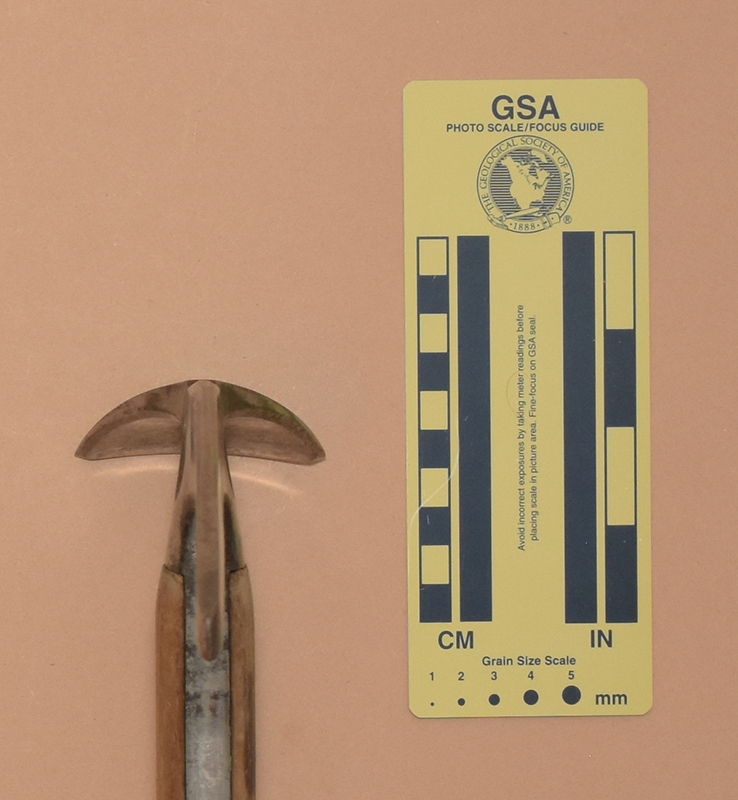
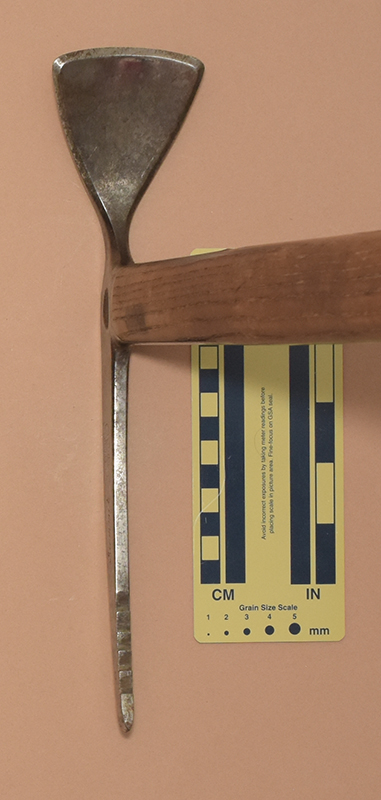
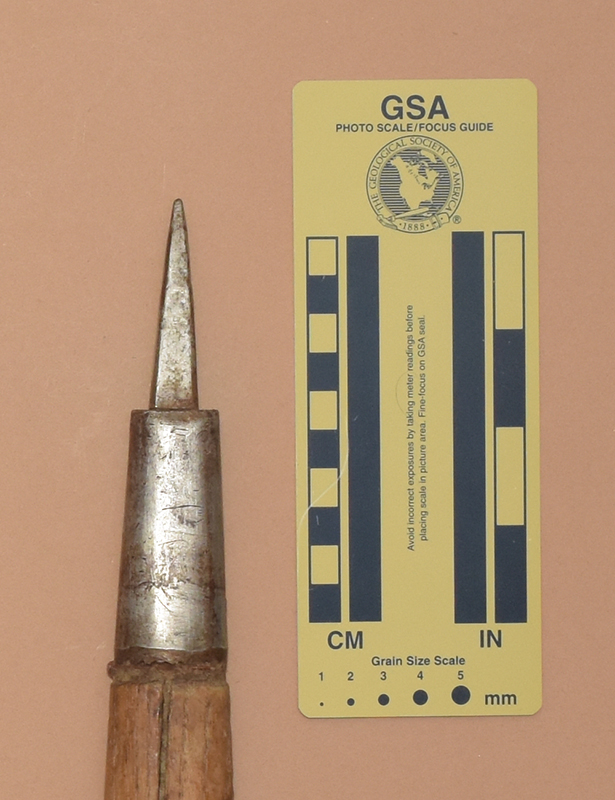
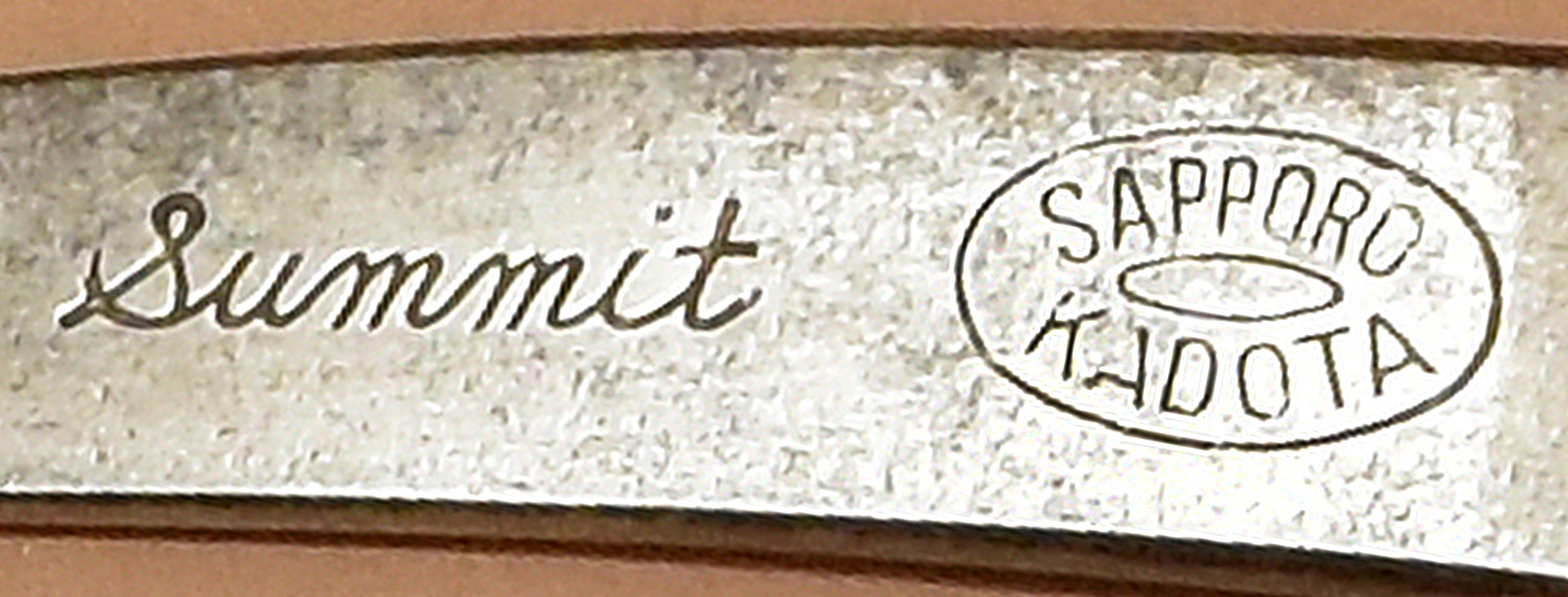
Summit
↑ 400: Kadota Iron Works Summit
- Made in Japan [1960s].
- 595x280 mm.
- Weight: 765 g.
- Wood Shaft.
- Shaft: 35x23 mm.
- Fixed Head with carabiner hole.
- Curved adze with a straight edge and a moderate arch.
- Adze: 75(l)x64(w)x3(arch) mm.
- Curved alpine pick with a negative-clearance chisel tip and with 5 ventral teeth.
- Pick: 150(l)x25(h)x8(t) mm.
- Triangular spike.
- Spike: 56(l)x12(w)x9(t) mm.
- Similar to the Napuri but with a toothed pick and more droop and lateral arch to the adze.
- Shorter shaft and changed from the Napuri make this axe more specialized for steeper terrain.
- Notch behind adze is fro draping the rope on steep ice.
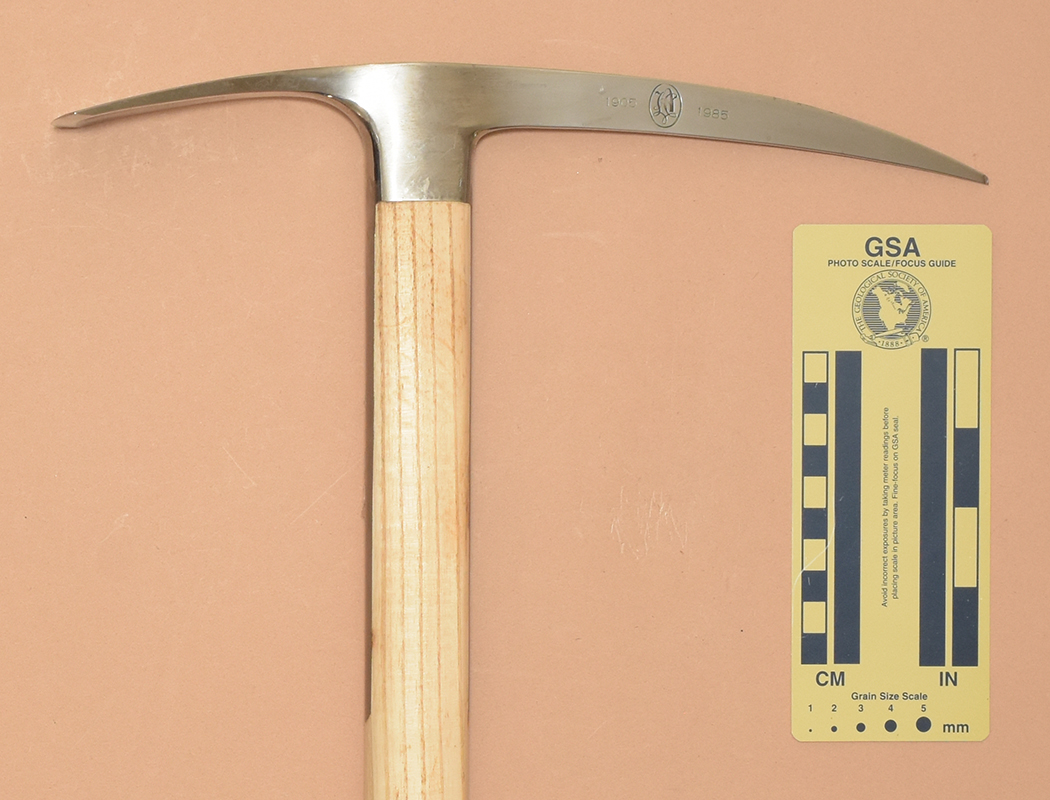
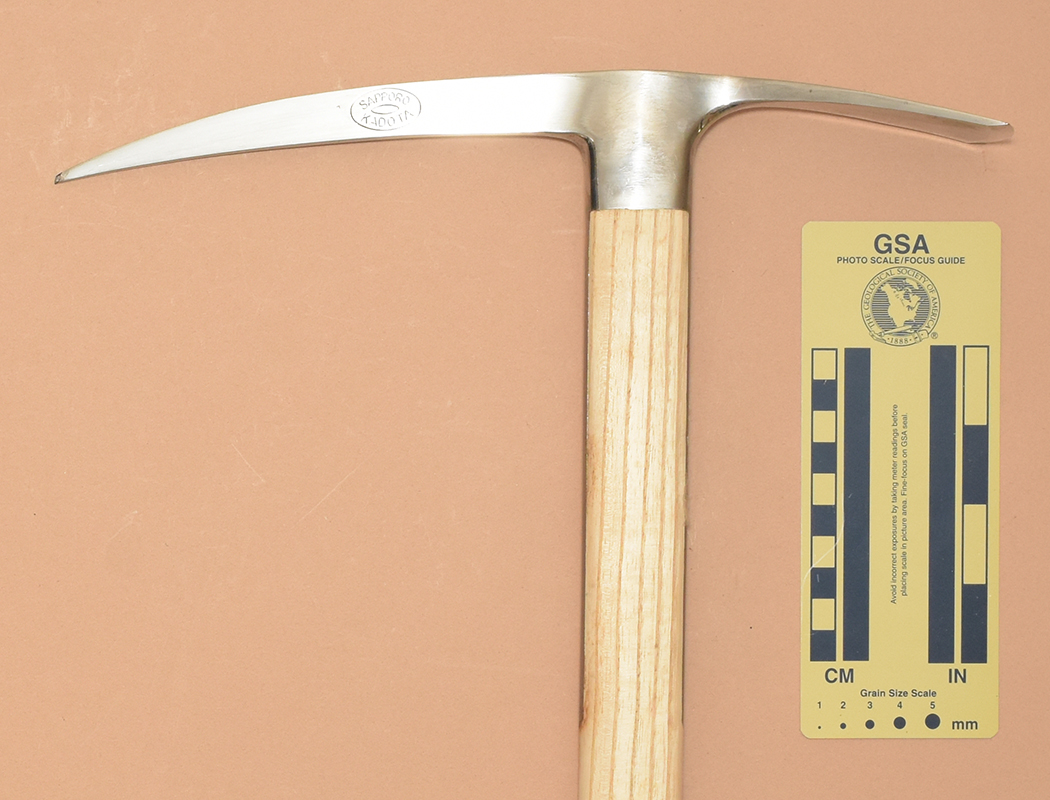
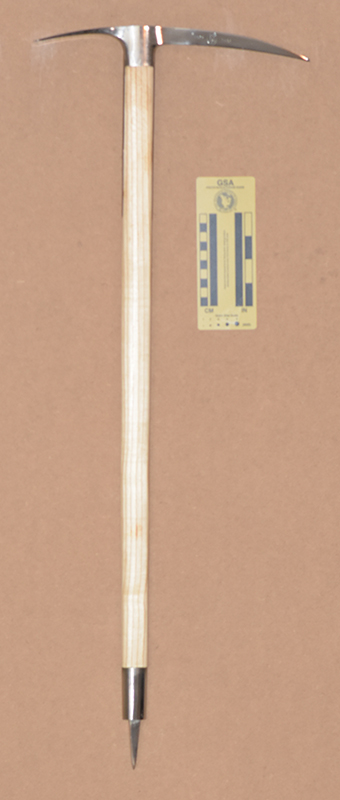
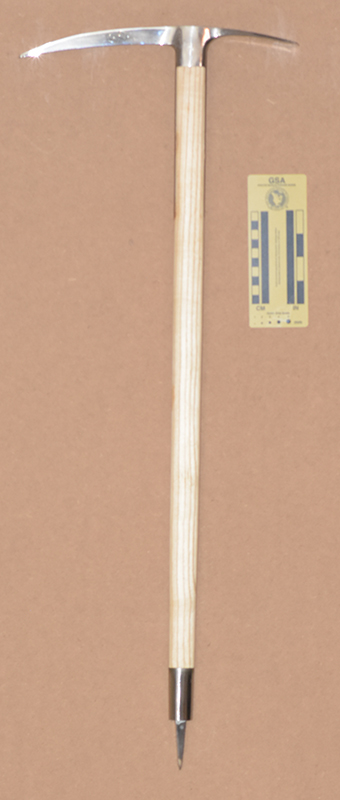
Japanese Alpine Club (日本山岳会) 80th Anniversary Commemorative
↑ 461: Kadota Iron Works Japanese Alpine Club 80th Anniversary
- Made in Japan [1985].
- 800x300 mm.
- Weight: 870 g.
- Wood Shaft.
- Shaft: 33x23 mm.
- Fixed Head.
- Straight adze with a curved edge and no arch.
- Adze: 90l)x61(w)x0(arch) mm.
- Curved alpine pick with a pointed tip.
- Pick: 160(l)x20(h)x8(t) mm.
- Square spike.
- Spike: 55(l)x12(w)x12(t) mm.
- Commemorative axe in new condition.
- Flat, sharp–cornered adze and pointed pick specialized for step cutting.
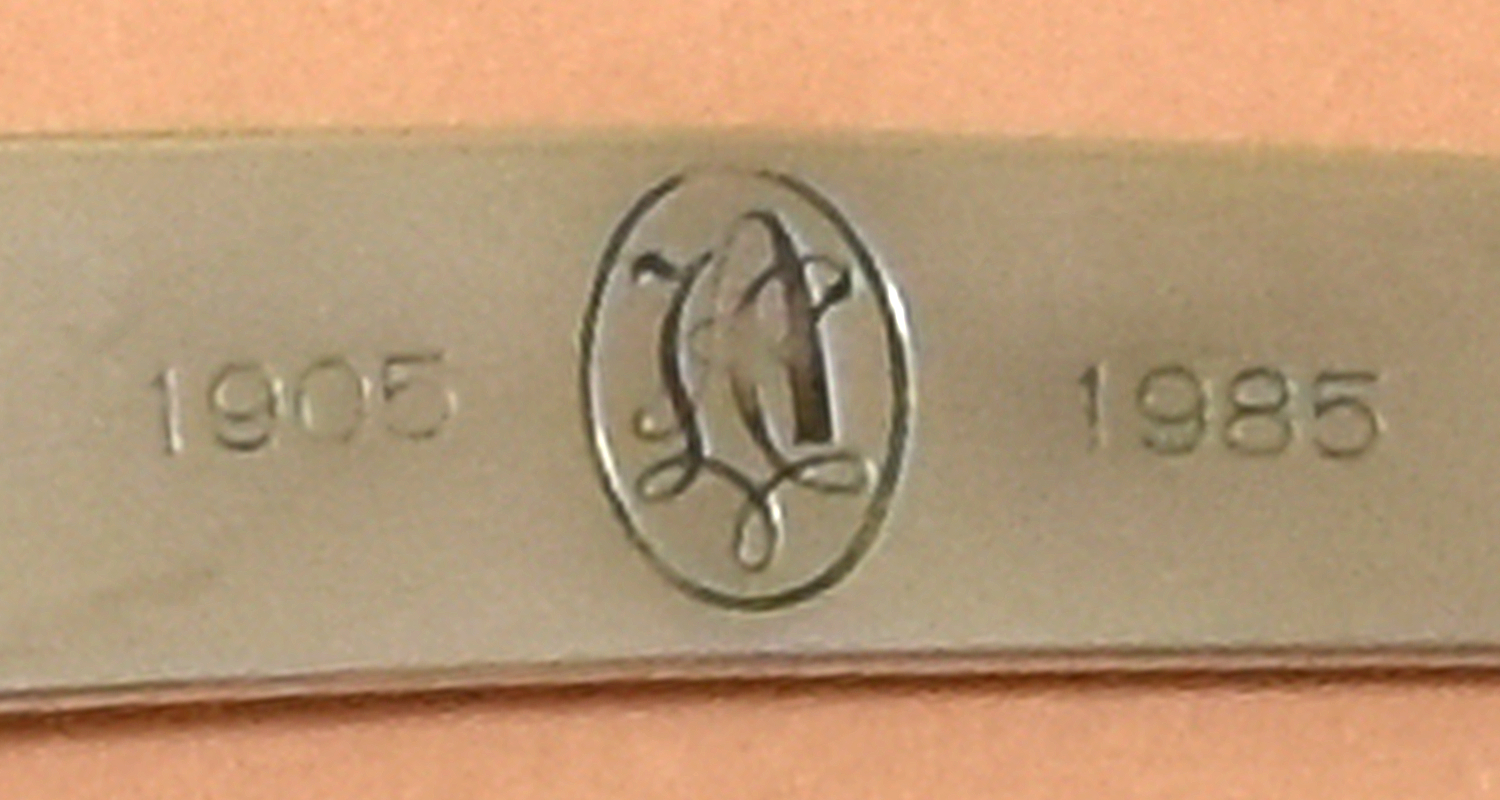
- The Japanese Alpine Club (日本山岳会) was founded in October 1905 as the first mountaineering club in Asia. The club has a special focus on expeditions and exploration of remote areas.