Technical Details
I acquired my Mammut Assist from S. Palamjot in 2026.
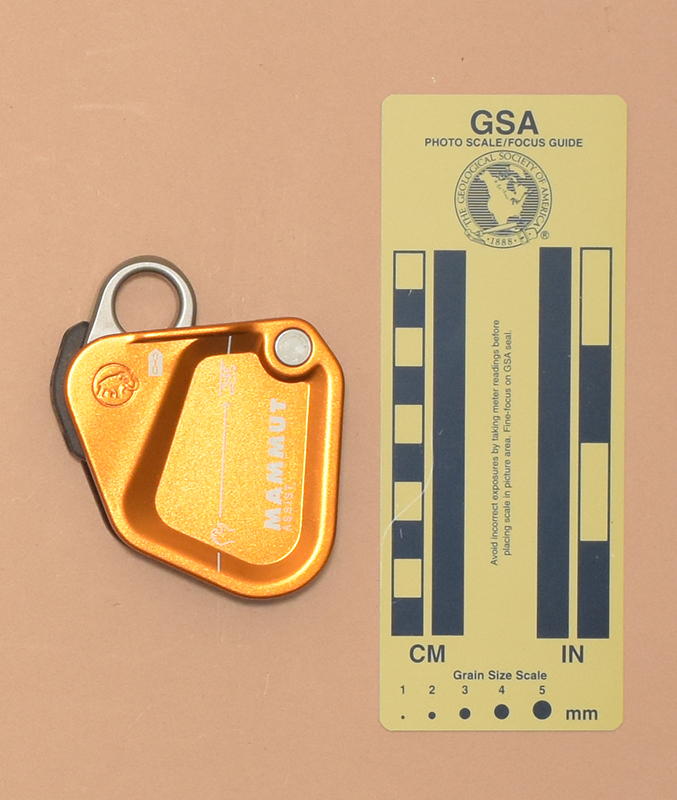
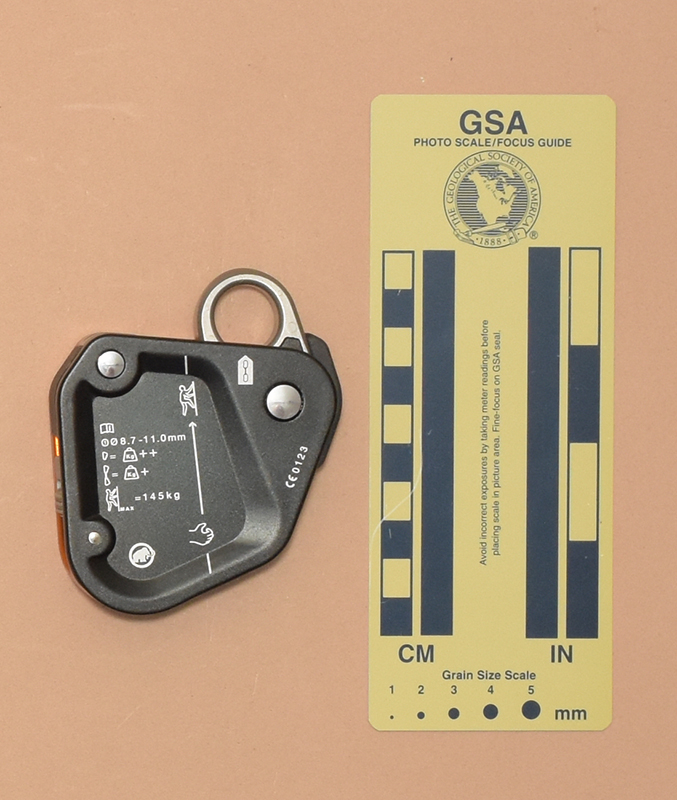
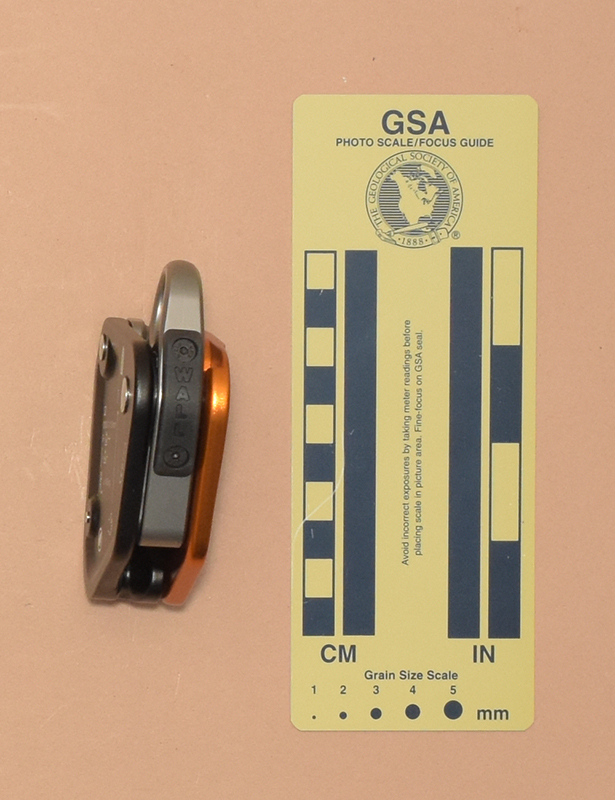
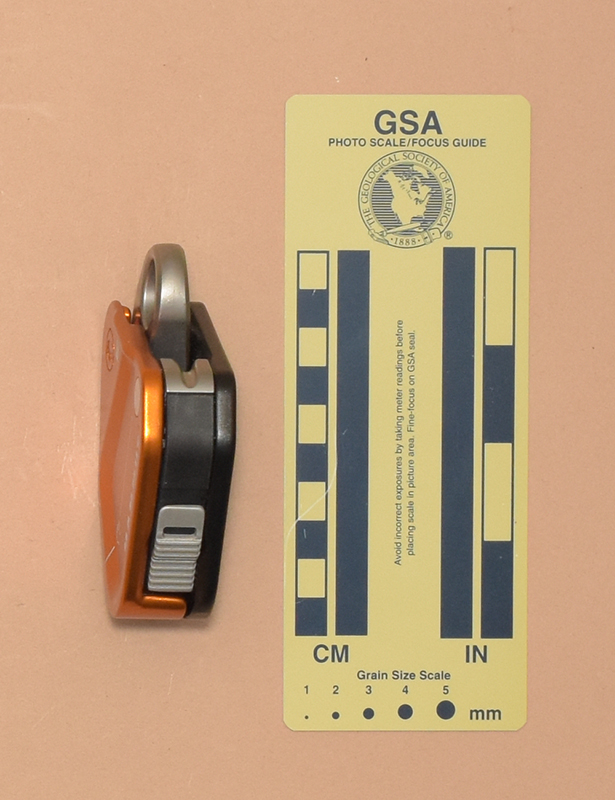
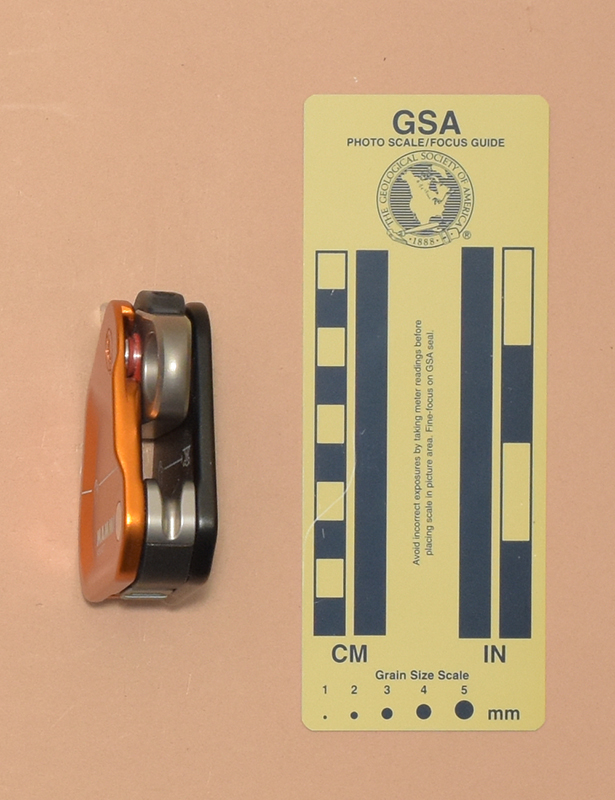
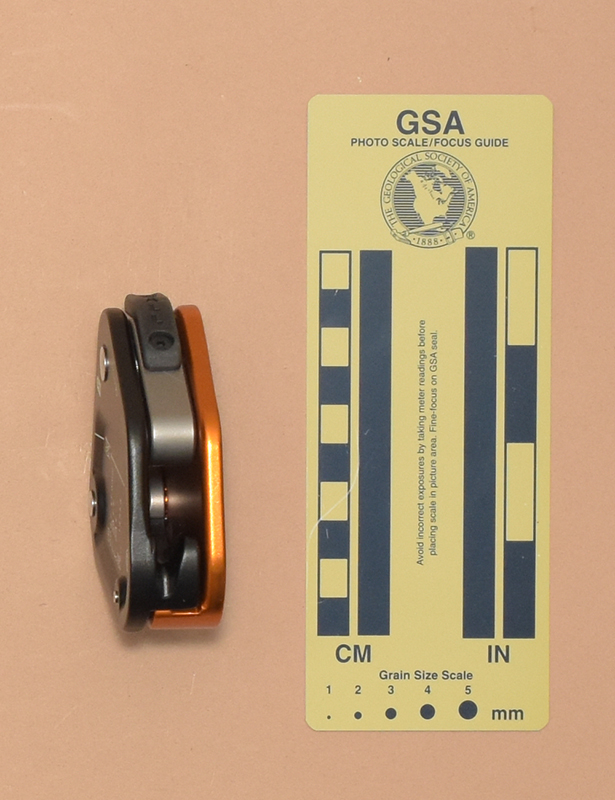
My Assist is 95 mm. long, 73 mm. wide, 24 mm. high, and weighs 221 g.
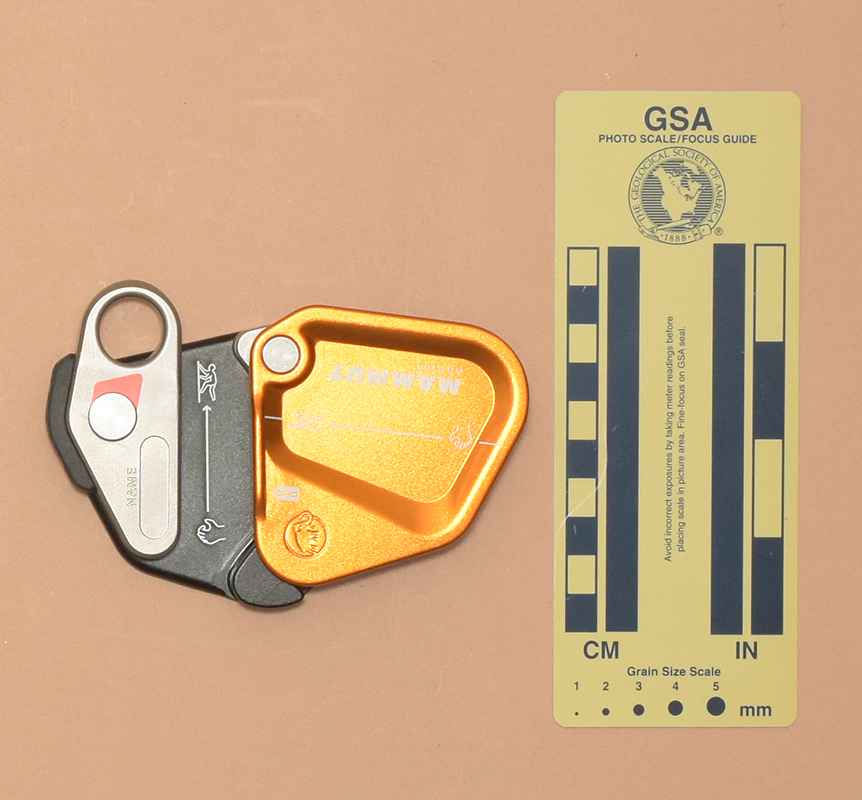
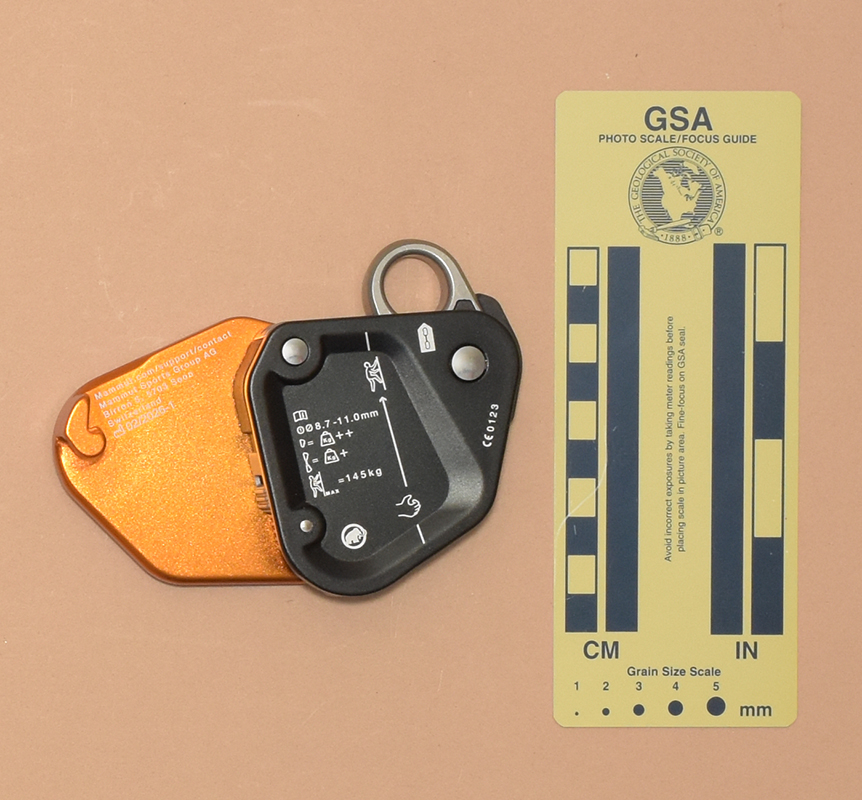
The Assist consists of a milled and anodized aluminum rear plate, a milled and anodized aluminum front plate, two internal steel anvils, and a latch mechanism. The rear plate supports a flat-faced steel anvil on its left side. The anvil is held by a rivet with a mushroom head that extends beyond the front of the anvil. This engages a milled slot in the front plate when the front plate is closed. The anvil cannot rotate, but the means to prevent rotation (presumably a projection/depression combination) is hidden. The outside of this anvil has a rubber bumper held by two screws. The rear plate supports a notched anvil at the upper right. This is also riveted in place, with an extension serving as the axle on which the front plate can pivot. The bottom right of the rear plate has a protrusion that serves as a third anvil. This is also notched, similar to the anvil above it. The latch mechanism sits in a plastic housing between the right-side anvils. The latch is a simple spring-loaded slider that engages in a notch in an inward projection on the front plate.
The outside of the front plate of the Assist has a milled Mammut logo. It is printed with a Quickdraw-inside-a-pointed-pentagon icon, a line with a climber icon and a hand icon, "MAMMUT," and "ASSIST. The inside is printed with "Mammut.com/support/contact," "Mammut Sports Group AG," "Birren 5, 5703 Seon," "Switzerland," a factory icon, and 02/2026–1."
The outside rear plate is printed with a book-with-an-"i" icon; "①Ø8.7 –11.0mm;" a carabiner icon followed by "=", a weight icon with "Kg" inside, and "++," a quickdraw icon followed by "=", a weight icon with "Kg" inside, and "+," a climber icon with "|MAX" followed by "=145kg;" a line with a climber icon and a hand icon,a Quickdraw-inside-a-pointed-pentagon icon,, and "CE0123." The inside is printed with a climber icon, an up-pointing arrow, and a hand icon.
The anvil on the left has "NAME" milled into its front beside a round-ended depression. The rubber bumper has "WALL" molded into it. The screws have "YFS" and "012.9" marked on their heads.
The Assist is an assisted-braking resistor designed to increase rope friction when there is a large weight difference between belayer and lead climber. It is used when both the climber and belayer are below a top anchor. In the event of a fall, the Assist increases the amount of rope friction so that a lighter belayer can hold a heavier lead climber without difficulty.
The Assist works well, and is much lighter than the Edelrid Ohms.
This is not the sort of device that I would want to haul up a big climb, but for "sport" climbing at the local crag, I can see how some teams would like it, especially if the climber weighs much more than the belayer.

For far more content, use a larger monitor and a full-width window.
Hundreds of cell phone users complained and asked me to for a simpler, mobile friendly site. In particular, they wanted me to limit each page to a small number of pictures and minimize my use of text. This new site provides what they asked for.