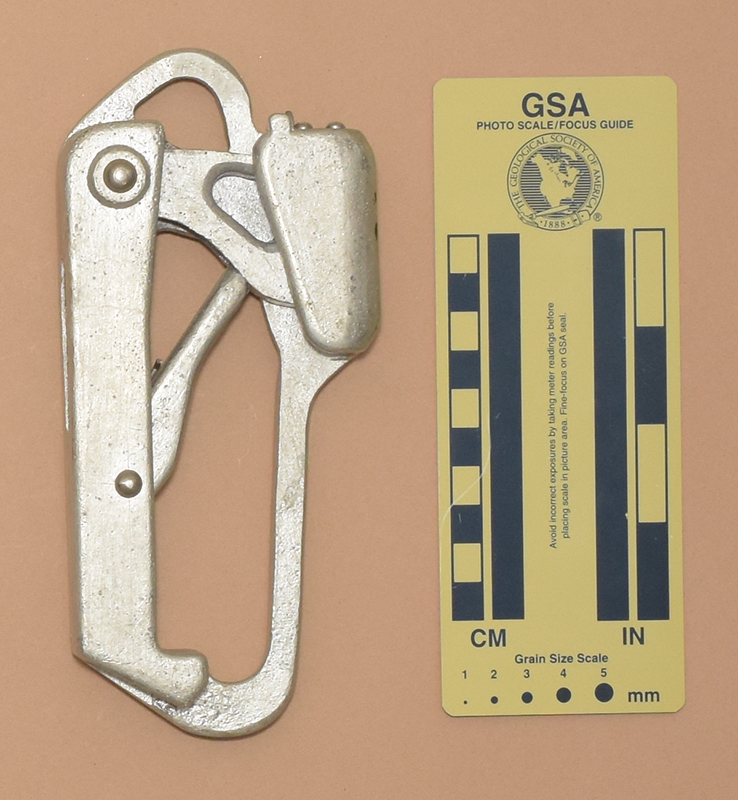
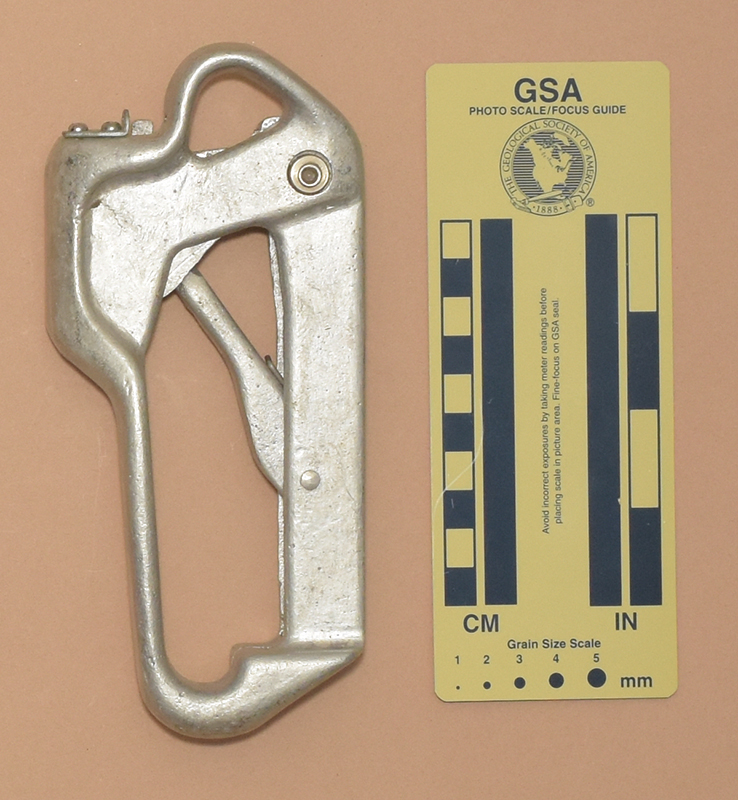
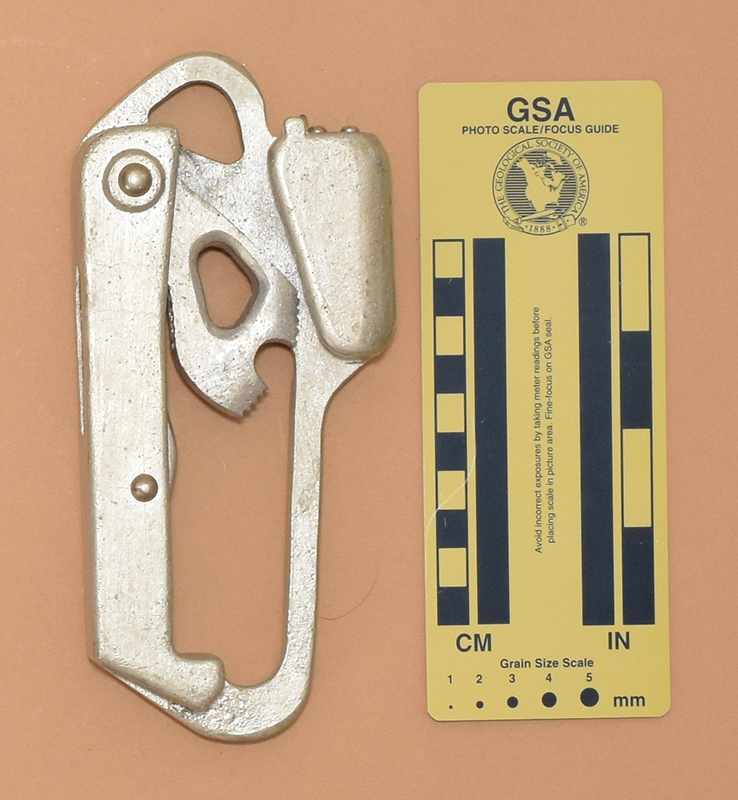
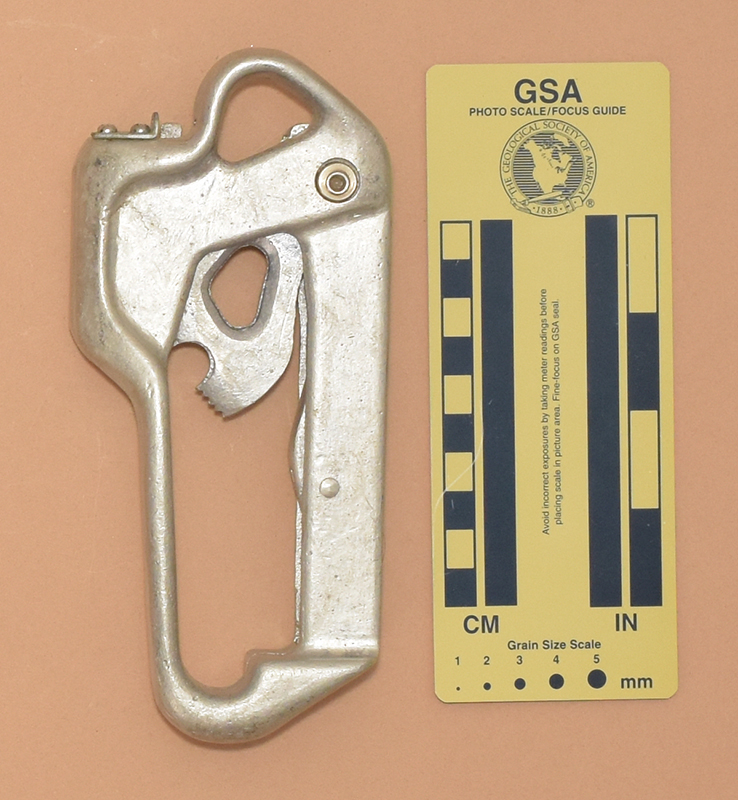
Overview
History
Imagine that you are being held prisoner by the cockroach space aliens who have you trapped in the Godzilla Tower. What do you do?
This actually happened. The proven technique, shown in the classic documentary "Godzilla versus Gigan" (Toho Co., Ltd., © 1972), is to rig a zip line out of polyethylene utility line, grab an ascender in one hand, exit the window, and slide on down. Yes, slide down on an ascender – but which ascender do you choose?
Watching the historical (or is it hysterical?) footage for the first time, I jumped out of my seat and backed the film up for a replay. Exactly one frame shows the ascender clearly, and it was definitely not a Jumar.

For many years I wondered if this ascender really existed, but Carlo Bellestrero sent me a page from a 1971 Snell Sport Chamonix catalog that showed that this is a Japanese copy of the Jumar. It was a perfect match to the one shown in the movie. Finally, in February 2015, Olivier Peron Caillet found a pair on a French auction web site, acquired them, and sent them to me.
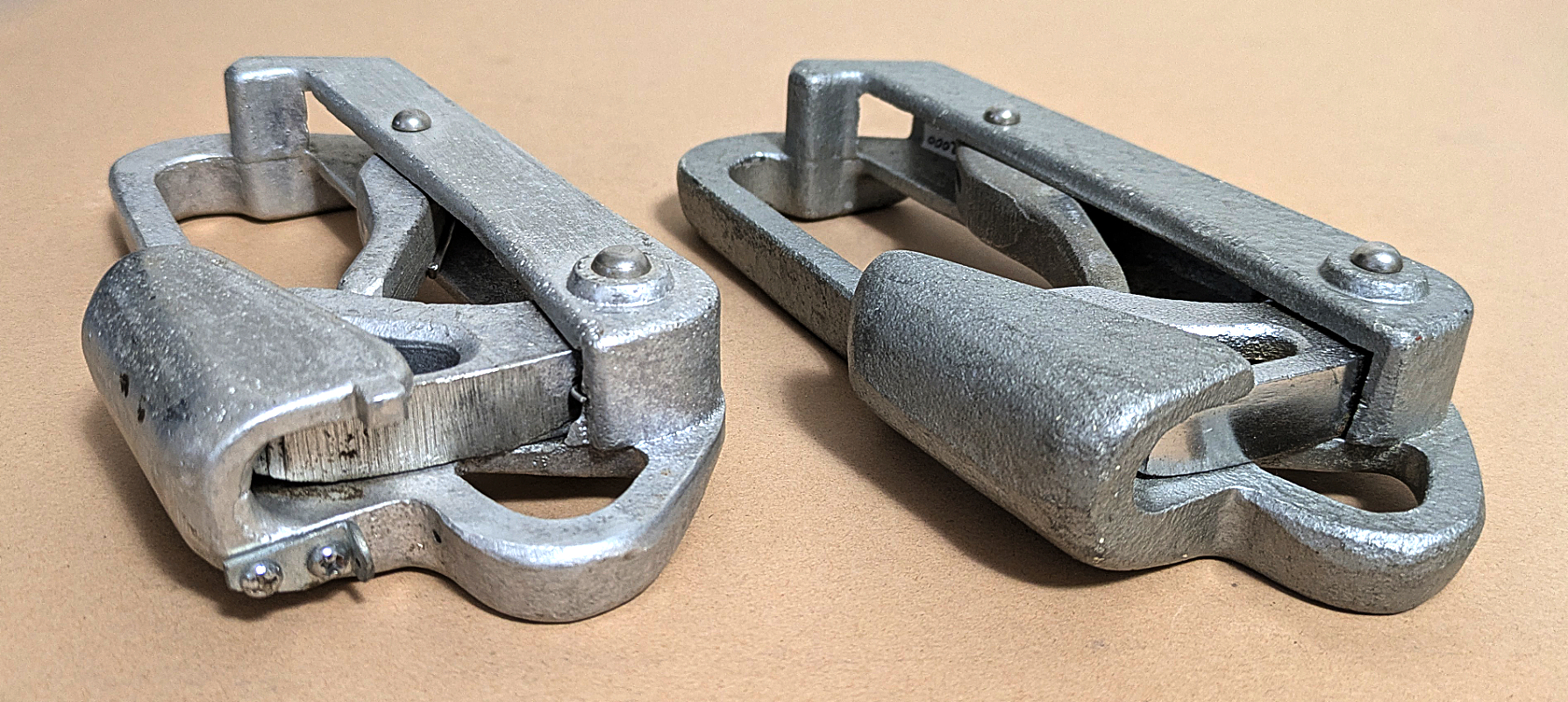 The ascender used in the documentary was a different version of the Tokyo Top than what Olivier sent me in 2015. In 2026 I was able to obtain a left-handed ascender matching the one used in the escape. It also matches the one shown in the 1971 Snell Sport Chamonix catalog. The one that I obtained in 2026is probably the older of the two. I call it “Version A” and the one that I obtained in 2015 “Version B.”
Along with the Peck Descender and a few others, these are now among the most valuable items in my collection, not in any monetary sense, but from a personal satisfaction perspective.
Thankfully, the cockroach space aliens were defeated. Our younger generation is safe, all because of the Tokyo Top ascender.
Comparison
There are three differences between the versions: The cam, the frame, and the secondary safety.
THE CAM
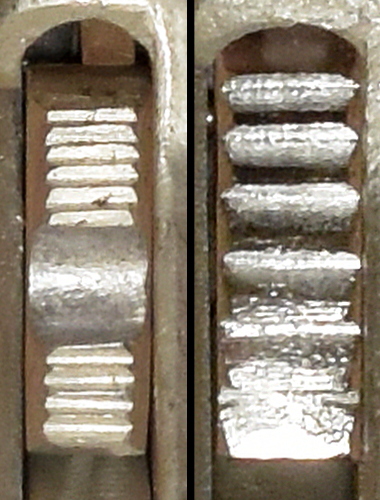
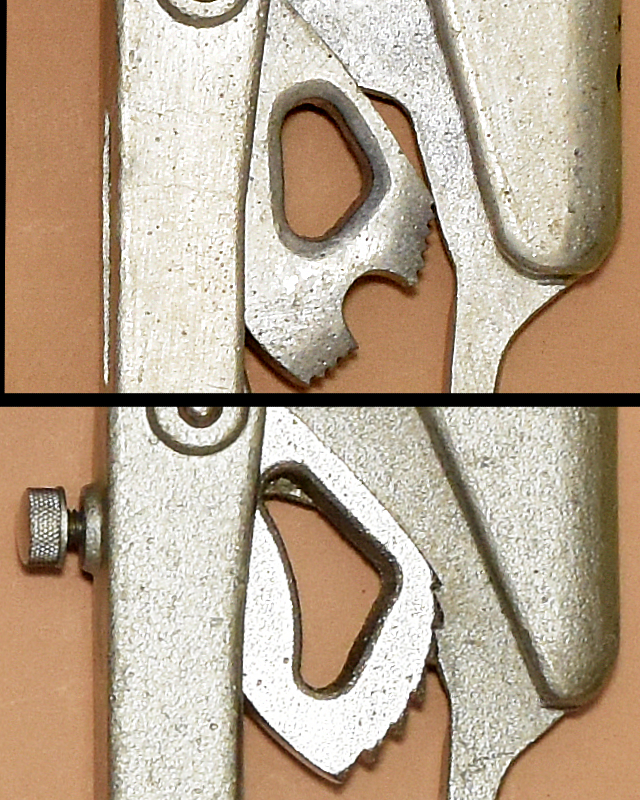 Both versions use a cast aluminum cam. Version A’s cam is unfinished, and Version B’s cam is chrome plated. The chrome-plated cam will not wear as quickly.
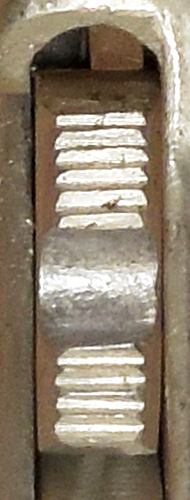
The cams have different shapes, especially in the cam face area. Version B has a conventional spiral face with seven large z-shaped teeth. Version A has six much finer triangular teeth, then a large cutout, followed by five more fine triangular teeth. The cutout essentially removes the middle 11 mm. of the cam face. It is part of the original casting, not milled later. I cannot recall seeing a similar cutout on any other ascender, not do I know why it exists. I can only guess that it allows the sixth tooth to dig into the rope farther, increasing the cam’s holding power.
When open, Version A’s cam provides 8.5 mm. clearance for inserting the rope. Version B provides 12.5 mm.
THE FRAME
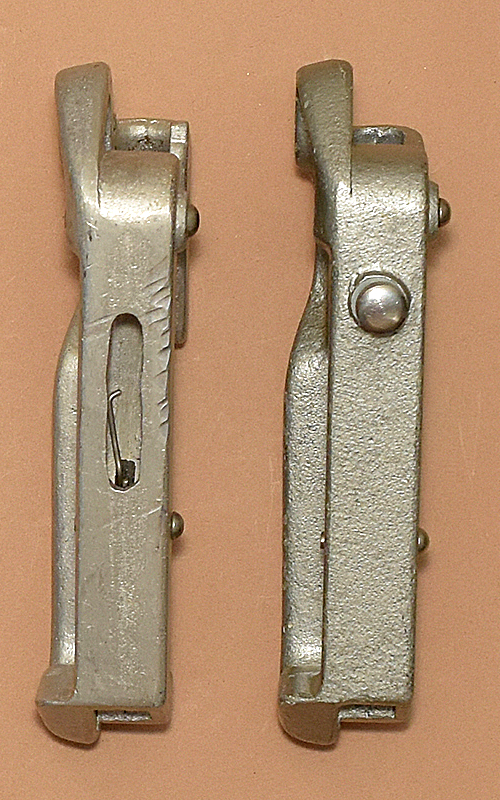 The two versions have similar frames with minor differences. Version A has a slot behind the cam safety lever that Version B lacks. I assume this is a mud release slot, since mud jammed behind the lever would interfere with opening the cam.
There are other minor differences that I’ll mention in the next section.
SECONDARY SAFETY
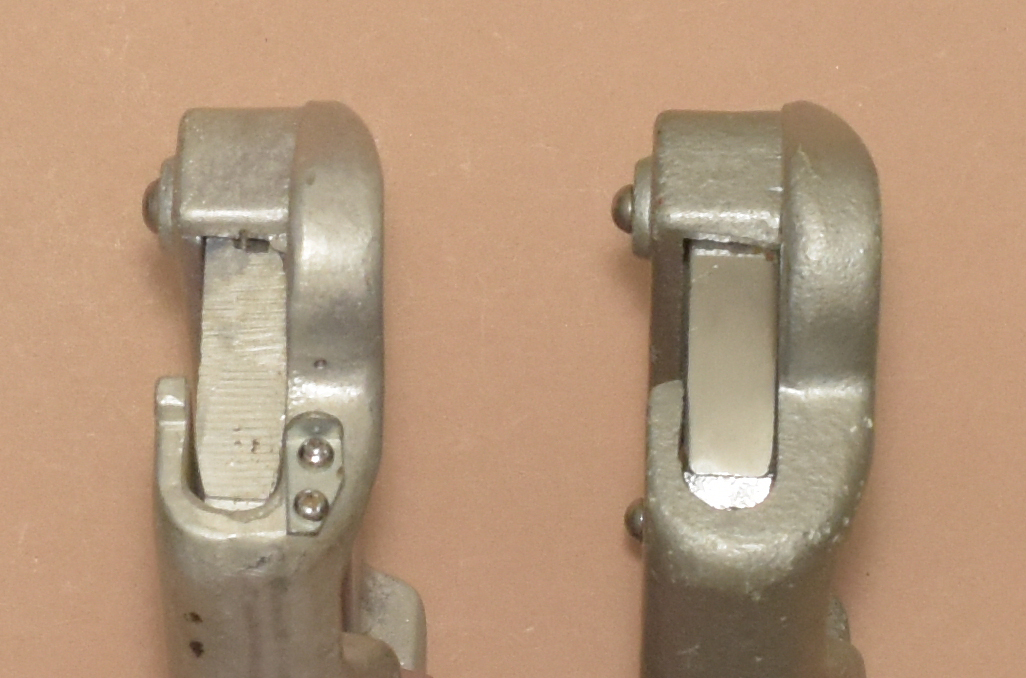 Version B has a knurled screw on the spine that limits how far the safety lever can be squeezed back, thereby limiting how far the cam can open. There is a circular boss on the spine that provides a greater thickness to allow more thread engagement.
My Version A does not have a secondary safety, It has a stamped metal tab screwed to the inside top surface of the cam channel. This tab has a small (~1.5 mm.) hole that aligns with a similar sized hole on the top arch of the frame. By itself, this does nothing, but the gap between the tab and the arch aligns with a 5.5 mm. wide, 4.3 mm. tall post ion the top of the open side of the cam channel. I am speculating here, but perhaps a wire safety would fit in the two holes and fold down over the post to help prevent the rope from accidentally coming out if the cam is inadvertently open. This might look like the safeties on some Hiebler ascenders, and might provide psychological reassurance. It would certainly not be as effective as the one on the Climbing Technology Quick’Arbor.
OVERALL
The two versions are the same size. Version A is 21% lighter, but both are heavier than the Jumars of the same era. If you find yourself at Snell Sports looking for an ascender in 1971, I recommend choosing the gray Jumar instead. When you need to rappel to escape from cockroach space aliens, I recommend using a descender.
[ Top
| Version B
| Return to H.E.C. Ascenders ]
Version A
(#3680)
Technical Details
I acquired this Tokyo Top ascender from Caleb Akers in 2026.
 This ascender is 177 mm. tall, 80 mm. wide, 37 mm. thick, and weighs 295 g.
The frame is an aluminum alloy casting covered with a
mottled gray paint. The frame has a 14 mm. wide rope channel cast into one
side. The handle is roughly rectangular. A 16 by 14 mm.
hole in the base of the handle provides access for
the sling ropes. A triangular hole above the cam provides an upper
attachment point for auxiliary slings.
The cam is an aluminum casting. The cam
and cam spring are mounted on a 3 mm. roll rivet. A steel
washer keeps the rivet roll from pulling into the aluminum frame.
The cam radius increases from 49 to 54 mm. over an angle of 32°, giving a 25° cam angle. The tooth pattern is (Z)^6(Gap)(Z)^5. More precisely, the cam has six much finer triangular teeth, then a large cutout, followed by five more fine triangular teeth. The cutout is part of the original casting, not milled later. It essentially removes the middle 11 mm. of the cam face.
The cam is spring-loaded with the spring acting to open the cam. The frame-mounted safety is spring-loaded to open away from the frame. This causes the end of the safety to push against the cam. The safety spring is strong enough to override the cam spring, generating a net closing torque on the cam. Squeezing the cam safety allows the cam to automatically open. When open, Version A’s cam provides only 8.5 mm. clearance for inserting the rope.
A slot behind the cam safety lever acts as a mud release slot, since mud jammed behind the lever would interfere with opening the cam. A stamped metal tab is screwed to the inside top surface of the cam channel. This tab has a small (~1.5 mm.) hole that aligns with a similar sized hole on the top arch of the frame. By itself, this does nothing, but the gap between the tab and the arch aligns with a 5.5 mm. wide, 4.3 mm. tall post ion the top of the open side of the cam channel.
There are no markings on this ascender.
The casting quality is fair at best. The frames do not look too bad, perhaps because they are painted, but the cams are pitted, showing that gases did not fully escape during the casting process.
Z-teeth do not work well on eccentric cam ascenders, and these are prone to slip. This is crucial for escaping from the Godzilla tower – a normal ascender would leave one stranded on rope with no way down save to let go.
Rigging the ascender is a nuisance since the opening between the cam and rope channel is only 8.5 mm.
Squeezing the safety lever opens the cam, seemingly convenient, but I find that my hands get in the way of the cam (I have large hands). The mechanism is different than I've seen on any other ascender; alas, I cannot say that it is better.
I’m speculating here, but perhaps a wire safety would fit in the tab and arch holes and fold down over the post to help prevent the rope from accidentally coming out if the cam is inadvertently open. This might look like the safeties on some Hiebler ascenders, and might provide psychological reassurance. It would certainly not be as effective as the one on the Climbing Technology Quick’Arbor.
This ascender is heavier than a Jumar of the same era but 20% lighter than Version B
[ Top
| Version A
| Return to H.E.C. Ascenders ]
Version B
(#2000)
Technical Details
I acquired this Tokyo Top pair from Olivier Peron Caillet in 2015.
 These ascenders are 177 mm. tall, 92 mm. wide, 36 mm. thick, and each weighs 375 g.
The frame is an aluminum alloy casting covered with a mottled gray paint. The frame has a 14 mm. wide rope channel cast into one side. The handle is roughly rectangular. A 16.0 by 14.3 mm. hole in the base of the handle provides access for the sling ropes. A triangular hole above the cam provides an upper attachment point for auxiliary slings.
The cam is an aluminum casting. The cam and cam spring are attached by a 3 mm. rivet. A steel washer keeps the rivet from pulling into the aluminum frame. The cam radius increases from 47 to 63 mm. over an angle of 34°, giving a 26° cam angle. The tooth pattern is (Z)^7. The cam is spring-loaded with the spring acting to open the cam. The frame-mounted safety is spring-loaded to open away from the frame. This causes the end of the safety to push against the cam. The safety spring is strong enough to override the cam spring, generating a net closing torque on the cam. Squeezing the cam safety allows the cam to automatically open. A knurled screw on the spine limits how far the safety can close, thereby limiting how far the cam can open. This screw must be retracted to allow the cam to open far enough to rig or derig the ascender.
The only markings on the ascender are a small sticker with a logo and "Tokyo Top Co."
Back in those days, the Japanese were famous for their low quality products (no longer true!), and these ascenders met the low expectations of those days. The casting quality is fair at best. The frames do not look too bad, perhaps because they are painted, but the cams are pitted, showing that gases did not fully escape during the casting process.
Z-teeth do not work well on eccentric cam ascenders, and these are prone to slip.
Rigging the ascender is a nuisance, since one must unscrew the knurled screw to allow the cam to open far enough to admit the rope - and then one must repeat the process for derigging.
Squeezing the safety lever opens the cam, seemingly convenient, but I find that my hands get in the way of the cam (I have large hands). The mechanism is different than I've seen on any other ascender; alas, I cannot say that it is better.
Finally, these are heavier than Version A, and both are heavier than the Jumars of the same era
[ Top
| Version A
| Version B
]