

This page will not fit into a tiny viewport. Please choose a full-size monitor with a full-width window or select the abridged New Wave pages.

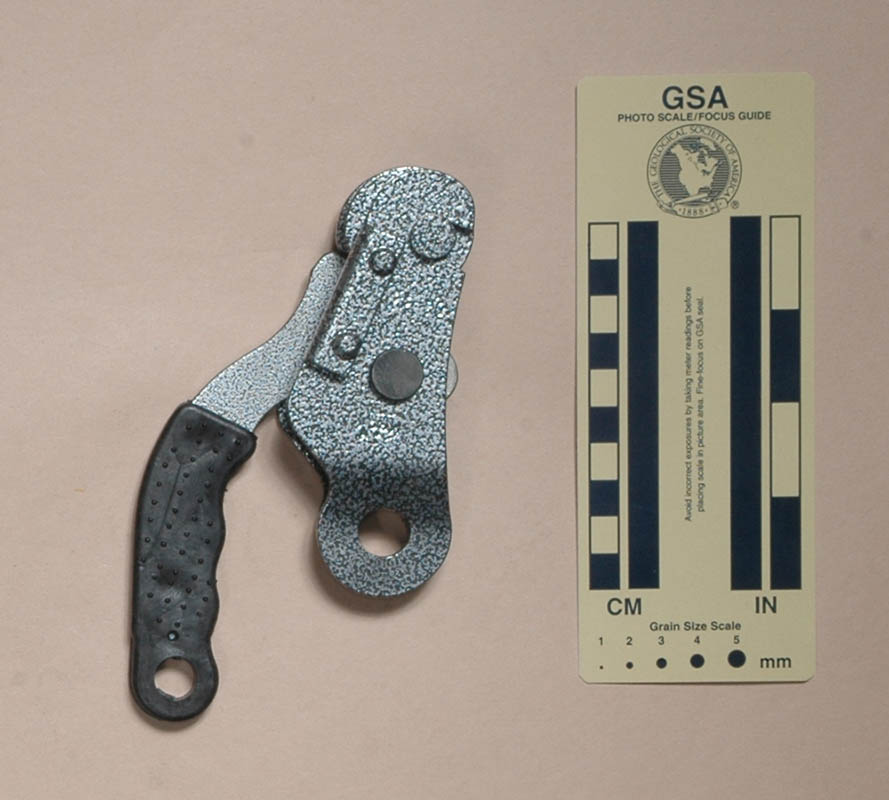
Version A
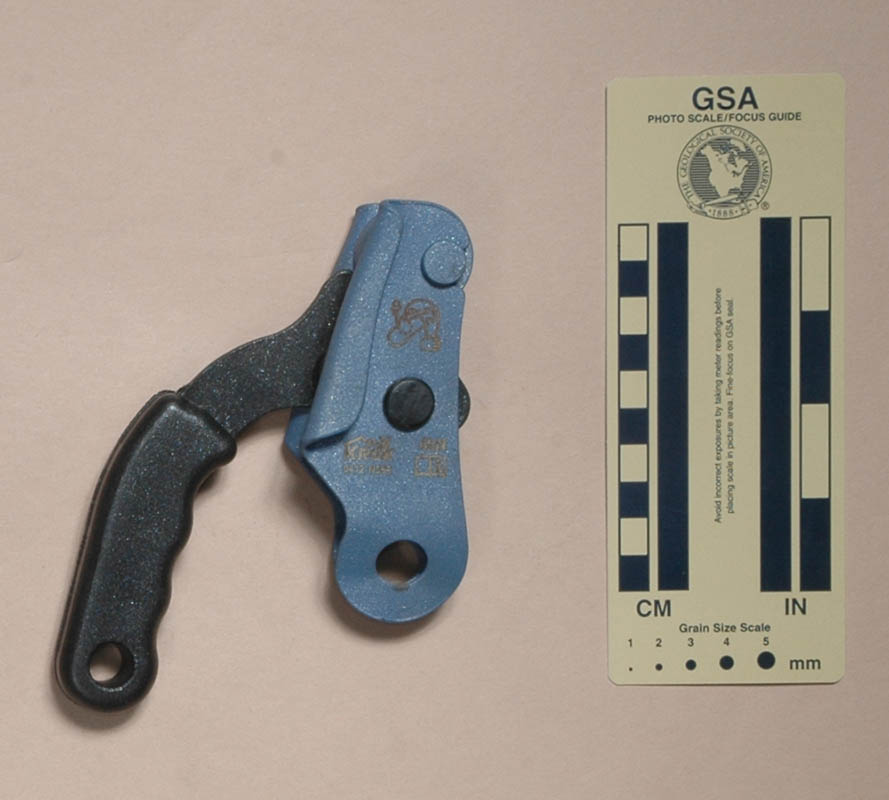
Version B
|
|
|
| Version A | Version B |
In the autumn of 1977, in the mountaineering section of the Voroshilovgrad (now Luhansk) engineering institute (WMI), first-year students began their journey into the mountains. Many of them achieved some success in Soviet and post-Soviet mountaineering and rock climbing. Years later, these individuals became key specialists at the manufacturing company KROK. Back then, amidst the chronic shortages of the Soviet era, they had to invent and manufacture mountaineering gear.
In 2004, when an opportunity came to establish his own manufacturing operations, Kostromitinov Alexei Dmitrievich began mass producing equipment for mountaineering, industrial rope access, and outdoor activities. He registered the Krok trademark that year, with the firm headquartered in Stakhanov, in the Luhansk region (Donbass). The name of the KROK brand was taken from the word "crows", which in mountaineering and tourism means a step-by-step sketch of the route to the goal. Production of Krok-branded products began in Russia and Ukraine.
Over years of dynamic growth, Krok developed and launched the production of over four hundred items of gear, hardware, and soft goods for mountaineering, outdoor activities, and industrial rope access. The company mastered the manufacture of personal protective equipment (PPE) against falls from heights, as well as equipment for working at heights and in confined spaces, and devices for rescue and evacuation operations. In addition, products are manufactured for sports and outdoor activities—including fitness and slacklining—as well as equipment for adventure parks, zip lines, and children's sports and playgrounds, along with gear for arboriculture.
Krok did not market directly in the U.S.A. They operated the eBay stores PetrenkoWorld in 2007 and Gear4Rocks from 2010 to 2013, making their products conveniently available to U.S. customers for a brief time.
In October 2020, founder and unchanged head of the company Kostromitinov Alexei Dmitrievich passed away, but the company continued to work under the leadership of his wife Oksana Valerievna. In 2022 Russia invaded Ukraine and working became even harder. There were no new developments and Krok gradually removed items from production. The situation worsened in 2024 and Krok decided to suspend operations. Production stopped in November, and the sales of the remaining inventory began.
[ Top | Version B | Return to Bobbins ]
|
|
 |
 |
| Front View | Rear View | Side View |
 |
 |
| Front View: Open for Rigging | Side View: Open for Rigging |
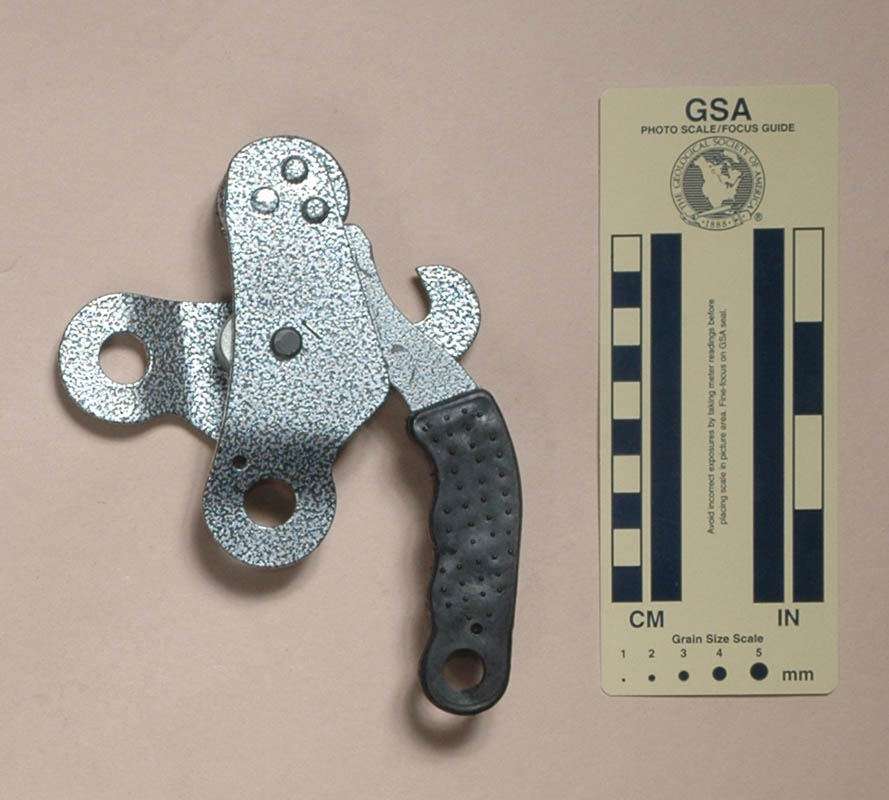
I acquired my Krok Grisha, Version A from Gear4Rocks in 2012. Gear4Rocks was the same company as Krok, the only difference was that the Krok trademark sold gear only inside Ukraine, and the Gear4Rocks trademark was created to spread Ukrainian gear around the world.
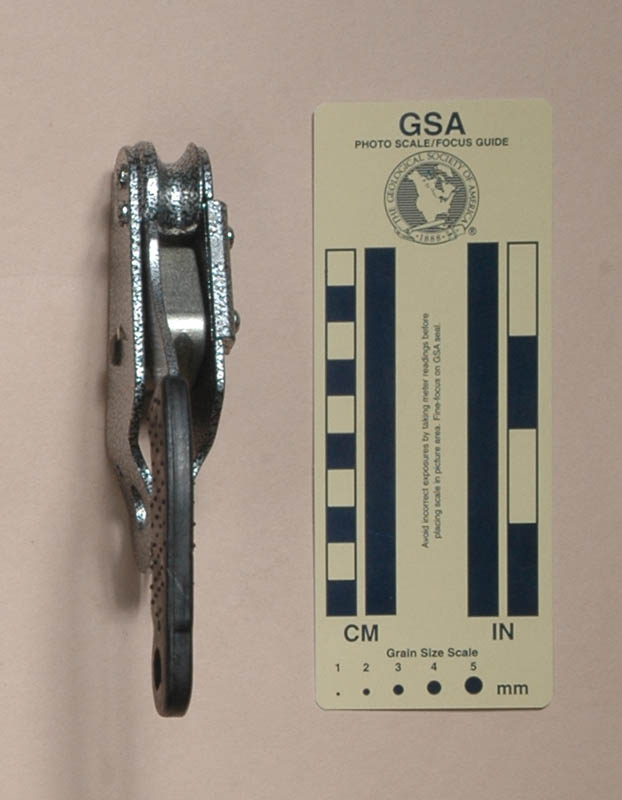
Version A is 156 mm. tall, 84 mm. wide, 31 mm. thick, and weighs 399 g.
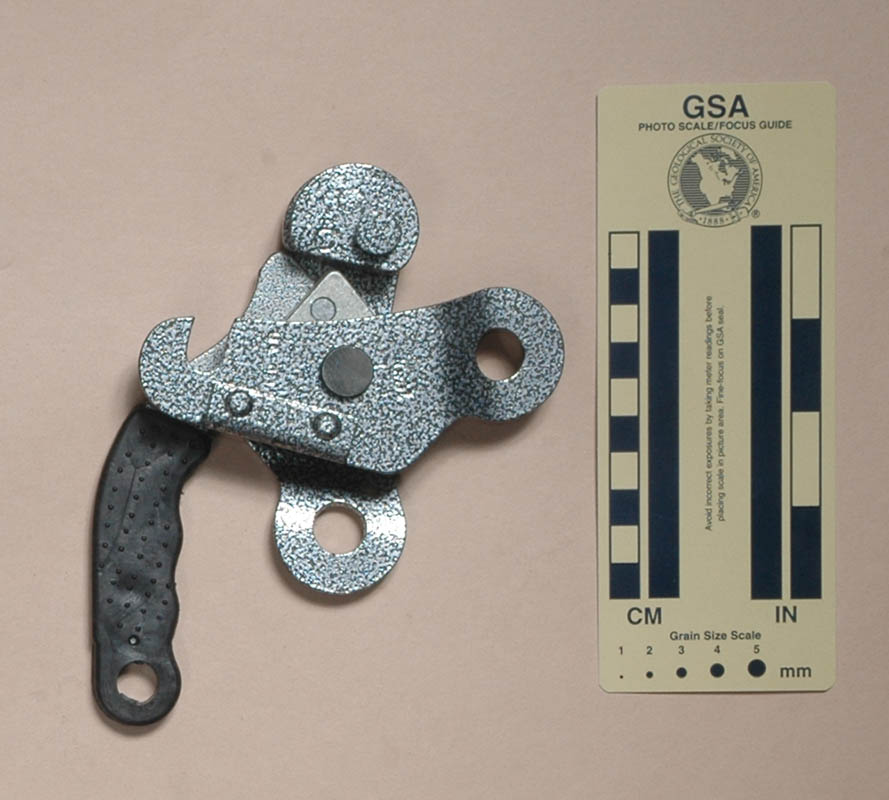
The side plates are made from 2.5 mm. steel. One plate is fixed, while the other pivots on the lower bollard axle to allow opening for rigging.
The lower bollard is part of an autostop assembly. This bollard is milled from steel, with a shallow rope groove and a nose that acts as a brake. Friction from the main rope’s passage tends to turn the lower bollard and force the nose towards the upper bollard, thus locking the rope and ideally arresting the descent. The rappeller uses the handle to keep the autostop feature disengaged. A steel handle is riveted to the fixed side plate side of the lower bollard. The handle portion has a plastic cover for comfort. The lower bollard and handle assembly rotate on a riveted axle. A weak, concealed spring tries to keep the handle to the engaged position, supplementing the action provided by the rope friction.
The upper large bollard is riveted to the rear plate. Made from steel, the bollard is cut away on its lower side to provide a flat surface to act as an anvil for the cam action of the autostop feature. The top of this bollard is even with the top of the frame. There is no provision for keeping the rope running over the top of this bollard. The front plate has a 40 mm. long, 12. mm. wide, 4 mm. thick plate riveted to it, near the handle edge. The corresponding edge of the plate is rounded. This provides a smooth surface for the rope to run over if it comes off the top bollard.
Most of the metal parts are painted with a mottled-finish paint. The front plate is stamped with the Krok logo and "04 11," the date of manufacture.
The lack of any provision for keeping the rope running over the top bollard my be disconcerting to some, but the idea is an old one, as seen in the Descendeur Autobloquant Dressler. The advantage is that this reduces the size of the descender, but it does require some more attention from the user. I find that stiff ropes, such as PMI Pit Rope, are particularly willing to leave their appointed path.
The Grisha is sold as a descender, but the rounded edge near the handle is reminiscent of the Petzl Grigri belay device.
There is no gate or cutout to allow opening the device without removing it from the harness.
I dislike the painted finish as well, since the paint just wears off and leaves a mess on the rope.
The shape of the handle brings it farther from the attachment carabiner than handles on the Petzl Stop and similar stop bobbins. I don't find this to particularly significant. I suppose it is mainly a matter of preference; but it does make the Grisha a bit bulkier for packing.
[ Top | Version A | Return to Bobbins ]
|
|
 |
 |
| Front View | Rear View | Side View |
 |
 |
| Front View: Open for Rigging | Side View: Open for Rigging |
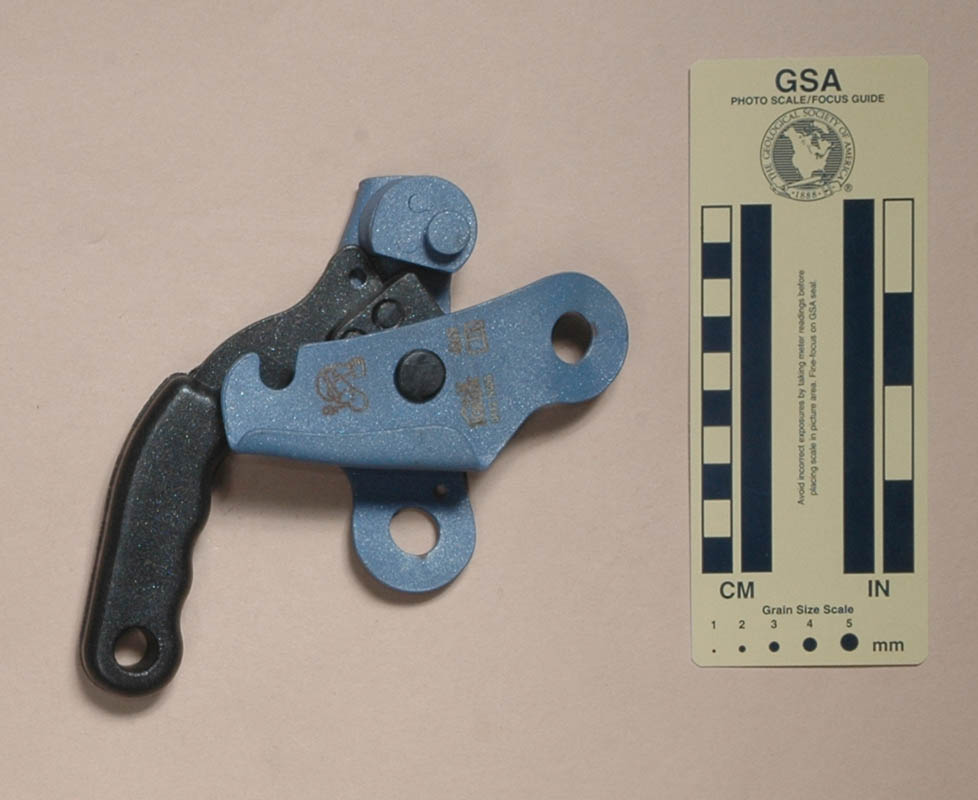
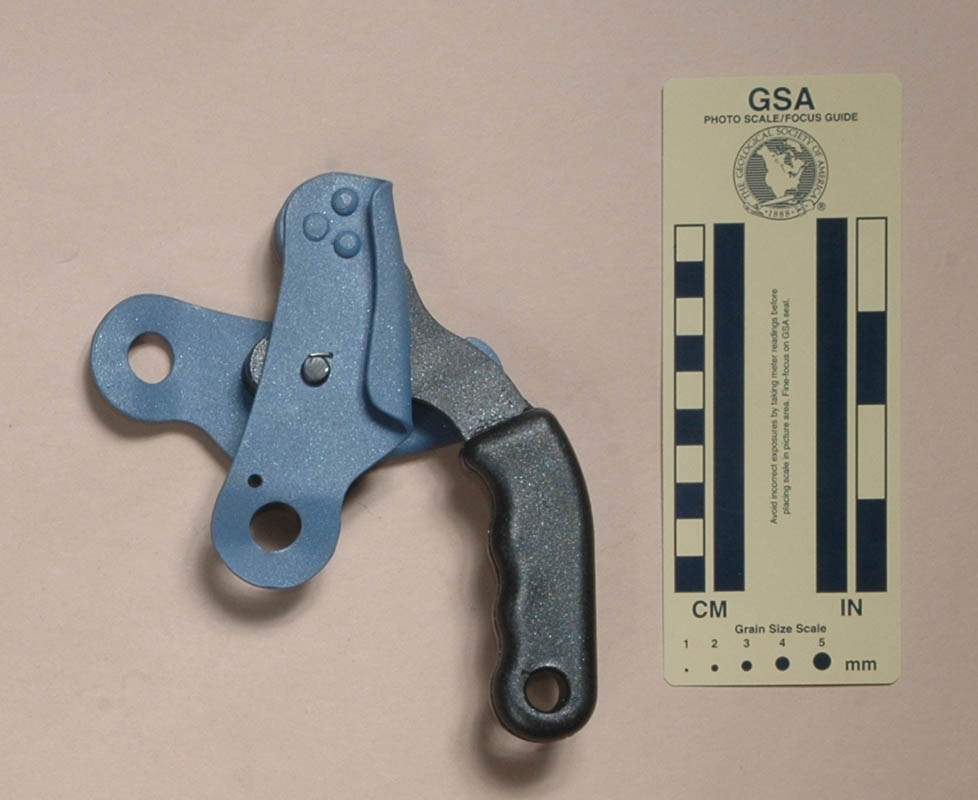
I acquired my Krok Grisha, Version B from Gear4Rocks in 2012. Immediately thereafter, I received a second one when Alex Dniprovsky sent me a box of donations originating from Alex Kostromitinov, the CEO of Krok. Gear4Rocks was the same company as Krok, the only difference was that the Krok trademark sold gear only inside Ukraine, and the Gear4Rocks trademark was created to spread Ukrainian gear around the world.
Version B is 135 mm. tall, 109 mm. wide, 36 mm. thick, and weighs 402 g.
Version B makes the following changes to Version A:
The pivoting side plate is etched with a rigging icon, the Krok logo,"0412 N088," (0412 N002" on the second one), "4kN," and a book-with-an-"i" icon.
Performance is identical to Version A’s. The beefed up side plate may increase strength, but I doubt that anything is wrong with the strength of Version A, so I consider the extra weight superfluous. The use of a different lot of bolts is unimportant. I almost never use this bobbin since I see no advantage over Version A.
[ Top | Version A | Version B ]