This page will not fit into a tiny viewport. Please choose a full-size monitor with a full-width window or select the abridged New Wave pages.


|
|
 |
| Front | Rear |
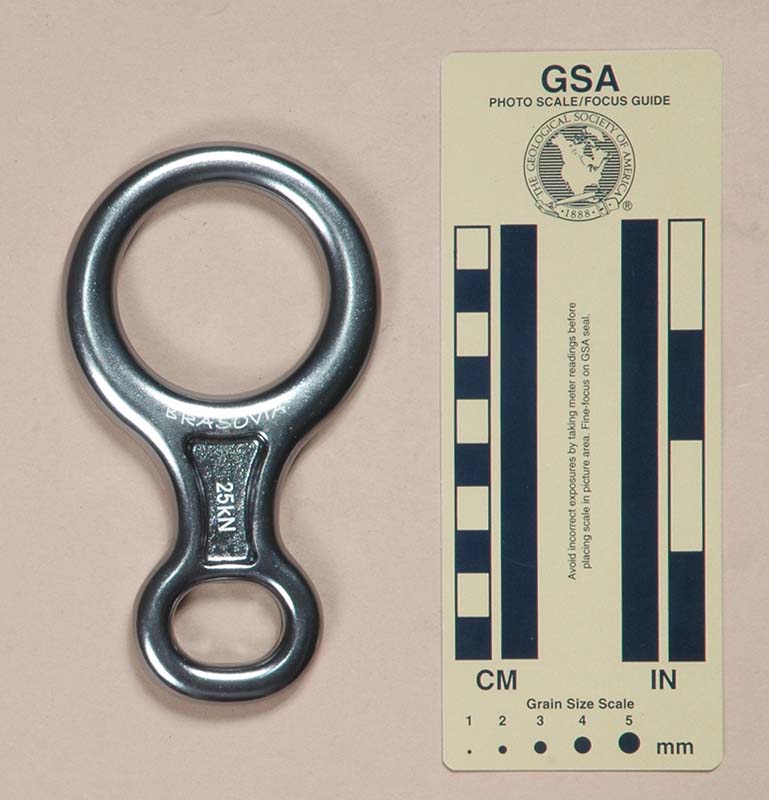
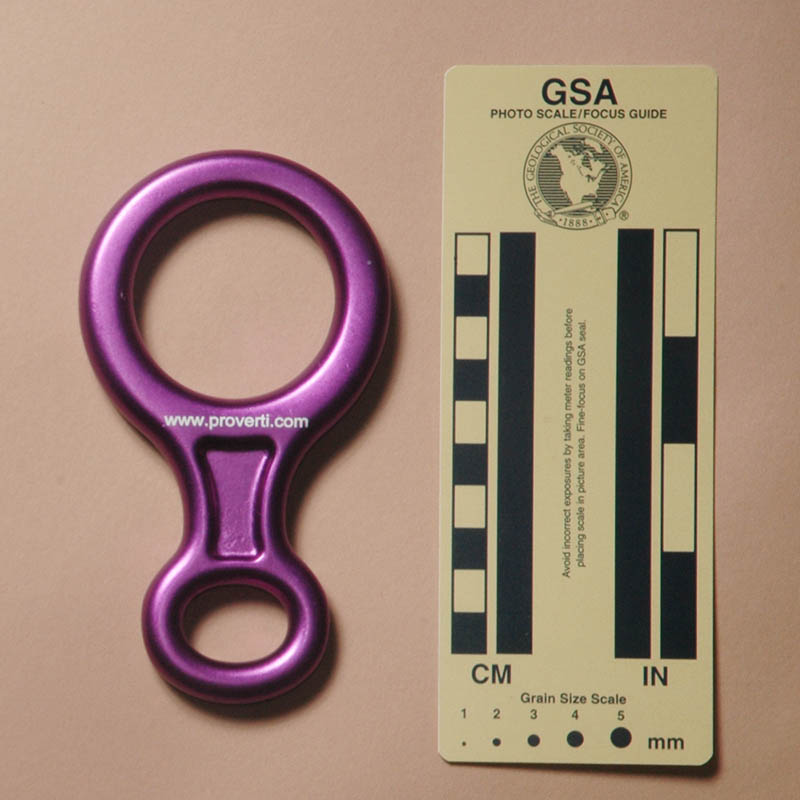
I acquired my Proverti from Ondřej Belica in 2015.
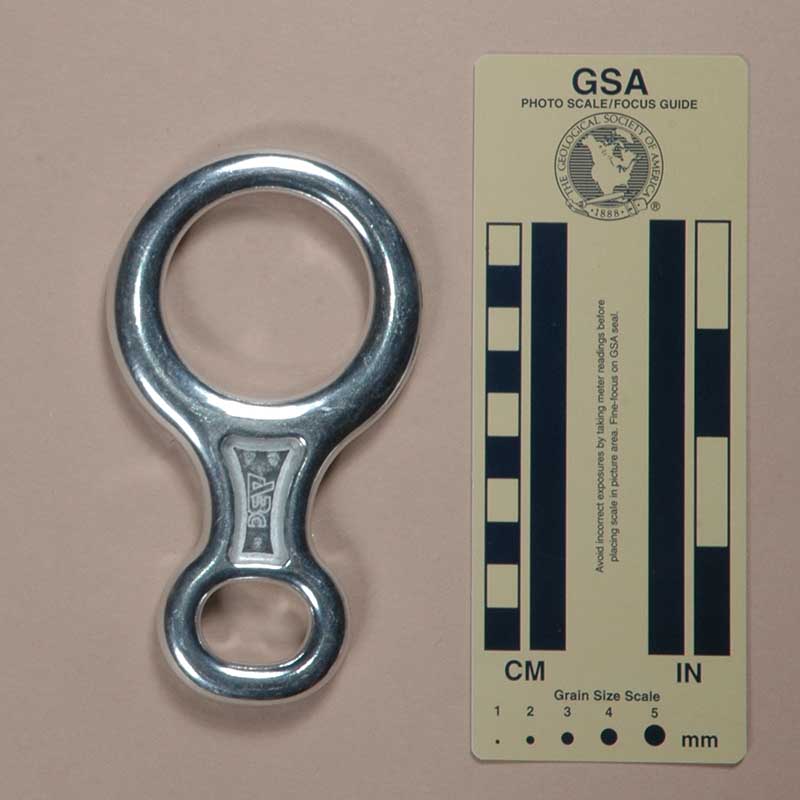
The Proverti is forged from aluminum alloy and then soft anodized. Mine is 131 mm. tall, 74 mm. wide, and 13 mm. thick. The rope hole is 48 mm. high and 48 mm. wide. The top center thickness is 11 mm. The shaft length and width are 44 mm. and 24 mm., respectively. The eye measures 18 mm. by 28 mm. My eight weighs 105 g.
The front is printed with "PROVERTI," "25kN," and "CD 303." The rear is printed with "www.proverti.com."
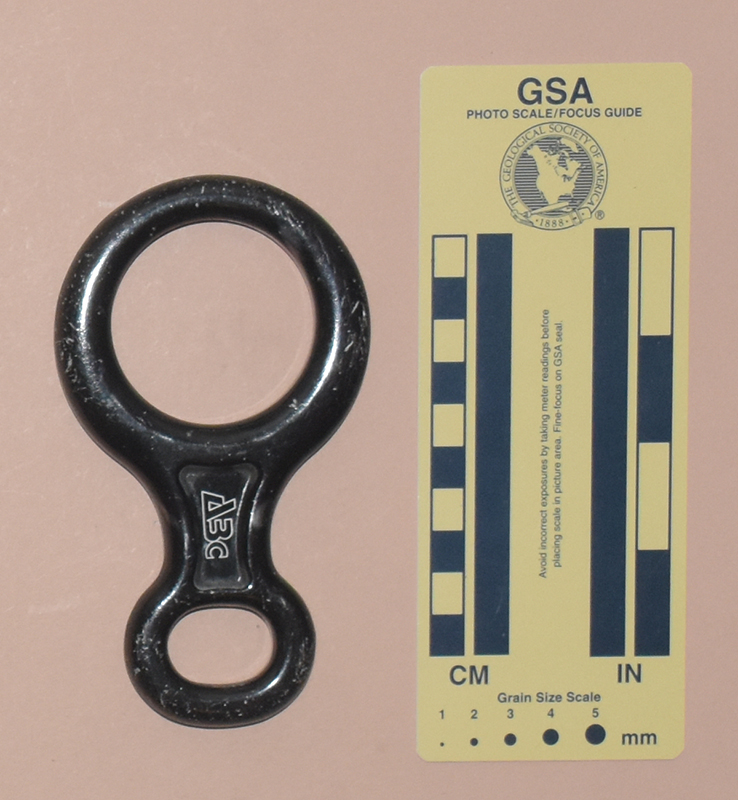
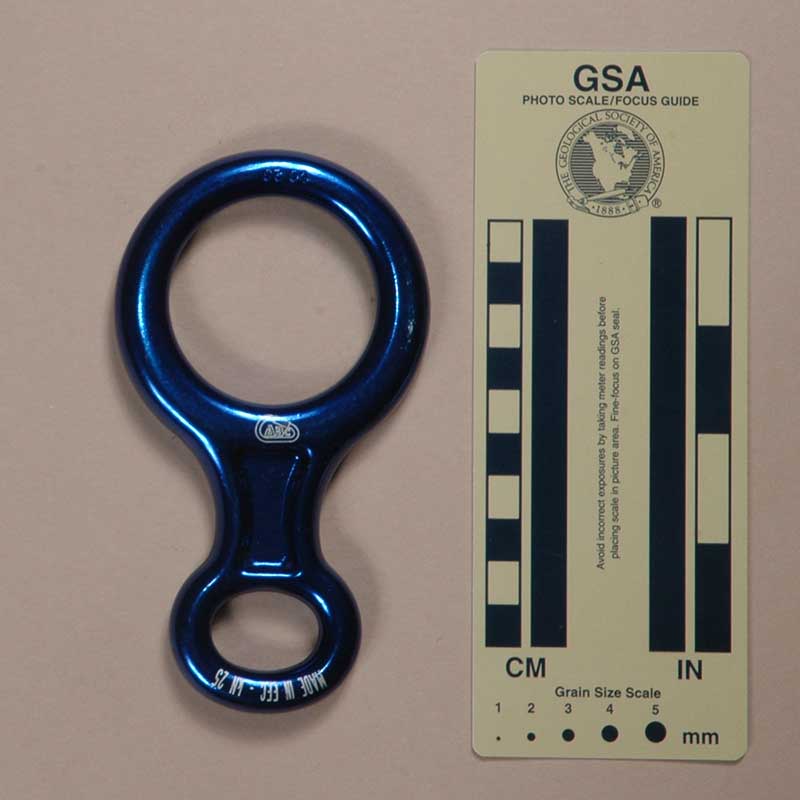
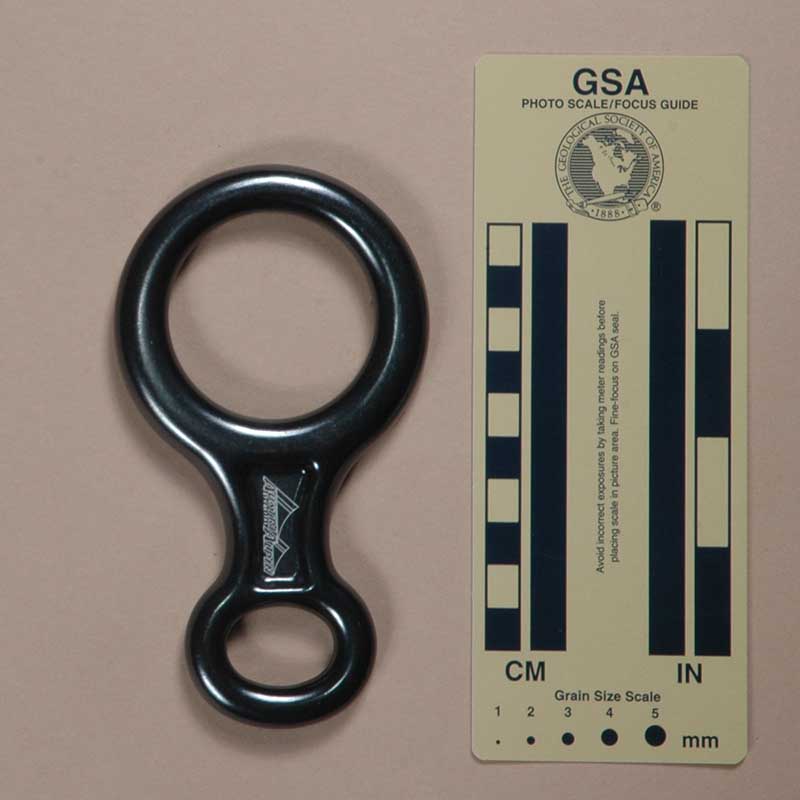
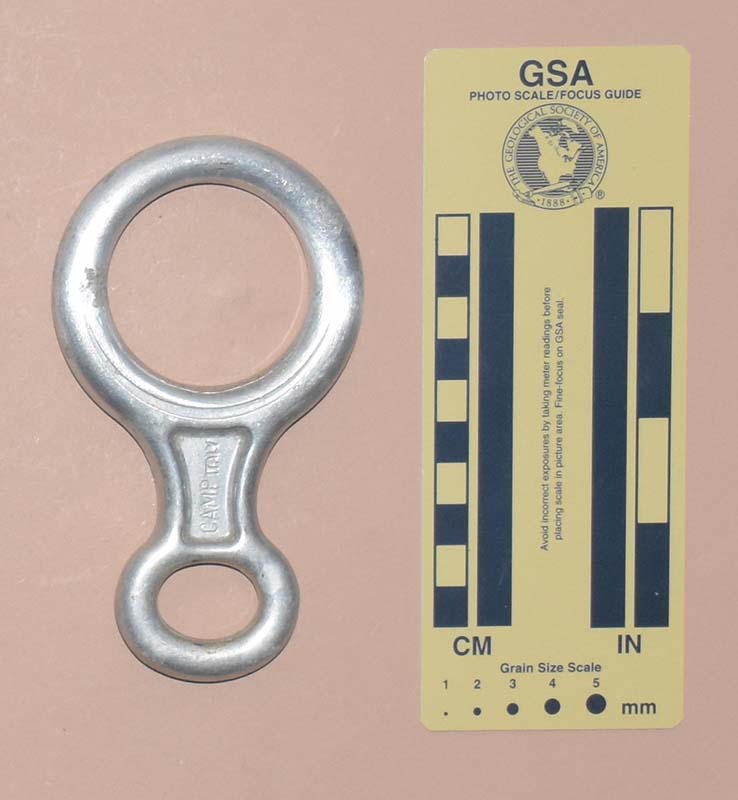
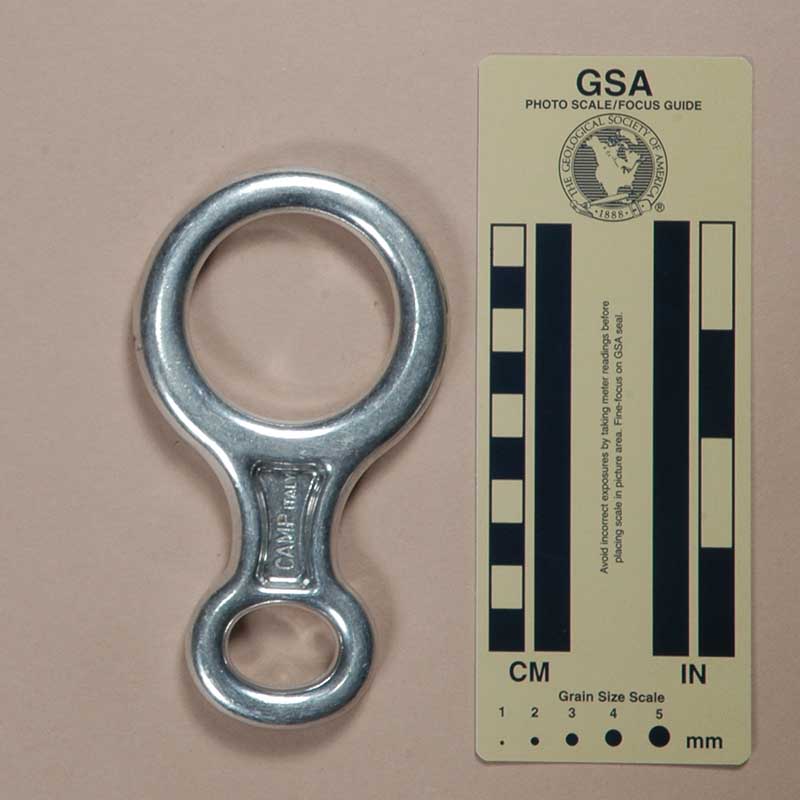
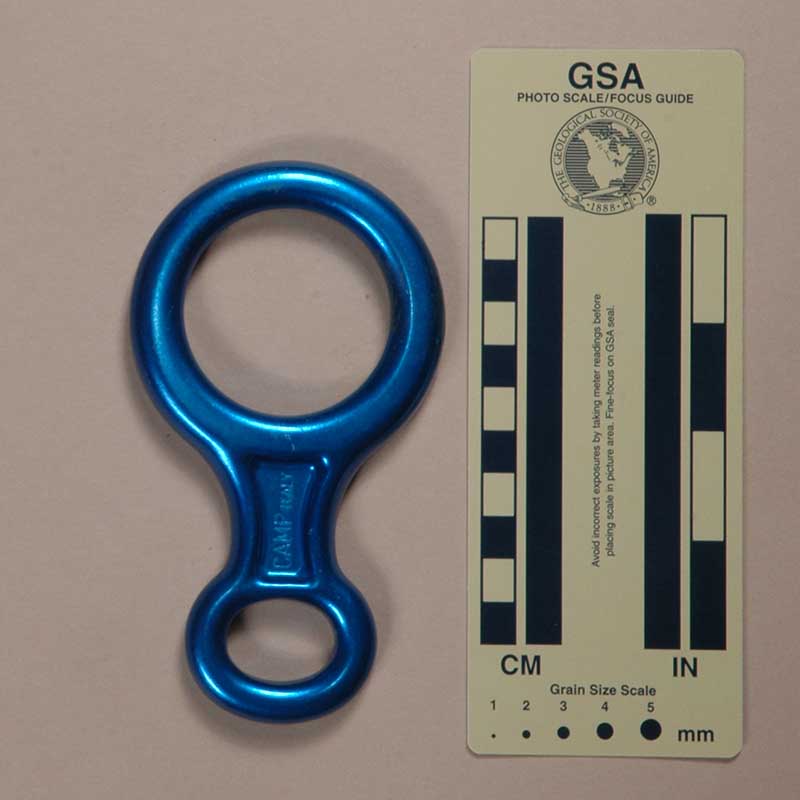
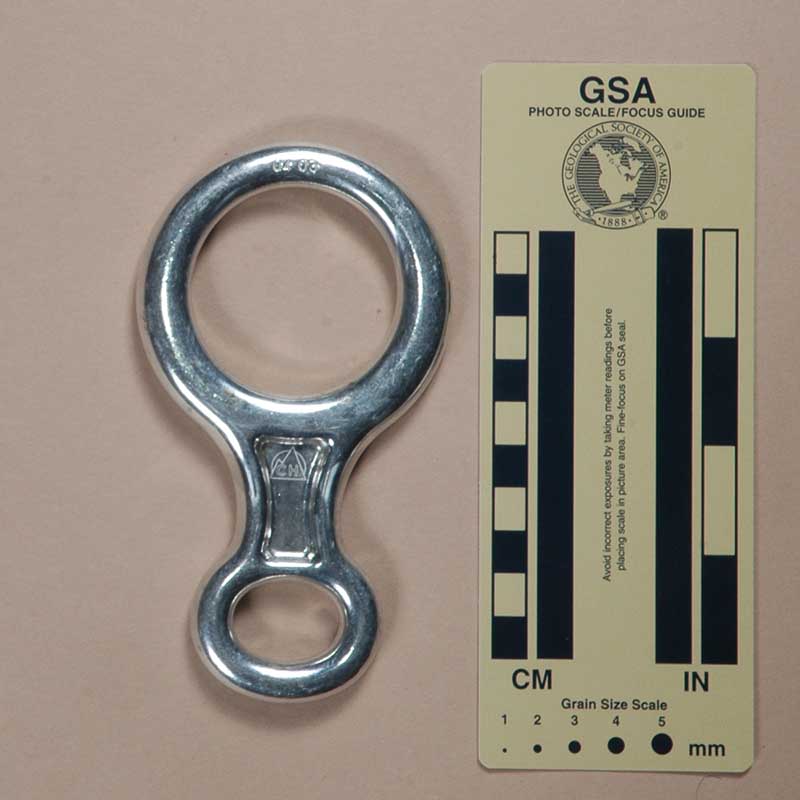
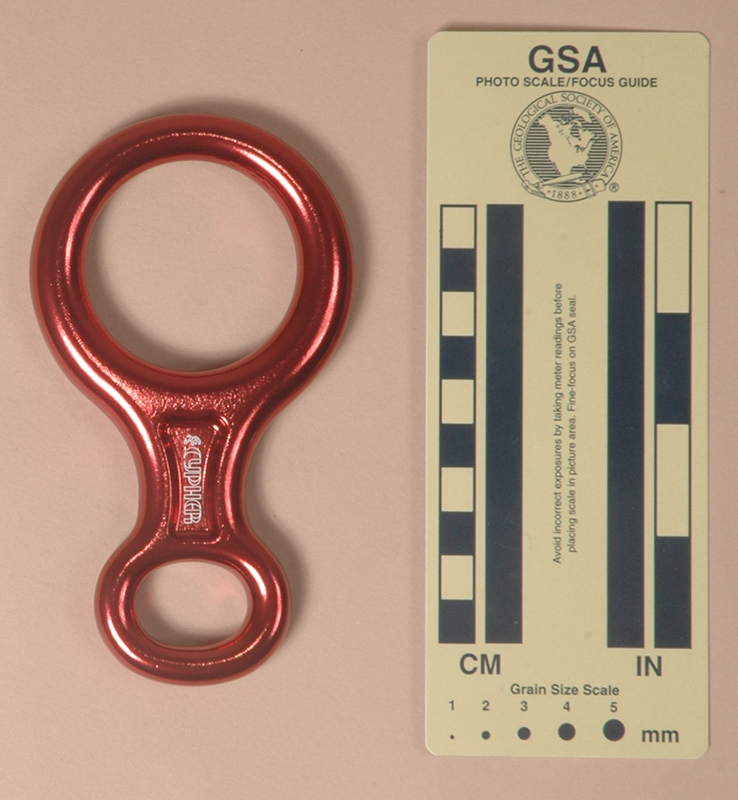
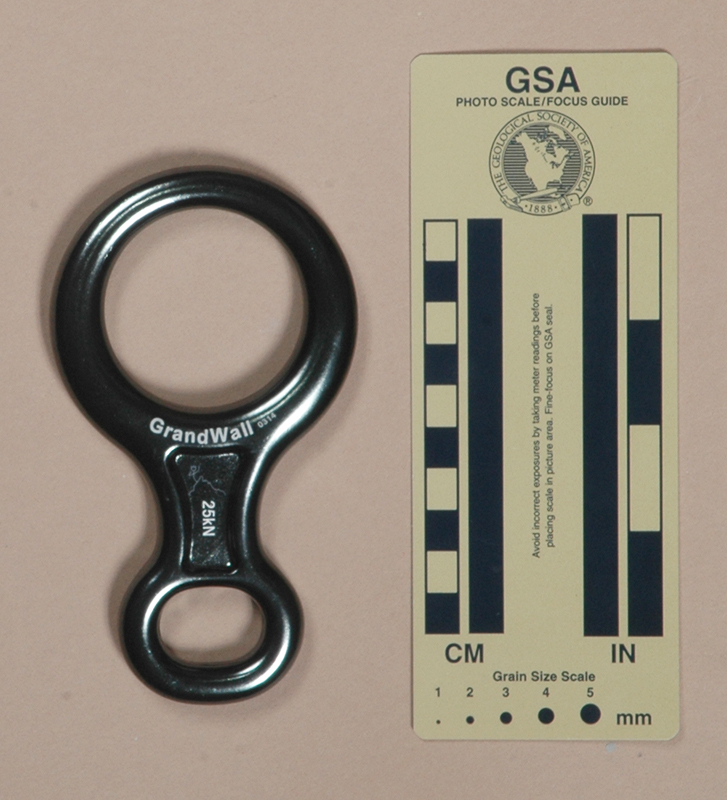
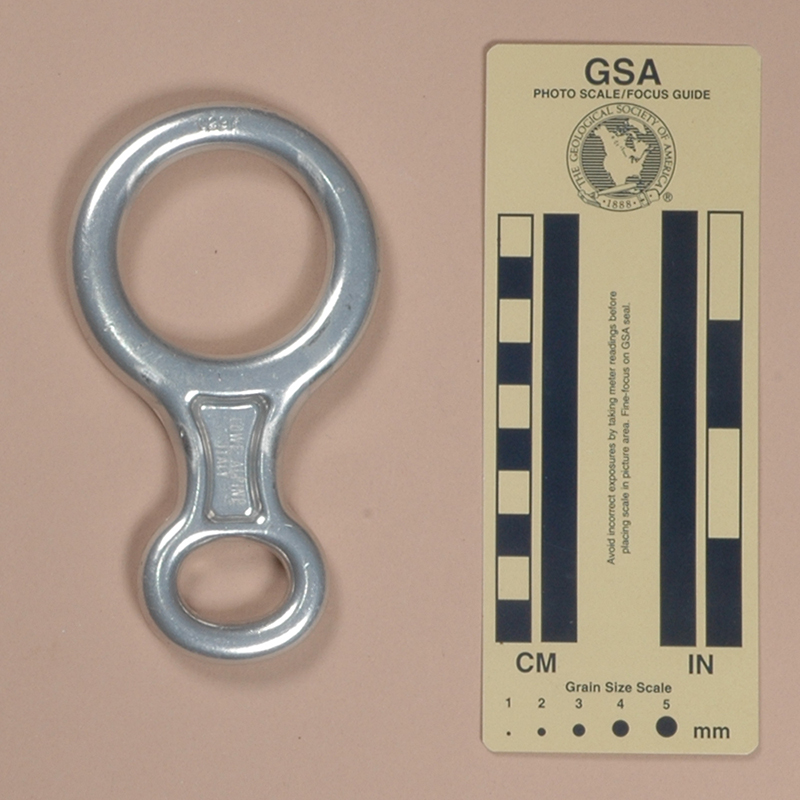
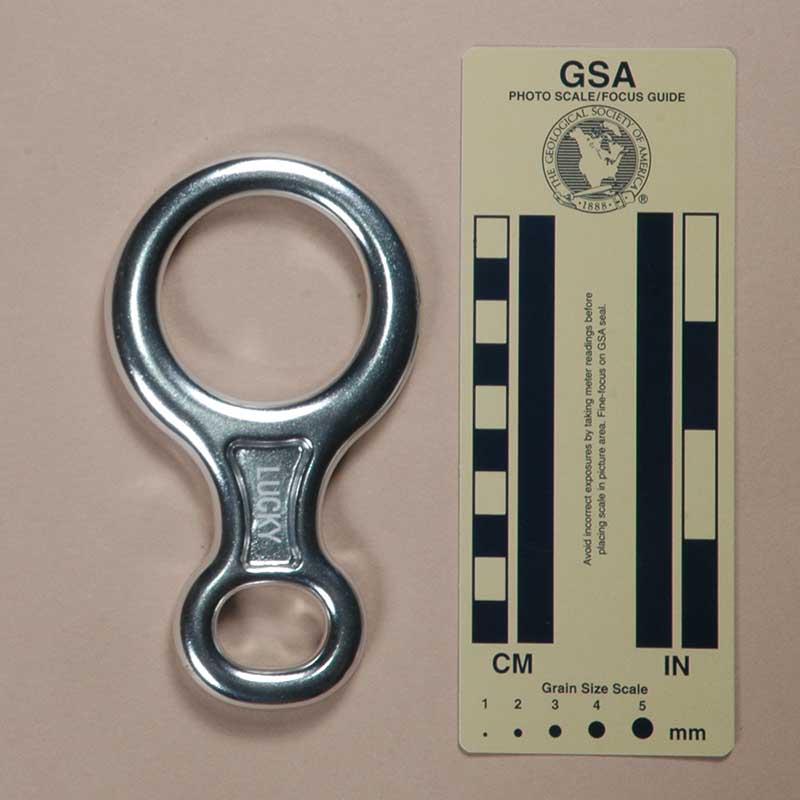
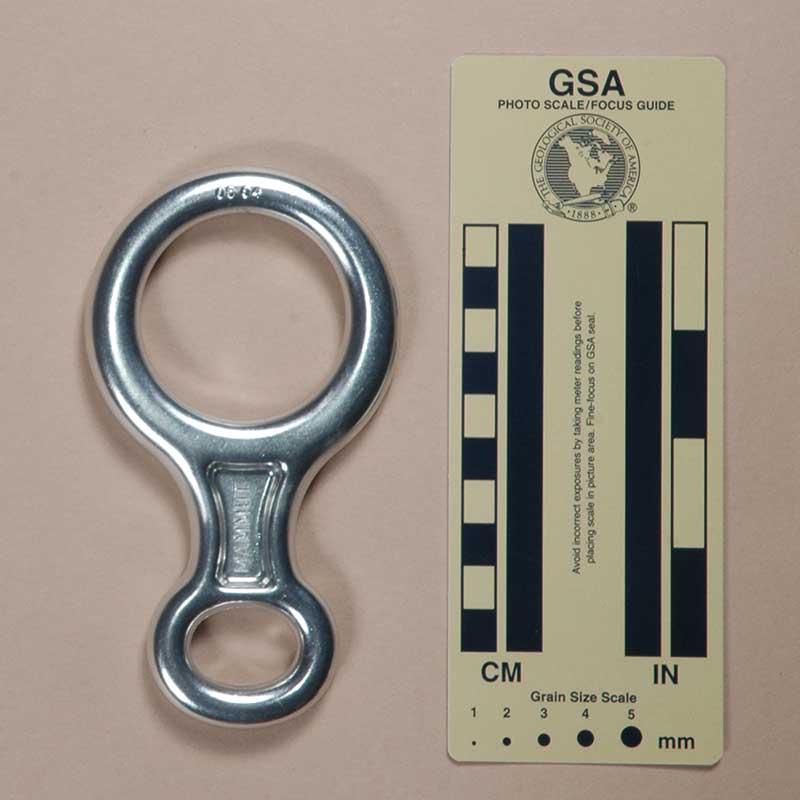
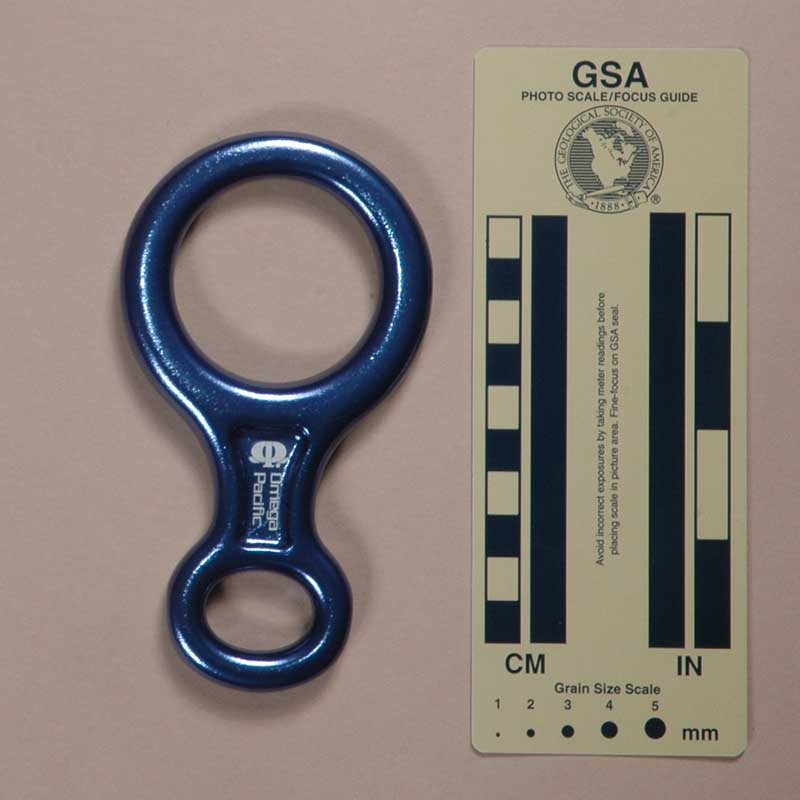
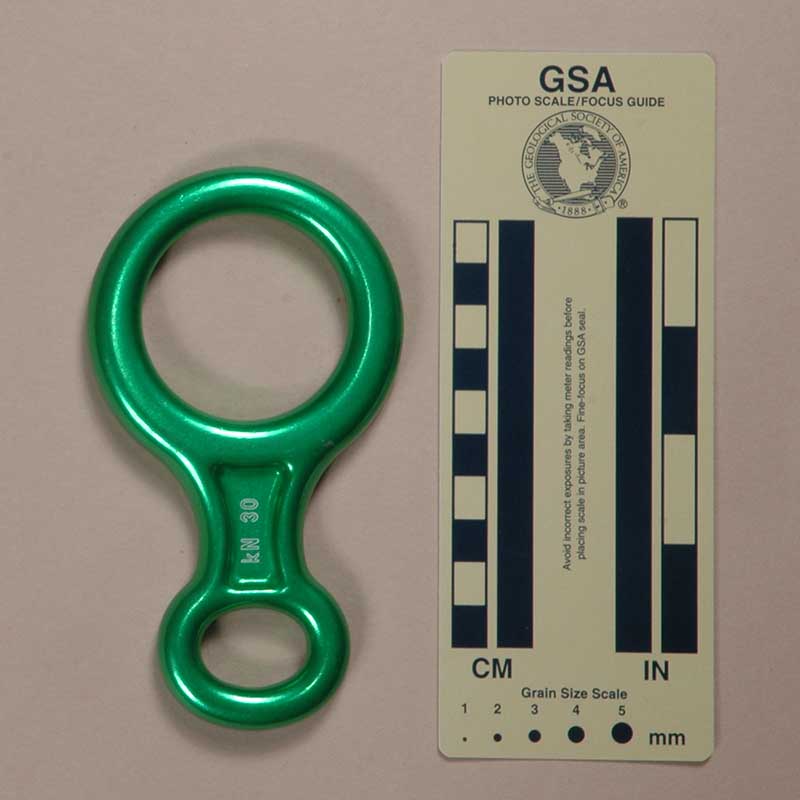
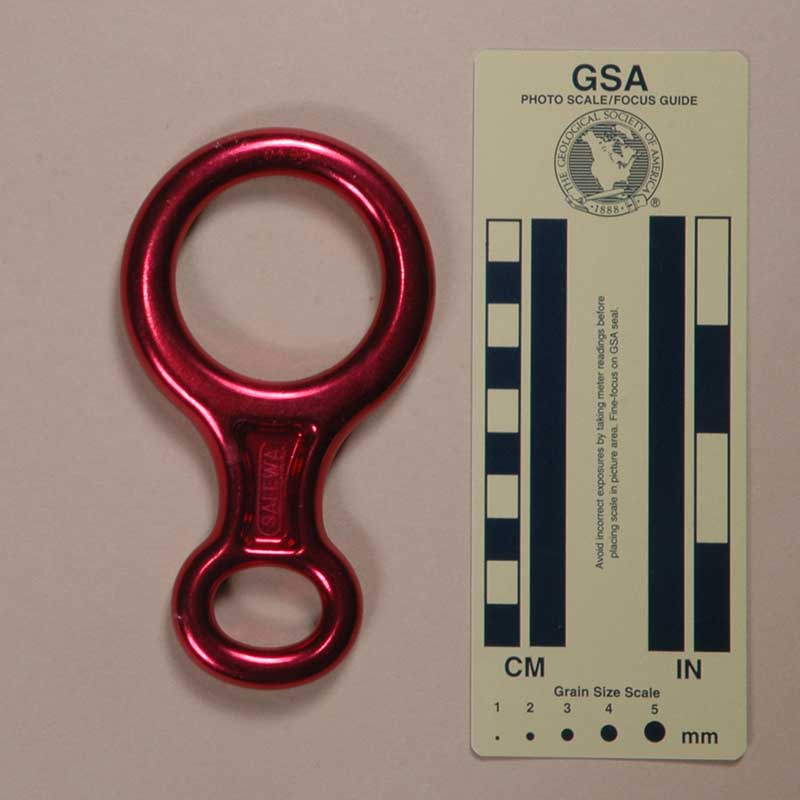
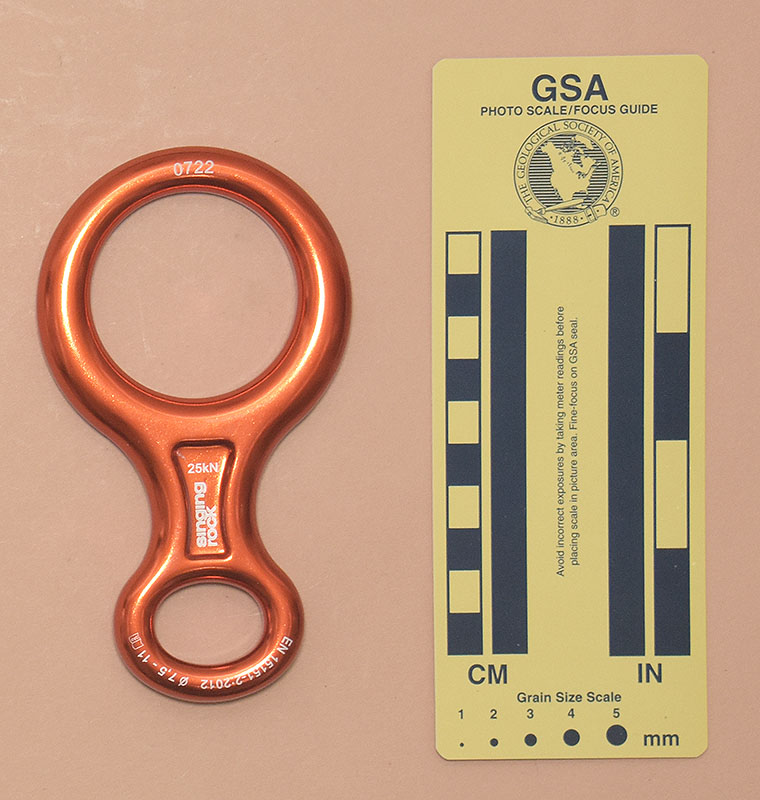
The Proverti CD 303 is a "midi" size, forged, aluminum eight sharing one of the most common designs of this type. The following eights are quite similar, except for their markings:
Some of these eights are made in Europe, and some in Asia. Some are rebranded eights made by one manufacturer for outside customers and labeled accordingly.
Each of these eights is 131±1 mm. tall and 74±1 mm. wide. Their weights fall in the 105±4 g. range. These are normal manufacturing variations that have no practical significance. Although similar, these eights are not identical, and close inspection will reveal some minor differences in their shapes. None of these affect their performance to any noticeable degree.
The AustriAlpin and C.A.M.P. 928.00/01 appear to have harder anodizing than the others, and may wear better. My experience with the high-quality hard anodizing on CMI eights is that hard anodizing provides considerable protection on clean ropes, but the protection provided against cave mud is limited. In bad conditions the anodizing soon breaks through, and the protection is lost. For this reason, I don't place a lot of value on hard over soft anodizing for caving use, but I prefer hard anodizing for climbing applications.
The rope hole is shorter than normal, so it may provide too much friction on stiff or muddy ropes. Cavers should consider this possibility.
Some caver friends refuse to use figure eights because they twist the rope. I think that concern is absurd for short drops, and eights are short drop devices.
Many climbers think that eights are outdated, and prefer to rappel on belay tubes. I prefer belay tubes for belaying, but belay tubes get very hot when used for rappelling. Eights run much cooler. On any given day, I make my choice about carrying a separate rappel device by considering several factors, and it is not unusual for me to carry an eight if I expect to be rappelling more than a very short distance.
None of these eights have slots for Sticht-type belaying, and their oval eyes are not really designed for that purpose. They can be used for "Sticht" belaying on 9 mm. rope, but the eye is a bit short for optimum use on 11 mm. rope. Some people will belay with an eight rigged for rappelling, but I don't like that practice since it does not provide the automatic lock and the friction that a Sticht does.
Most of these eights have strength markings of 25 or 30 kN. To put this in perspective, the value required by EN 15151-2:2012 is only 7 kn. The excess provides margin for wear.
The Proverti brand is owned by Protekt, a Polish firm founded in 1989 in Łódź. Protekt specializes in products designed to protect against falling from a height. Protekt's products include safety harnesses, safety shock absorbers, safety cables, and permanent safety systems. Combining the experience gained during many years of production of harnesses and equipment for industrial mountaineering with the passion of our employees, Protekt decided to launch the Proverti brand focusing on the production of sports harnesses and climbing equipment. Proverti had its own web presence from 2014 until 2019.