This page will not fit into a tiny viewport. Please choose a full-size monitor with a full-width window or select the abridged New Wave pages.


Version A

Version B
|
|
|
| Version A | Version B |
LACD was founded in 2002 and operates from Haar-Ottendichl, Germany. They provide climbing and mountaineering equipment for both beginners and experienced climbers. LACD only supplies dealers, authorities, associations, etc.. They do not not deliver to consumers.
[ Top | Version B | Return to Belay Tubes ]
|
|
 |
 |
| Front | Rear | Top |
 |
 |
 |
| Left | Right | Bottom |
I acquired my LACD Evo Alpine from Alpinsport Basis GmbH in 2012.
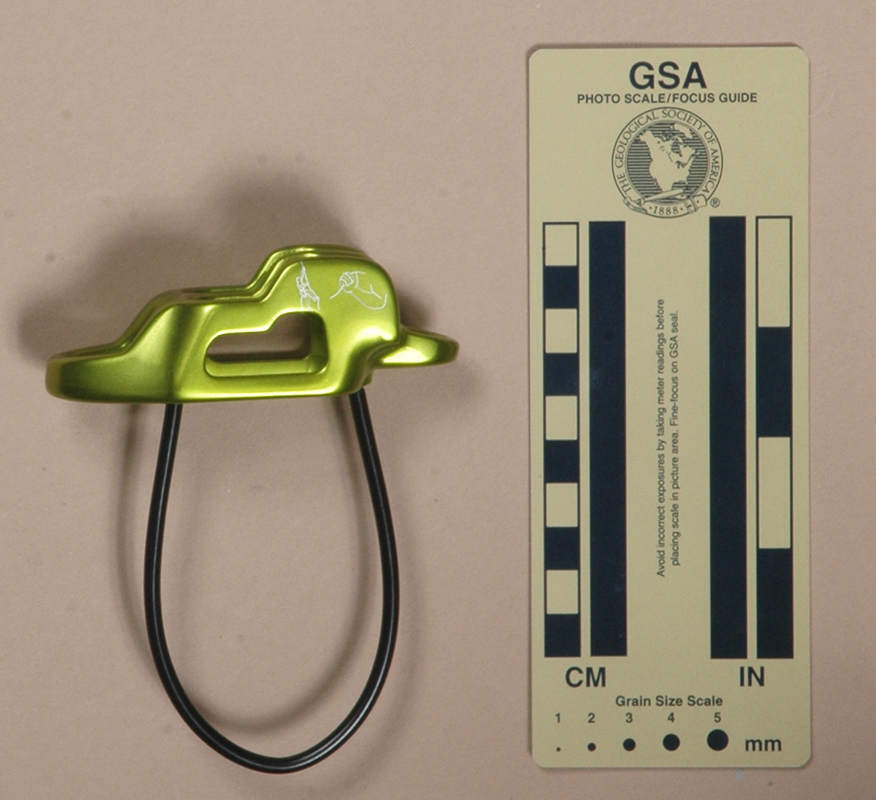
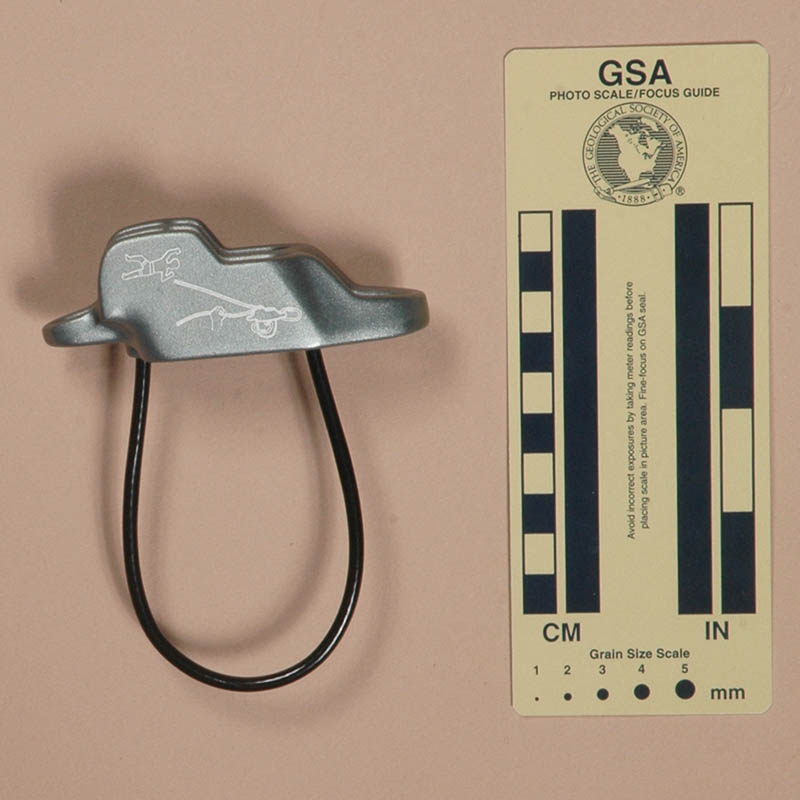
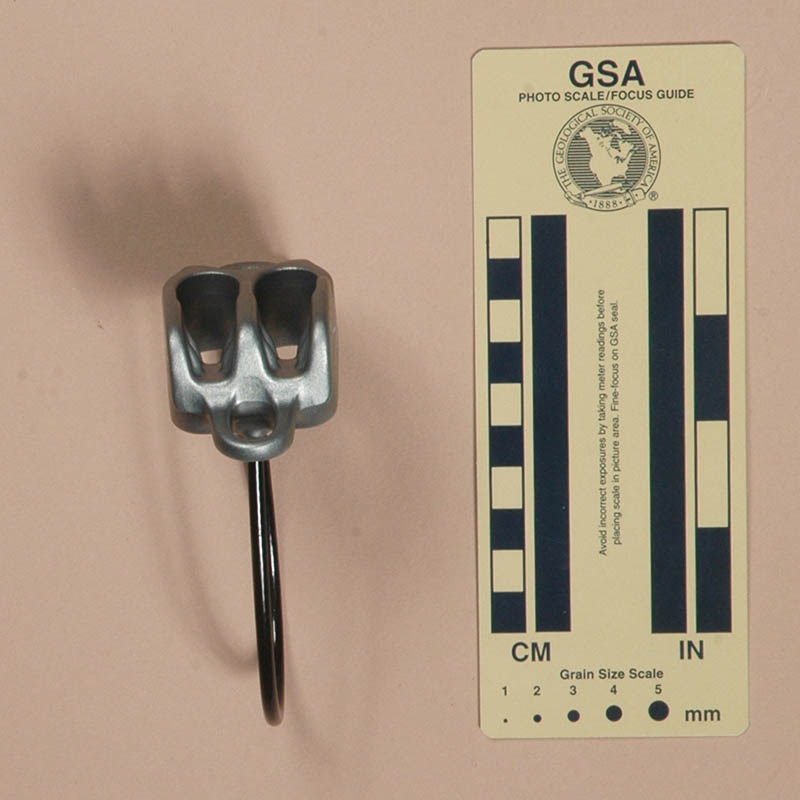
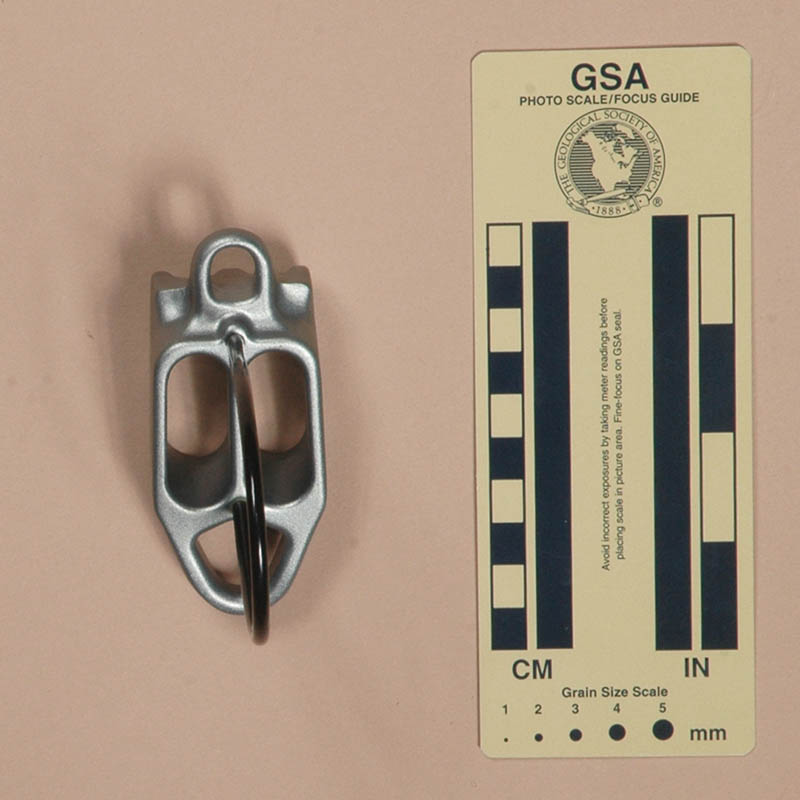
The LACD Evo Alpine is a notched belay tube. It is forged from aluminum alloy and soft anodized. Mine is 94 mm. long, 40 mm. wide, 114 mm. high, and weighs 92 g. The slots are 34 mm. long and 15 mm. wide. The top of the Omega oval carabiner that I use for comparing belay tubes sits 20 mm. below the ends of the slots.
The LACD has a horizontal eye carabiner eye at the end opposite the grooves, much like the eye on the Grivel Master Pro RTMAPB. The LACD has a stiff, plastic-covered cable keeper.
One side is printed with a climber icon, the LACD ’logo, a book-with-an-"i" icon, and a hand-holding a rope icon. The other side has a printed diagram showing how to rig the device for top-roping.
The LACD Evo Alpine is one of the following closely-related notched belay tubes:
|
|||||||||||||||
Each of these is larger and heavier than the averages for the belay tubes in my collection. The extra mass helps from a thermal perspective, but I find these to be simply too large for my taste. The LACD Evo Alpine, Version A does not have the lightening cutouts, and so it is the heaviest of the lot. I would rather carry a lighter belay device. Less metal means less weight to carry, but it also means less ability to absorb heat. For belaying, this is not usually a major concern, while for rappelling, any belay tube can get quite hot.
The top surface is stepped, allowing for deeper rope grooves without lowering the notches. The V-notches used in this design do not seem to be very effective at increasing the braking force. The notches do not have the narrow angle found on the Trango Jaws and its equivalents, so they do not create the same wedging action.
Normally I rig for belaying from the harness while using the notches. Reversing this arrangement removes the notches from play, resulting in less friction for braking.
[ Top | Version A | Return to Belay Tubes ]
|
|
 |
 |
| Front | Rear | Top |
 |
 |
 |
| Left | Right | Bottom |
I acquired my LACD Evo Alpine, Version B from Alpinsport Basis GmbH in 2015.
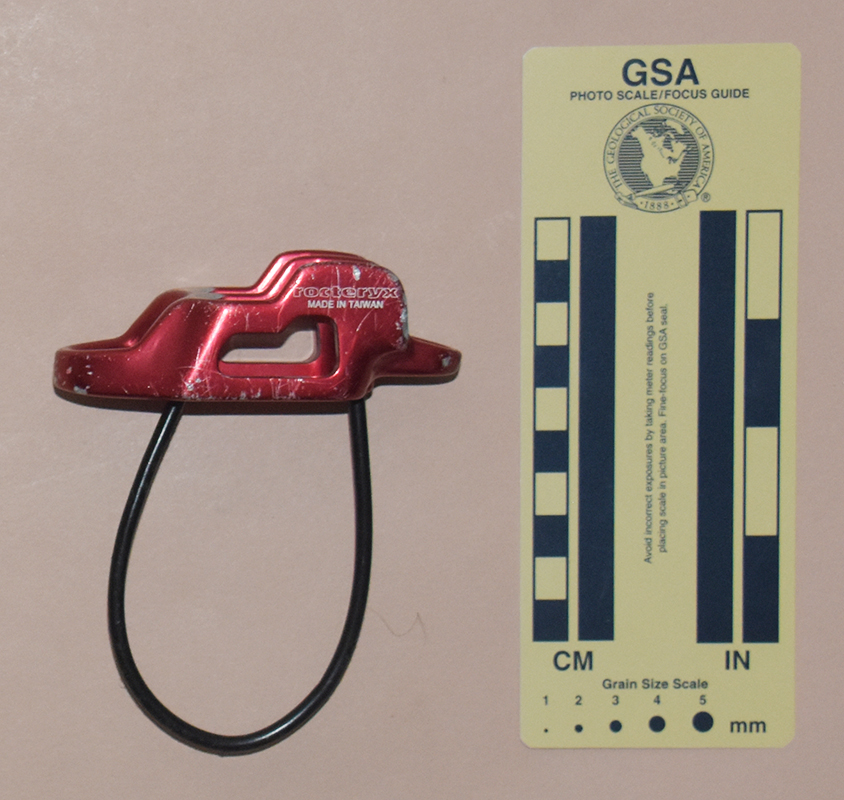
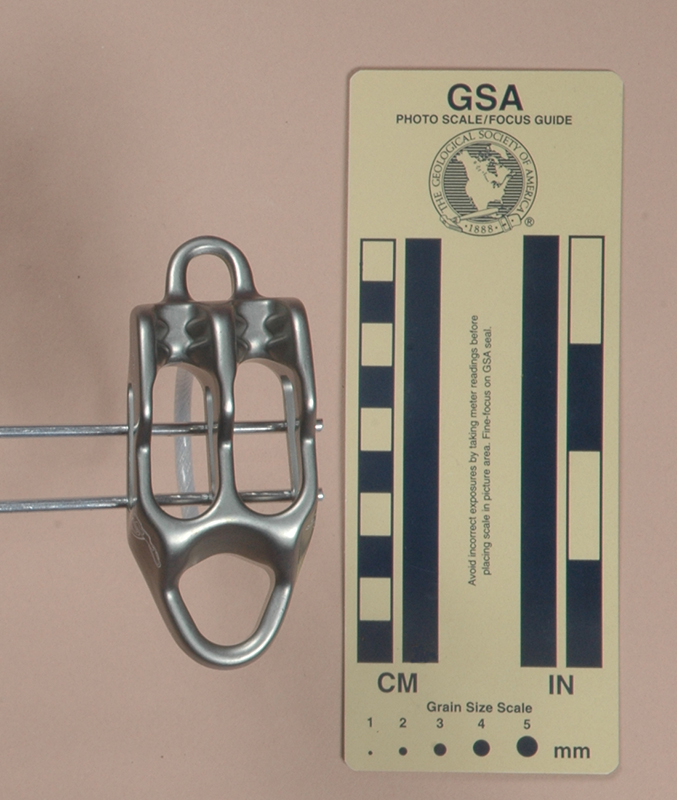
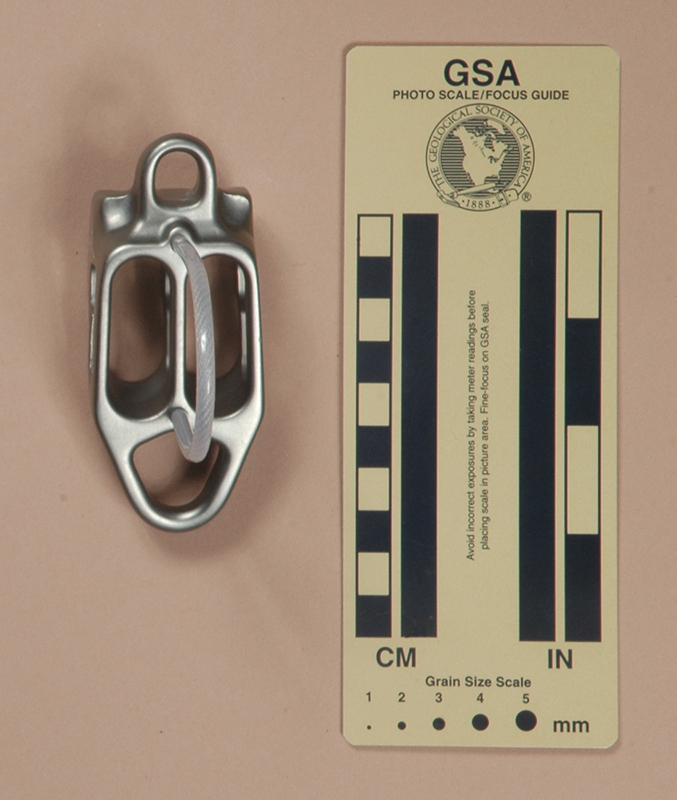
Version B is forged from aluminum alloy and soft anodized. Mine is 41 mm. long, 95 mm. wide, 85 mm. high, and weighs 79 g. The slots are 34 mm. long and 14 mm. wide. The top of the Omega oval carabiner that I use for comparing belay tubes sits 21 mm. below the ends of the slots.
Version B has openings in the sides and in the central rib, making it 13 g. lighter than the previous version.
One side is printed with a climber icon, the LACD ’logo, a book-with-an-"i" icon, a hand-holding a rope icon, "0115," and "0218." The other side has a printed diagram showing how to rig the device for top-roping.
The LACD Evo Alpine is one of the following closely-related notched belay tubes:
|
|||||||||||||||
Each of these is larger and heavier than the averages for the belay tubes in my collection. The extra mass helps from a thermal perspective, but I find these to be simply too large for my taste. The LACD Evo Alpine, Version A does not have the lightening cutouts, and so it is the heaviest of the lot. I would rather carry a lighter belay device. Less metal means less weight to carry, but it also means less ability to absorb heat. For belaying, this is not usually a major concern, while for rappelling, any belay tube can get quite hot.
The top surface is stepped, allowing for deeper rope grooves without lowering the notches. The V-notches used in this design do not seem to be very effective at increasing the braking force. The notches do not have the narrow angle found on the Trango Jaws and its equivalents, so they do not create the same wedging action.
Normally I rig for belaying from the harness while using the notches. Reversing this arrangement removes the notches from play, resulting in less friction for braking.
[ Top | Version A | Version B ]