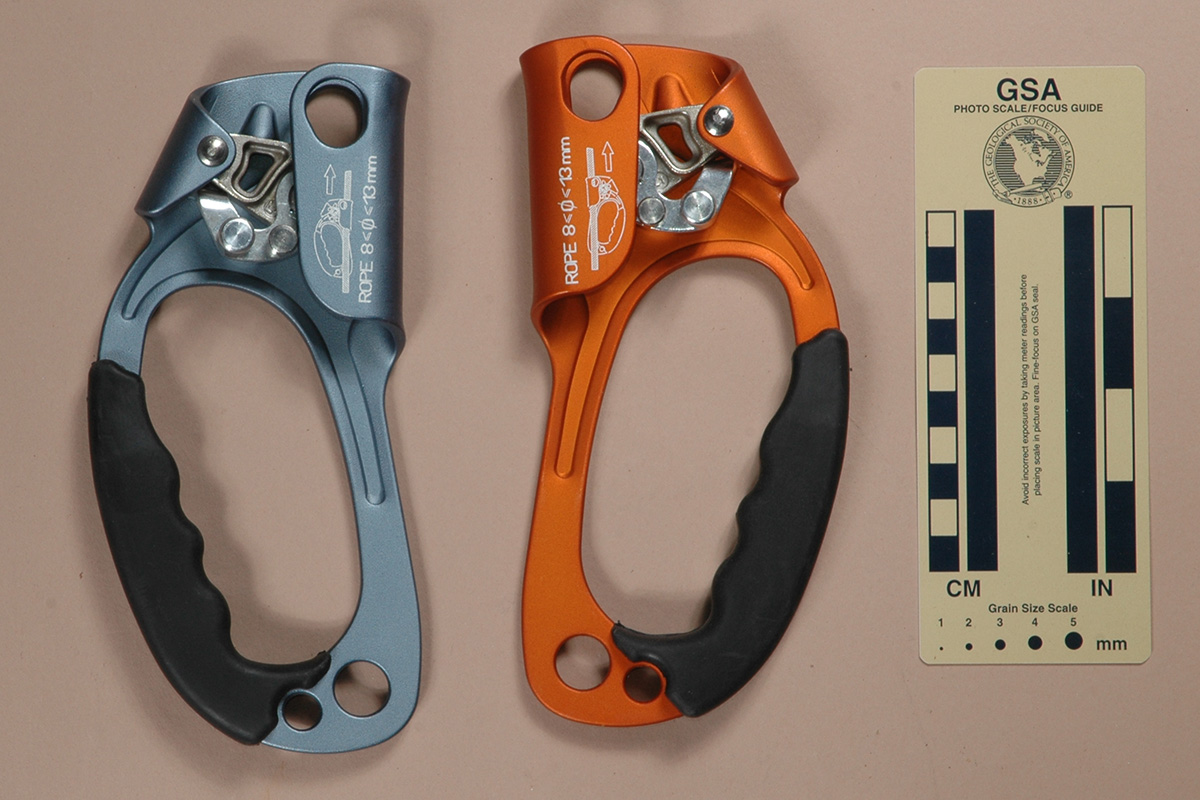
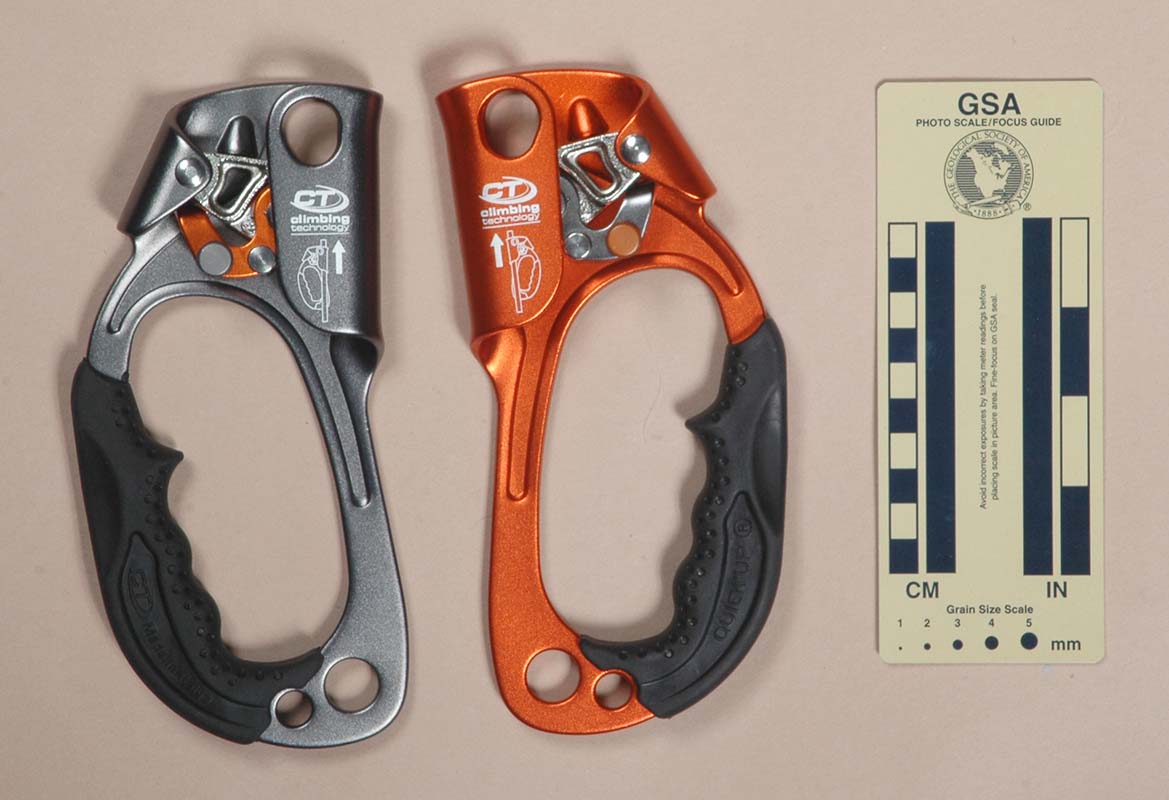
This page will not fit into a tiny viewport. Please choose a full-size monitor with a full-width window or select the abridged New Wave pages.

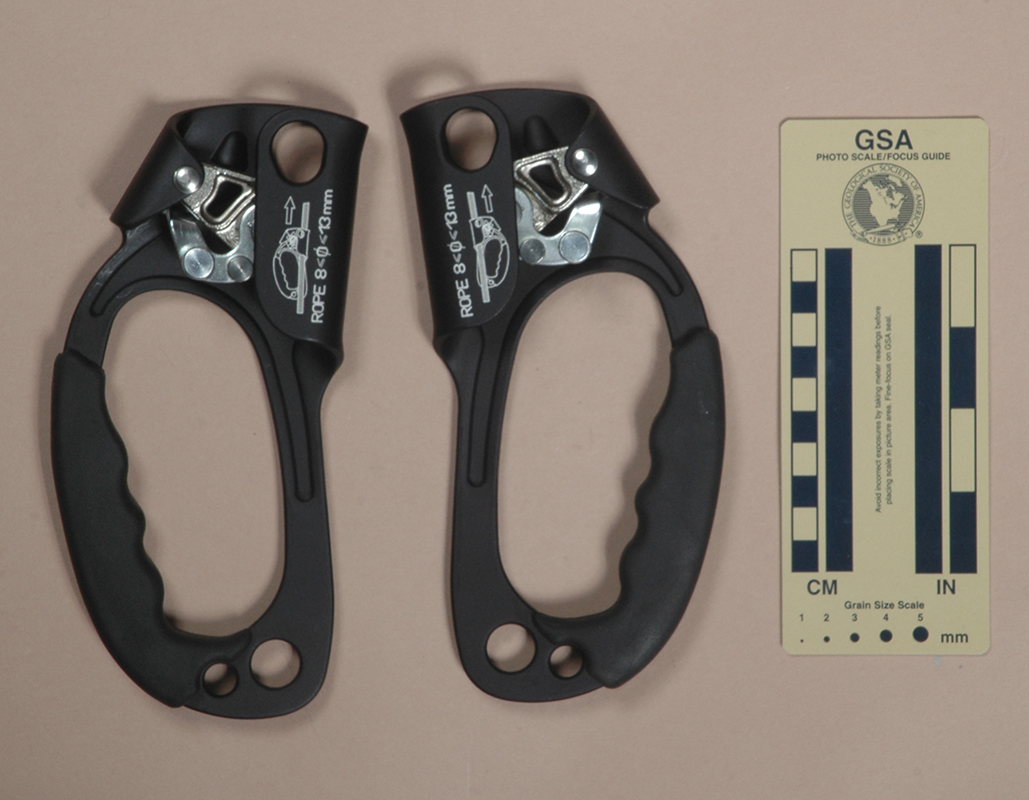
Version A

Version B
|
|
|
| Version A | Version B |
Singing Rock is a climbing equipment manufacturer in the Czech Republic. The headquarters, production, training and testing centre is located in Poniklá. Our textile production plant is situated in Semily. The production of metal products and components is placed in Sudkov. The Kladno training centre for work at height is just 20 min from Prague. Singing Rock supplies products to more than 65 countries worldwide through its network of distributors and agents.
The Singing Rock company was founded in 1992. Before starting Singing Rock, one of its founders, Vladimír Křapka, was earning his living by sewing the backpacks and sandals which became very popular in former Czechoslovakia under the name Tucan. The Tucan brand was at the very beginning of the new company's activities, from the backpacks and sandals to the climbing harnesses. After founding Singing Rock in 1992 and starting the partnership with Jan Goddefroy from Belgium, a new company name and logo were chosen in cooperation with a British advertising agency. Thus the "Tatrman" who was the initial representative of the Singing Rock's identity was brought to life. It showed an Indian during the traditional Sun dance at the place where the rock really does sing thanks to the wind – and that is where the name Singing Rock came from.
The "Tatrman" logo was in use until 2000 when it was replaced by the "arrow." The company logo got this unique shape by accident – their longterm graphic designer Jiří Mělnický from the H.R.G. printing house used the symbol of an American road sign on the cover of the catalogue. Vláďa Křapka liked this idea so much that he had a new company logo created using this sign. Like the "Tatrman," the "Singing Rock arrow" is inspired by Western culture and stands for a clear, straight direction, sense of purpose and, most of all, the vertical – a direction connected with everything that Singing Rock creates.
The private financial fund ARX Equity Partners bought Singing Rock in 2009. At the same time Singing Rock s.r.o. and Lanex a.s. merged. The successor company had the business name Lanex a.s. They acquired Raveltik s.r.o. in 2011 to extend the portfolio with the metal products; expansion to the market with products for ice climbing and mountaineering. Two years later, in 2013, the Singing Rock division split from Lanex a.s. and reorganized back to Singing Rock s.r.o.
[ Top | Version B | Return to H.E.C. Ascenders ]
|
|
 |
| Front View: Closed | Rear View: Closed |
 |
 |
| Front View: Open for Rigging | Rear View: Open for Rigging |
I acquired this Singing Rock Lift from Alpinsport Basis GmbH in 2015.
This version is 189 mm. tall, 90 mm. wide, 30 mm. thick, and weighs 219 g.
 The shell is a tall irregular shaped stamping made from 3.9 mm. aluminum alloy sheet metal. A 16 mm. wide rope channel is formed in the upper portion of one side and a smaller cam channel lies opposite the first. A hole drilled through both sides of the cam channel accepts a 6 mm. rivet. The cam and cam spring are mounted on this rivet. The handle below the cam has a soft "rubbery" hand grip molded into place. The hand grip has four finger grooves. A 14.8 mm. sling attachment hole is punched below the handle opening, and a smaller 9.8 mm. hole is punched outside the first. A 16.0 by 18.7 mm. pear-shaped hole punched through both sides of the rope channel provides an attachment point just above the cam. There is a punched cam stop that does not contact the top of the cam. A stamped reinforcing rib extends from the bottom of the shell, up the front strap, behind the cam, and partly down the back strap.
This ascender uses a standard Climbing Technology cam found on many of their chest, hand, handled, double-rope, and foot eccentric cam ascenders. The cam is a plated skeletonized steel casting. The cam radius,measured from the pivot, increases from 38 to 57 mm. over an angle of 40°, giving a 31° cam angle. The cam has numberof small conical teeth, all of which have their axes approximatelyparallel to the lower surface of the cam. The tooth pattern is(3.2.4)(1H1.2)^3(3.2), where the "H" stands for a 4 mm. wide, 6 mm.wide inverted subtriangular hole.
A spring-loaded manual safetyis mounted on an axle riveted to the center of the cam. The normal action of the spring holds the safety against the cam.When the cam is opened, the shell interferes withthe safety tab, thus preventing opening the cam. If the safetyis moved away from the cam (opposing the spring), the tab willclear the shell and the cam will open. At full open the safetycan be released and the spring will hold the arm against the back of the shell, locking the camopen.
The front of ascenders are printed with "ROPE 8<Ø<13mm" and a rigging illustration. The rear are printed with "Made in EEC 0112" (…0510 on the right), "0149-39-12" (0001-21-12 on the right), a book-with-an-"i" icon, an up-pointing arrow, "singing rock," "CE 0333," "EN 567," the UIAA logo, and "Patented."
The Singing Rock Lift is one of the following group of ascenders, all of which are variations of the same basic design using the same cam safety style:
|
|
||||||||||||||||||||||||||||||||||||||||||||||||||||||||||||
Climbing Technology Ltd. of Cisano Bergamasco, Italy made all of these ascenders. Climbing Technology also made a version of the Amelia for Repetto Sport, but I never acquired that version.
These are well-made ascenders. All sharp edges have been removed. The attachment points are simple yet well-rounded holes in the shell; even so, I would consider their small radius too sharp for directly attaching sling ropes. They are probably acceptably rounded for webbing, but considering the proximity of the attachment points to the main rope, I would recommend using a small maillon for most attachments in order to reduce the risk of sling abrasion. The lower attachment hole could theoretically have the same safety problems as the one described for the Clog Version B.
The upper rope attachment hole is located very close to the main rope. A carabiner through the upper attachment hole will probably drag on the main line. Note that such a carabiner will prevent putting the ascender on or off rope, so one's climbing system must be designed accordingly.
The safety is one of the easiest to use with one hand. It reminds me of the one on the Hugh Banner and the PMI Cat, but the ones on these are smoother. The small pin on the cam safety performs an interesting function: pushing down on the post causes the safety tab to lever the cam open, but not enough to let the rope free. This provides an alternate way to "thumb" the ascender. The "thumbing" feature is clever but does not work well on ropes larger than about 11 mm: the cam does not open enough for the down-sloping teeth to reliably miss catching on the rope sheath. I think it is better to simply grasp the ascender from above and lift the ascender in the traditional manner (unless, of course, you are one of those who prefers to climb Frog). The ribbed handle is comfortable enough for my large hands, but I don't climb by gripping ascenders at their handle.
The rubber handle grips have evolved with time. They are not particularly comfortable for me because the ribs are spaced poorly for my large hands. In addition, the handle on the older models is "too square" for my taste. A file can eliminate both objections, but I suspect that few people will find a need to modify theirs.
The cam is well made. The cam stop is placed in a position where it will actually touch the cam if the ascender is off rope. Many manufacturers put cam stops in odd places where they can never touch the cam. I don't see much need for cam stops, most active cavers don't weight enough to bend their ascenders to failure by cam pull-through, and there is no need to shock load one's ascenders.
The cam closing stop contacts the cam at the same time that the cam face contacts the inside of the rope groove. In any case, the stop only functions when the ascender is off rope, so I consider it to be superfluous. Its only purpose is to achieve a higher strength in artificial tests prescribed by various standards.
The holes in the cam face are intended to reduce the risk of ascender slippage due to mud-caked cam teeth. The design appears superior to some, but most ropes muddy enough to stop other ascenders will stop the this one as well. If you climb muddy ropes, expect to encounter slipping problems with any eccentric cam ascender.
This ascender has the same pit lip disadvantage as the Clog and other stamped frame ascenders, although the reinforcing will help prevent bending.
I'm not sure the extra holes are needed at the base. Except for the Petzl Pompe, I've never found a real need for a second hole. Some people like them, and I might find them more appealing if they were large enough for a standard carabiner to fit through.
If you are looking for a stamped-frame handled ascender, any of these would be a good choice.
[ Top | Version A | Return to H.E.C. Ascenders ]
|
|
 |
| Front View: Closed | Rear View: Closed |
 |
 |
| Front View: Open for Rigging | Rear View: Open for Rigging |
I acquired this Singing Rock Lift from Buffalo Gap Outfitters in 2019.
This version is 193 mm. tall, 89 mm. wide, 29 mm. thick, and weighs 191 g.
The shell is a tall irregular shaped stamping made from 4.0 mm. aluminum alloy sheet metal. A 15 mm. wide rope channel is formed in the upper portion of one side and a smaller cam channel lies opposite the first. A hole drilled through both sides of the cam channel accepts a 6 mm. semi-tubular rivet. The cam and cam spring are mounted on this rivet. The handle below the cam has a soft "rubbery" hand grip molded into place. The hand grip has a small index finger support. A 29.5 mm. wide, 21.5 mm. high subtriangular sling attachment hole is punched below the handle opening. A 16.9 by 18.1 mm. oval-shaped hole punched through both sides of the rope channel provides an attachment point just above the cam. There is no cam stop or reinforcing rib.
 The cam is a skeletonized stainless steel casting. The cam radius increases from 38 to 56 mm. over an angle of 37°, giving a 30° cam angle. The cam has number of small conical teeth. The upper teeth are parallel to the top of the cam, but the lower teeth have their axes sloping downward. The tooth pattern is (3)(4.1H1)^3(2.3)^2, where the H stands for an oval hole.
A spring-loaded manual safety bar is riveted to the cam. The safety has a plastic thumb tab molded over it. The normal action of the safety spring holds the safety against the cam. When the cam is opened, the shell interferes with the safety bar, thus preventing opening the cam. If the safety bar is moved away from the cam (opposing the spring), it will clear the shell and the cam will open. At full open the safety can be released and the spring will hold the safety against the back of the shell. This provides a means of locking the cam open.
The front of ascenders are printed with a dashed up-pointing arrow, "UP," a rigging illustration and "singing rock." The rear are printed with "CE," "1019," an up-pointing arrow, "singing rock," "EN 567:2013," "Ø8-13mm," "EN12841:2006/B" "•Ø10-13mm 120kg," "LIFT-L" (…-R on the right), a book-with-an-"i" icon, a scanner code, and "0104RK8040918" (0102RK040219 on the right). Both sides of the hand grip have a molded up-pointing arrow and "singing rock" molded in raised letters.
This is a well-made ascender. I find the cam particularly easy to open one-handed with the proper hand, but rather difficult to open with only the "wrong" hand.
The tie-in hole is a bit funky. It is wide enough to sew 25 mm. webbing around the bottom flat, although that is not my recommendation. A maillon will slide more than it would in a round hole or inverted D-shaped hole, but I don't find that too annoying. Let’s just say that the hole is different than most, and leave it at that for now.
The index finger support digs into the middle finger of my large hands, but since I don't use handles while ascending, this is not a problem for me.
[ Top | Version A | Version B ]