

This page will not fit into a tiny viewport. Please choose a full-size monitor with a full-width window or select the abridged New Wave pages.

|
|
 |
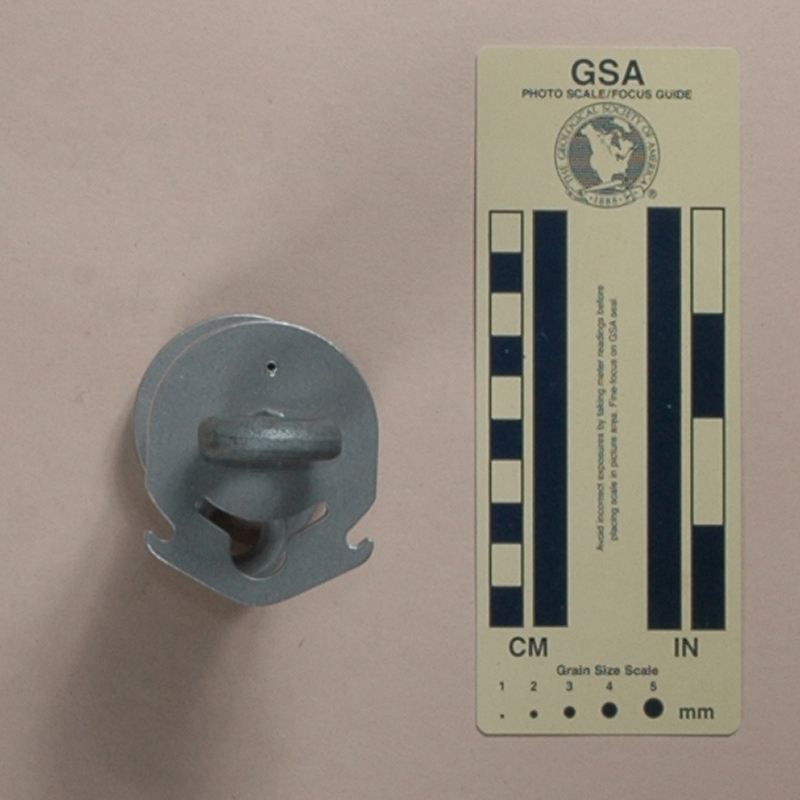 |
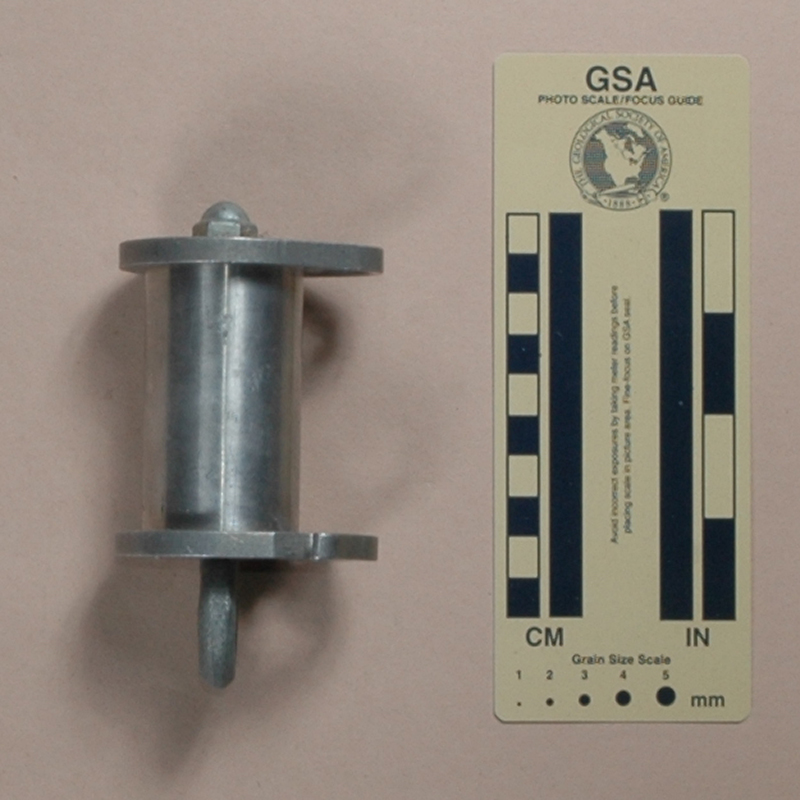
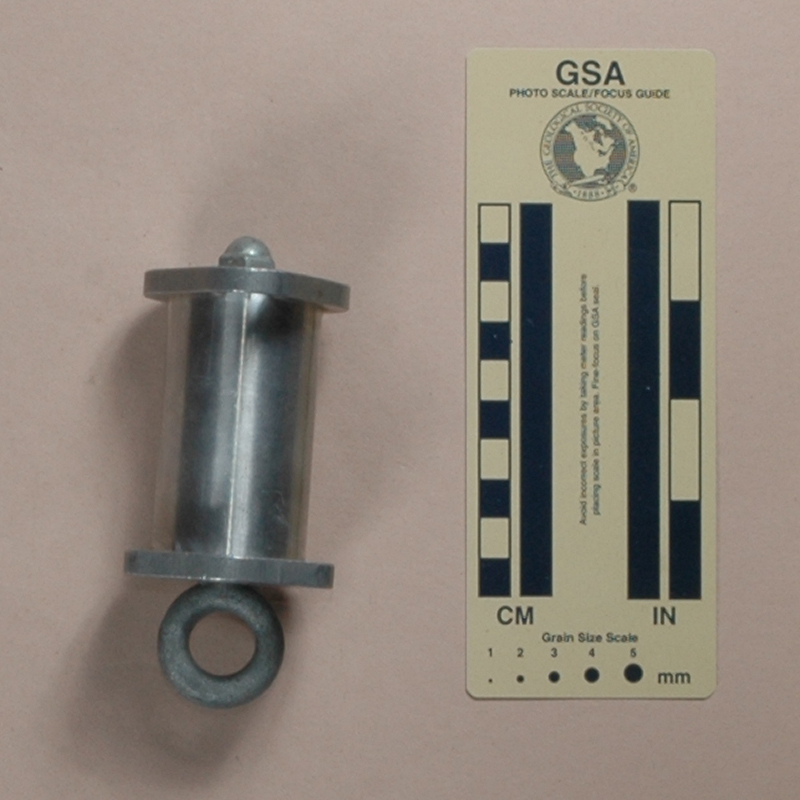
| Front View | Rear View | Bottom View |
I acquired this Forrest Escape line from John E. Weinel, Inc. in about 1985.
My Forrest Escape line is 118 mm. tall, 64 mm. wide, 52 mm. thick, and weighs 264 g.
It consists of a spool fastened between top and bottom plates with an eye bolt passing from bottom to top. The plates are secured with an acorn nut. The top plate has a rounded 1/2-inch (13 mm.) hole to guide the rope. The bottom guide has a similar hole with an elongated slot on each side, and two small horns. The spool is 39 mm. in diameter and the plates are 63 mm. apart. Small spring pins passing through the plates and into the spool piece keep the latter from rotating.
The top of the top plate is stamped "Pat. Pend."
The Forrest Escape Line is an emergency escape device that works on a special 4.5 mm. Kevlar cord.
Presumably the slots in the lower plate are to allow one to stop and enjoy the view while escaping from the Towering Inferno, since they make tying off easy. The eye bolt provides a place to clip in.
Kevlar cord is not the best material for general caving and mountaineering use, but this device wasn't intended for that purpose. As an escape device for bedrooms farther above ground level than mine, it would make a nice device.
The Forrest Escape Line is protected by U.S. Patent 4,550,801. The patent application was filed on November 29, 2984 and the Patent was issued on November 5, 1985.
Bill Forrest [1939–2012] started Forrest Mountaineering in 1968, initially operating from a basement in Denver, Colorado. Bill sold the company to Olsen Industries in 1985.[1]
Forrest created a fiberglass wall hammer and ice tools with interchangeable picks, the swami belt with adjustable leg loops, the daisy chain and shock-absorbing quickdraws, copperheads, Titons, and the Triton, an all-in-one piece for belaying, rappelling, and protection.[2]