

This page will not fit into a tiny viewport. Please choose a full-size monitor with a full-width window or select the abridged New Wave pages.

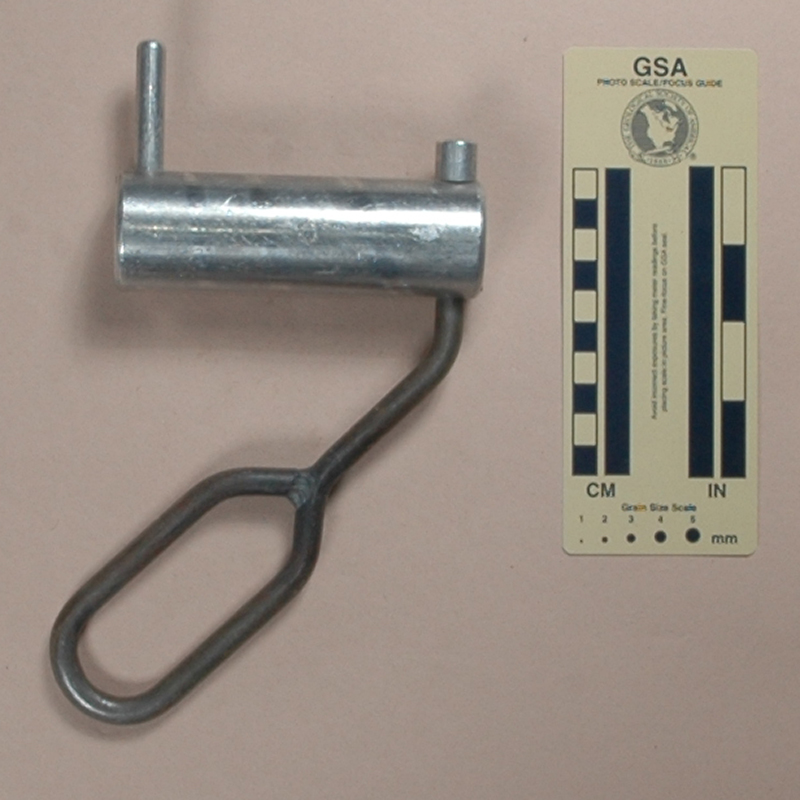
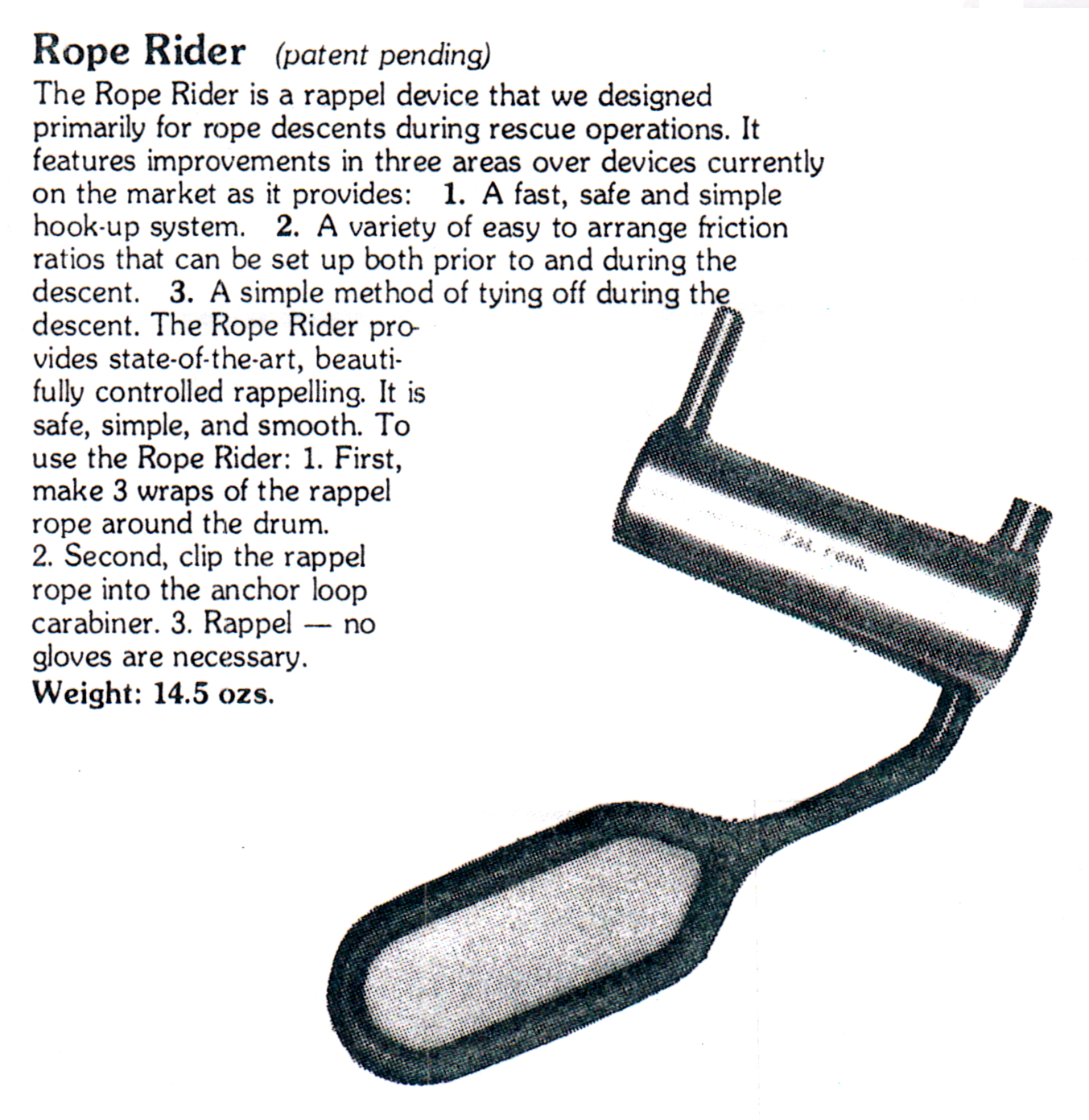
Rope Rider

Rope Rider Junior
|
|
|
| Rope Rider | Rope Rider Junior |
Bill Forrest [1939–2012] started Forrest Mountaineering in 1968, initially operating from a basement in Denver, Colorado. Bill sold the company to Olsen Industries in 1985.[1]
Forrest created a fiberglass wall hammer and ice tools with interchangeable picks, the swami belt with adjustable leg loops, the daisy chain and shock-absorbing quickdraws, copperheads, Titons, and the Triton, an all-in-one piece for belaying, rappelling, and protection.[2]
[ Top | Rope Rider Junior | Return to Horizontal Spools ]
 |
|
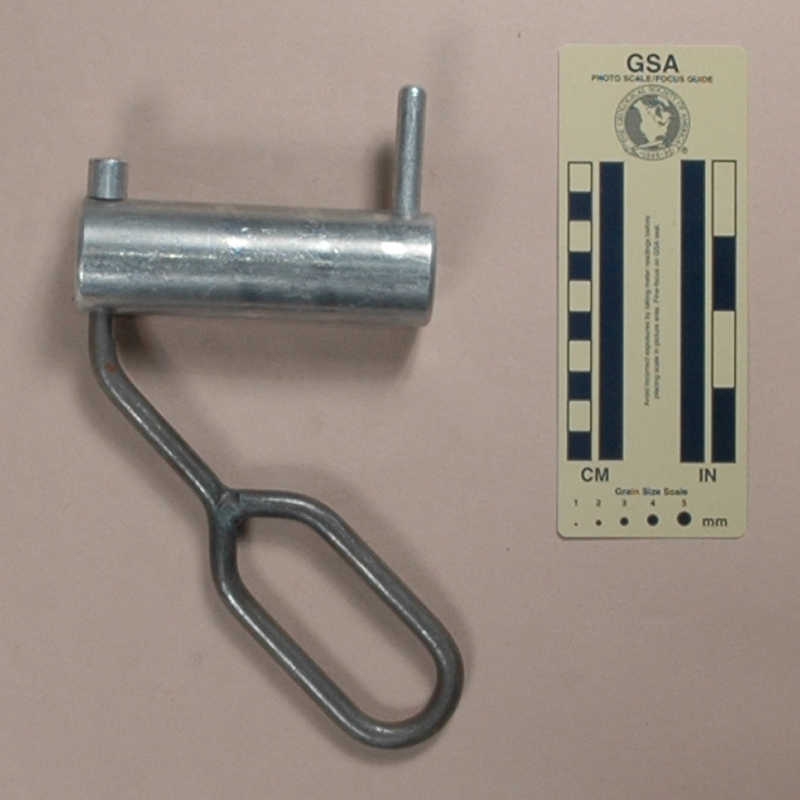
| Front View | Rear View |
I acquired my Forrest Rope Rider from John E. Weinel, Inc. in 1985.
My Forrest Rope Rider is 219 mm. tall, 122 mm. wide, 39 mm. thick, and weighs 412 g.
The Forrest Rope Rider consists of a 1/4-in thick, 1-1/2 O.D. aluminum tube mounted on a steel arm. The arm appears to be secured by an aluminum nut threaded on at the top. A small (3 mm.) pin in the end of the tube passes through the steel arm, keeping it from rotating. The eye on the arm is huge, and could have been made smaller to save weight. An aluminum post is threaded and pinned to then tube. It acts to help hold the rope on the spool. Both the post and the arm pass through both sides of the aluminum tube.
This device looks scary. I tested it on belay because I wasn't sure that anything could keep the rope on the spool. Actually, with some care it is easy, but a momentary lack of attention could cause one or more wraps to disengage. I found that three wraps gave me the right amount of friction (I weighed 82 kg at the time of the test). Aside from the worry about it coming off the rope, it handled nicely.
 |
Warning: The user must be careful or the rope can come off of the spool. The results could be non-habit-forming. |
|
 |
[ Top | Rope Rider | Return to Horizontal Spools ]
|
|
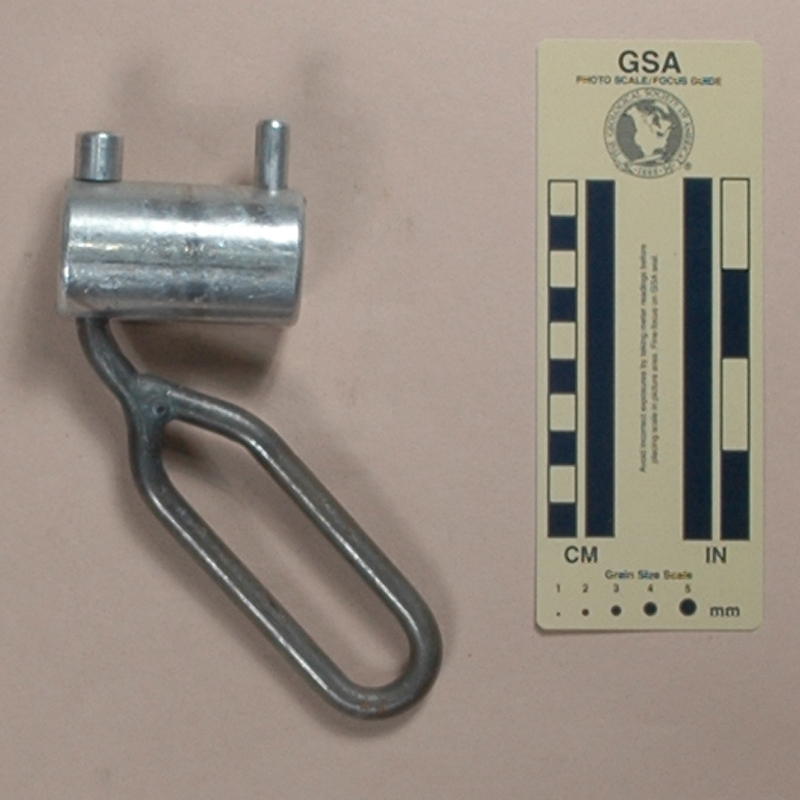 |
| Front View | Rear View |
I acquired my Forrest Rope Rider Jr. from John E. Weinel, Inc. in 1985.
My Forrest Rope Rider Jr. is 170 mm. tall, 76 mm. wide, 39 mm. thick, and weighs 300 g.
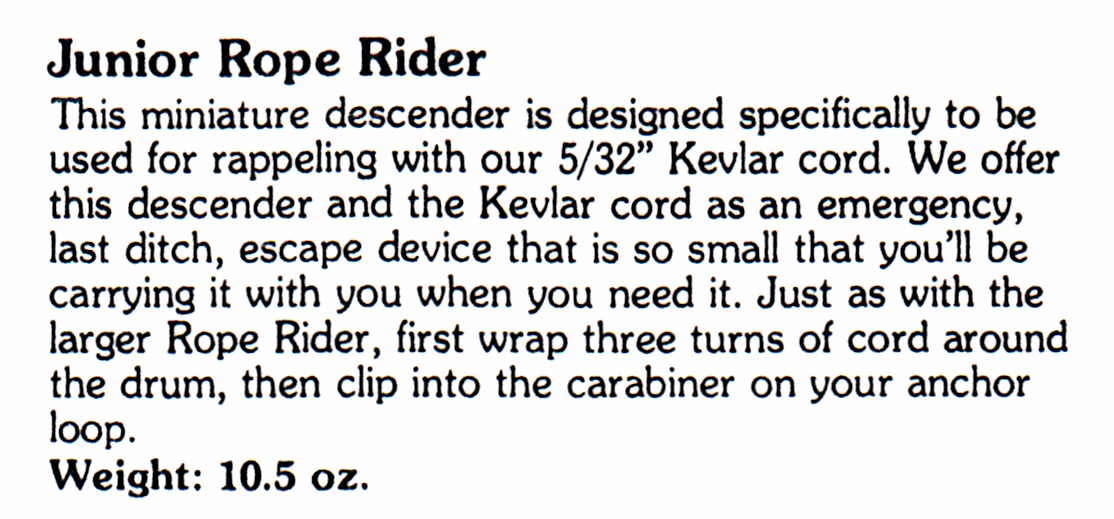
The Rope Rider Junior is a smaller version of the Rope Rider designed as an emergency descender specifically for 5/32 inch (4 mm.) Kevlar cord, with three turns wrapped around the drum. Although the spool portion is smaller, the arm isn't, and so the weight and size saving is less than one could expect. The guide pin is shorter than on the Rope Rider, so my concerns about the rope coming off are amplified.
|
Warning: The user must be careful or the rope can come off of the spool, transforming the rappeller into a skydiver sans parachute. |
|
 |
[ Top | Rope Rider Junior | Rope Rider | Return to Horizontal Spools ]