

This page will not fit into a tiny viewport. Please choose a full-size monitor with a full-width window or select the abridged New Wave pages.

SRACK1B

SRACK2B
SRACK3B

SRACK4B
|
|
|
|
|
| SRACK1B | SRACK2BNFPA | SRACK3B | SRACK4B |
CMI has been making products for climbers, mountaineers, arborists, ropes course professionals, and fire service and industrial safety experts since 1964.
Minnesota native Gregg Blomberg moved to Denver, Colorado to attend a two-year college to study gunsmithing. He caught the climbing bug and decided to use his knowledge about metalworking to manufacture pitons. Up to that time, a few climber/blacksmiths in America were forging and selling “hard metal” reusable pitons from alloy steels. Gregg thought he could improve on the design of the piton and began manufacturing out of a garage in Denver in 1963. Gregg then designed and manufactured the first American-made piton hammers. He founded Colorado Mountain Industries (CMI) in 1964. After selling about 450 piton hammers, Gregg realized the market in the US was saturated, so he licensed a West German company, Salewa, to manufacture his designs in Europe. In 1966, Gregg decided to sell CMI to Redfield Gunsight Company, also in Denver.[1]
In 1972, CMI was still a division of the Redfield Gunsight Company and was managed by Don Burris. In 1971, he left Redfield to start his own company, Burris Optics, so it was decided to arrange for the sale of the CMI division. Bev Feldstein, an ambitious outdoor enthusiast and owner of The Speleo Alpine Shop in Cincinnati, became excited about acquiring CMI and moving it to Ohio. By early 1973, Bev had formed a corporation of five people: herself, daughter Linda, Joe Day, Todd Tomlinson, and Ethan Becker. Ethan had the financial resources and became the owner. By the summer of 1973 CMI had moved to the eastern Cincinnati suburb of Fairfax. Ken Macke joined the team as a designer and production manager.[1]
In 1975, CMI also began to produce some private label climbing gear for other suppliers. They were approached by Ron Kirk to manufacture a set of five wedge-shaped chocks, like the “Gendarme Nuts.” The relationship between CMI and Ron quickly grew. By 1976, CMI was losing money at a steady pace, and Ethan’s accountant convinced him to scale back operations and to find a buyer for CMI. [1] Ron Kirk purchased CMI in 1978 and moved the company to Franklin West Virginia. It remains there, family owned and operated under Ron Kirk's leadership.
[ Top | SRACK2BNFPA | SRACK3B | SRACK4B | Return to Racks ]
|
|
 |
 |
| Front View | Rear View | Side View |
I acquired this rack from Barry Duncan at the 2016 Old Timers Reunion.
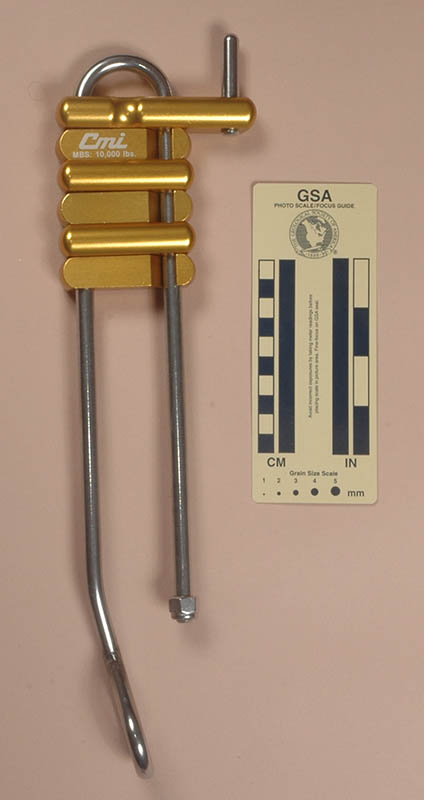
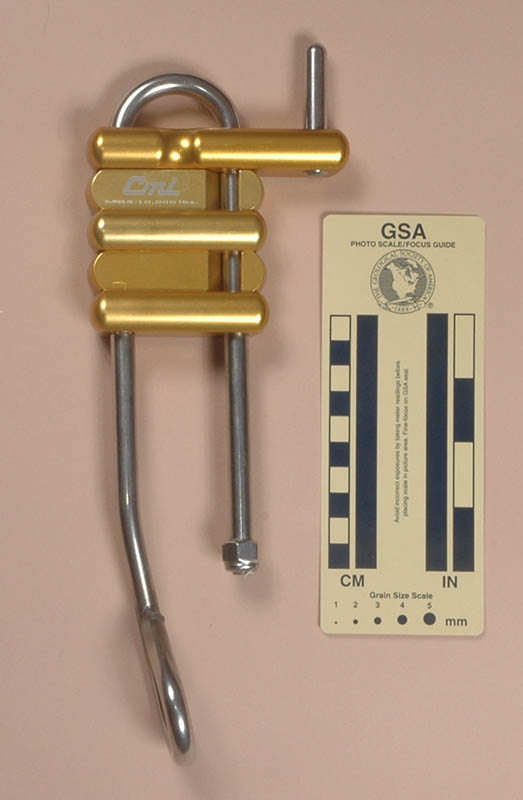
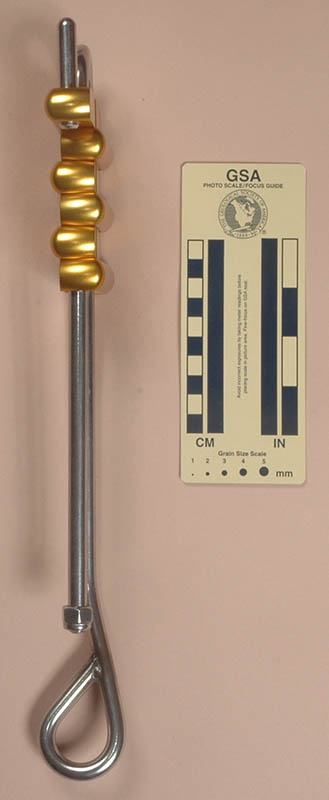
My CMI SRACK1B rack is 369 mm. tall, 103 mm. wide, 46 mm. thick, and weighs 784 g. The frame is made from 9.5 mm. stainless steel bent into shape, with an internal width of 35 mm. and a 27 mm. diameter welded eye twisted 90°. There are six hard-anodized aluminum brake bars, each 16mm tall and 22 mm. thick, with one rounded side and a rope grove on that side. The top bar is a 86 mm. long hyperbar with a 34 mm. tall, 9.5 mm. diameter pin. The remaining bars are 16 mm. in diameter. Allowing 45 mm. for the rope leaves 109 mm. for spreading the bars.
The second bar is printed with "Mi" and "MBS" 10,000 lbs."
This rack is well made. The hard anodizing should reduce initial brake bar wear when used on clean ropes. The bars pivot on the closed side of the frame, as they should for safety.
CMI has made a number of CMI U-frame racks over the years, but I believe that this is one of their first of the more versatile J-frame racks.
The hyperbar is longer than necessary. Eliminating the hyperbar would save some weight without sacrificing any utility in caving environments.
 |
 |
[ Top | SRACK1B | SRACK3B | SRACK4B | Return to Racks ]
|
|
 |
 |
| Front View | Rear View | Side View |
I acquired this rack from Mathew Lee in 2023
My CMI SRACK2BNFPA rack is 424 mm. tall, 103 mm. wide, 32 mm. thick, and weighs 928 g. The frame is made from 9.5 mm. stainless steel bent into shape, with an internal width of 35 mm. and a 25 mm. diameter welded eye. The top bar is a 100 mm. long, 29 mm tall U-shaped bar with a hyperbar pin on one side. The hyperbar pin is 9.5 mm. stainless steel and extends 34 mm. above the top of the U-bar. The remaining five bars are 68 mm. long. All six bars are formed from 2.35 mm. stainless steel. Allowing 45 mm. for the rope leaves 104 mm. for spreading the bars.
All bars are stamped with "Mi"
This rack is well made. The stainless steel bars should wear well, especially when used on clean ropes. The bars pivot on the closed side of the frame, as they should for safety.
I saw one of these pull-tested at the CMI factory. It survived a ridiculously high load without breaking, and I was impressed. I won't say what the load was, since excessive strength hardly matters.
Although nicely made, I do not like this rack. It is too long for anything that I am likely to use. It is too heavy for regular caving use. The bigger-is-better crowd conducting INS missions will love it. I absolutely hate U-shaped bars, feeling that the argument that they help prevent rigging the rack backwards is specious (with proper technique, reverse rigging is impossible). The hyperbar is not only longer than necessary, but I don't see any need for hyperbars on my standard-length racks. Some feel differently, but I find the disadvantages overweight the advantages for what i do. I’d rather have a standard top bar and dispense with the hyperbar entirely.
[ Top | SRACK1B | SRACK2BNFPA | SRACK4B | Return to Racks ]
|
|
 |
 |
| Front View | Rear View | Side View |
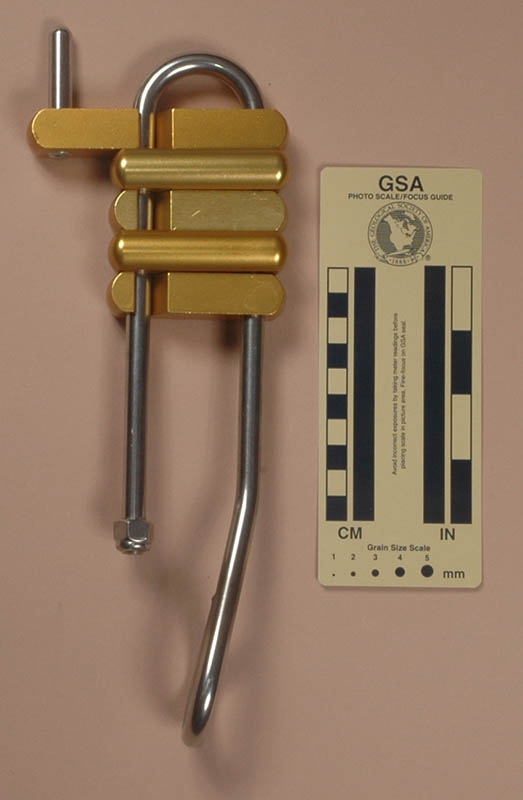
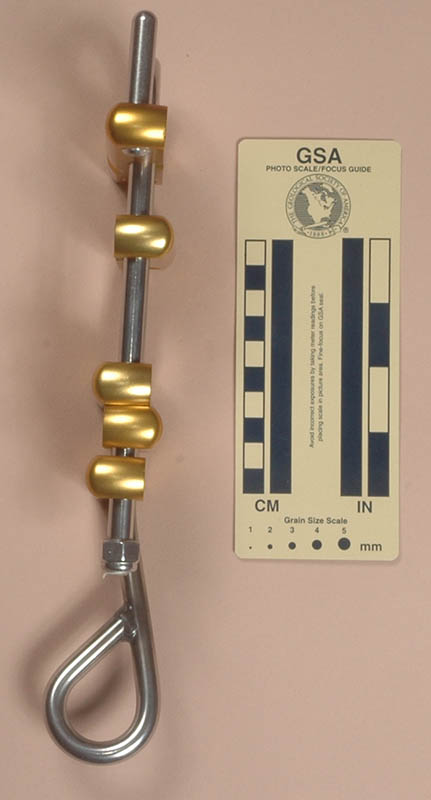
I acquired this rack from Barry Duncan at the 2016 Old Timers Reunion.
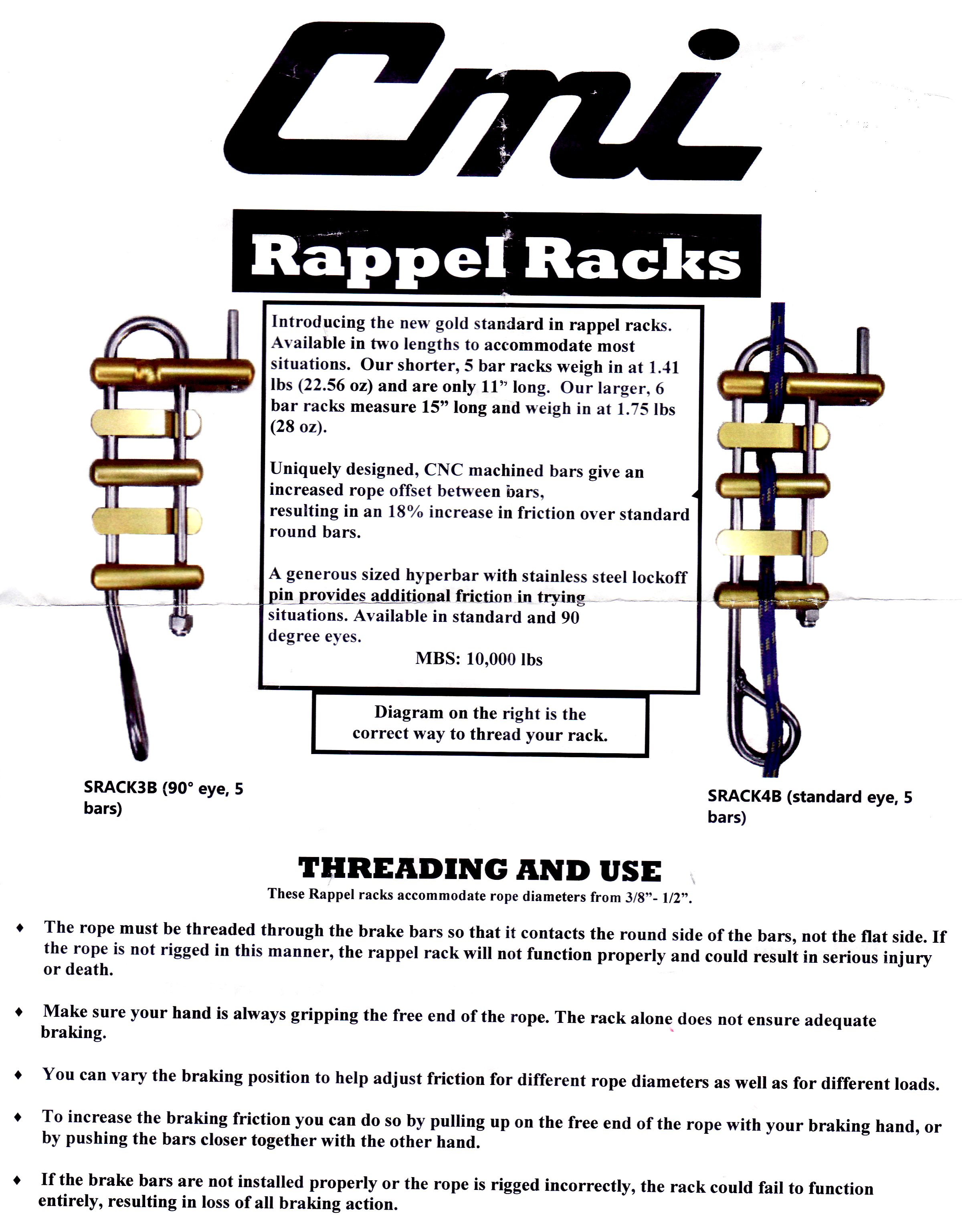
My CMI SRACK3B rack is 272 mm. tall, 103 mm. wide, 46 mm. thick, and weighs 528 g. The frame is made from 9.5 mm. stainless steel bent into shape, with an internal width of 35 mm. and a 27 mm. diameter welded eye twisted 90°. There are six hard-anodized aluminum brake bars, each 16mm tall and 22 mm. thick, with one rounded side and a rope grove on that side. The top bar is a 86 mm. long hyperbar with a 34 mm. tall, 9.5 mm. diameter pin. The remaining bars are 16 mm. in diameter. Allowing 45 mm. for the rope leaves 26 mm. for spreading the bars.
The second bar is printed with "Mi" and "MBS" 10,000 lbs."
This is a shorter rack that does not have much room for spreading the bars, so I view it as a constant friction device. Light cavers might find that it has too much friction.
|
|
|
[ Top | SRACK1B | SRACK2BNFPA | SRACK3B | Return to Racks ]
|
|
 |
 |
| Front View | Rear View | Side View |
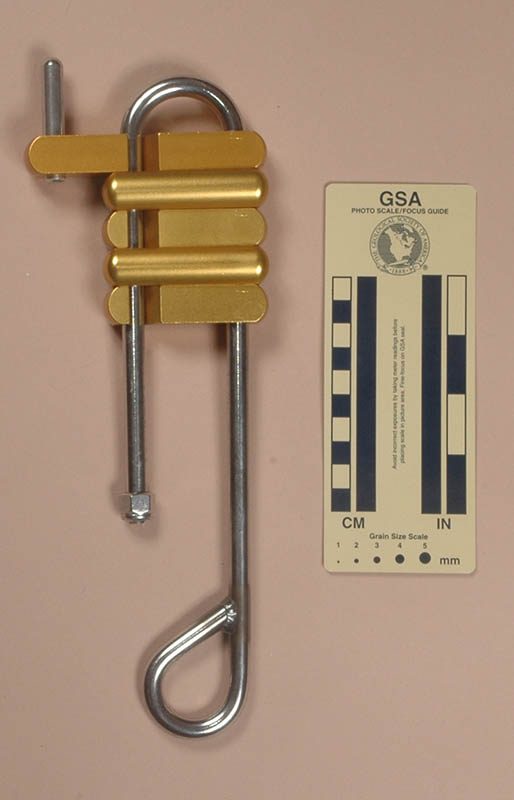
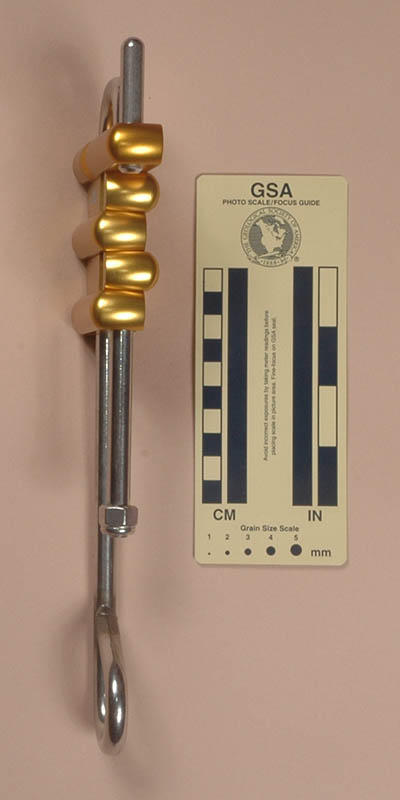
I acquired this rack from Barry Duncan at the 2016 Old Timers Reunion.
My CMI SRACK4B rack is 281 mm. tall, 103 mm. wide, 26 mm. thick, and weighs 528 g. The frame is made from 9.5 mm. stainless steel bent into shape, with an internal width of 35 mm. and a 27 mm. diameter welded eye twisted 90°. There are six hard-anodized aluminum brake bars, each 16mm tall and 22 mm. thick, with one rounded side and a rope grove on that side. The top bar is a 86 mm. long hyperbar with a 34 mm. tall, 9.5 mm. diameter pin. The remaining bars are 16 mm. in diameter. Allowing 45 mm. for the rope leaves 26 mm. for spreading the bars.
The second bar is printed with "Mi" and "MBS" 10,000 lbs."
This is another shorter rack that does not have much room for spreading the bars, so I view it as a constant friction device. Light cavers might find that it has too much friction. At least this one does not have the twisted eye.
The SBRACK3 and SBRACK4 are different sizes, but mine weigh almost exactly the same amount.
|
|
|
[ Top | SRACK1B | SRACK2BNFPA | SRACK3B | SRACK4B ]