

This page will not fit into a tiny viewport. Please choose a full-size monitor with a full-width window or select the abridged New Wave pages.


Version A
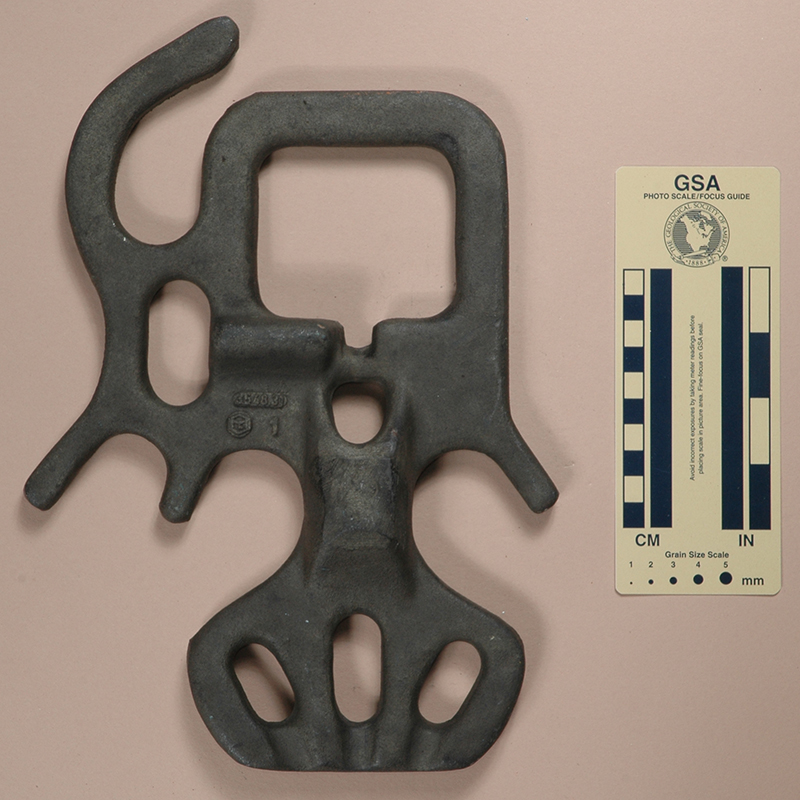
Version B
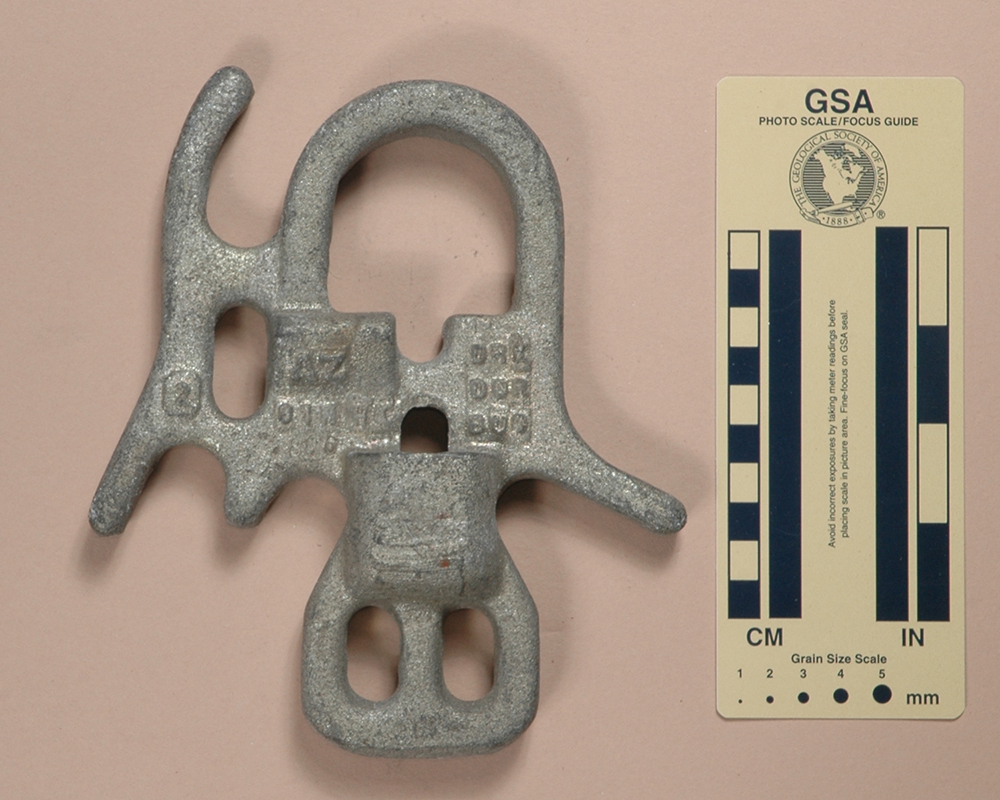
Version C
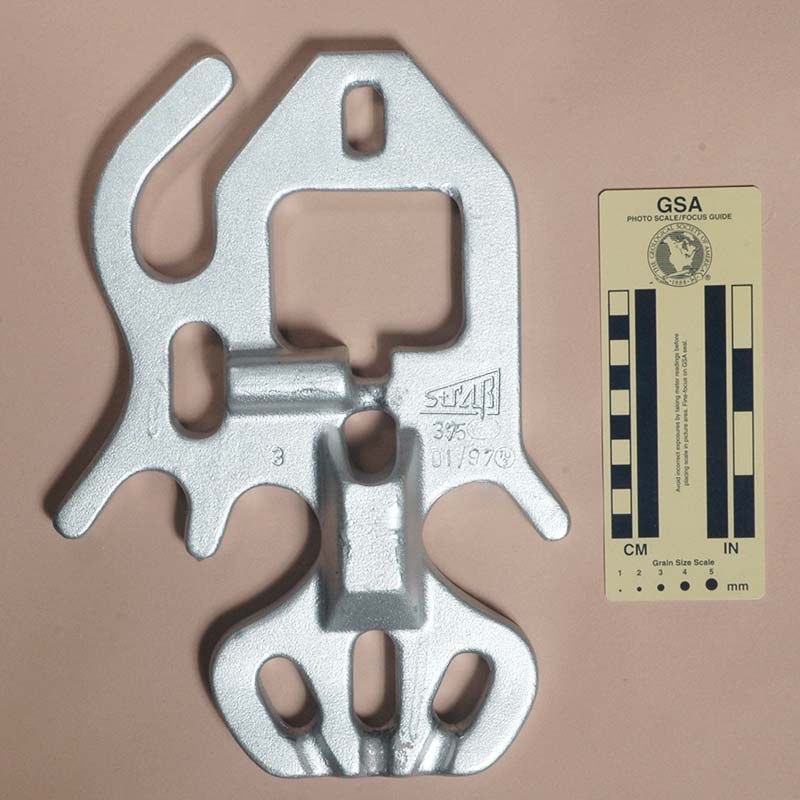
Version D

Version E
|
|
|
|
| Version A | Version B | Version C |
|
|
|
| Version D | Version E |
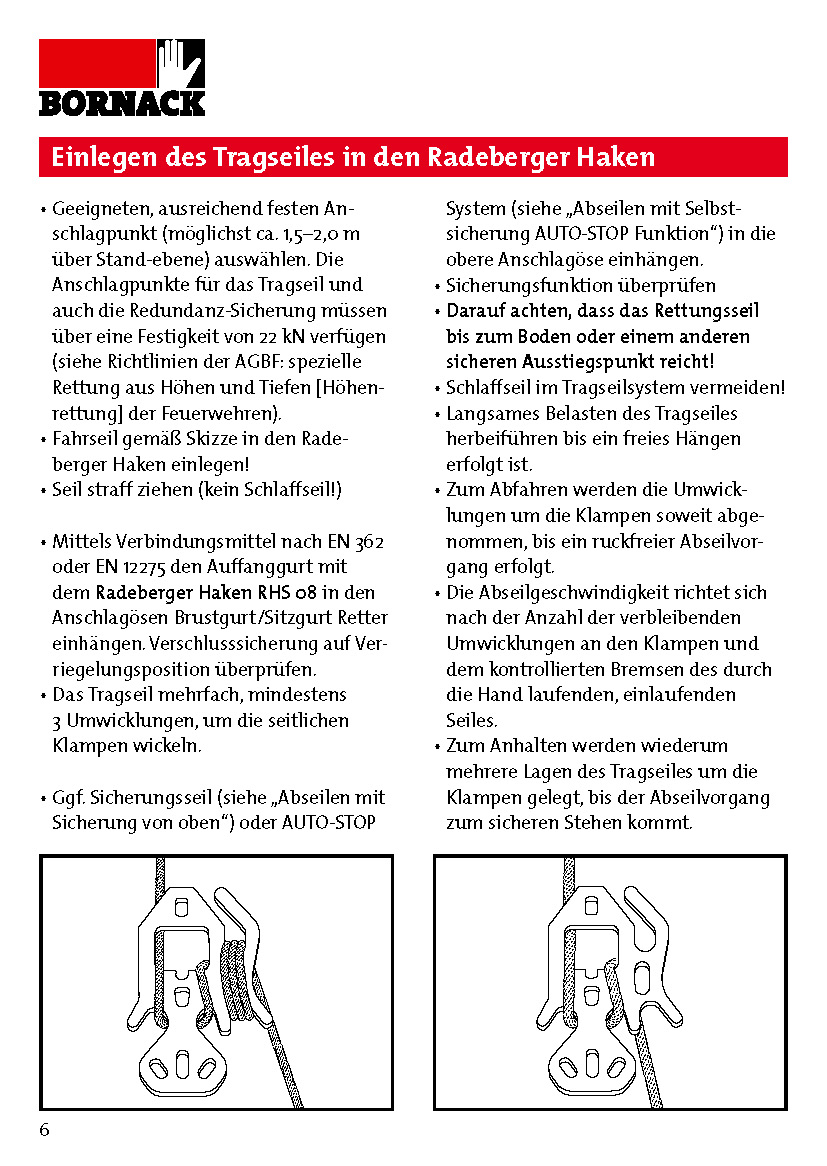
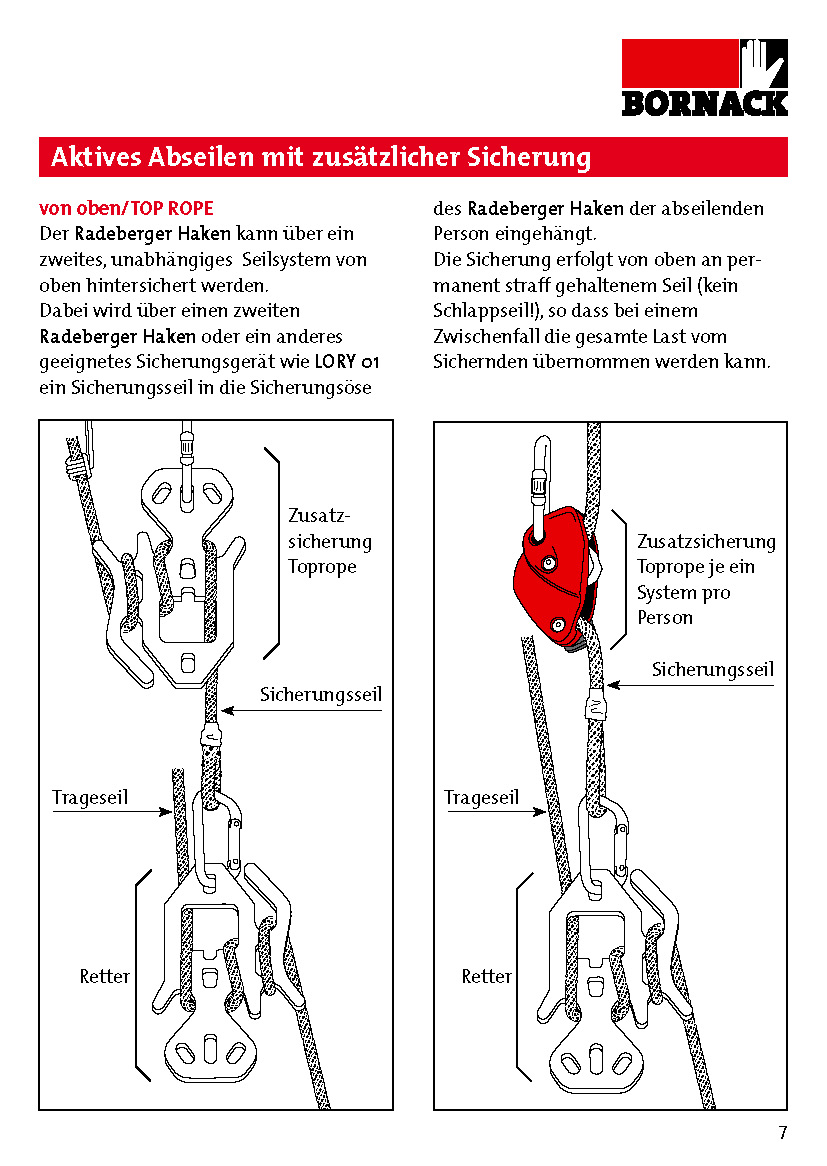
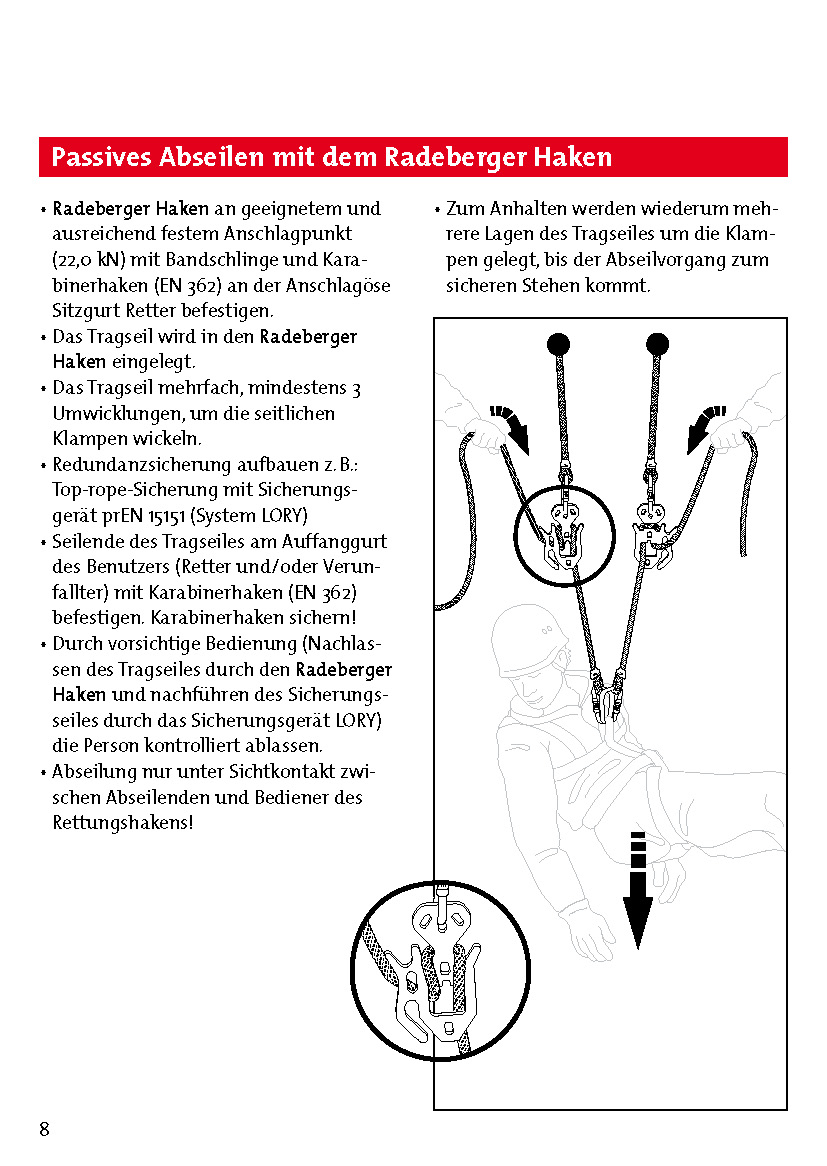
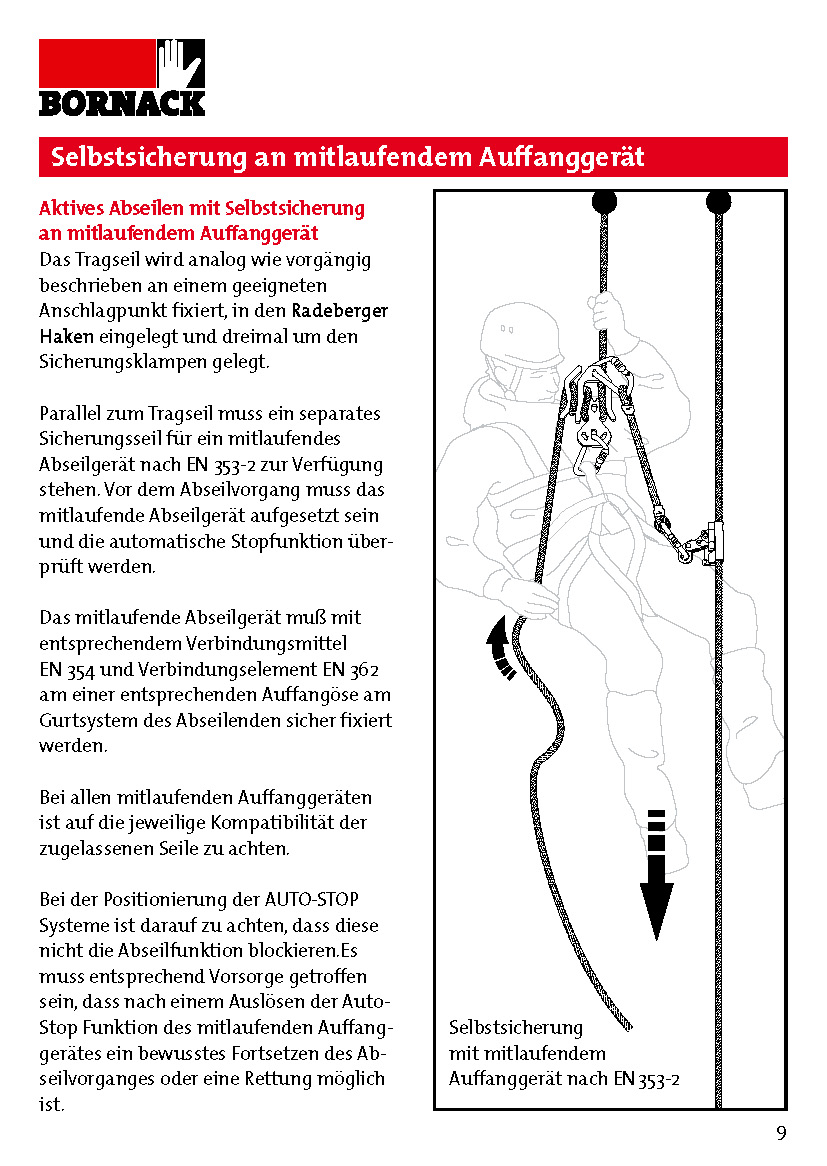
In 1951, Gerhard Brosche, Peter Graf, Heinz Kittner and Rainer Hilsberg took a Töpfer Hook, a perverted and very horny figure eight, and made it go straight. The offspring became the Radeberger Haken, the hook, err, from Radeberger. The “Radi” quickly became an important climbing device, at least in Germany. Climbers no longer use them, but they still see use by rope access professionals in Germany and nearby areas.
Early Radeberger Haken (1956-1964) were implemented Alfred Rudolph in cooperation with an engineer from the Flugzeugwerke Dessau and the VEB Metallgusswerke Leipzig. I have two of these.
A small number of smaller "Picollo" Radis were made in the Czechoslovak Socialist Republic in the 1980s. I have one of these.
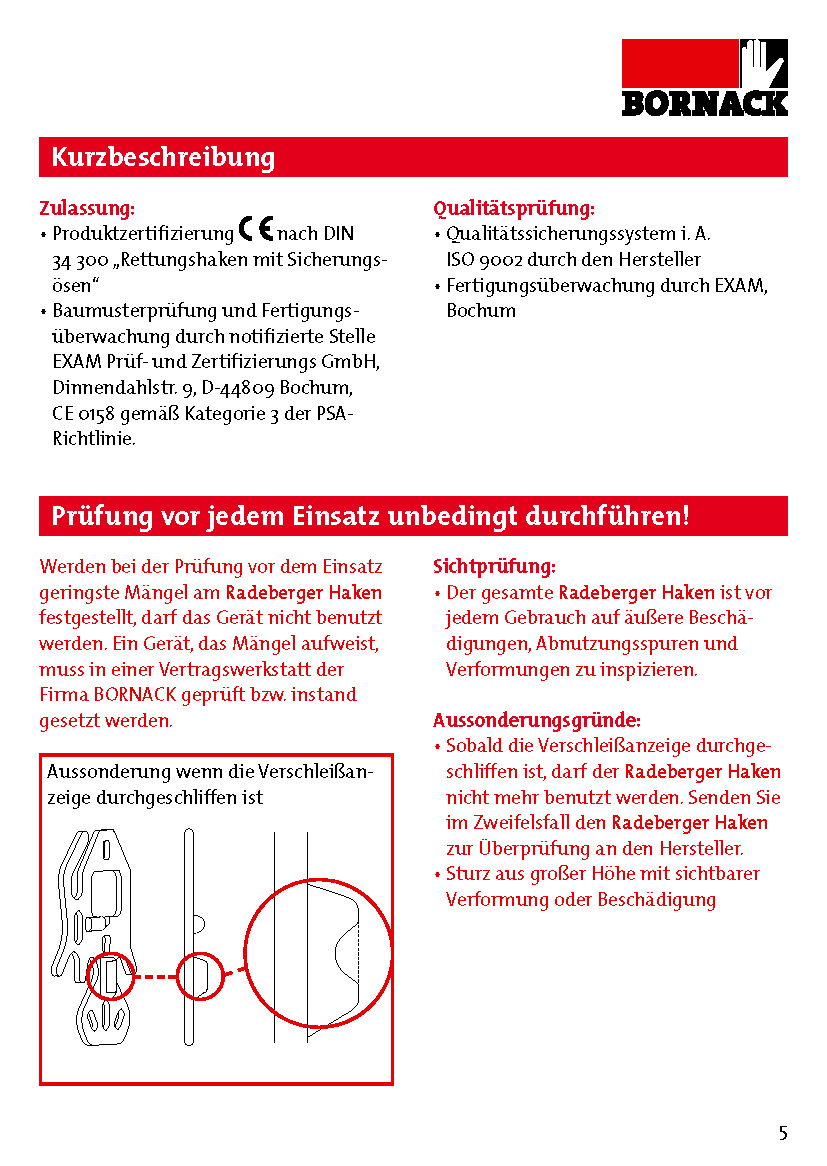
One of my Radeberger Haken was made for or by Bornack. Bornack is a German company that has focused exclusively on workplace safety since 1964. Hailo Wind Systems acquired all Bornack products in December 2025.
One of my Radeberger Haken has a "Straβ" logo. Höhenservice Strass began in 1978 with Hans-Uwe Strass' idea of renovating buildings as a rope team without any scaffolding or lifting platform. They perform inspections, audits, and special work. They also develop access and rescue concepts and offer training courses.
Early Radis were made from welded steel rod, later ones were made from cast aluminum and later even stainless steel. I have four aluminum and one steel Radi. The quality of the earlier cast aluminum Radis is suspect. Mine first three (1956, 1960, 1981) have quite a bit of porosity and the resulting descenders feel surprisingly light. The fourth cast Radi (1997) does not have the porosity problem. My steel Radi is much more robust, but at 1.8 kg, it makes better kayak anchor a practical descender.
I like Radis for their bizarre shape, but they are not practical for modern caving or climbing use. Among other things, they too large and too heavy for my taste. To be honest, though, some people have exaggerated their size, they are not really as large as a toilet seat. Radis are not easy to find, and ordering them from Germany has proven to be nigh on impossible. There are a lot of versions out there that the museum lacks. Let me know if you can help!
[ Top | Version B | Version C | Version D | Version E | Return to Figure Eights ]
|
|
 |
| Front | Rear |
I acquired this Radeberger Haken from Fritz Scholz (from Germany) in 2011, with Stefan Thurner in Austria acting as translator and intermediary to facilitate the transaction.
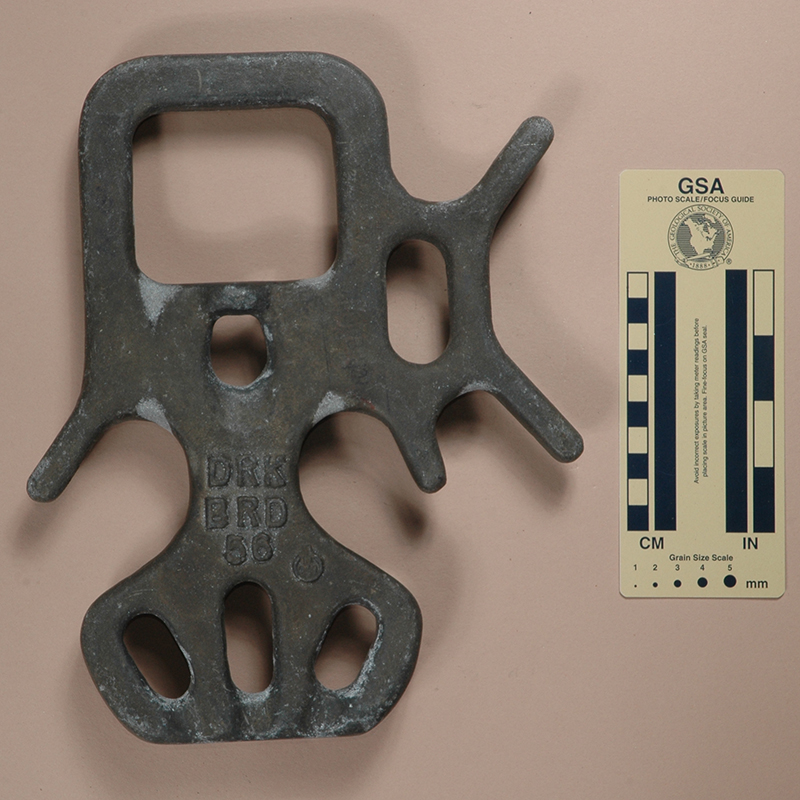
This Radeberger Haken is cast from a magnesium alloy. Mine is 265 mm. tall, 213 mm. wide, and 37 mm. thick. The rope hole is 66 mm. high and 77 mm. wide. The top center thickness is 15 mm. The shaft length and width are 113 mm. and 42 mm., respectively. The auxiliary hole is 48.1 mm. high and 23.7 mm. wide. The eye measures 42 mm. by 17 mm. The ears are 58.1 and 51.6 mm. long. This Radeberger Haken weighs 682 g.
The front has a raised "1" and is stamped "150." The rear has "DRK," "BRD," and "56" in raised characters, as well as an illegible icon.
This Radeberger Haken was implemented by Alfred Rudolph in cooperation with an engineer from the Flugzeugwerke Dessau and the VEB Metallgusswerke Leipzig. It was made in 1956. It falls into my miscellaneous figure eights with ears category.
This version is huge. Although it is too heavy for my taste, it is not as heavy as it looks. With its large size, it feels light in the hand. The horns provide many options for tying off, and the three eyes make up for each one being only large enough for a single carabiner - at least, side-by-side.
[ Top | Version A | Version C | Version D | Version E | Return to Figure Eights ]
|
|
 |
| Front | Rear |
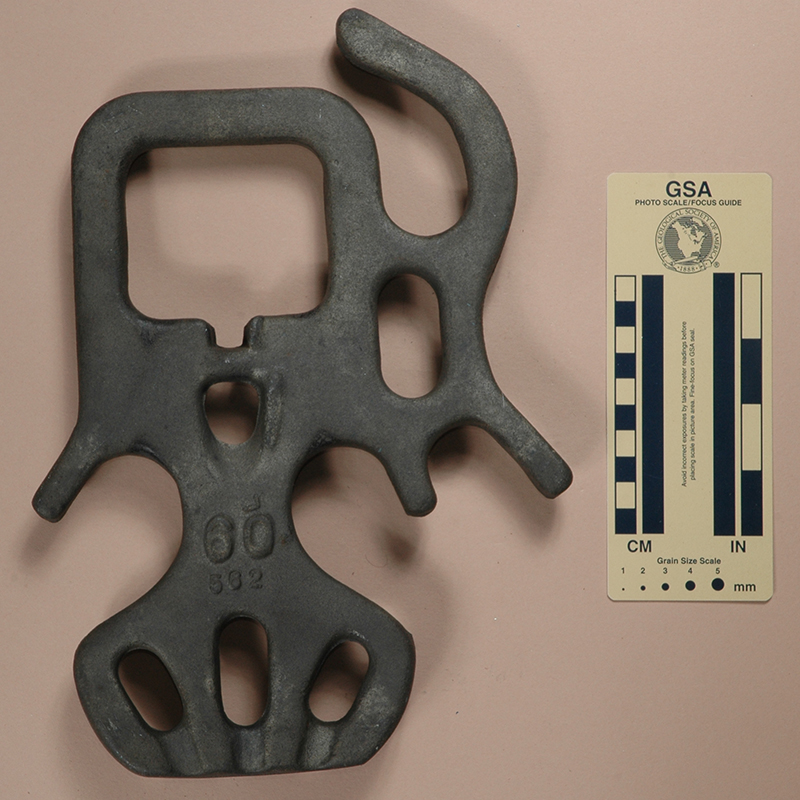
I acquired this Radeberger Haken from Tino Schneider in 2012.
The Radeberger Haken is cast from a magnesium alloy. Mine is 287 mm. tall, 205 mm. wide, and 34 mm. thick. The rope hole is 66 mm. high and 75 mm. wide. The top center thickness is 15 mm. The shaft length and width are 113 mm. and 42 mm., respectively. The auxiliary hole is 47.9 mm. high and 23.4 mm. wide. The eye measures 41 mm. by 18 mm. The ears are 91.2 and 51.3 mm. long. The Radeberger Haken weighs 712 g.
The front has "1" and "3548.31" in raised characters and a raised icon that I do not recognize. The rear has a raised "L" at an odd angle, "60" and "562."
This Radeberger Haken was implemented by Alfred Rudolph in cooperation with an engineer from the Flugzeugwerke Dessau and the VEB Metallgusswerke Leipzig. It was made in 1960. It falls into my miscellaneous figure eights with ears category.
This version is similar to Version A, except the upper horn is longer, providing for more secure tie-offs.
[ Top | Version A | Version B | Version D | Version E | Return to Figure Eights ]
|
|
 |
| Front | Rear |
Harald Müller gave me this Radeberger Haken in 2010.
This version is cast from a magnesium alloy. Mine is 176 mm. tall, 153 mm. wide, and 28 mm. thick. The rope hole is 46 mm. high and 48 mm. wide. The top center thickness is 21 mm. The shaft length and width are 75 mm. and 38 mm., respectively. The auxiliary hole is 28.7 mm. high and 13.2 mm. wide. The eye measures 24 mm. by 13 mm. The ears are 46 and 38.5 mm. long. This Radeberger Haken weighs 299 g.
The front has various raised cast letters and digits: "2," "AZ," "81H," "H0," "DRN," "DOR," and "HUD." It is also stamped with "856." The rear has "240" in raised cast letters.
The Radeberger Haken was made in the Czechoslovak Socialist Republic in 1980. It falls into my miscellaneous figure eights with ears category.
Although I like the Radeberger Haken for its bizarre shape, it is not practical for most caving or climbing. Among other things, it is too large and too heavy for my taste – and this is the small, lightweight version!
The eye is too narrow to accept two full size locking carabiners, but there are two eyes, so this should not be an issue.
This version is surprisingly light for its size. The surface of the aluminum casting looks almost porous; perhaps this is part of the reason it feels lighter than it looks.
[ Top | Version A | Version B | Version C | Version E | Return to Figure Eights ]
|
|
 |
| Front | Rear |
I acquired this Radeberger Haken on eBay from Daniel Liebers in 2013.
This version is cast from aluminum alloy. Mine is 288 mm. tall, 207 mm. wide, and 39 mm. thick. The rope hole is 74 mm. high and 75 mm. wide. The top center thickness is 16 mm. The shaft length and width are 102 mm. and 40 mm., respectively. The auxiliary hole is 45.2 mm. high and 20.9 mm. wide. The eye measures 41 mm. by 17 mm. The ears are 88.8 and 49.7 mm. long. This version weighs 1266 g.
The front has "3" and a "Straβ" cast into it, and is also stamped with "39"with "75" overstriking the "9," an indistinct "V" inside an oval (there may be more inside), "01/97," and "Tu" and "3" inside a circle.
This Radeberger Haken was made for Höhenservice Strass in 1997. It falls into my miscellaneous figure eights with ears category.
The quality of this one is higher than the quality of the cast magnesium versions in my collection, but it is also much heavier.
[ Top | Version A | Version B | Version C | Version D | Return to Figure Eights ]
|
|
 |
| Front | Rear |
I acquired this Radeberger Haken from Thorsten Huk in 2011.
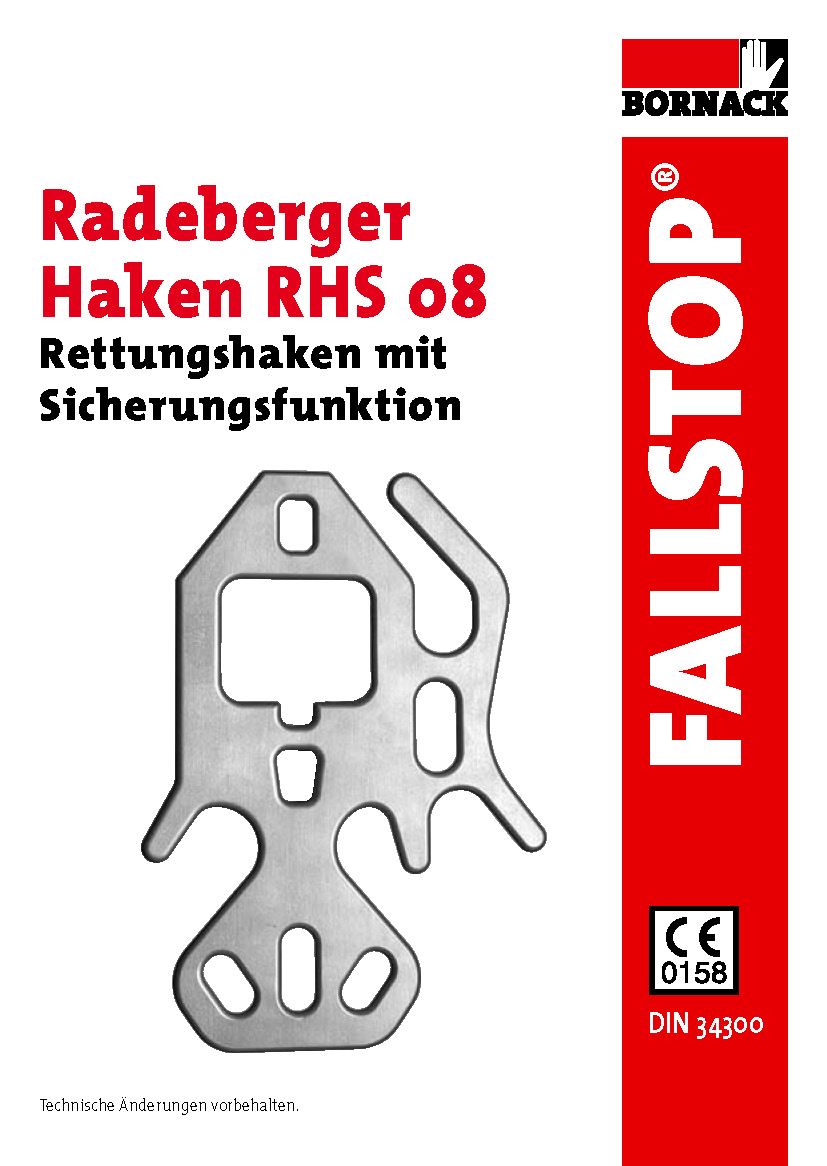
This version is made from stainless steel, and consists of two shaped blocks welded to a milled plate. Version D is 290 mm. tall, 205 mm. wide, and 26 mm. thick. The rope hole is 73 mm. high and 76 mm. wide. The top center thickness is 8 mm. The shaft length and width are 112 mm. and 40 mm., respectively. The auxiliary hole is 44.8 mm. high and 20 mm. wide. The eye measures 40 mm. by 16 mm. The ears are 92.6 and 52.7 mm. long. This version weighs 1792 g.
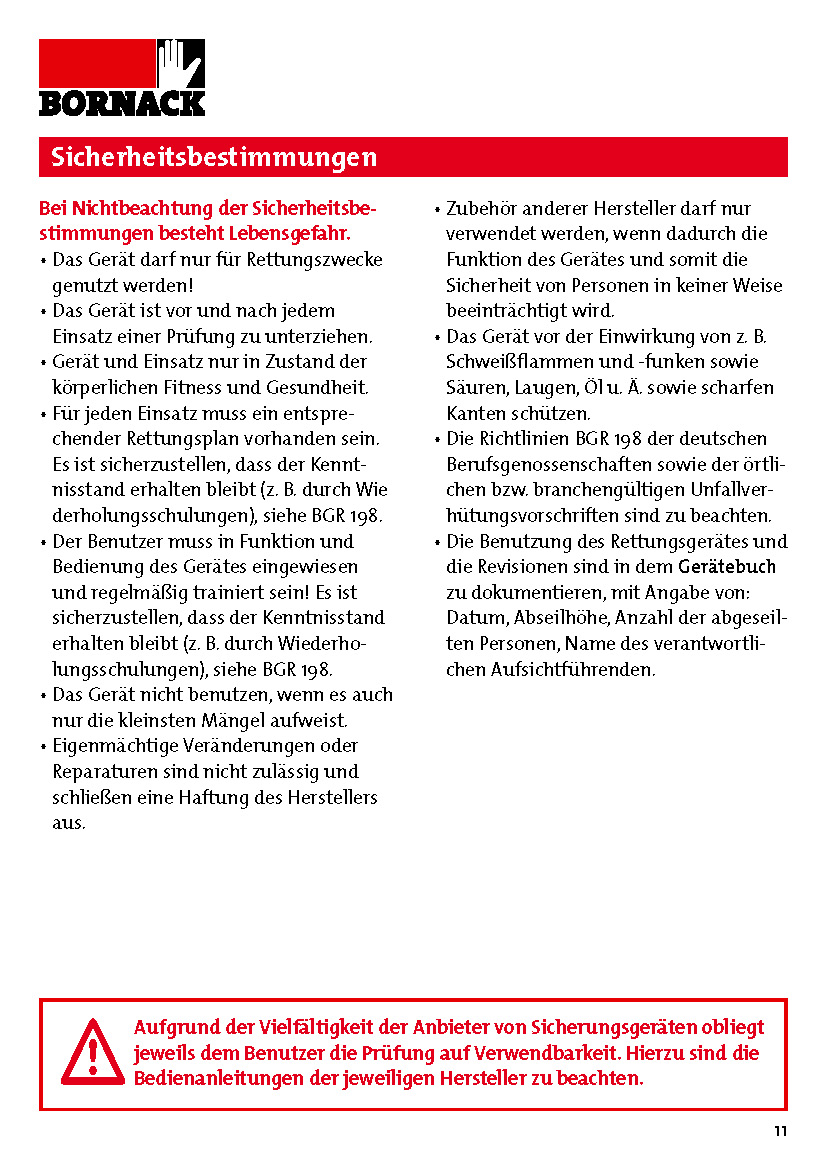
The rear is printed with a hollow rectangle, a hand-inside-a-square icon, "BORNACK," "RHS-E-08," "DIN 34300,", "CE 0158," "Max 250 kg," "Max 300m," "Art 777006," "www.bornack.de," and a book-with-an-"i" icon.
This version was sold by Bornack in 2011. It also falls into my miscellaneous figure eights with ears category.
This version is made from steel, making this one of the most absurdly heavy eights in my collection. It should outlast the user, if for no other reason than no caver or climber is going to carry this with them for frequent use.
 |
 |
 |
 |
 |
 |
 |
 |
 |
 |
 |
 |
[ Top | Version A | Version B | Version C | Version D | Version E ]