

This page will not fit into a tiny viewport. Please choose a full-size monitor with a full-width window or select the abridged New Wave pages.

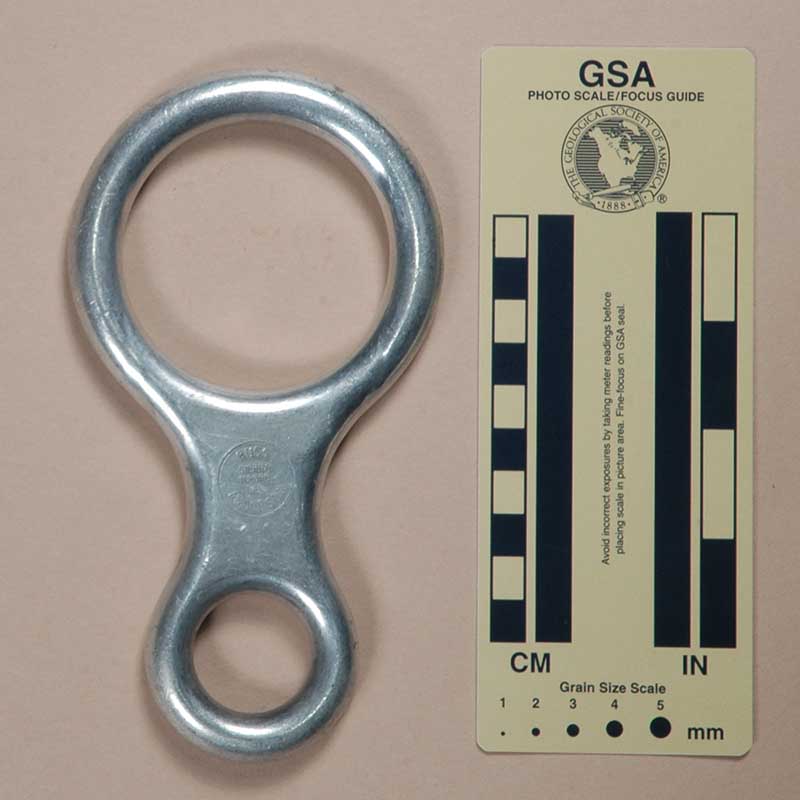
Version A
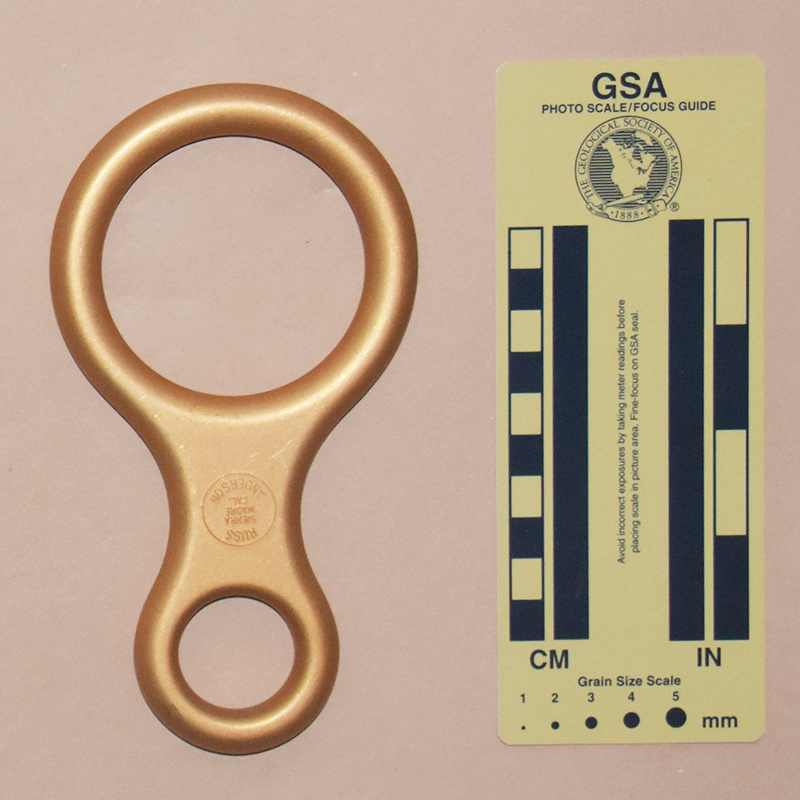
Version B
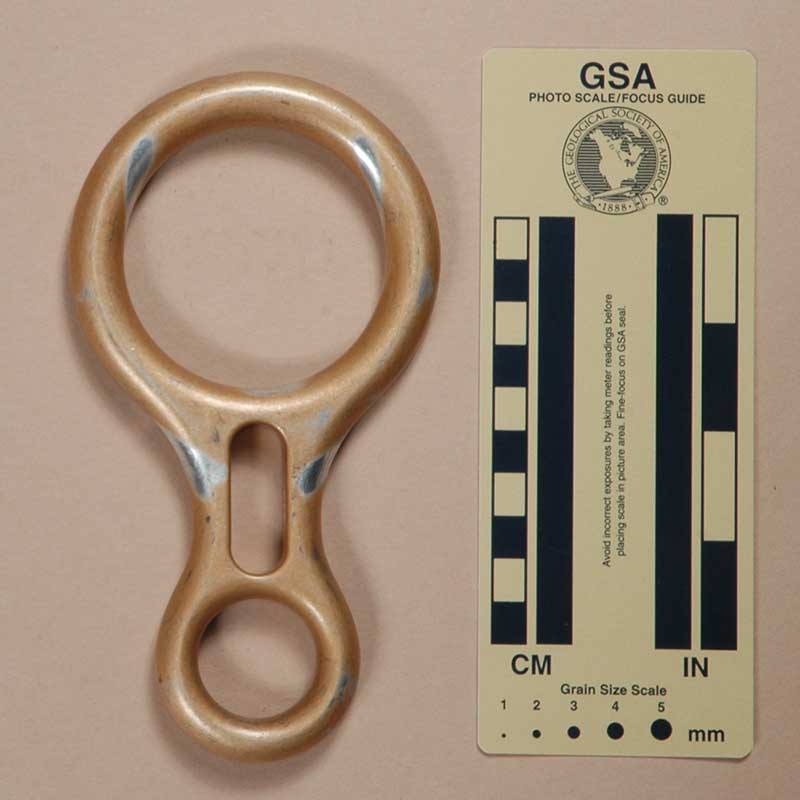
Version C
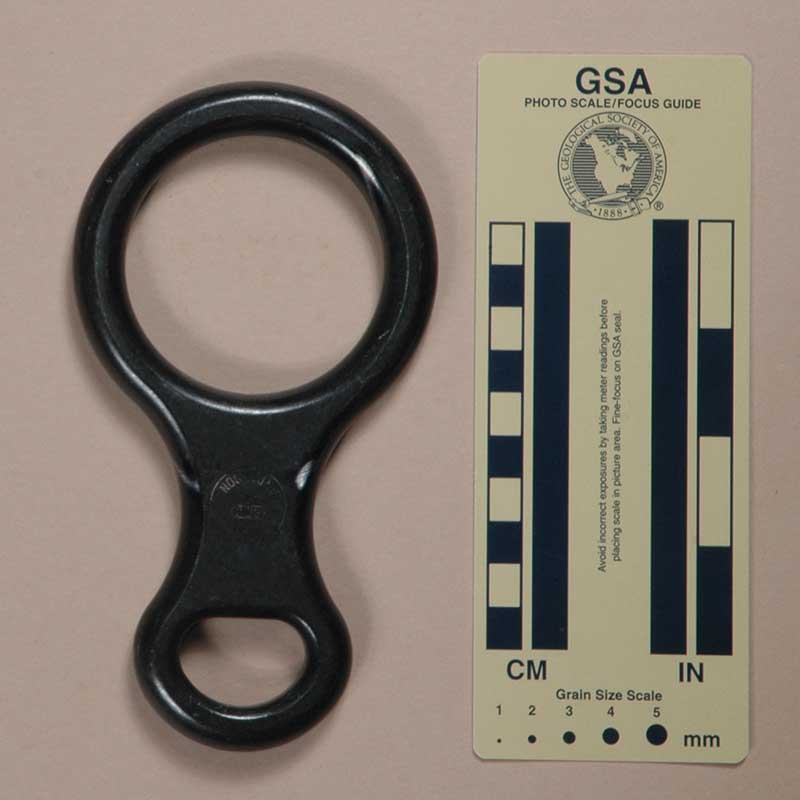
Version D

Version E
|
|
|
| Version A | Version B |
|
|
|
|
| Version C | Version D | Version E |
Russ Andeson was an arborist and rescue team member with a small home machine shop. He developed several products, including a litter wheel for stretchers, an array of pulleys, and several figure eights.[1][2][3]
Russ Anderson is best known for his line of figure eights. Russ was concernes about the figure eight's tendency to girth hitch when used incorrectly. Anderson added "ears" to the design to prevent this from happening.[1][2]
Anderson's ears were not the first, but he was undoubtedly unaware of their use on obscure European eights and developed his ears independently.
For a short time he marketed several products from his home in Sierra Madre before making a deal in 1983 to have SMC market his ideas in exchange for royalties.[1][2][3]
Jim Clark founded SMC in 1967 as Seattle Manufacturing Corporation.
SMC’s first product was an oval carabiner designed and manufactured specifically for Mary Anderson of the original REI Co-op Store. She was dissatisfied with the quality and turnaround time of overseas manufacturers. SMC’s founder, Jim Clark, identified the critical design and tooling elements that REI required and brought his aircraft industry standards of excellence to the manufacturing of mountaineering gear.
SMC grew and their product line expanded to cover a full range of climbing hardware including pitons, chocks, ice axes, and others. SMC entered the rescue market as rescuers adopted techniques and equipment developed by climbers.
Harken Safety & Rescue acquired SMC in 2022.
[ Top | Version B | Version C | Version D | Version E | Return to Figure Eights ]
|
|
 |
| Front | Rear |
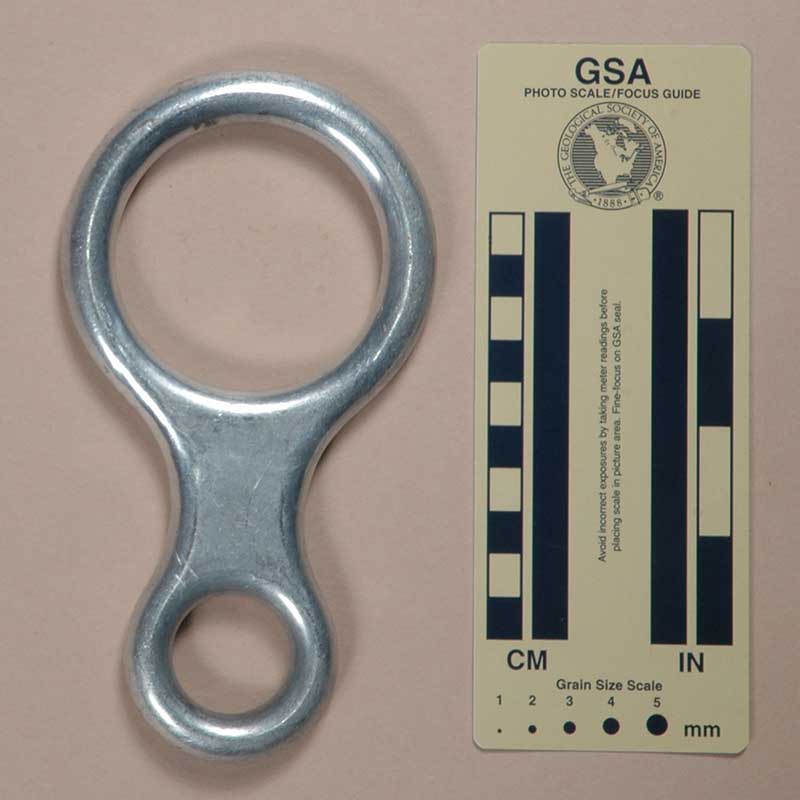
I acquired this eight from Chuck Rozner in 2000, but it is a much older eight, probably dating from around 1980.
The Russ Anderson, Version A is milled from aluminum plate and then soft anodized. Mine is 160 mm. tall, 88 mm. wide, and 13 mm. thick. The rope hole is 63 mm. high and 63 mm. wide. The top center thickness is 12 mm. The shaft length and width are 48 mm. and 31 mm., respectively. The eye measures 28 mm. by 28 mm. My eight weighs 149 g.
The front side of the shaft is stamped with the following words inside a 17 mm. circle:
RUSS
SIERRA
MADRE
CAL.
ANDERSON
This Russ Andersons are typical examples of the large milled plate eights, in fact, they essentially define the group. Russ Anderson figure eights have long been favorites of mine. I lost my original Version B caving in the mid 1980s. Chuck Rozner saw my Ten Most Wanted List and sent me a replacement. The one that he sent is not anodized, but otherwise seems identical to the one I lost.
[ Top | Version A | Version C | Version D | Version E | Return to Figure Eights ]
|
|
 |
| Front | Rear |
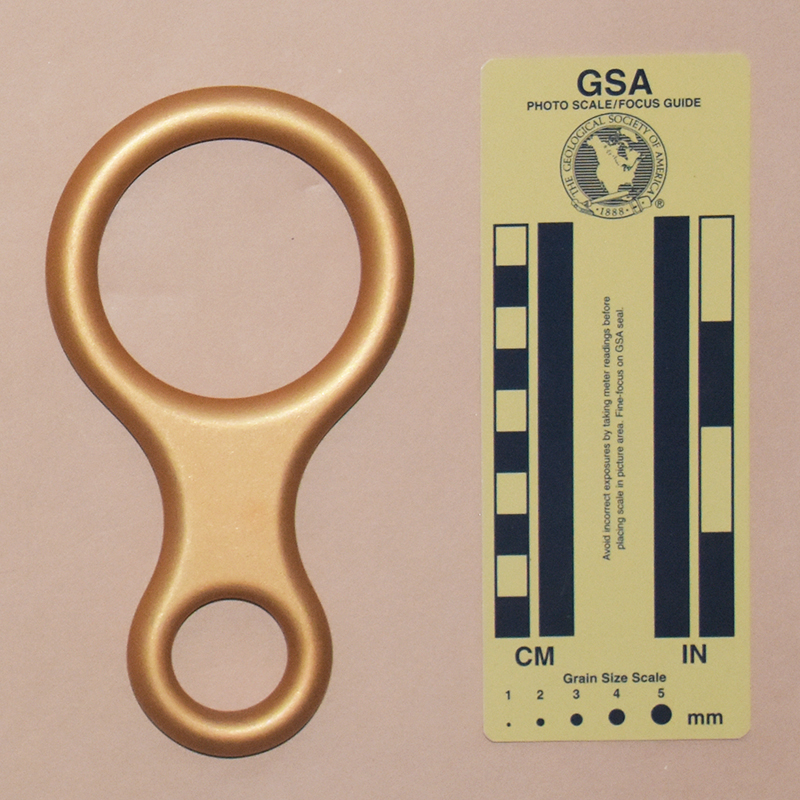
I acquired this eight from from Daniel Veelik in 2007, but it is a much older eight, probably dating from around 1980. I had bought one then, but subsequently lost it caving. Daniel provided a replacement. I found and acquired a second one used on eBay from Andrew Knoflicek in 2008, a third used on eBay from Paul Calton in 2012, a fourth from James Bechtold in 2020, a"like new" fifth one from Tim Chapman in 2020, and one more from Jonathan Schwinger in 2022. In 2024 I acquired another from Colin Ware and then gave it to Артём Бабин. I obtained two more, lightly used, from Imam Abdullah in 2025.
The Russ Anderson, Version B is milled from aluminum plate and then soft anodized. Mine is 161 mm. tall, 87 mm. wide, and 13 mm. thick. The rope hole is 61 mm. high and 61 mm. wide. The top center thickness is 13 mm. The shaft length and width are 49 mm. and 30 mm., respectively. The eye measures 28 mm. by 28 mm. My eight weighs 154 g.
The front side of the shaft is stamped with the following words inside a 17 mm. circle:
RUSS
SIERRA
MADRE
CAL.
ANDERSON
Russ Anderson figure eights have long been favorites of mine. I acquired my original Version B around 1980 (at the same time that I acquired my Version C), but lost it caving in the mid 1980s. I spent years looking for an exact replacement (I hate losing gear). At the 2007 NSS Convention, Daniel Veelik offered to replace it. This replacement seems identical to the one I lost. I've since acquired several more.
Note that the eye is circular, not elongated as in Version D onward. This eight’s design is pure, utter simplicity, providing all one needs in an eight with no extra nonsense, but I prefer Version B.
[ Top | Version A | Version B | Version C | Version E | Return to Figure Eights ]
|
|
 |
| Front | Rear |
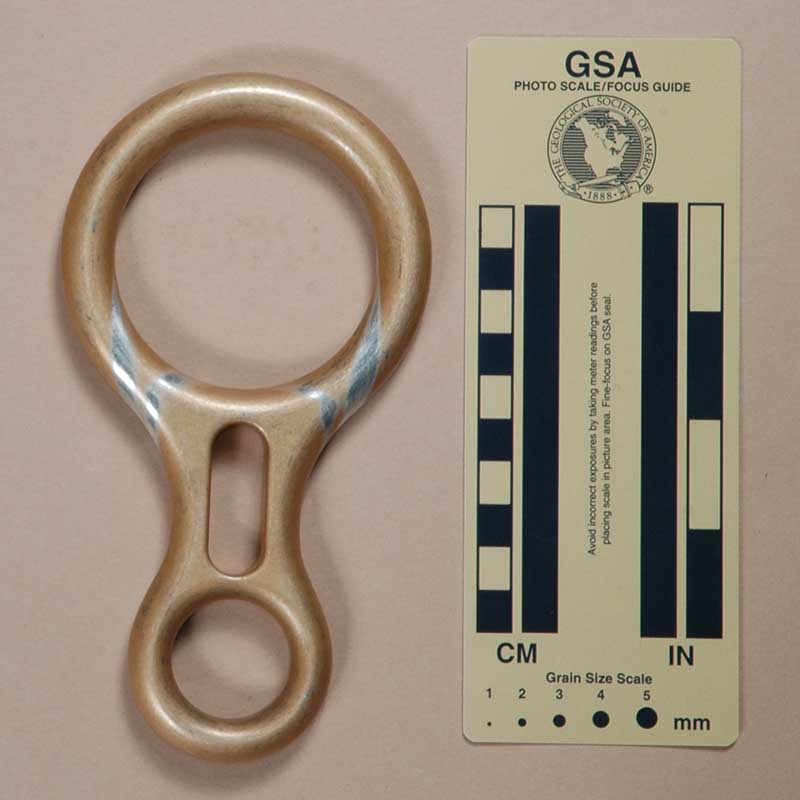
I don't have records of when or where I acquired my one of this version, but it was probably in the early 1980s. I acquired a second from Colin Ware in 2024.
The Russ Anderson, Version C is milled from aluminum plate and then soft anodized. Mine is 159 mm. tall, 87 mm. wide, and 13 mm. thick. The rope hole is 61 mm. high and 61 mm. wide. The top center thickness is 13 mm. The shaft length and width are 49 mm. and 30 mm., respectively. The belay slot in the shaft is 35 mm. long and 12.7 mm. wide. The eye measures 28 mm. by 28 mm. My eight weighs 139 g.
There are no markings on this eight.
I particularly like this one because of the belay slot - it is separate from the eye. In the later designs, Russ Anderson abandoned this feature, probably as a cost savings. The slot dimensions are designed for Sticht-type belaying with 11 mm. rope, and compare favorably with the slot dimensions found in true Sticht-type belayers.
[ Top | Version A | Version B | Version C | Version E | Return to Figure Eights ]
|
|
 |
| Front | Rear |
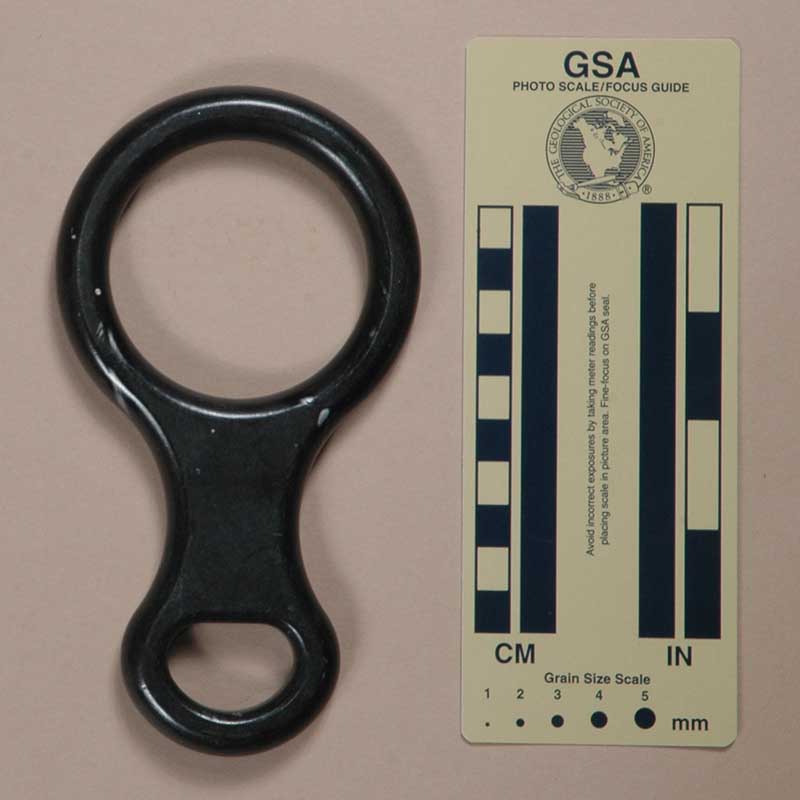
I don't have records of when or where I acquired this eight, but it was probably in in 1989.
The Russ Anderson, Version D is milled from aluminum plate and then soft anodized. Mine is 155 mm. tall, 84 mm. wide, and 13 mm. thick. The rope hole is 60 mm. high and 60 mm. wide. The top center thickness is 13 mm. The shaft length and width are 52 mm. and 31 mm., respectively. The eye measures 20 mm. by 30 mm. My eight weighs 157 g.
The front side of the shaft is stamped with the following words inside a 17 mm. circle:
RUSS
SMC
USA
ANDERSON
The "SMC" imprint is actually the SMC logo with the letters set inside an oval and separated by vertical bars.
Version D is much like Version B, except the eye has been redesigned as a belay slot. It has the SMC logo indicating that it was after SMC started producing the Russ Anderson line. SMC tells me that this was in 1990, but the next version proves that they were making them in 1989.
[ Top | Version A | Version B | Version C | Version D | Return to Figure Eights ]
|
|
 |
| Front | Rear |
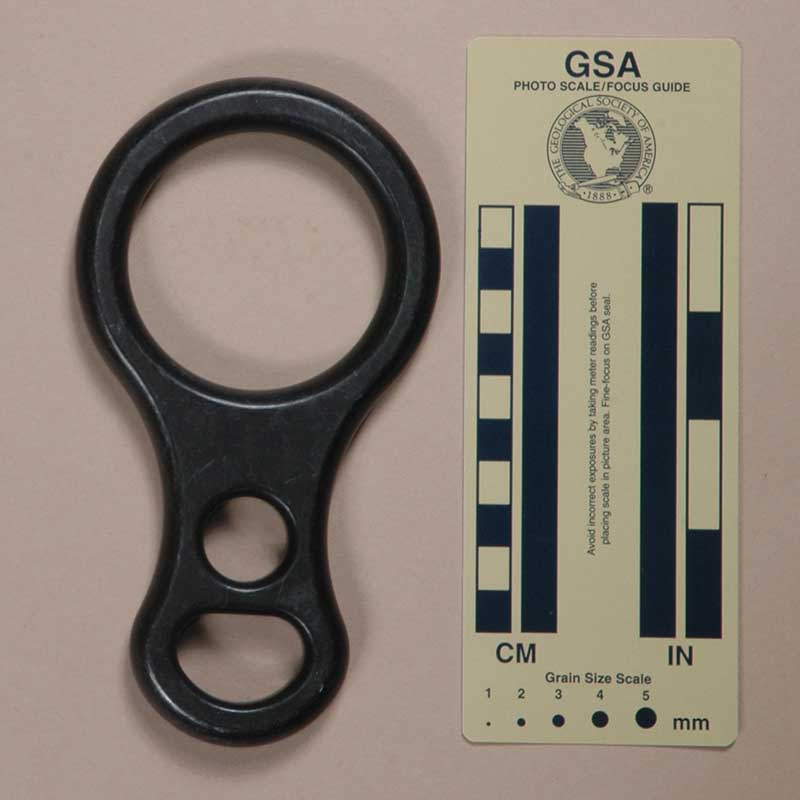
I acquired this eight at the 1989 NSS Convention, but I don't remember from whom. It was probably Bob & Bob.
The Russ Anderson, Version E is milled from aluminum plate and then soft anodized. Mine is 155 mm. tall, 84 mm. wide, and 13 mm. thick. The rope hole is 60 mm. high and 60 mm. wide. The top center thickness is 13 mm. The shaft length and width are 52 mm. and 39 mm., respectively. The auxiliary hole is 19.5 mm. in diameter. The eye measures 20 mm. by 30 mm. My eight weighs 153 g.
The front side of the shaft is stamped with the same markings as Version D.
Version E adds an auxiliary hole to Version D. I never needed need to clip a third carabiner into the shaft of any of my eights, so I just look at this as a lightening hole - but one that they couldn't fit in without making the shaft wider.
[ Top | Version A | Version B | Version C | Version D | Version E ]