

This page will not fit into a tiny viewport. Please choose a full-size monitor with a full-width window or select the abridged New Wave pages.

|
|
 |
| Front | Rear |
 |
 |
| Top | Rigged for Use |
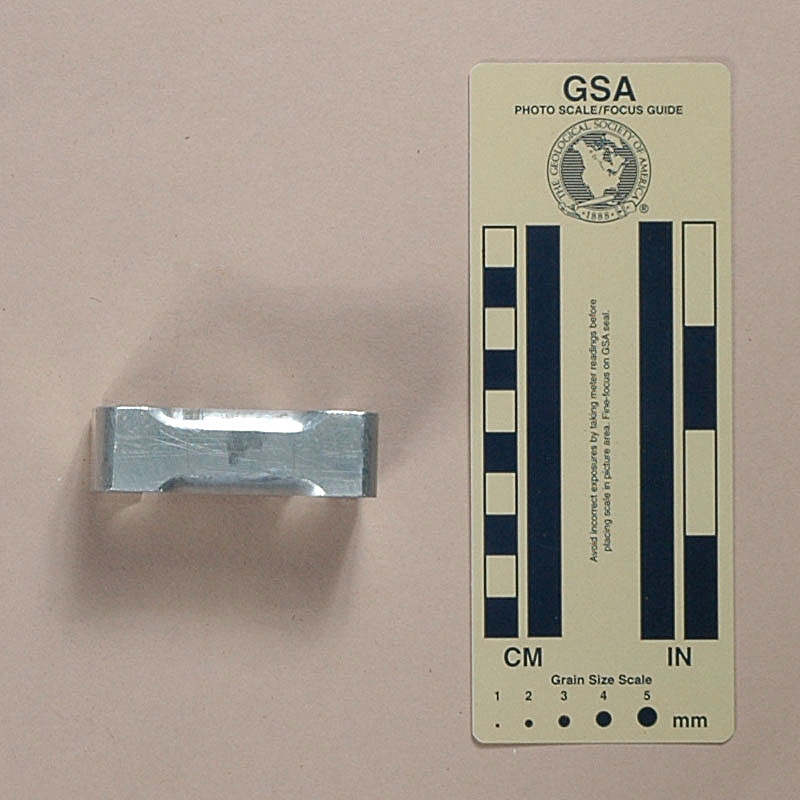
I made my Wagner Brake Bar in 2004.
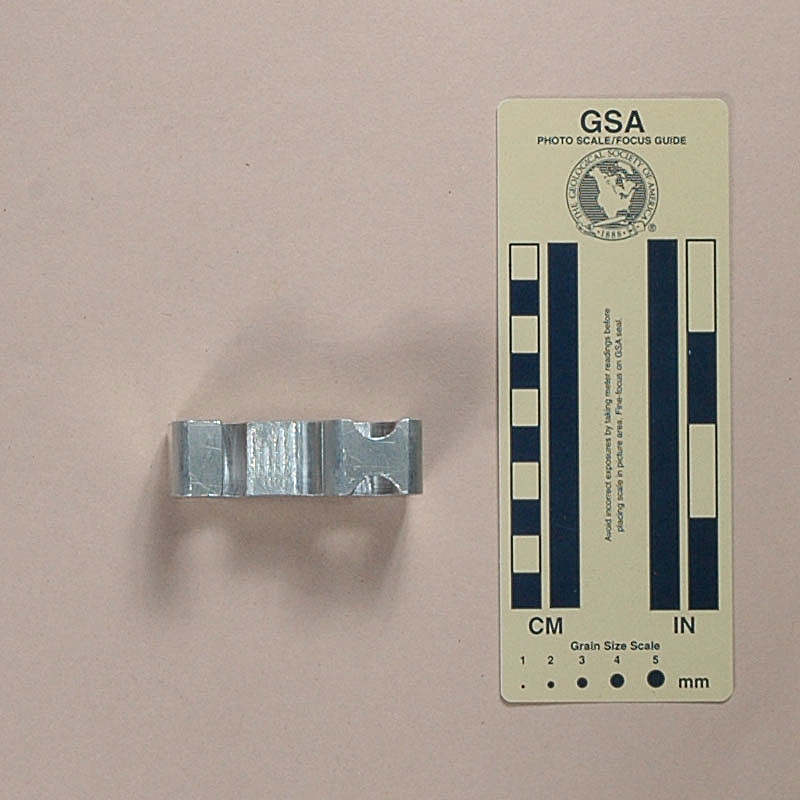
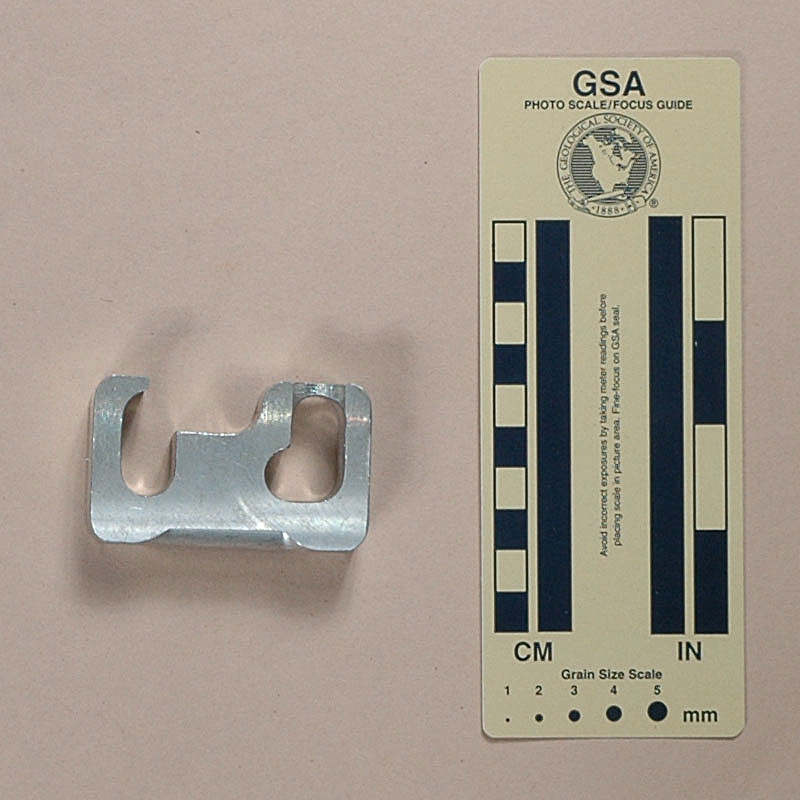
My Wagner Brake Bar is 67 mm. tall, 40 mm. wide, 20 mm. thick, and weighs 91 g. I milled my Wagner brake bar from 6061-T6 aluminum plate.
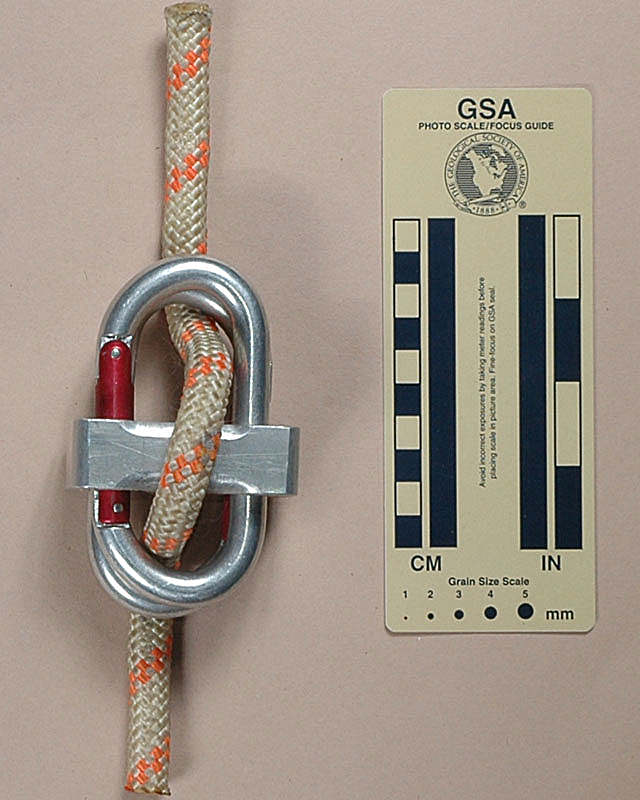
The Wagner brake bar is unique in that it rides on two carabiners. This effectively eliminates most of the concern over side loading a carabiner’s gate, without resorting to contrived methods like the Carabiners as Brake Bars.
After I bought my first milling machine, I made one for myself, using the patent as a guide. I added some relief on the unloaded side of the brake bar to make it easier to rig onto the oval carabiners I use, but other than this, my version is a faithful copy of the original. It works well, and rides nicely on the opposed carabiners.
In 1975 Kelly Wagner filed for a patent on a unique brake bar design, and received U.S. Patent 4,019,609 in 1977. By the time Wagner developed his brake bar, carabiner brake bar methods were already in decline, having been effectively replaced by figure eights and rappel racks. As far as we know, Wagner never produced his brake bar commercially. Gary Storrick made one for testing in 2004, using the patent drawings as guides.
Gary Storrick, NSS 12967 FE CM, began caving, climbing, and collecting vertical equipment in 1971. He created this web site in 1999, and earned an NSS Certificate of Merit in 2024 for his work. Back in the day, his father Robert had some small equipment made for him in the shops that he managed. Gary now makes samples in his home machine and wood shops to aid his research. He suggests, "I may have tried more devices than the average caver."