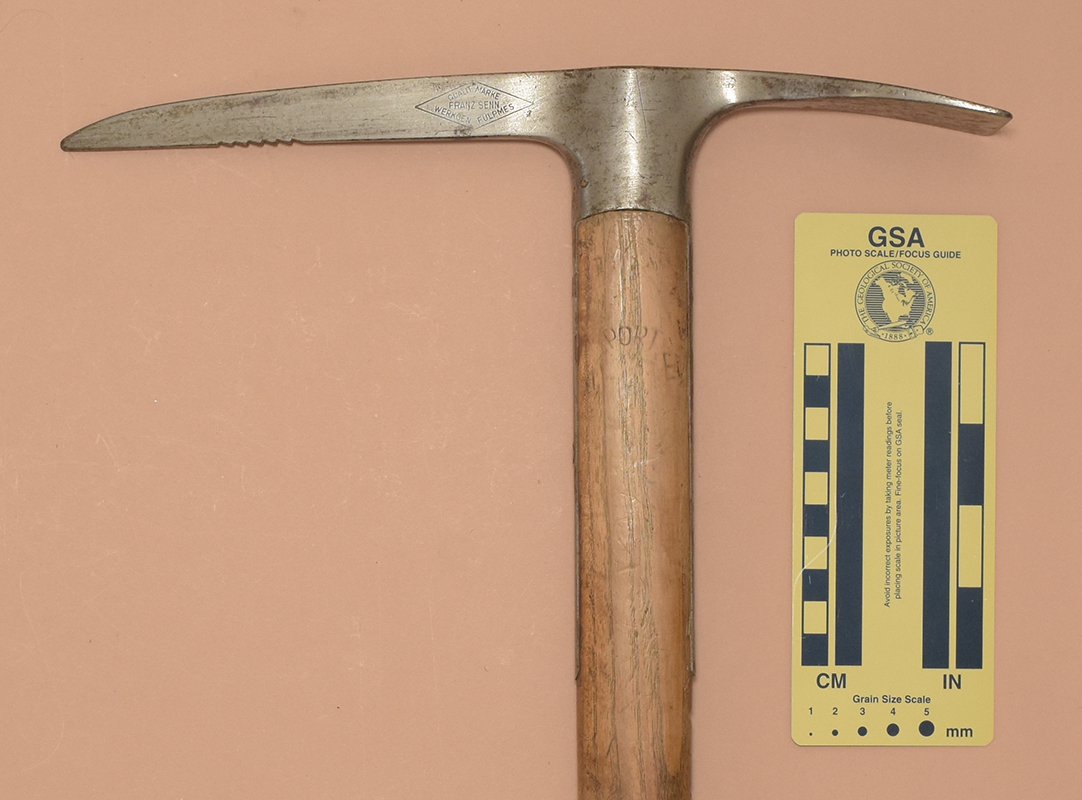
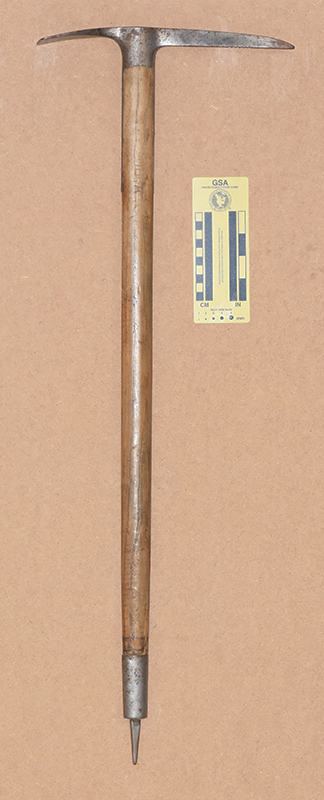
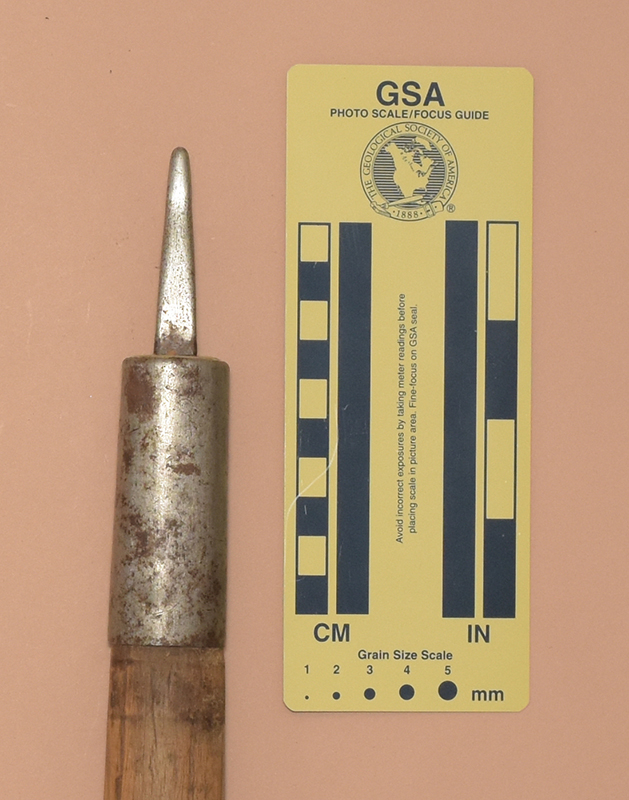
Werk (or Werkgen) Fulpmes is the shortened form of "Werkgenossenschaft der Stubaier Kleineisenindustries – Fulpmes" (Cooperative of Stubai Small Iron Industries - Fulpmes), a co-op of 27 small ironworks in the Fulpmes area of the Stubai Valley, Austria that banded together in 1897. They produced tools and other metal products, including mountaineering equipment.
In 1955, Werkgen Fulpmes started marketing various products with the "Stubai" name. In the next few years they gradually used the "Stubai" name for more products. The "Stubai"–inside–a–diamond logo appeared in 1958. Werkgen Fulpmes officialy adopted the "Stubai" company name in 1960, and subsequently marketed all their items under the Stubai brand name. They used the diamond logo until the 1970s, when they changed the logo to a 3–peak mountain with "STUBAI" within the mountain.
History
Ramón Montaner used a shortened 1920s Werk Fulpmes ice axe to clumsily murder Leon Trostsky in 1940. That most famous of all ice axes is now in the International Spy Museum in Washington DC.
Ice Axes
Werkgenossenschaft Fulpmes
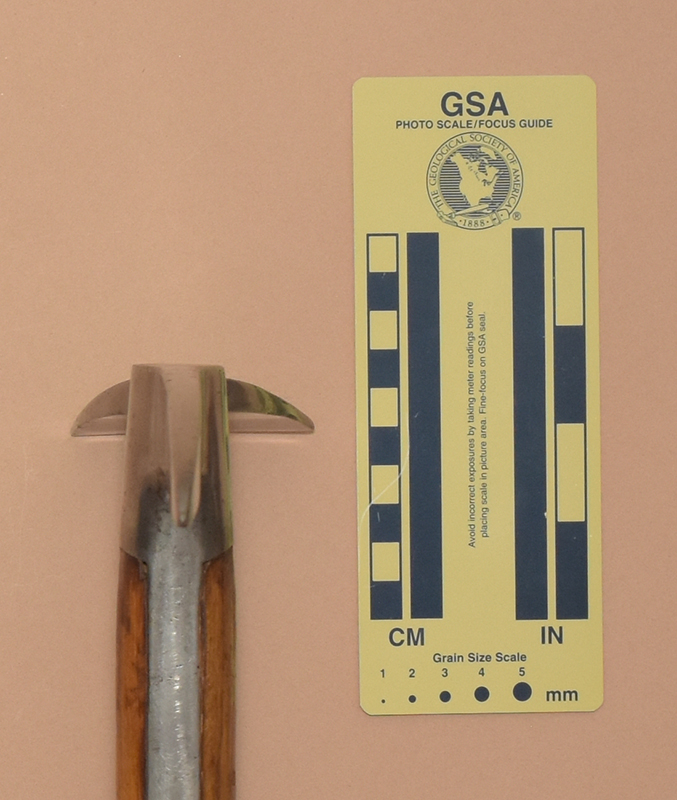
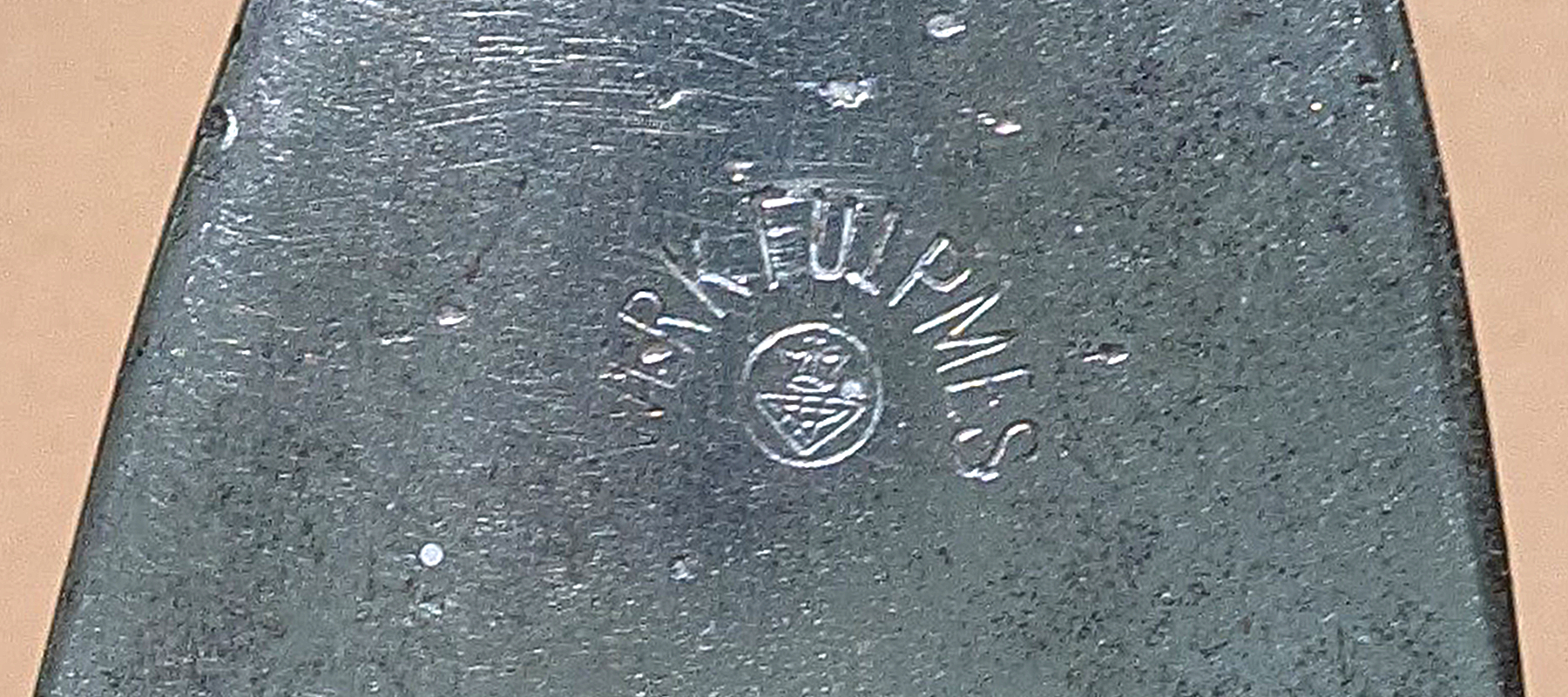
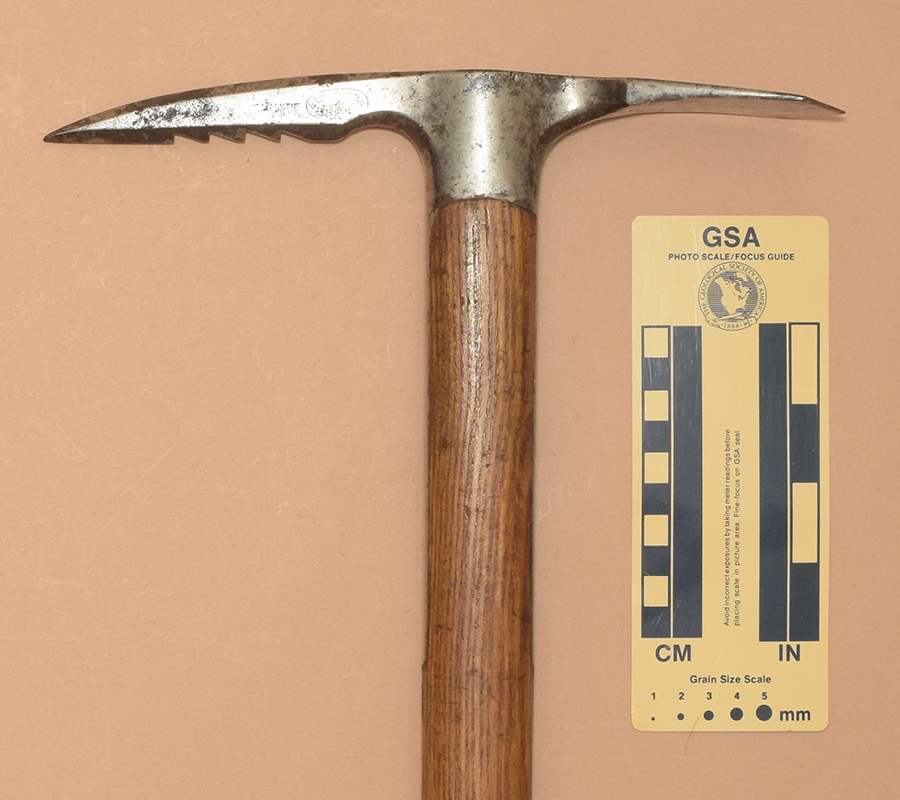
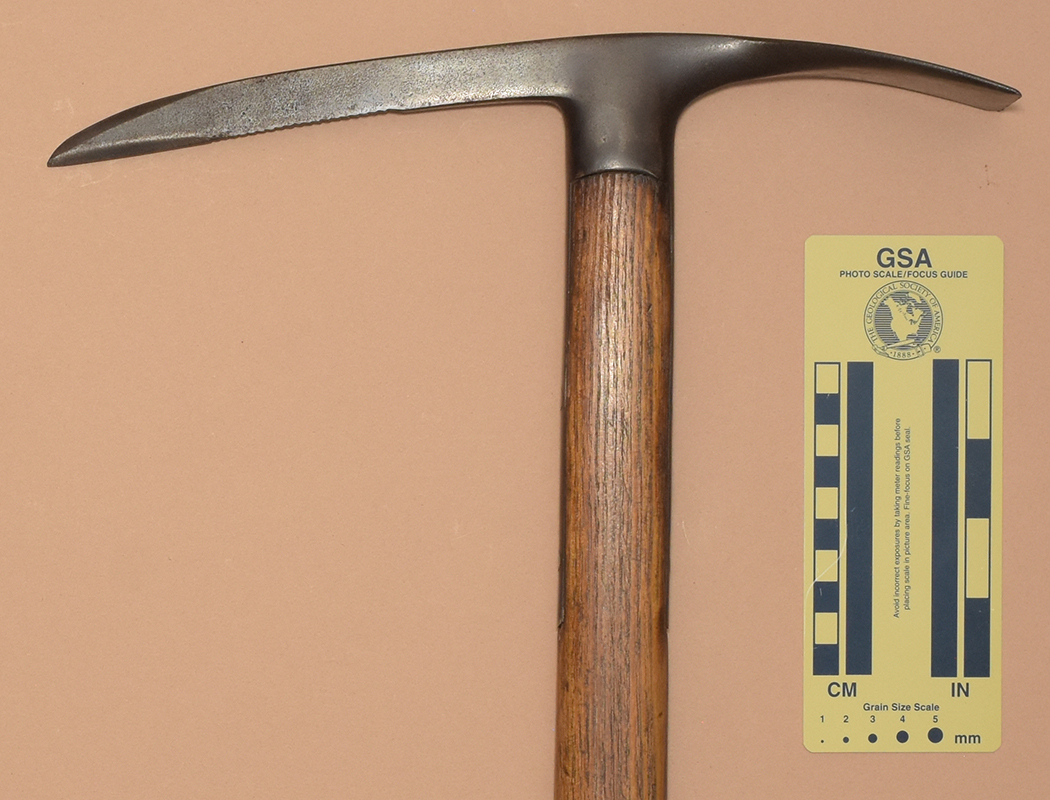
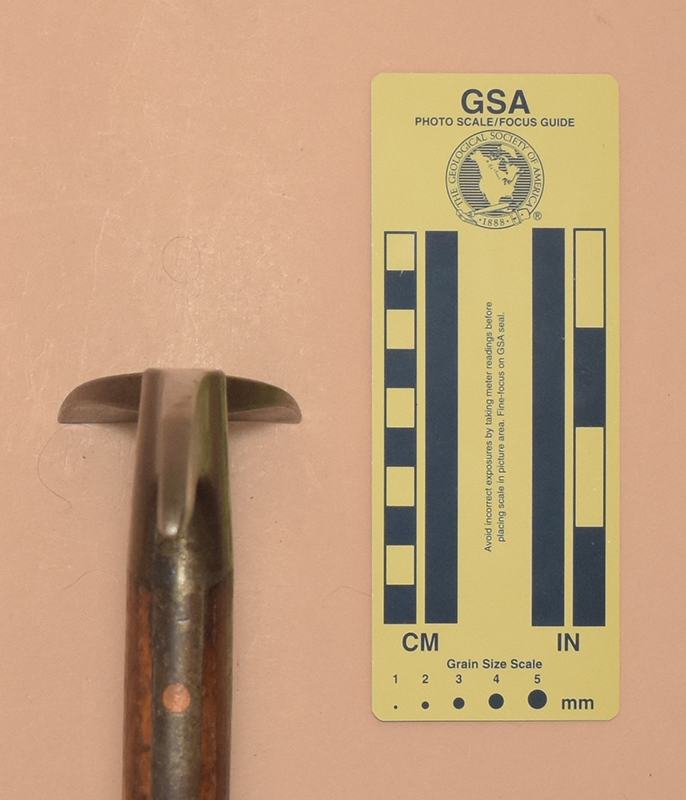
These early Werk Fulpmes ice axes have a
Werkgenossenschaft Fulpmes logo
stamped on the top of the adze.

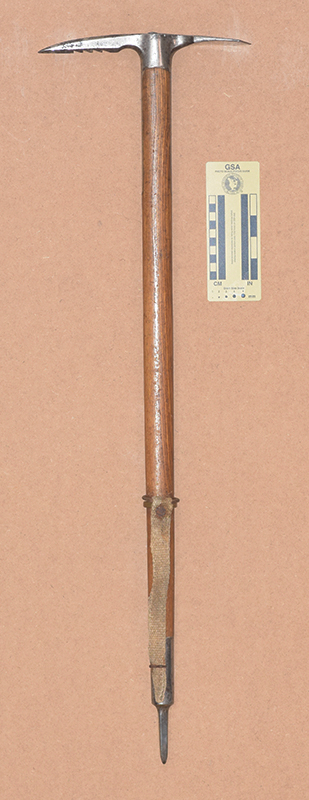
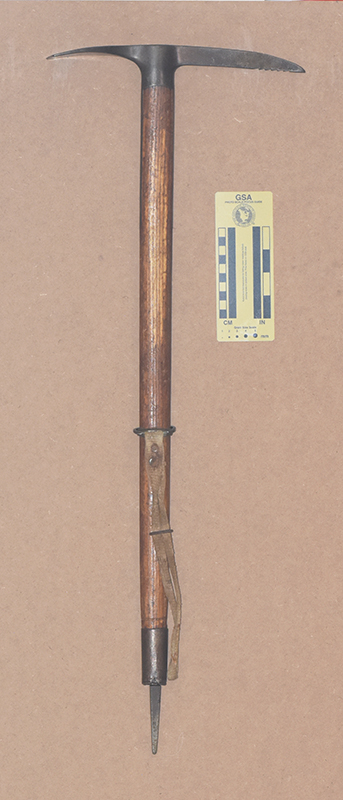
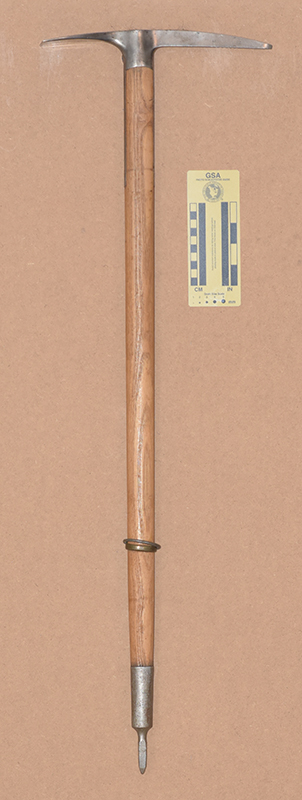
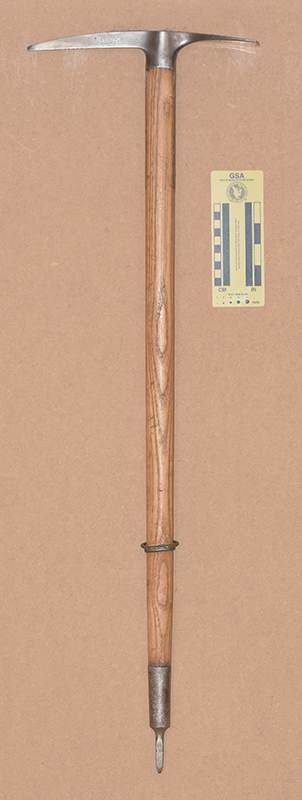
↑ 152: Werkgenossenschaft Fulpmes
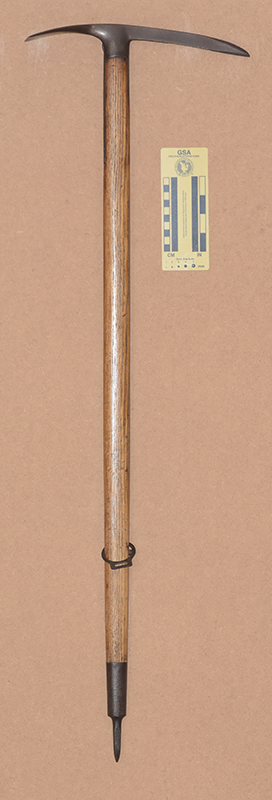
- Made in Austria [ca. 1900].
- 980x235 mm.
- Weight: 970 g.
- Wood Shaft.
- Shaft: 30x24 mm.
- Fixed Head.
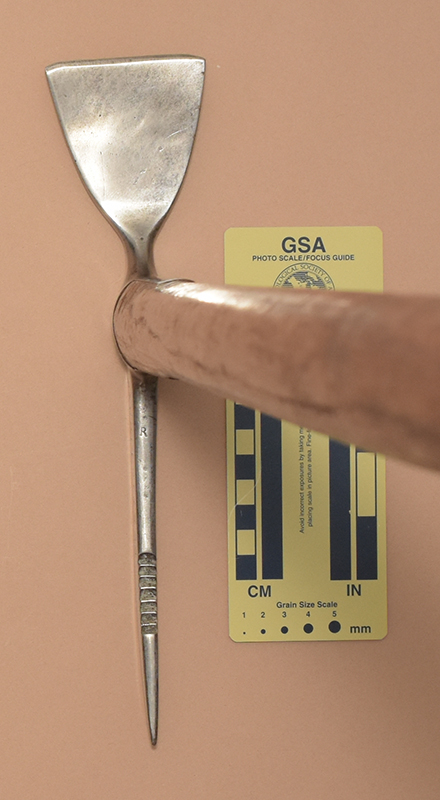
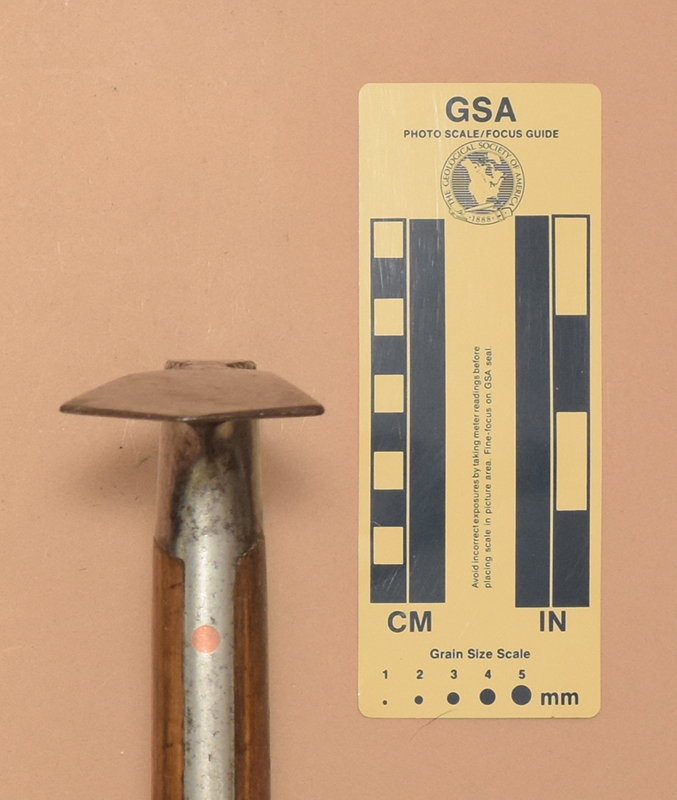
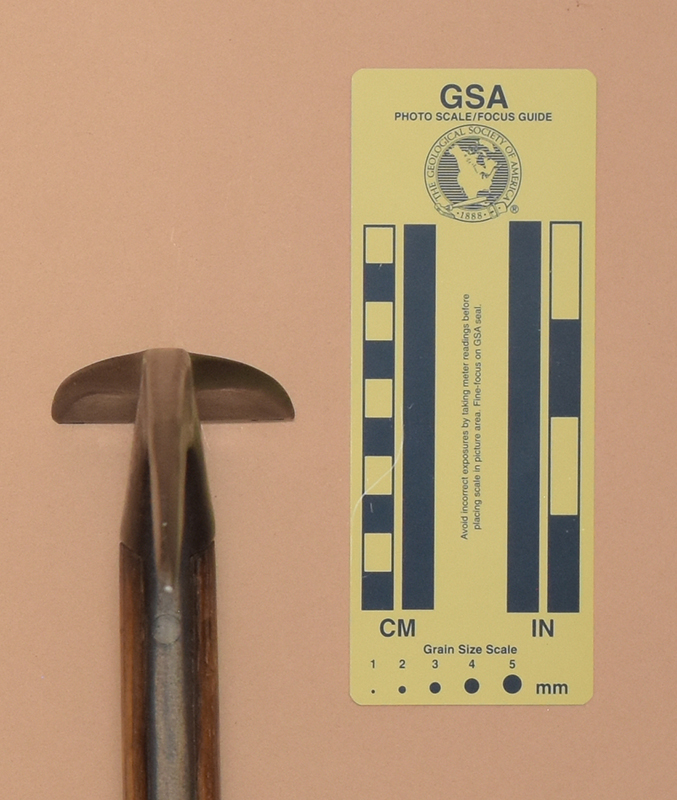
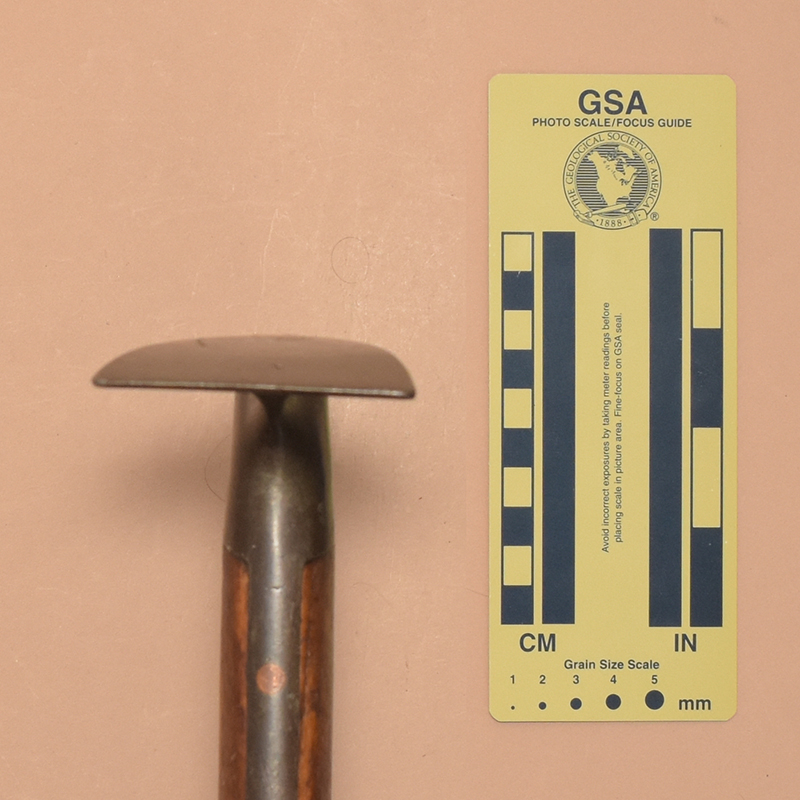
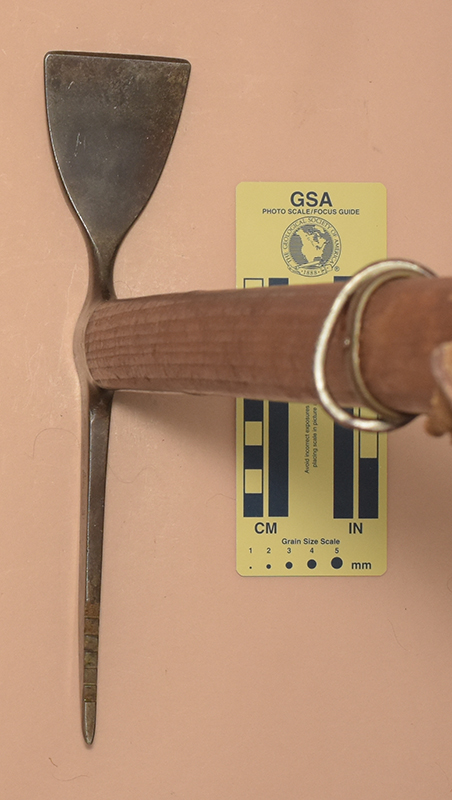
- Straight adze with a curved edge and no arch.
- Adze: 60(l)x44(w)x0(arch) mm.
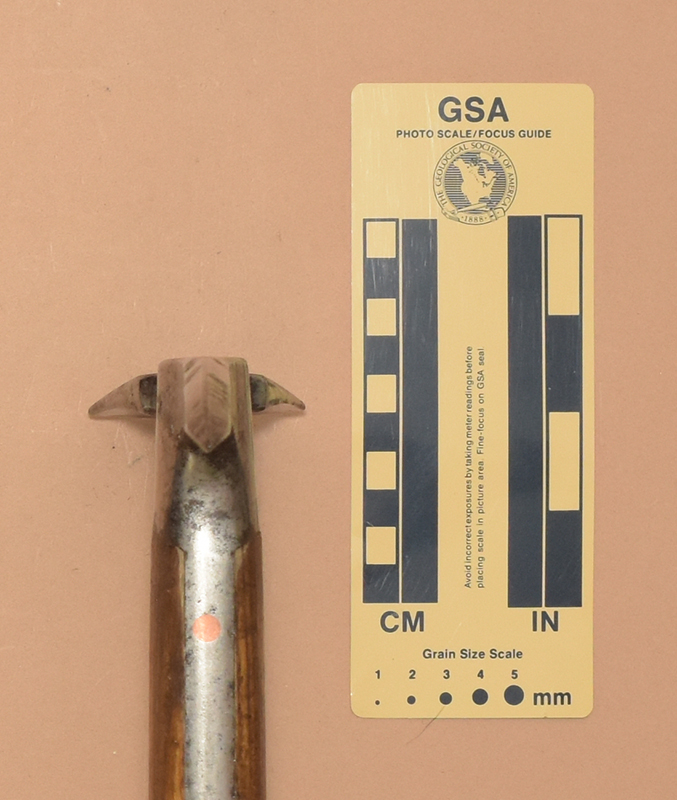
- Straight alpine pick with a pointed tip and with 7 ventral teeth.
- Pick: 115(l)x21(h)x9(t) mm.
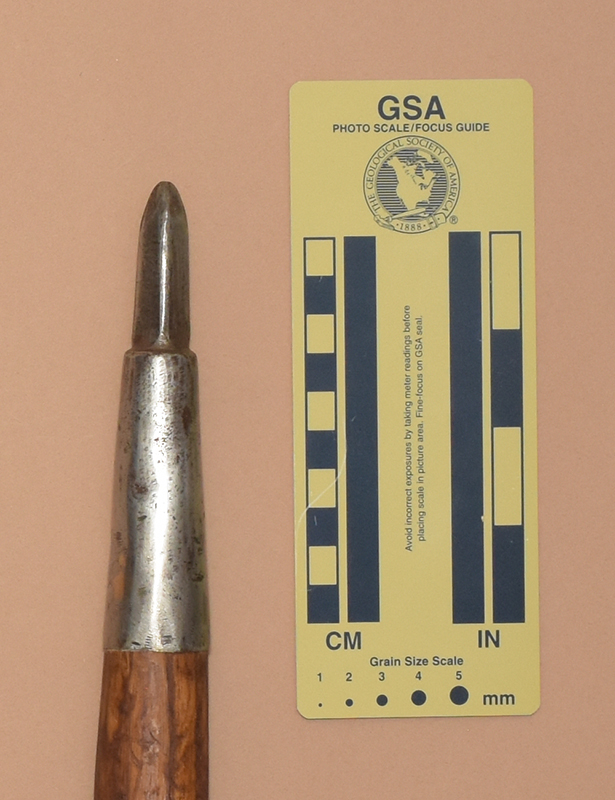
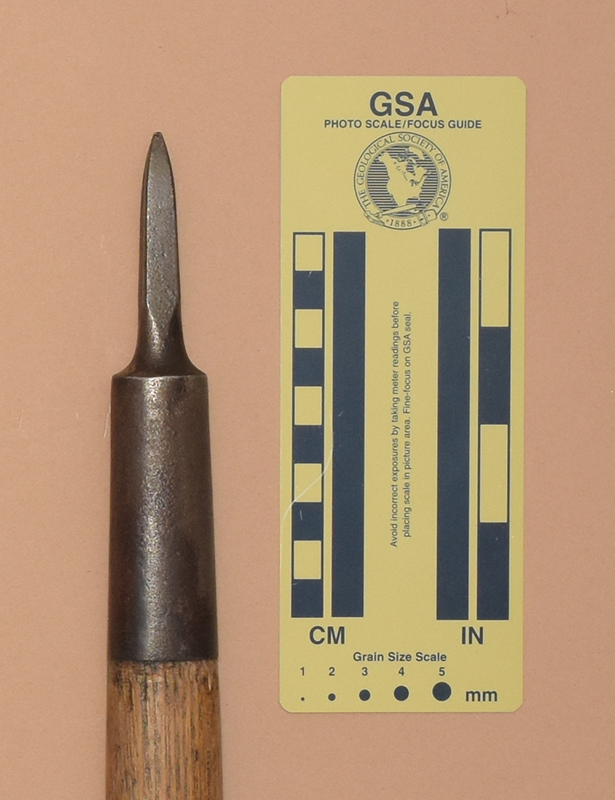
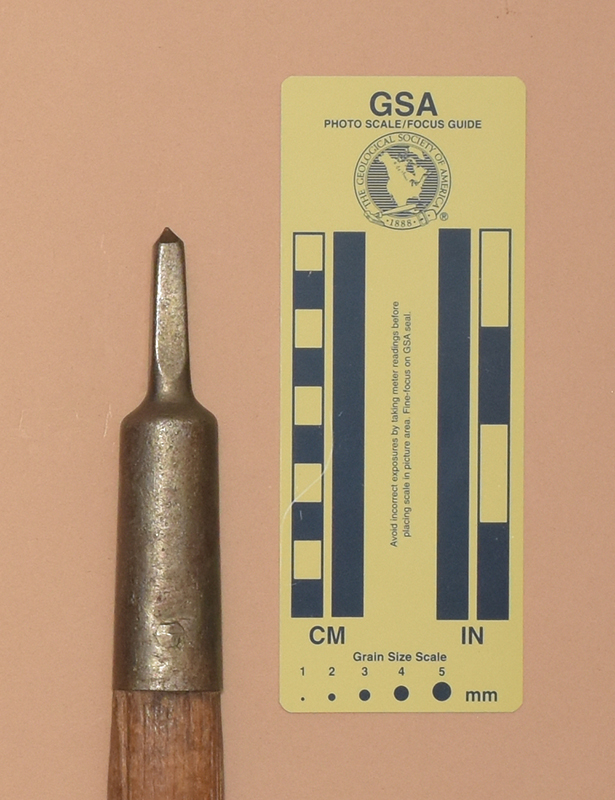
- Square spike with integrated ferrule.
- Spike: 77(l)x12(w)x12(t) mm.
- Glide ring and stop are missing. Stop was mounted on sace of shaft rather than the edge.
- This is a long ice axe whose length is consistent with the general practice of the first half of the 1900s. The adze is small, thick, and flat.
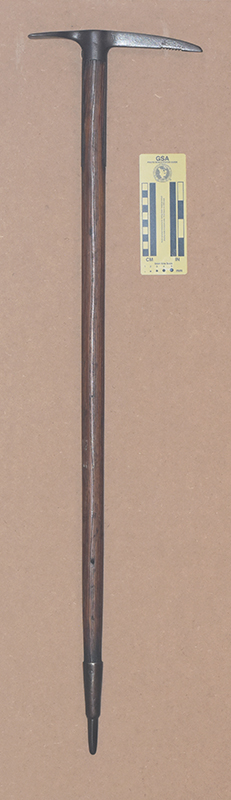
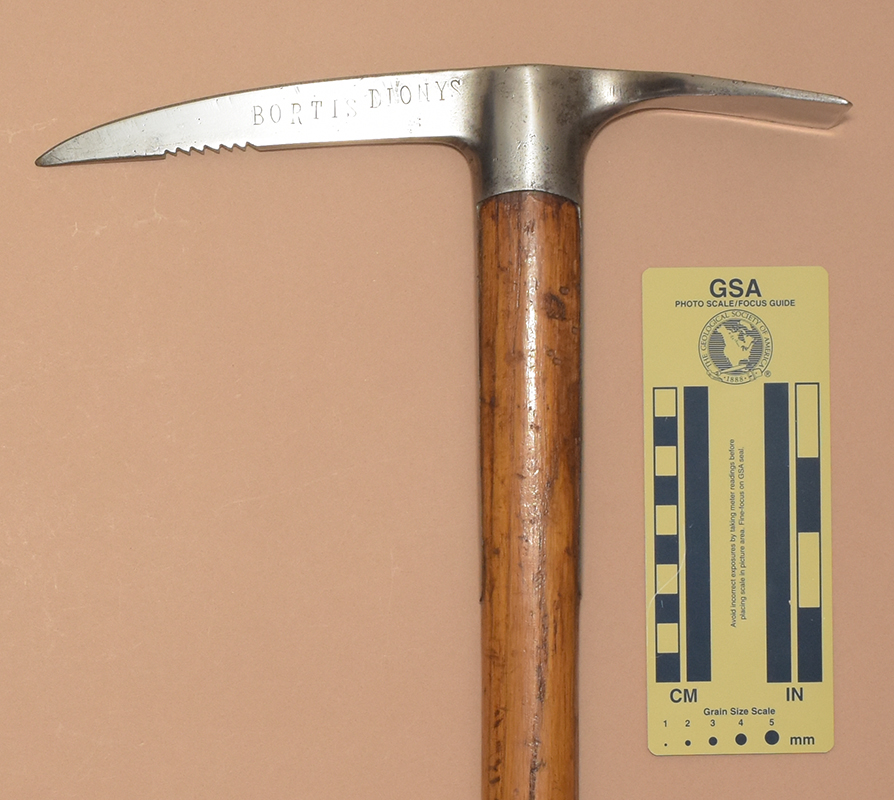
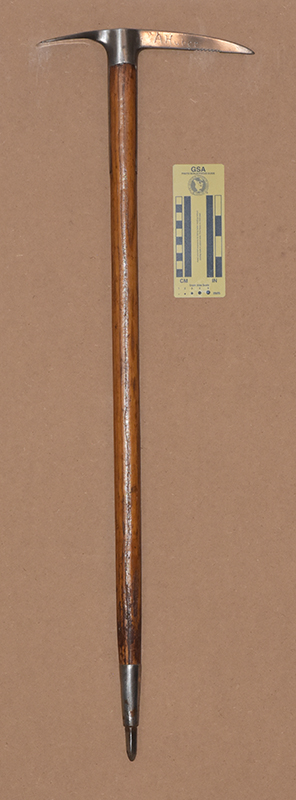
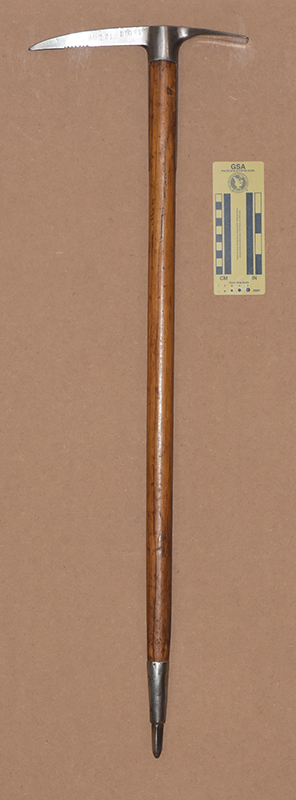
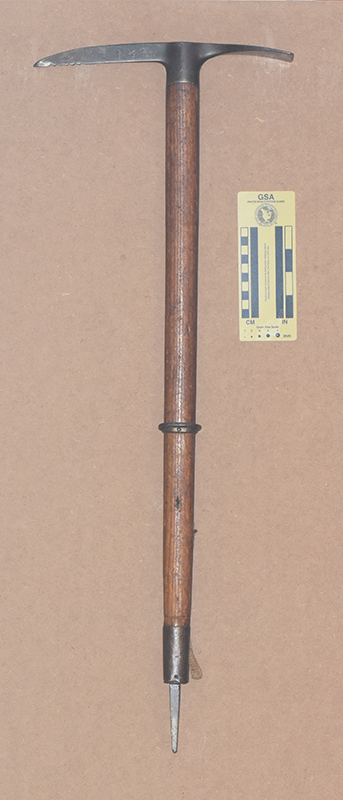
↑ 412: Werkgenossenschaft Fulpmes
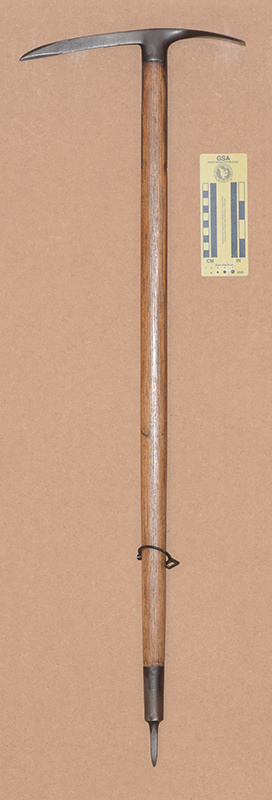
- Made in Austria [ca. 1920].
- 905x270 mm.
- Weight: 1095 g.
- Wood Shaft.
- Shaft: 32x29 mm. (Grip: 31x28 mm.)
- Fixed Head.
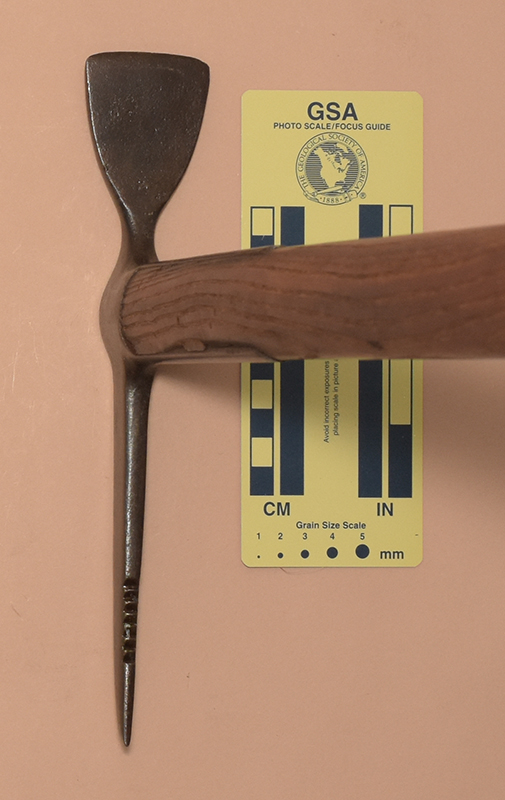
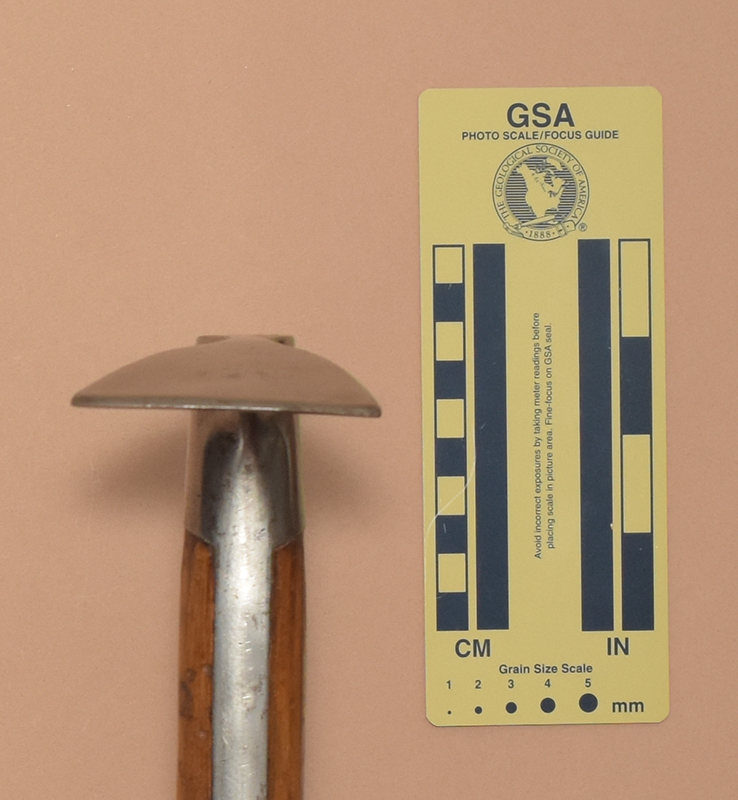
- Straight adze with a curved edge and no arch.
- Adze: 70(l)x62(w)x0(arch) mm.
- Straight alpine pick with a pointed tip and with 7 ventral teeth.
- Pick: 135(l)x24(h)x9(t) mm.
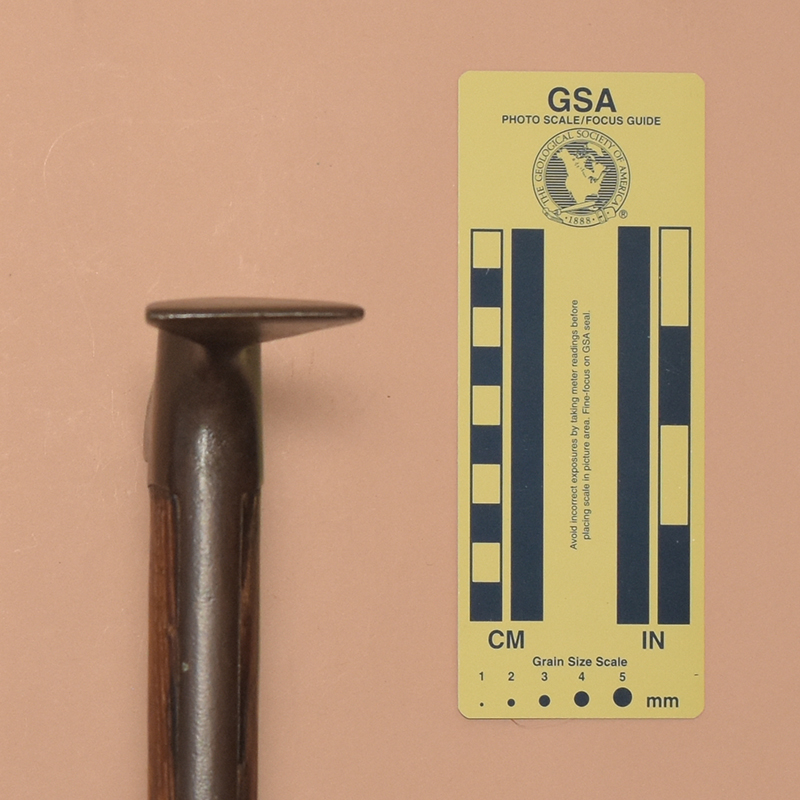
- Square spike with integrated ferrule.
- Spike: 41(l)x13(w)x13(t) mm.
- Heavy, nearly circular shaft with slight taper.
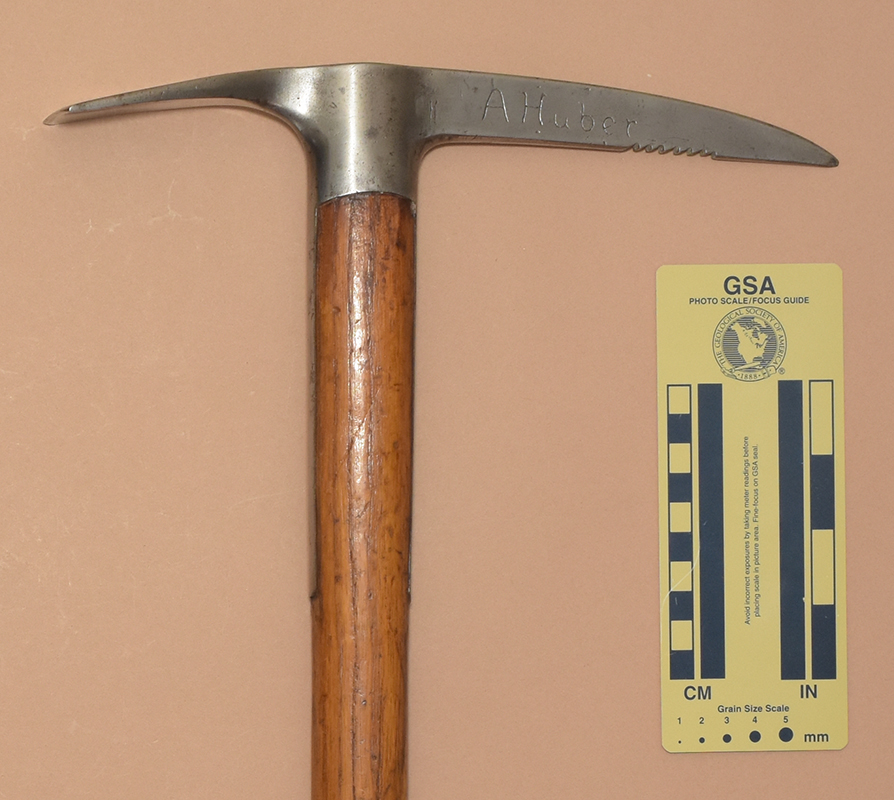
- A previous owner name "A Huber" is engraved on one side of the pick.
The names "BORTIS" and "DIONYS" are stamped on the other side of the pick. - The owner's name "A.Huber" also appears on my A. Hupfauf axe #247. That axe was made in 1921. I have not been able to find any information about A. Huber.
Werkgen Fulpmes
This axe has a Werkgen. Fulpmes stamp but matches earlier Johann Hofer axes bearing his stamp. Johann began producing ice axes in Fulpmes in 1888. He later moved to St. Anton / Arlberg, where he continued production until about 1915. This axe's design matches his No. 6 Stubaier Damenpickel (women's ice axe) from one of his St. Anton catalogs.
My axe appears in a 1936 Werk Fulpmes catalog listing "Mittelschwere Herrenpickel und Leichte Stubaier Damenpickel," mine being the former. Mine is the midweight mens axe with the 250 mm. head. The head on the women's axe was 25mm. ahorter. The catalog describes these axes as "oben und unten kantige, seitlich abgeflachte Hakenform mit spitzen Zähnen, Schaufel spitz" ("pick with a hooked shape, edged at the top and bottom, flattened at the sides, featuring sharp teeth; pointed adze"). These axes probably remained in production until the War.

↑ 542: Werkgen Fulpmes Stubaier Form
- Made in Austria [1920s–1930s].
- 860x250 mm.
- Weight: 1150 g.
- Wood Shaft.
- Shaft: 35x28 mm. (Grip: 30x25 mm.)
- Fixed Head.
- Straignt pentagonal adze and no arch.
- Adze: 70(l)x55(w)x0(arch) mm.
- Straight hexagonal pick with a pointed tip and with 4 ventral teeth.
- Pick: 115(l)x21(h)x12(t) mm.
- Square spike with integrated ferrule.
- Spike: 62(l)x11(w)x11(t) mm.
- Glide ring with canvas strap; brass collar retainer secured by two screws.
- This heavy axe has a distinct 19th century style.
- The design features a pointed adze and hexagonal pick that appears to be optimized for step cutting.
- Single–piece spike and ferrule.
Werk Fulpmes (?) Aschenbrenner
This is definitely an Aschenbrenner style axe but it has no markings. Stefan Romic found this axe in an antique fair in Osijek, Croatia. He provided the following comments about this unusual axe:
I realized that beside the absence of any markings, that specific Ice Axe had features I've never before, nor after of course, encountered on that ubiquitous model. It was definitely an original configuration, if it was remade, I would've noticed. It had an obscenely long shaft for an "Aschenbrenner", more in line with the 1910s-'20s Ice Axes.. and most importantly it had a forged one piece ferrule ! Features all encountered on considerably earlier Ice Axes.. All that led me to believe that I stumbled upon a rare, possibly prototype, workshop variant of the most iconic classic Ice Axe out there..
It actually makes perfect sense, since workshop specimens, test pieces etc. wouldn't carry a brand name of factory he (P. Aschenbrenner) later on made a deal with to mass produce his design. How it ended up in Croatia ? Well.. easily, in fact probably as my own, since the 7th SS-Freiwilligen-Gebirgs-Division had it's plate full with "bandenkampf" and Tito's partisans all over the Balkans up until the very end of war.
And how did they get it.? Well it was almost identical to their official ice axe, and most likely picked up at the workshop/factory and delivered to an army inventory with all the other brand new official Aschenbrenners. Fascinating. It actually might be one of the oldest Aschenbrenners in existence!
This includes some reasonable speculation but we will never know (let alone prove) the complete history of this axe. For my part, I believe it highly likely that it was produced by one of the Werk Fulpmes shops along with other Aschenbrenners.
↑ 445: Werkgen Fulpmes (?) Achenbrenner
- Made in Austria (?) [1930s].
- 990x305 mm.
- Weight: 1000 g.
- Wood Shaft.
- Shaft: 35x23 mm. (Grip: 31x23 mm.)
- Fixed Head.
- Straight adze with a straight edge and no arch.
- Adze: 90(l)x62(w)x0(arch) mm.
- Angled alpine pick with a diamond-point tip and with 20 ventral teeth.
- Pick: 160(l)x19h)x10(t) mm.
- Square spike with integrated ferrule.
- Spike: 49(l)x10(w)x10(t) mm.
- Glide ring w/o strap.
- This long axe has an oval shaft that tapers below the glide ring collar.
- Large head has a flat adze with sharp corners and straight diamond–pointed "Aschenbrenner" pick are designed for step cutting.
- Single–piece spike and ferrule.
Werk Fulpmes
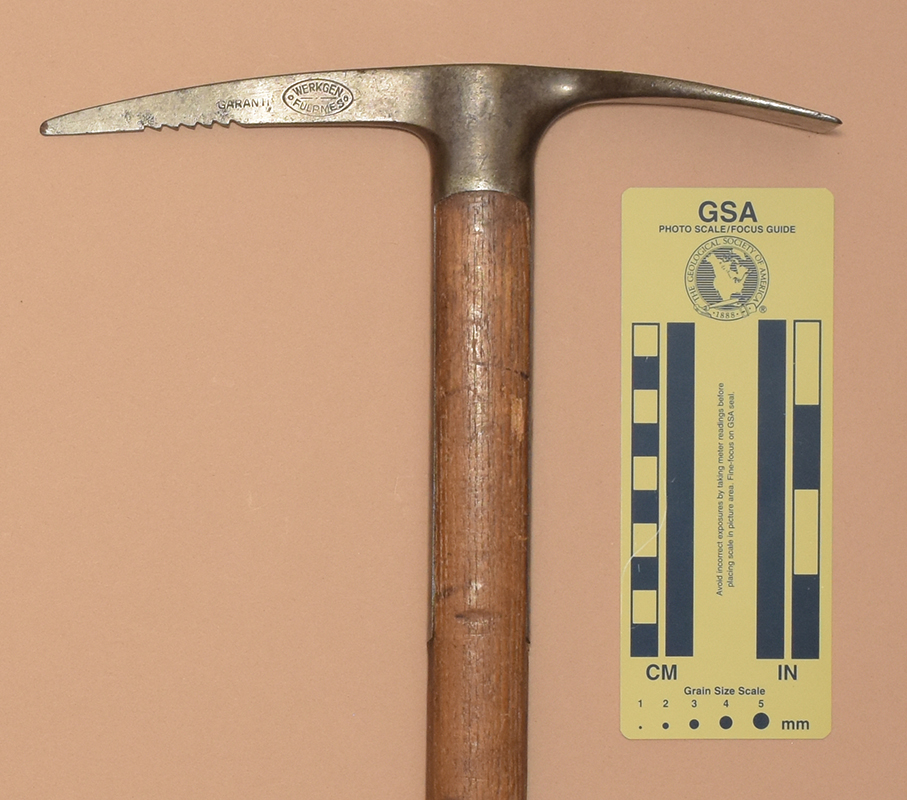
Garantie
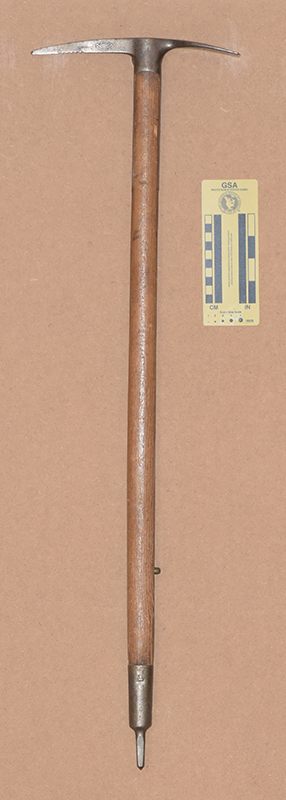
↑ 446: Werkgen Fulpmes Garantie
- Made in Austria [1920s].
- 825x235 mm.
- Weight: 805 g.
- Wood Shaft.
- Shaft: 30x22 mm.
- Fixed Head.
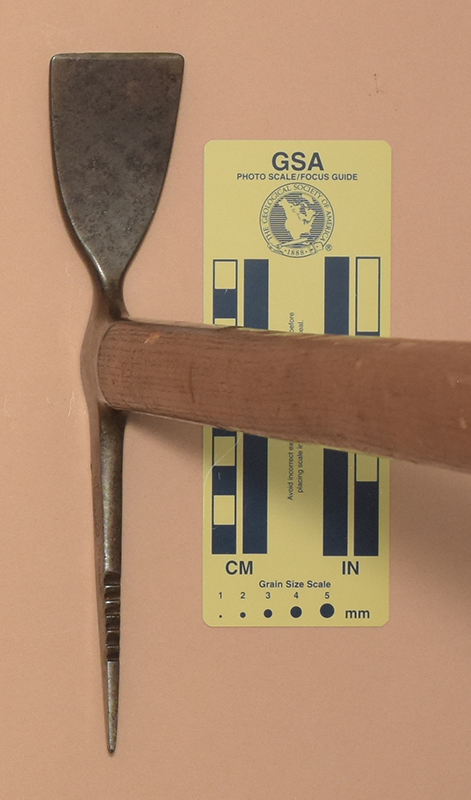
- Straight adze with a straight edge and no arch.
- Adze: 80(l)x46(w)x0(arch) mm.
- Angled alpine pick with a rounded tip and with 6 ventral teeth.
- Pick: 105(l)x17h)x9(t) mm.
- Square spike with integrated ferrule.
- Spike: 45(l)x10(w)x10(t) mm.
- Glide ring is missing.
- This is a small axe lies between full–size axes and lightweight walking–stick axes. It is intended for women or for occassional summer use.
- Single–piece spike and ferrule.
Extra Garantie
↑ 206: Werkgen Fulpmes Extra Garantie
- Made in Austria [1930s].
- 780x285 mm.
- Weight: 1065 g.
- Wood Shaft.
- Shaft: 35x24 mm. (Grip: 32x23 mm.)
- Fixed Head.
- Curved adze with a straight edge and no arch.
- Adze: 85(l)x62(w)x0(arch) mm.
- Straight alpine pick with a pointed tip and with 6 ventral teeth.
- Pick: 150(l)x21(h)x9(t) mm.
- Square spike.
- Spike: 47(l)x13(w)x13(t) mm.
- Glide ring with canvas strap; brass collar retainer.
- The inscription is struck with EXTRA GARANTIE in French.
- Werkgen Fulpmes logo matches those used in the 1930s.
Prima Garantie
Ramón Montaner used a shortened 1920s Werk Fulpmes ice axe to clumsily murder Leon Trostsky in 1940. That most famous of all ice axes is now in the International Spy Museum in Washington DC.
↑ 444: Werkgen Fulpmes Prima Garantie
- Made in Austria [ca. 1920].
- 895x285 mm.
- Weight: 1045 g.
- Wood Shaft.
- Shaft: 35x24 mm. (Grip: 31x23 mm.)
- Fixed Head.
- Straight adze with a straight edge and no arch.
- Adze: 85(l)x57(w)x0(arch) mm.
- Straight alpine pick with a negative-clearance chisel tip and with 6 ventral teeth.
- Pick: 135(l)x21h)x9(t) mm.
- Square spike with integrated ferrule.
- Spike: 49(l)x10(w)x10(t) mm.
- Glide ring w/o strap; brass collar retainer.
- This axe has an oval shaft that tapers below the glide ring collar.
- Flat adze with sharp corners and straight pointed pick are designed for step cutting.
- Single–piece spike and ferrule.
- This is the model that Ramón Montaner shortened and clumsily used to murder Leon Trostsky in 1940.
Franz Senn
The Fran Senn axe is a copy of Ralling's Akademiker Pickel. It was named after Franz Xaverius Senn (1831–1884), an Austrian priest and mountaineer. Senn was among the first to promote alpinism and foster the early development of mountaineering in Tyrol. He was a founding member of the Austrian and German alpine associations.
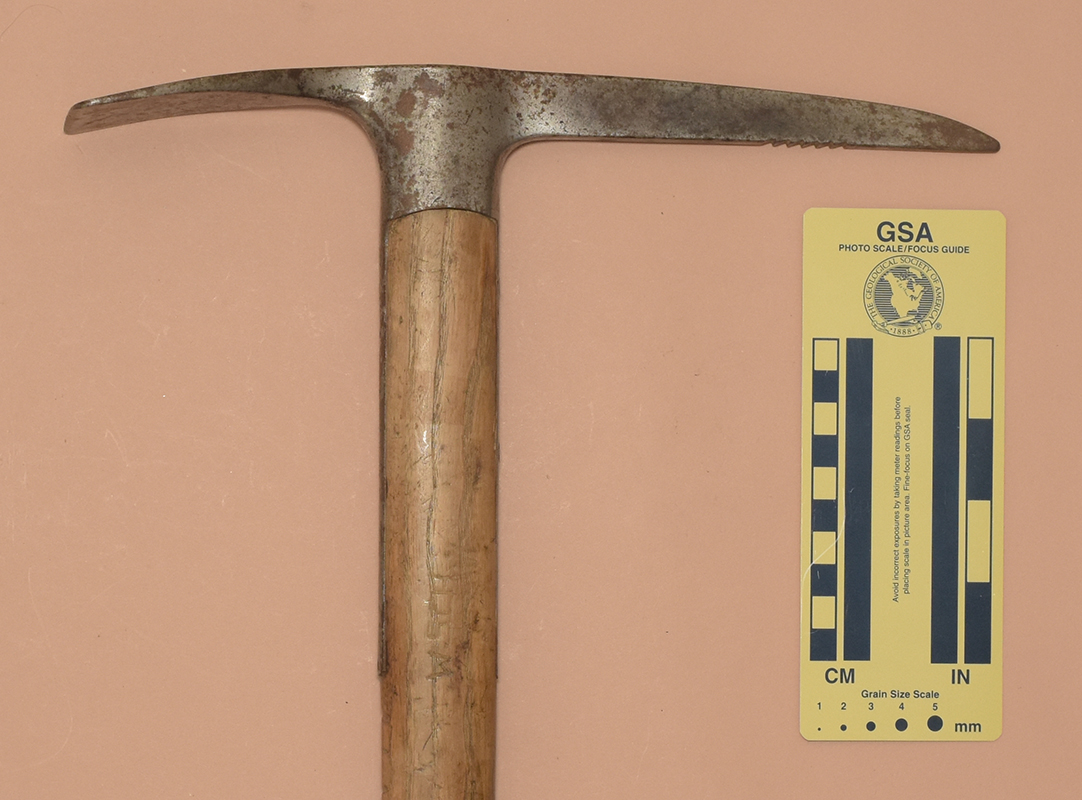
↑ 359: Werkgen Fulpmes Franz Senn
- Made in Austria. [1930s].
- 830x290 mm.
- Weight: 1100 g.
- Wood Shaft.
- Shaft: 35x26 mm. (Grip: 32x25 mm.)
- Fixed Head.
- Straight adze with a straight edge and no arch.
- Adze: 80(l)x61(w)x0(arch) mm.
- Straight alpine pick with a pointed tip and with 6 ventral teeth.
- Pick: 145(l)x21(h)x8(t) mm.
- Square spike.
- Spike: 52(l)x11(w)x11(t) mm.
- The tapered shaft that provides strength where it's needed most and gives the axe a solid swing when cutting steps.
- The Fran Senn axe is a copy of Ralling's Akademiker Pickel.