
This page will not fit into a tiny viewport. Please choose a full-size monitor with a full-width window or select the abridged New Wave pages.
Black Diamond Equipment is an American manufacturer specializing in equipment for climbing, skiing, and mountain sports. The company was founded in 1989 and is headquartered in Holladay, Utah.
Yvon Chouinard bought a second-hand coal-fired forge in 1957 and started making hardened steel pitons under the Great Pacific Iron Works name. Their success led him to form Chouinard Equipment Ltd. He partnered with Tom Frost, and they moved their operation to Ventura California in 1967. The Chouinard product line expanded into a wide variety of climbing and related outdoor gear. In 1971-1972, they introduced Hexentrics and Stoppers. Frost left the operation in 1977, and his name was removed from ice axes and other products that had born the CBouinard-Frost name.
In 1989, Chouinard Equipment was facing a liability lawsuit. Chouinard had to separate the liability of Chouinard Equipment from the deep pockets of Patagonia, which he had founded in 1973. Chouinard Equipment filed for Chapter 11 bankruptcy to protect the firm's assets. The lawsuit ultimately went nowhere. Peter Metcalf, Maria Cranor, and former Chouinard Equipment employees purchased the company assets in 1989, formed Black Diamond Equipment Ltd., and moved the firm to Salt Lake City Utah.
Initially Black Diamond continued using the "C-inside-a-diamond" logo inherited from Chouinard Equipment. Over time, this logo evolved into the current "cut diamond" design. The exact year of this transition is not precisely documented, but discussions among climbers suggest that the new logo was introduced around the year 2000. Archived web pages show that the cut diamond was in use by the beginning of 2000, but the 2000 summer catalog still contains the older logo. Black Diamond also had Chouinard stock with the old logo that was not sold for many years, making dating an item by its logo difficult to impossible.
 Black Diamond's initial 1990 catalog offered four camalot sizes numbered #1 though #4. These had U-shaped stems and were equivalent to their Chouinard predecessors. They added the #.5 and #.75 Camalot Juniors in 1991.
I do not have any examples of Black Diamond's first generation Camalots
 Black Diamond changed the #1 through #4 Camalots to a single stem design in 1994, leaving the Camalot Juniors unchanged.
Black Diamond expanded their Camalot offerings by adding the #5 in 1995, the #3.5 and #4.5 in 1998, and the Micro Camalots #0.1 through #0.75 in 2000 (replacing the Camalot Juniors). This chart shows the 1998 offerings.
 |  |
↑ Set 955-956, 226-230, 880: Black Diamond Camalots; #0.5–#4.5
 |  |  |  |
↑ 955: Black Diamond Camalot; #0.5
 |  |  |  |
↑ 956: Black Diamond Camalot; #0.75
 |  |
↑ 226: Black Diamond Camalot; #1
 |  |
↑ 227: Black Diamond Camalot; #2
 |  |
↑ 228: Black Diamond Camalot; #3
 | 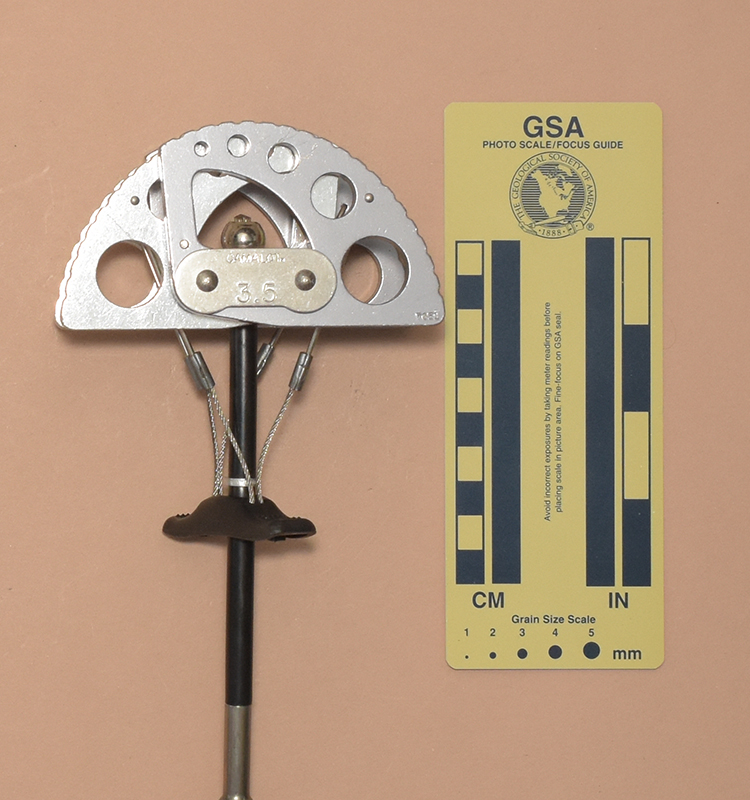 |
↑ 229: Black Diamond Camalot; #3.5
 |  |
↑ 230: Black Diamond Camalot; #4
 |  |  |  |
↑ 880: Black Diamond Camalot; #4.5
 | 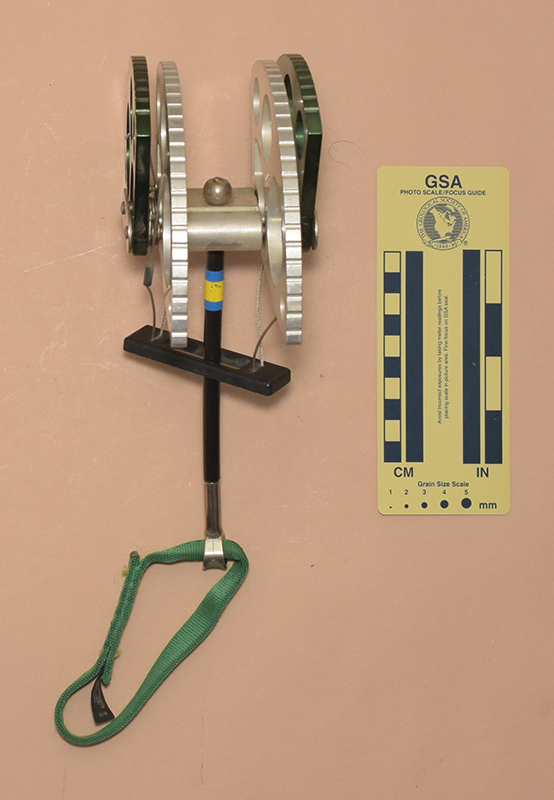 |
↑ 026: Black Diamond Camalot; #5
 Black Diamond introduced their third generation Camalot in 2006. These featured a looped stem instead of the previous thumbpiece. They introduced the smaller Camalot C3 series at the same time, replacing the second generation Micro Camalots.
Black Diamond later introduced the X4 series in 2013, the X4 Offsets in 2014, and the Camalot Ultralights in 2015.
At least one retailer referred to the third generation Camalots as the C4 series, but Black Diamond's web site did not use the C4 terminolgy prior to introducing the fourth generation C4 Series.
 |  |
↑ 025: Black Diamond Camalot; #5
 Black Diamond introduced their fourth generation C4 series in 2019. These featured new cam lobes optimized for weight, yielding a 10% weight reduction. They introduced a new trigger design on the #4 through #6 for compact racking.
Black Diamond added the huge #7 and #8 Camalots in 2020. They also made two prototype #21 Camalots because of course they did.
 |  |
↑ 024: Black Diamond Camalot; C4, #6
 |  |
↑ 023: Black Diamond Camalot; C4, #7
 |  |
↑ 022: Black Diamond Camalot; C4, #8