

This page will not fit into a tiny viewport. Please choose a full-size monitor with a full-width window or select the abridged New Wave pages.

|
|
 |
| Front | Rear |
 |
 |
 |
| Left | Right | Open for Rigging |
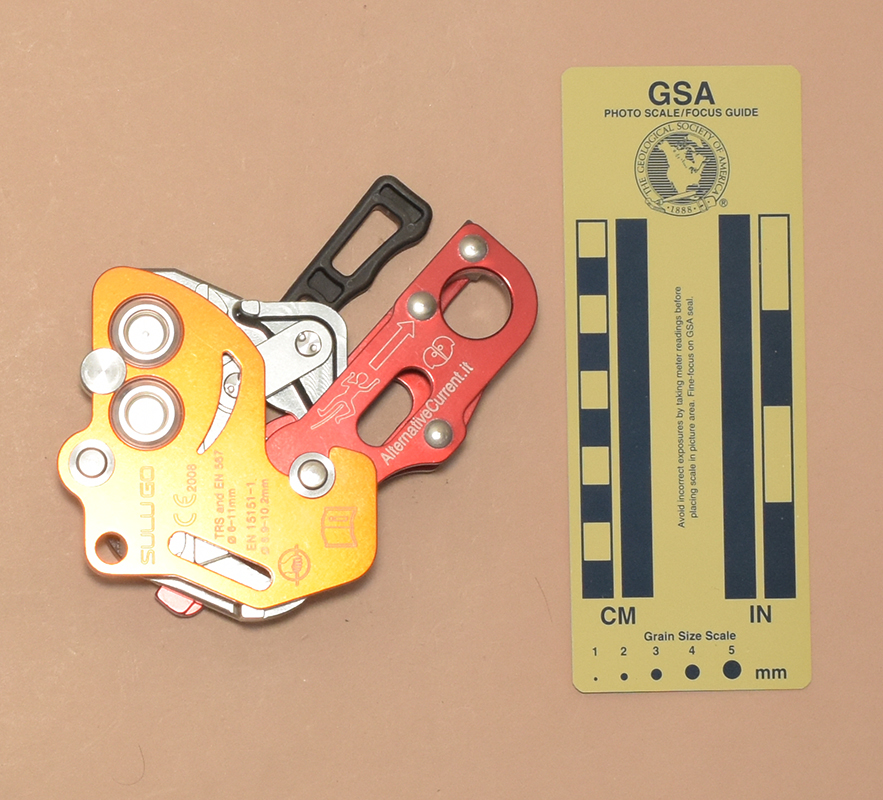
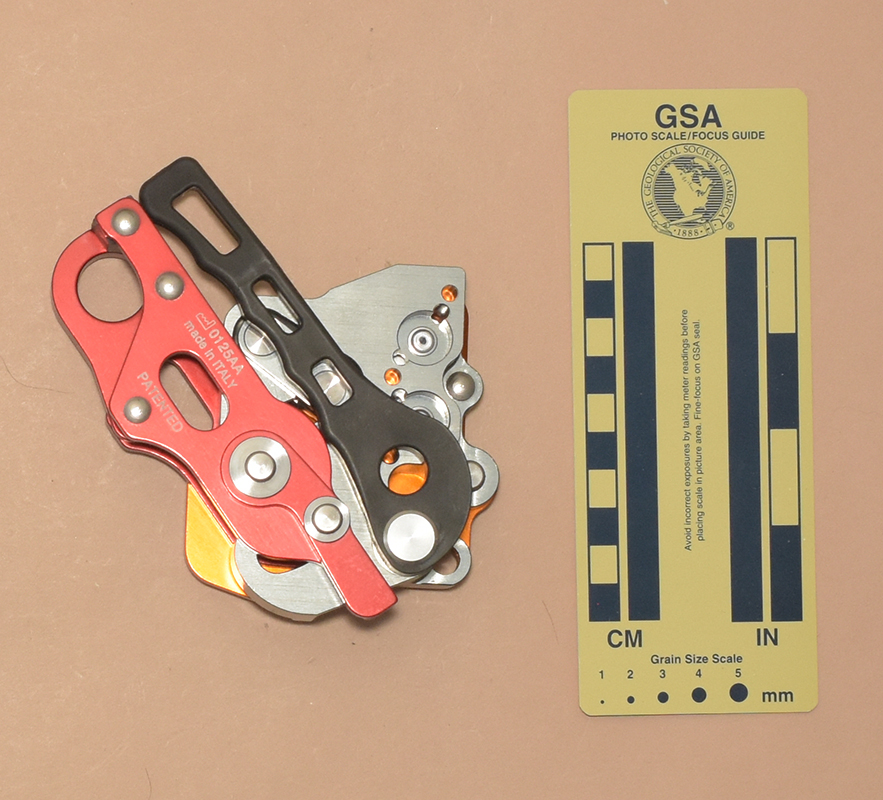
I acquired this AlternativeCurrent Sulu Go from AlternativeCurrent in 2024. It is from the first production batch.
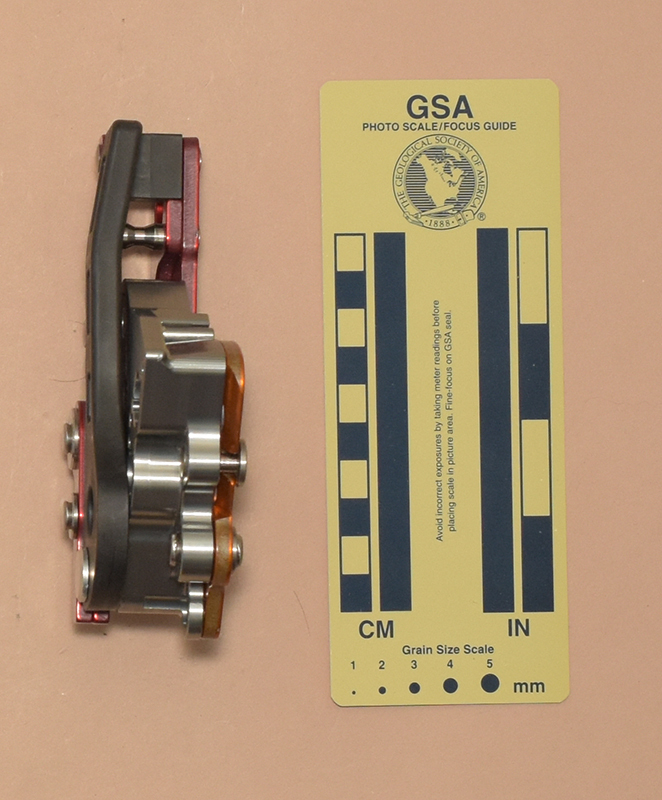
The AlternativeCurrent Sulu Go is 121 mm. long, 98 mm. wide, 41 mm. high, and weighs 328 g.
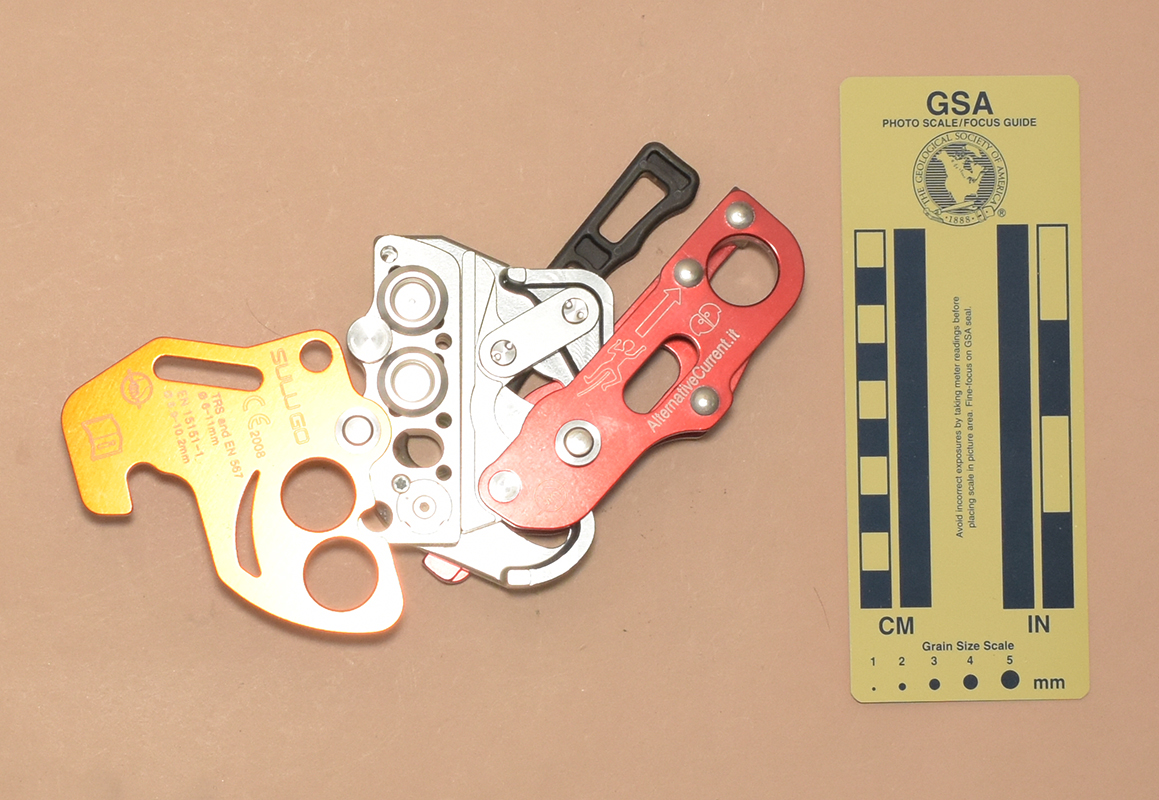
The Sulu Go is moderately complex, consisting of an aluminum frame, a brake shoe mounted on a parallelogram linkage, an attachment arm, a control handle, and a swinging cover.
The frame is milled from 7075 aluminum alloy. The left side forms an anvil for the rope. The face is flat, 74 mm. tall and 14.5 mm. deep. The anvil gas recesses on the front side that support two spring-loaded push buttons that lock the cover closed, a grooved pin that engages a notch in the cover, an axle for the cover to rotate on, and a spring assembly for the handle. The right side of the frame supports two pins for the parallelogram linkage. The top link pair are simple links, while the lower pair are part of the attachment arm.
The brake is a flat-faced shoe that moves on the parallelogram linkage. The linkage keeps the shoe face parallel to the anvil face at all times.
The attachment arm consists milled aluminum front and rear pieces held together by five pins. The lower two act as pivots for, while the remainder are fixed. The distal ends are separated by a spacer held by the fifth pin. The front piece has an attachment hole while the rear one is relieved to provide carabiner clearance. The geometry is such that loading the device while on rope forces the brake shoe toward the anvil, gripping the rope.
The plastic control lever is mounted on the rear of the device. It's springs normally pushes it against the control arm, forcing the brake shoe toward the anvil. Pulling the handle down causes the proximal end of the handle to cam against the lower end of the attachment arm's rear piece, forcing the arm to rotate and pull the brake shoe away from the anvil, allowing the rope to slip.
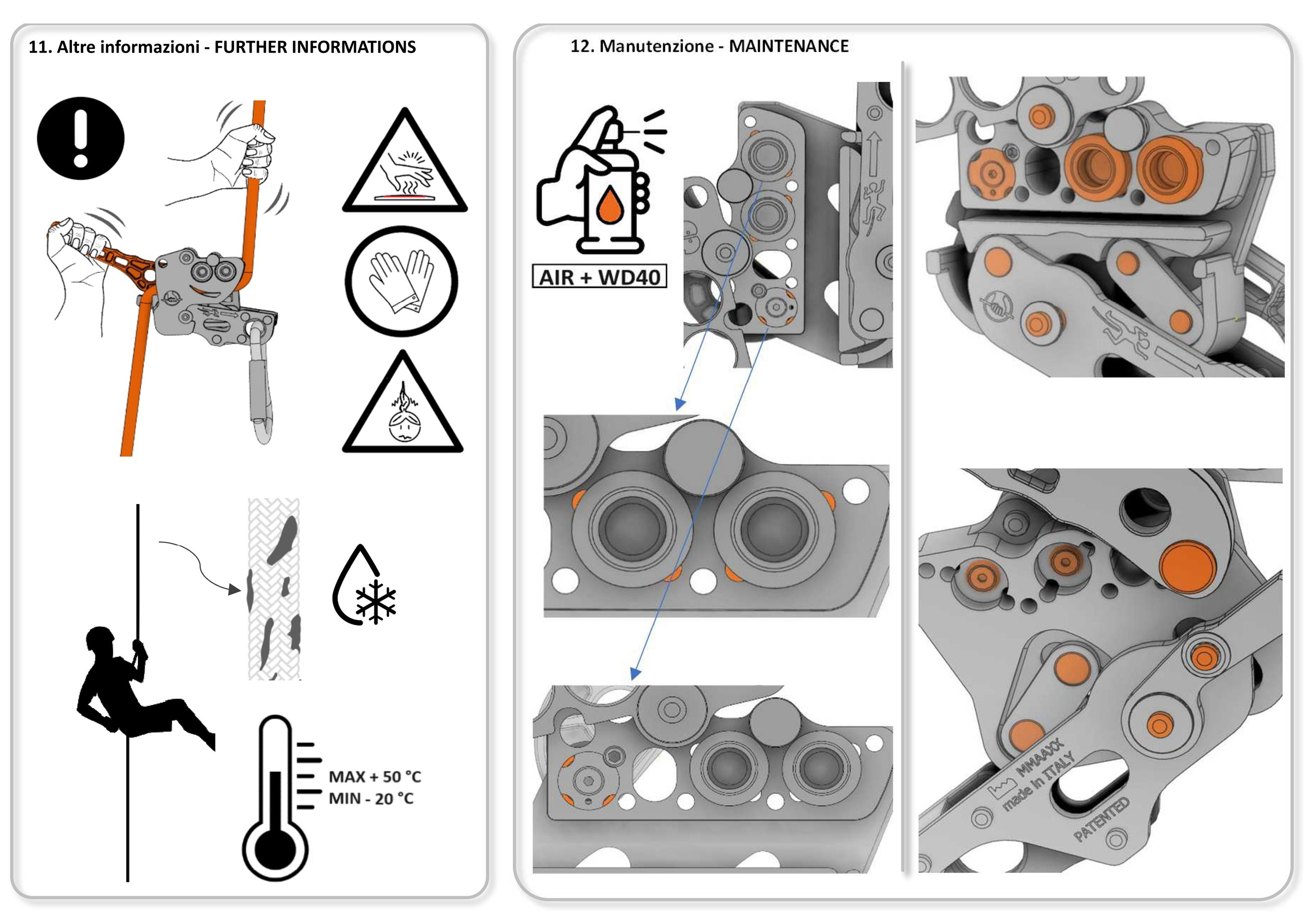
The front of the cover is printed with "SULU GO," "CE2008," TRS and EN 567," "Ø 6-11 mm," "EN 15151-1," and "Ø 8.9-10.2 mm." The rear of the attachment arm is printed with "⇧" with a climber below, the AlternativeCurrent logo, and "AlternativeCurrent .it." The front of the attachment arm is printed with "a factory icon, "0125AA," "made in ITALY," and "PATENTED."
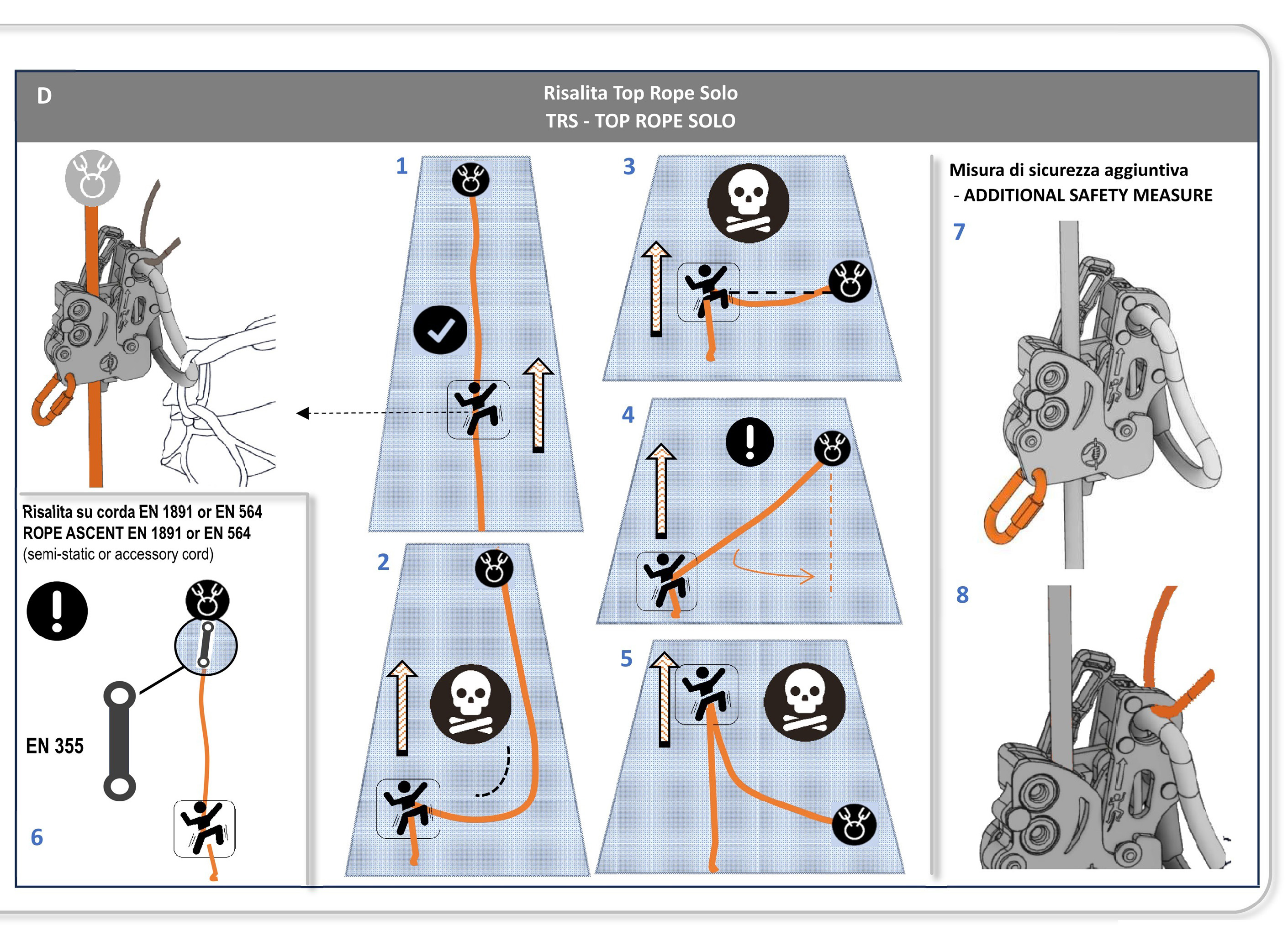
The Sulu Go is heavy for a belay device, and for normal use most people would choose something lighter and less complex. Where the Sulu Go is attracting attention is in the solo climbing community. There are (and always have been) very few devices in the climbing market explicitly designed for solo climbing use. The Sulu Go is the only one that I know of that has been certified for any such use, in this case for Top Rope Solo climbing. There has not been enough time for a consensus to develop on Sulu Go. My recommendation is to simply avoid solo climbing.
 |
DO NOT CLIMB SOLO! Nothing can make solo climbing safe. |
|
||
 |
 |
 |
 |
 |
 |
 |
 |
 |
 |
After climbing a poorly protected route in 2017, a few climbers decided to develop a new type of friend with a very wide range, all in a single tool. Years of design, testing and three patents later, they registered AlternativeCurrent S.R.L. in 2021 and introduced the Angel AC in 2022. A year later, they introduced the Big Angel cam and Sulu line of belay devices. AlternativeCurrent S.R.L. is in Circonvallazione Bran, Italy.