

This page will not fit into a tiny viewport. Please choose a full-size monitor with a full-width window or select the abridged New Wave pages.

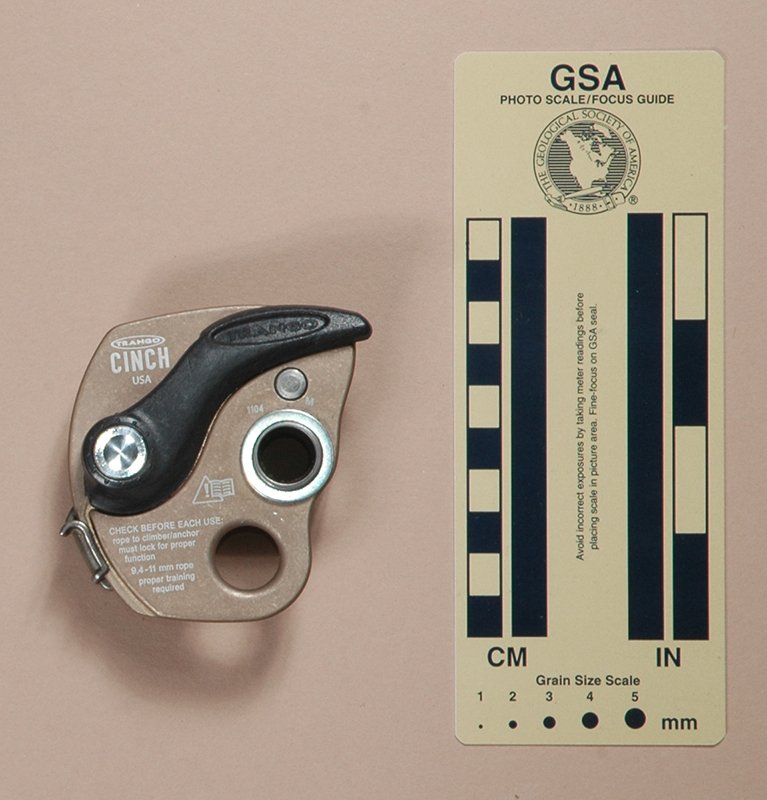
Version A

Version B
|
|
|
| Version A | Version B |
Trango is a Korean manufacturer of climbing devices. Trango Sports was established in 1987, and changed their name to Trango in 2001. They merged with Kovea Tech in 2007. They branched out to the Japanese market in 2011, the Middle East market in 2014, and the Chinese market in 2021. In 2017 they began industrial equipment development.
Great Trango Holdings Inc. is a specialized sporting & recreational goods & supplies wholesale firm based in Lafayette, Colorado. They are the North American partner for Trango Korea.
Established in 1991 in the USA, Trango Climbing (USA) focuses on designing, manufacturing, and distributing high-performance climbing gear for alpine, bouldering, gym, sport, and trad climbers. They operate an online retail store.
[ Top | Version B | Return to Lever Box Belay ]
|
|
 |
 |
| Front | Rear | Side |
 |
 |
| Front: Open for Rigging | Rear: Open for Rigging |
I acquired my Cinch from Mountain Gear in 2004.
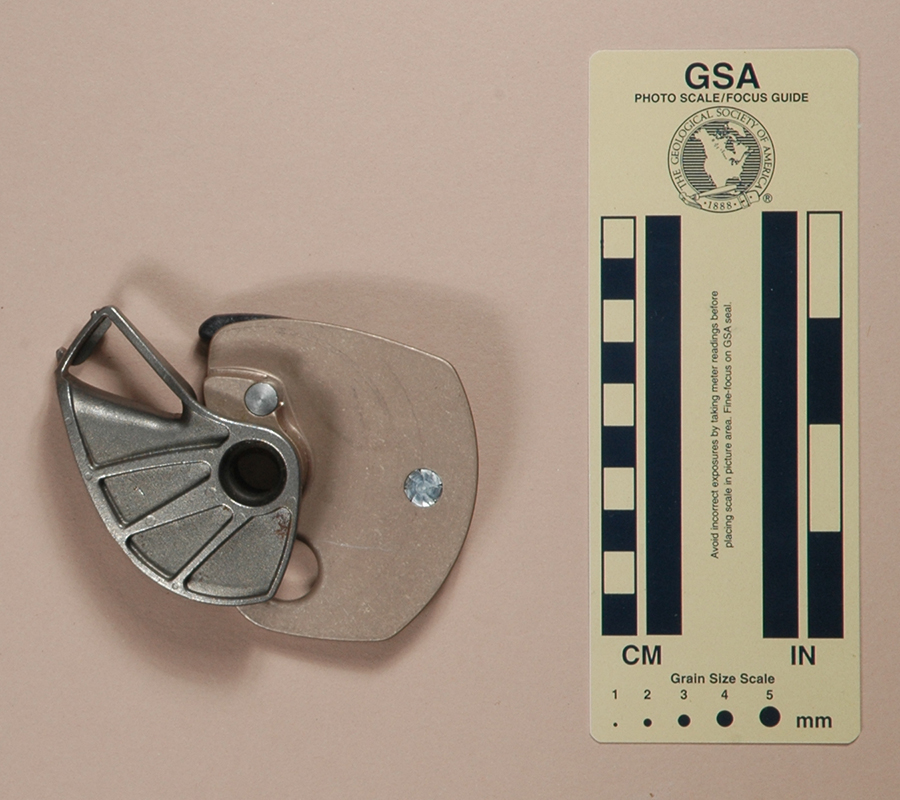
The Cinch consists of a cast steel back, milled aluminum front cover, plastic handle, and miscellaneous parts. The back is irregular in shape. The inside provides a rope channel with cast icons showing which end of the rope goes to the climber and which is used for belay. A tubular extension below the rope channel provides an axle for the cover to rotate on. The outer end of this extension is crimped over a steel washer to retain the cover. A hollow triangular extension ends in a hooked lip that captures the cover when closed. The back of the plate has several reinforcing ribs.
The cover is milled from aluminum, and then anodized. Most of the cover is 6 mm. thick (except for a 2.7 mm. thick area behind and above the lever, forming a lever stop, and the hook engagement arc mentioned later), but the portion fitting over the back axle is 18.5 mm. thick. A small extension to this portion acts as a cam for stopping rope motion. An 8 mm steel pin pressed into the front cover rests in a cylindrical depression in the extension; this pin forms the part of the cam that contacts the rope. This provides wear resistance beyond what aluminum would provide. The left side of the cover is a circular arc that fits into the notch in the back’s hook.
The cover has a rivet-mounted plastic lever on its left side. A spring forces the lever clockwise to the closed position. To use the lever, swing it counter-clockwise, where depressing the lever will cause the hooked extension to ride in a molded cam surface in the lever, forcing the cover to turn clockwise with respect to the back, thereby releasing the cam pressure on the rope. Although perhaps sounding strange, this isn't a typo: pushing down on the lever moves the left side of the cover up.
The front of my Cinch is printed with an ellipse containing "TRANGO," the word "CINCH," "USA," "1104," "M," the Reading is Dangerous icon, "CHECK BEFORE EACH USE: rope to climber/anchor must lock for proper function," "9.4-11 mm. rope," and "proper training required." The handle has "TRANGO" inside an ellipse. The inside of the back piece has a hand icon and a climber icon to indicate the rope path.
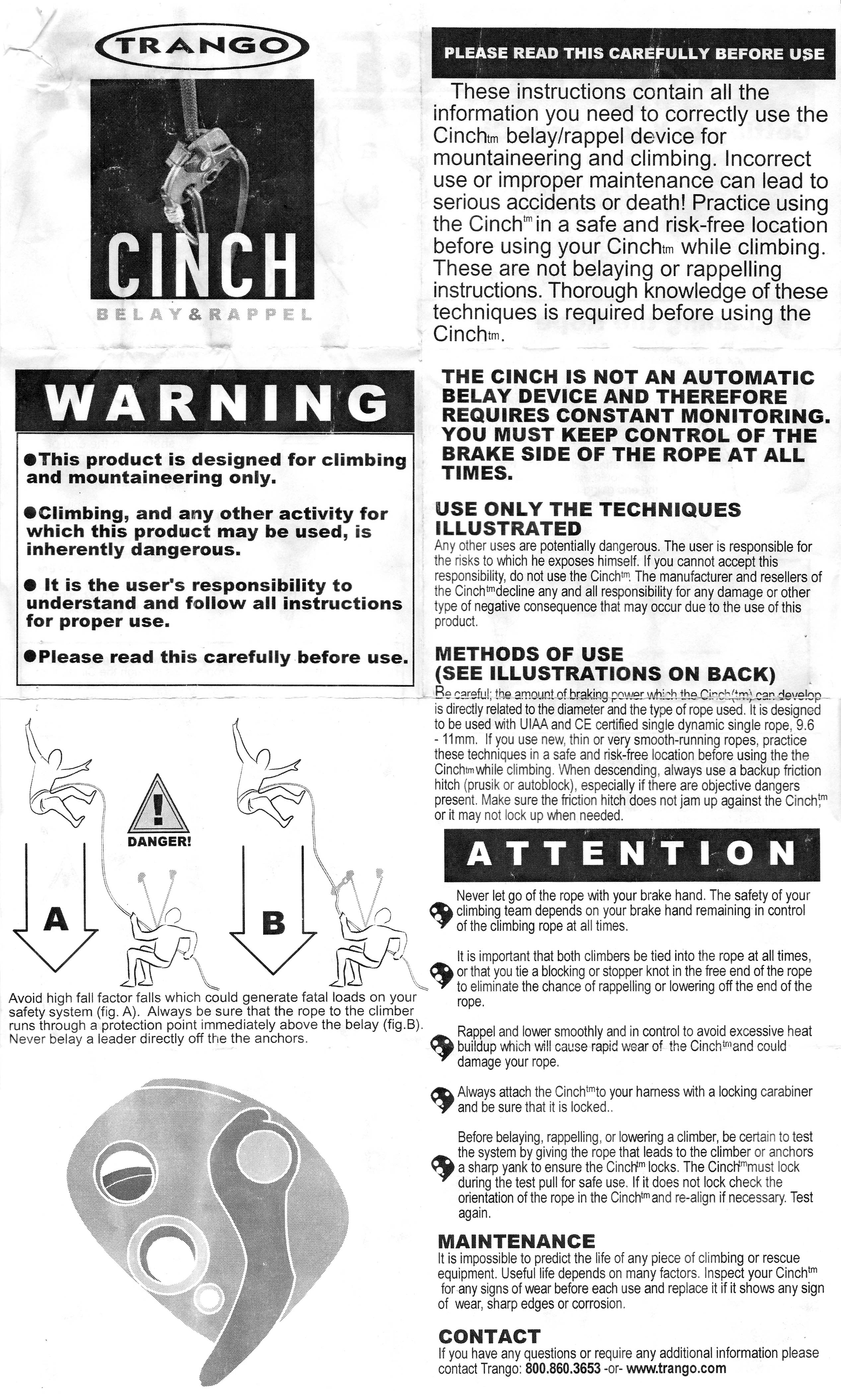
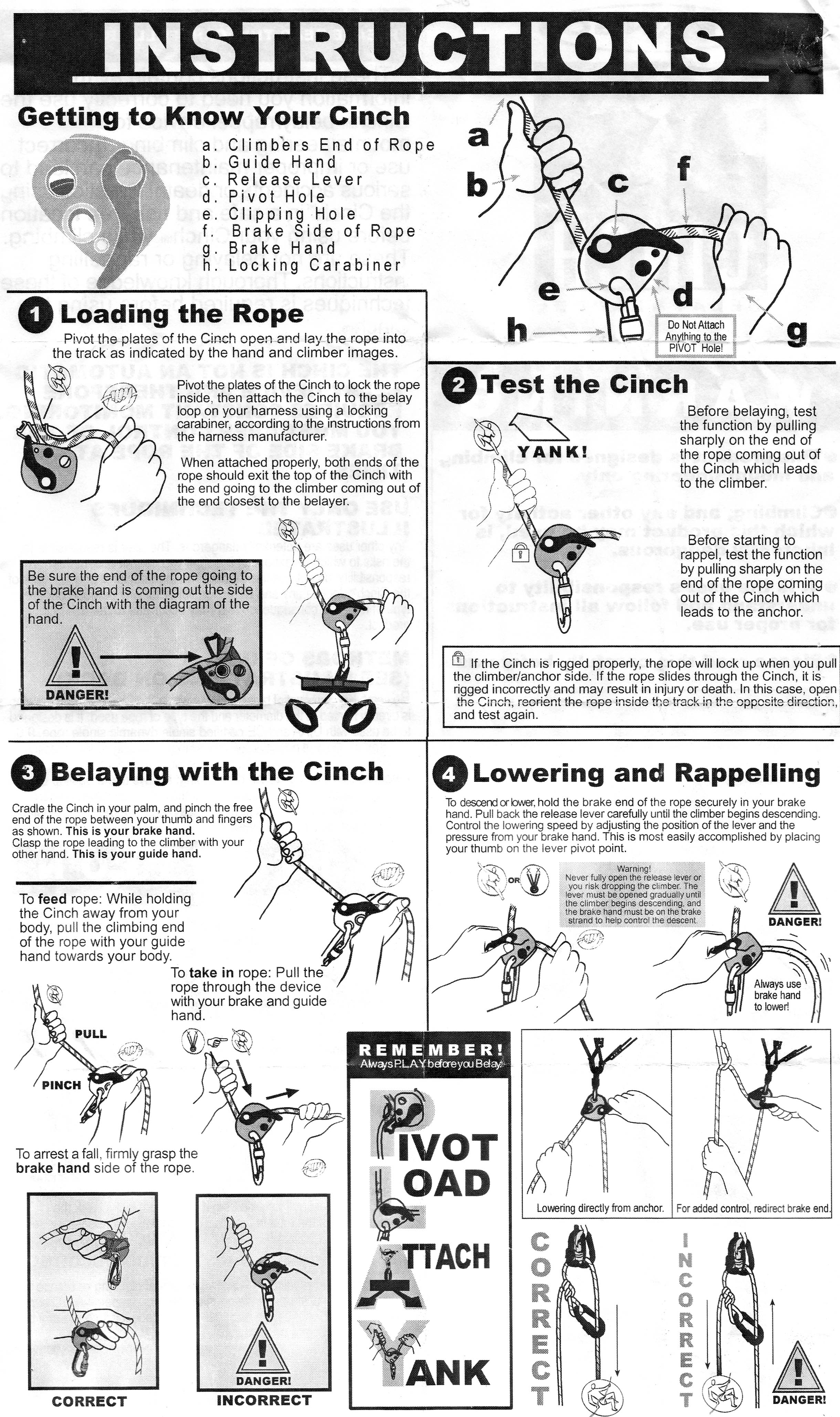
The Cinch is well made. It is a complex device that requires more training and familiarization than most devices, much like the Petzl Grigri. The Cinch is much smaller and lighter than the Grigri. Like the Grigri, the Cinch provides an autolocking feature that may be useful on big walls where the belayer is snoozing, but I’d rather have my second awake.
The lever action on the Cinch is cool: someone did some nice thinking here, although some may find the lever action to be too abrupt.
The hook ensures that the front cover does not spring away from the back, although the normal rope loading does not tend to force this.
I'm not a fan of autolocking belay devices, but I have to admit that I haven't had as much experience with the Cinch as I would like to have. Since I'm not likely to take such a large complex device to the crag, a more detailed evaluation will have to wait until I pay to visit a local climbing wall.
 |
 |
[ Top | Version A | Return to Lever Box Belay ]
|
|
 |
| Front | Rear |
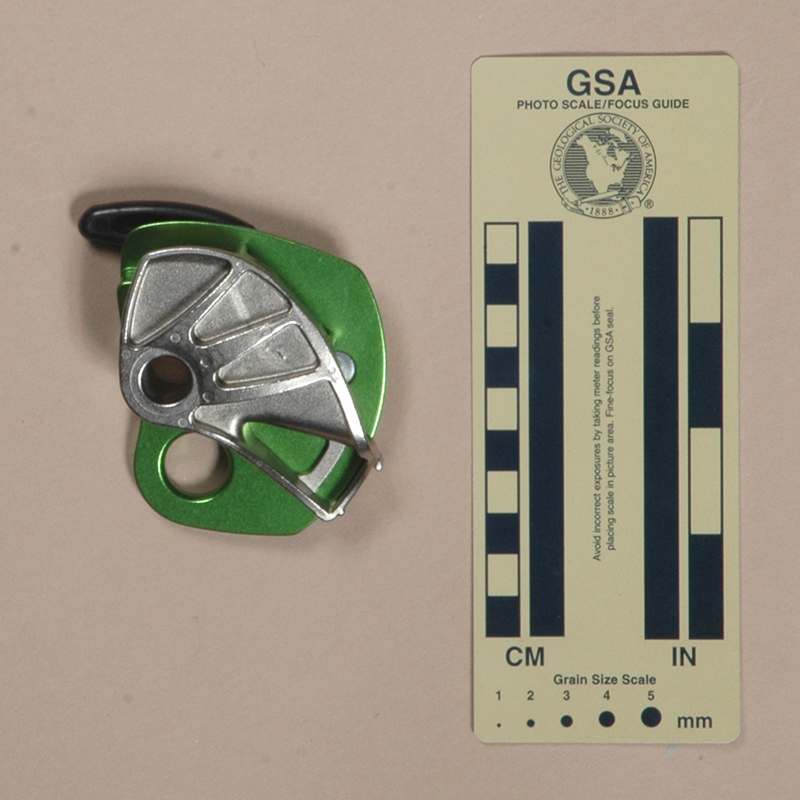
I acquired my Trango Cinch, Version B from Unique Outfitters in 2012. I acquired another in 2017 as part of Bob Thrun's collection.
Version B is 76 mm. tall, 77 mm. wide, 36 mm. thick, and weighs 187 g. The handle is longer than the one on Version A, and the front washer is smaller.
The front of my Cinch is printed with an ellipse containing "TRANGO," the word "CINCH," "USA," "9674," the Reading is Dangerous icon, "IMPORTANT!," "Expert use only," "Ø9.4 - 11mm," "Made in USA," "PAT#6,843,346," and "CE0123." The inside of the back piece has a hand icon and a climber icon to indicate the rope path. The handle has "TRANGO" inside an ellipse.
The differences between the two versions are minor and do not seem to affect functionality much.
[ Top | Version A | Version B ]