

This page will not fit into a tiny viewport. Please choose a full-size monitor with a full-width window or select the abridged New Wave pages.

Reverso 3
Reverso 4

Reverso

Unireverso
Universo

Verso, Version A

Verso, Version B
|
|
|
|
| Reverso 3 | Reverso 4 | Reverso |
|
|
|
|
|
| Unireverso | Universo | Verso, Version A | Verso, Version B |
The original Reverso and the Reversino (the second in the Reverso line) are in my Near Tubes category.
In 1930, Fernand Petzl discovered caving at the age of 17. Back at his workshop after each excursion to the depths, Fernand imagined new tools for exploring darkness and heights. With his inventions taking up more and more space, he decided to create his own workshop, sparking the growth of his small business. Working together brought Fernand closer to his son, Paul, who was determined to grow the business. From the beginning, Paul's wife Catherine took care of the accounting.
Paul Petzl, a mechanical engineering student, had already been thinking about creating a real company and began to plan out his first investments. In 1970, the Petzl brand was created. Five years later, the first company headquarters was established at the foot of the Dent de Crolles. In the years that followed, the number of employees increased as the company experienced local and international growth.
Petzl is a family business that, over the years, has become the largest European manufacturer of personal protective equipment for those who work and play in darkness or at height. All Petzl products are invented and developed at their headquarters in the heart of the French Alps.
The Petzl brand is present in over 55 countries with 85% of their sales made internationally. More than 9 million products are sold every year, and 10 million people use Petzl personal protective equipment every day.
[ Top | Reverso 4 | Reverso | Unireverso | Universo | Verso, v. A | Verso, v. B | Return to Tube Belayers ]
|
|
 |
 |
| Front | Rear | Top |
 |
 |
 |
| Left | Right | Bottom |
I acquired my Petzl Reverso 3 from Mountain Gear in 2008.
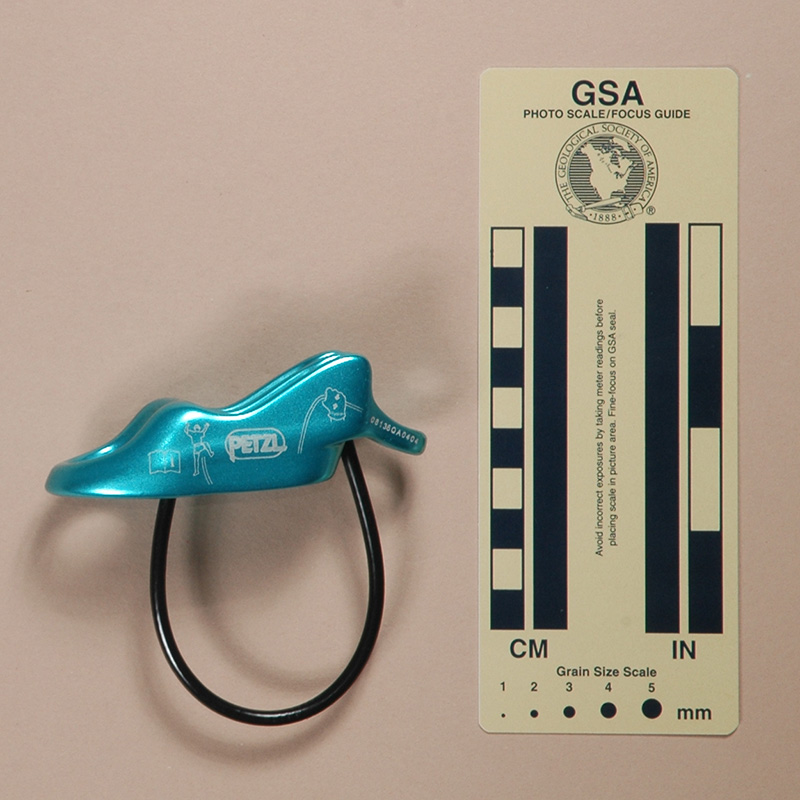
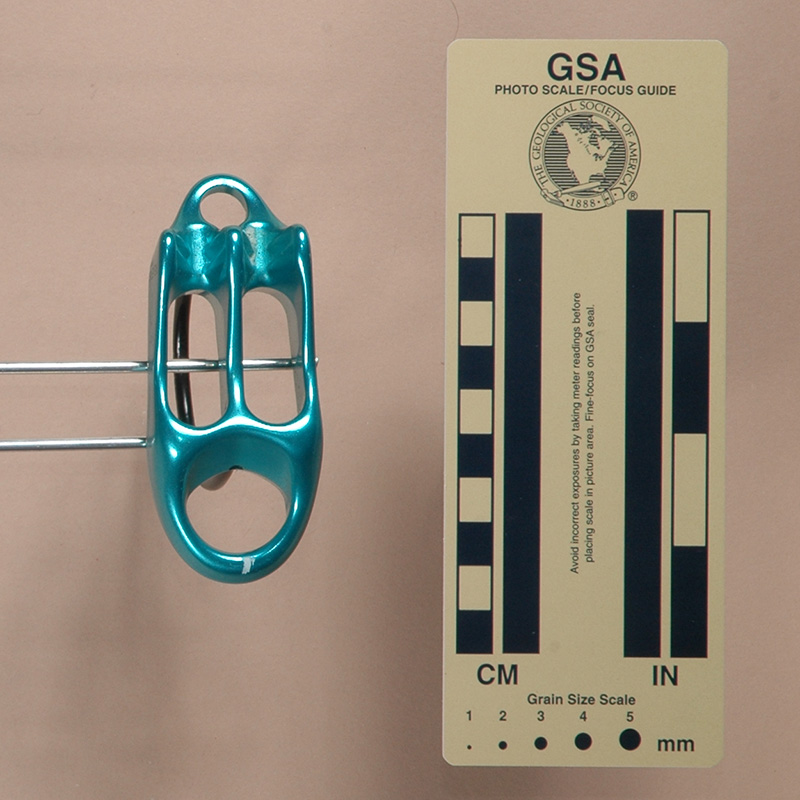
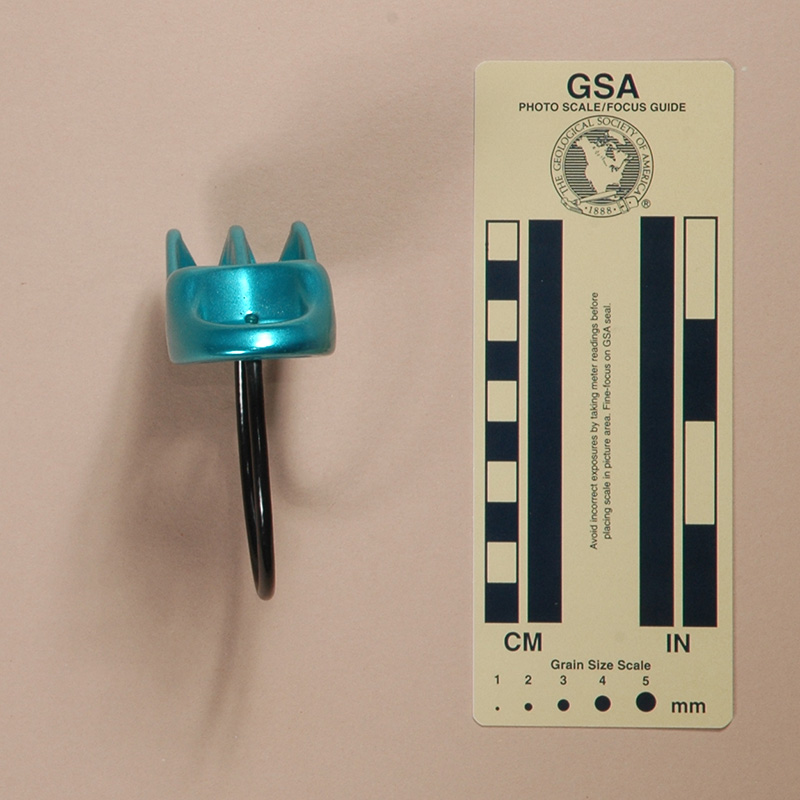
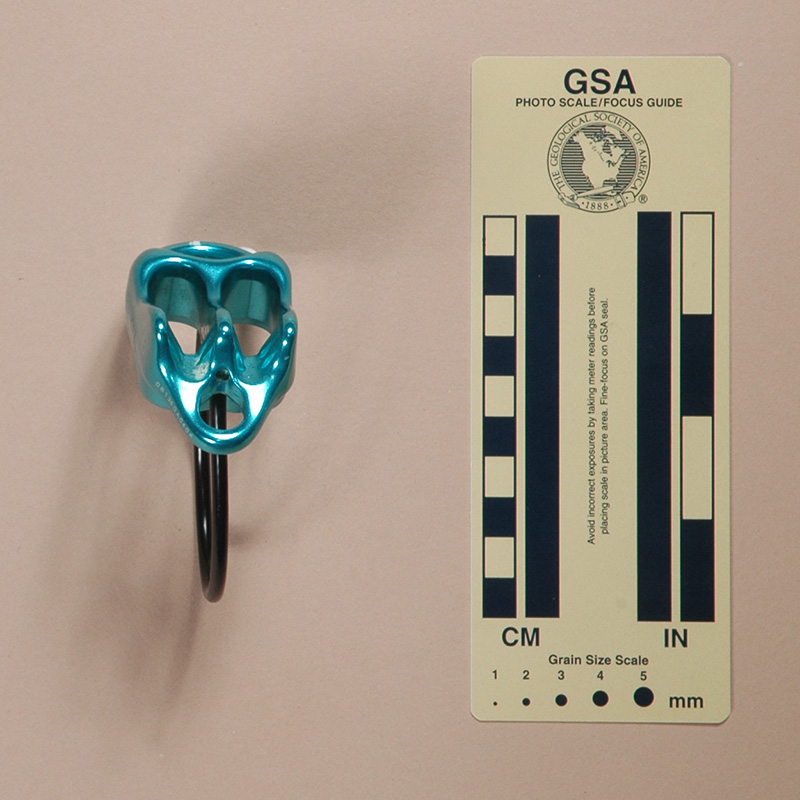
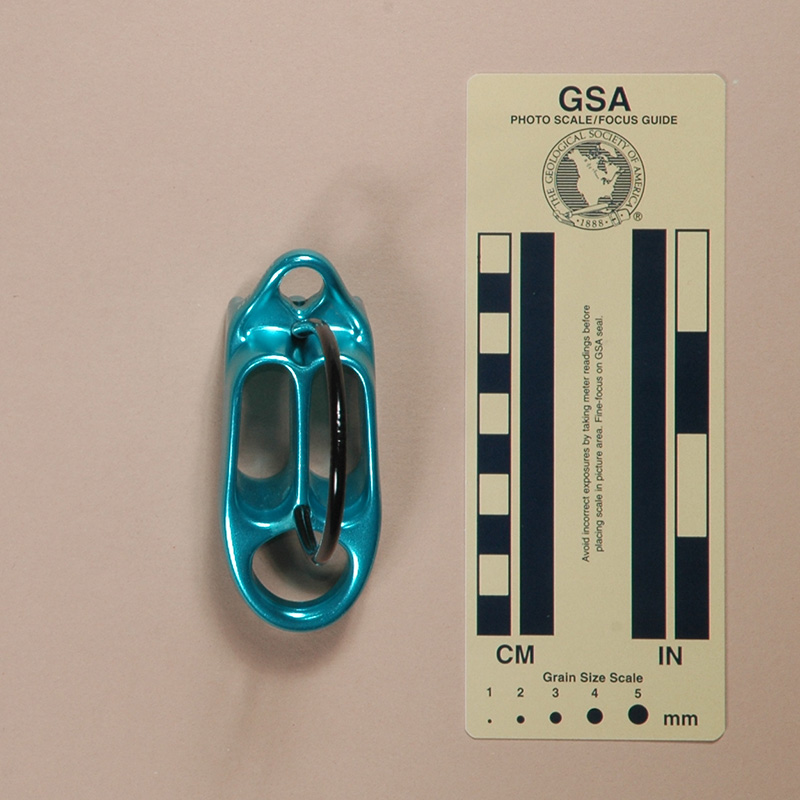
The Petzl Reverso 3 is a notched belay tube. It is forged from aluminum alloy and then hard anodized. Mine is 95 mm. long, 40 mm. wide, 92 mm. high, and weighs 78 g. The slots are 32 mm. long and 13 mm. wide. The top of the Omega oval carabiner that I use for comparing belay tubes sits 13 mm. below the ends of the slots.
The Petzl Reverso 3 has two slots with ribbed V-grooves at one end, a release hole underneath, and a carabiner eye at the end opposite the slots. It also has a stiff, plastic-covered cable keeper.
One side of the Petzl Reverso 3 has a rigging diagram for the guide configuration, "Reverso3," and "Patented." The other side has a book-with-an-"i" icon, a climbing figure, the Petzl logo, a hand-holding-a-rope figure, and "08136QA0404."
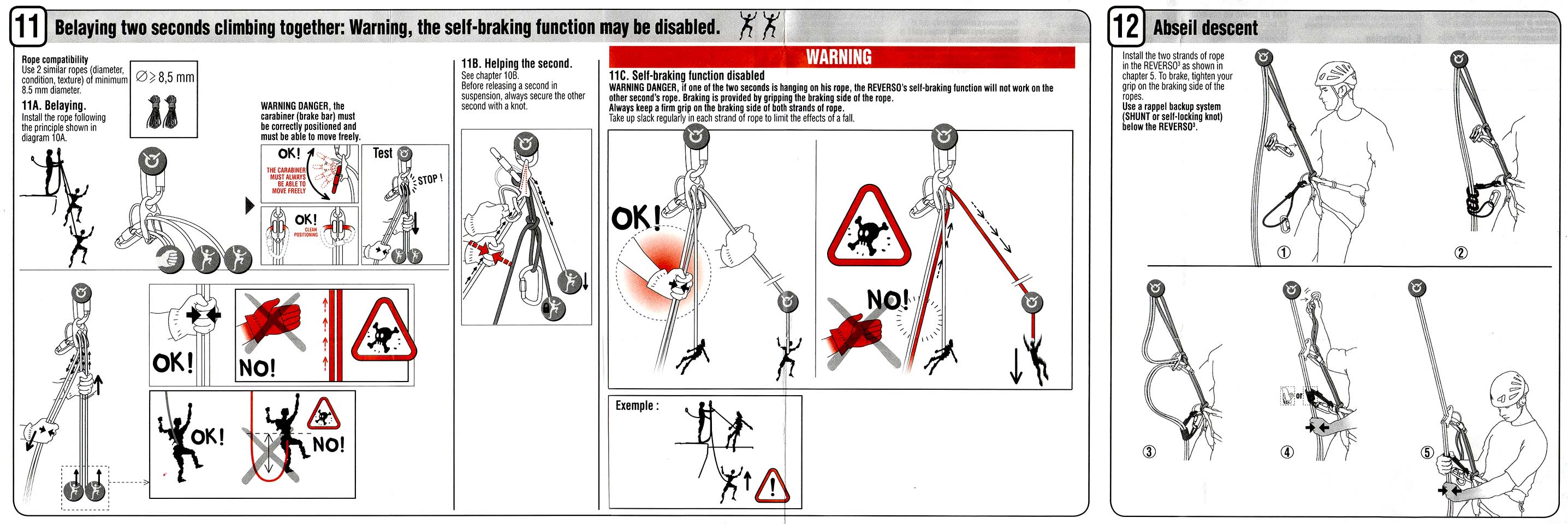
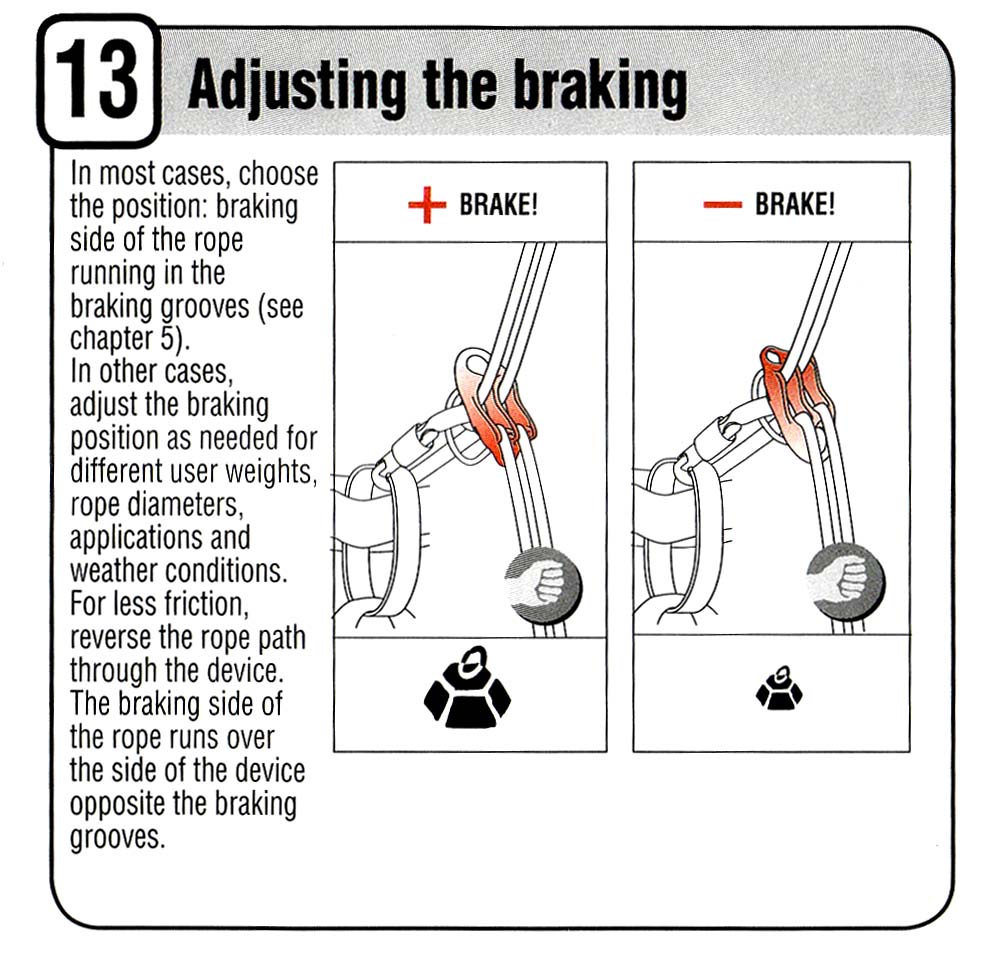
The Petzl Reverso 3 has the same release hole and carabiner hole introduced on the Black Diamond ATC-Guide, and functions the same way. When belaying a second from above, a guide can clip the Reverso 3 to an anchor sling with a carabiner passed through the carabiner hole (as shown on the rigging figure on the device), belaying in an autostop mode, much like one might with a Kong Gi–gi. One can release a jammed Reverso 3 by passing a cord through the cord eye and pulling on the cord - possibly by looping it through a carabiner and applying body weight - but don't let go of the braking end of the rope! The Reverso 3 is large, but smaller and lighter than the Black Diamond ATC-Guide. My overall impression is that I like the Reverso 3.
Seth Gross sent the following comment on October 7, 2009:
Hey, I love your site! I was just glancing through it and I wanted to alert you to a possible error in your description of the Reverso 3’s release mechanism. When you are belaying in self-braking mode, the device is released through a small hole similar to the one on the ATC Guide. On your site, you say the locking action is released by feeding a sling through the release hole, just like the ATC Guide. But the directions for the Reverso 3 specify that a carabiner should be stuck into the hole and then used as a handle to release the device. Petzl specifically tells users NOT to feed a sling or cord through the hole to release it, I don't know why. I suspect the reason is that their "handle" method makes it easier to release the device with one hand while you hold the rope with your other hand. I know you’re not in the business of giving instruction in the correct use of the devices, but I just thought I’d let you know.
Yours, Seth Gross
Thanks Seth. A loose cord could get pulled into the device while belaying, but a carabiner cannot.
 |
 |
 |
 |
 |
 |
 |
 |
[ Top | Reverso 3 | Reverso | Unireverso | Universo | Verso, v. A | Verso, v. B | Return to Tube Belayers ]
|
|
 |
 |
| Front | Rear | Top |
 |
 |
 |
| Left | Right | Bottom |
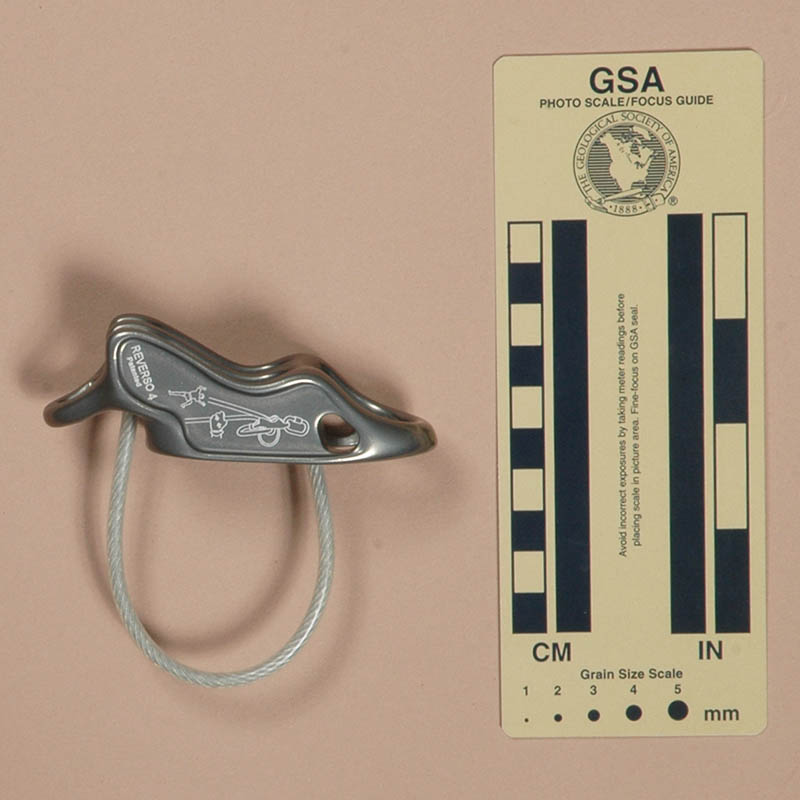
I acquired my Petzl Reverso 4 from Expé-Spelemat in 2012.
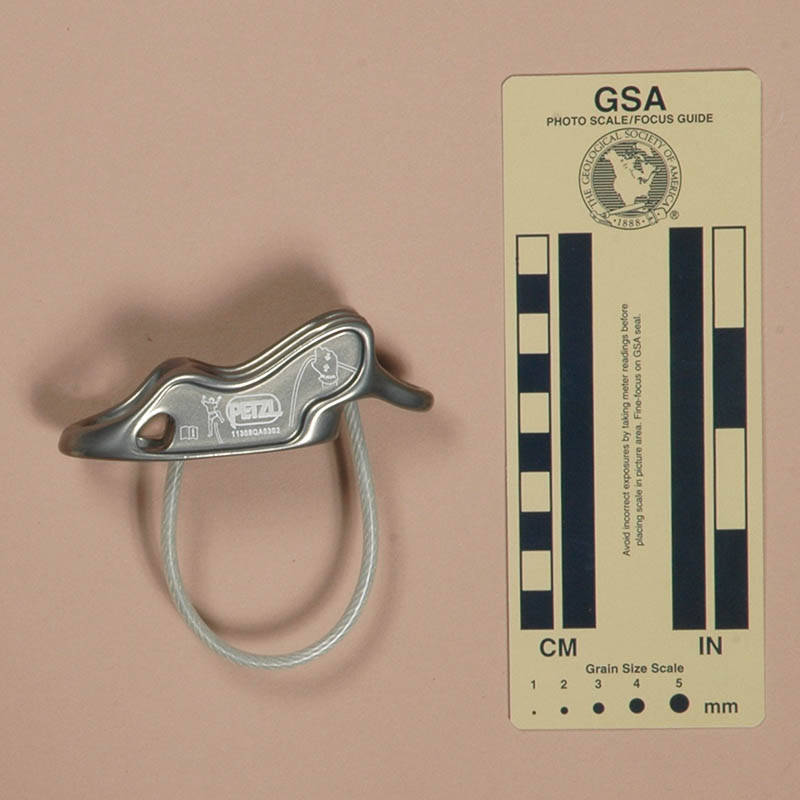
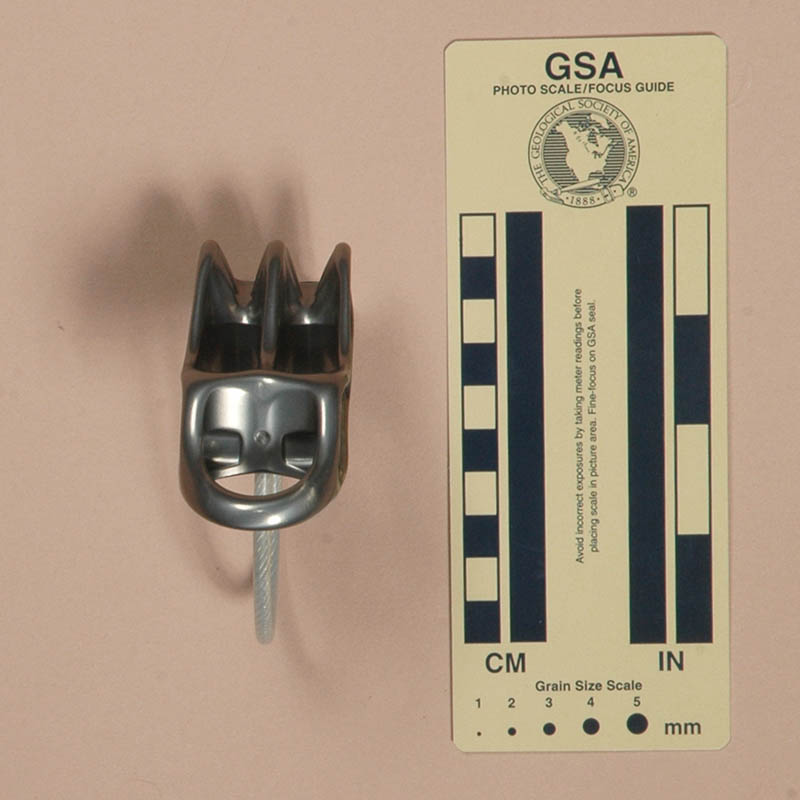
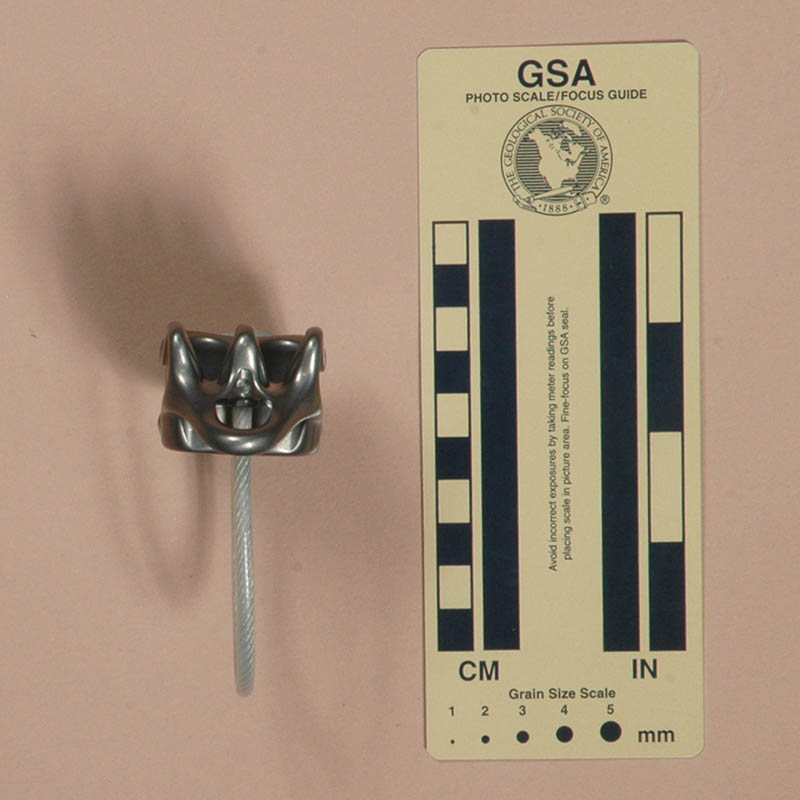
The Petzl Reverso 4 is a notched belay tube. It is forged from aluminum alloy and then hard anodized. Mine is 95 mm. long, 38 mm. wide, 83 mm. high, and weighs 57 g. The Reverso 4 has two slots with ribbed V-grooves at one end. The slots are 32 mm. long and 13 mm. wide. The top of the Omega oval carabiner that I use for comparing belay tubes sits 21 mm. below the ends of the slots.
The Petzl Reverso 4 has a release hole at one end, underneath the v-grooves, and a carabiner eye at the end opposite the slots. It also has a plastic-covered cable keeper.
One side of the Petzl Reverso 4 has a rigging diagram for the guide configuration, "Reverso 4," and "Patented." The other side has a book-with-an-"i" icon, a climbing figure, the Petzl logo, a hand-holding-a-rope figure, and "11368QA0302."
The sides of the Reverso 4 are thinner than those on the Reverso 3. This lightens the device by 21 g., but also results in it running hotter than the Reverso 3.
[ Top | Reverso 3 | Reverso 4 | Unireverso | Universo | Verso, v. A | Verso, v. B | Return to Tube Belayers ]
|
|
 |
 |
| Front | Rear | Top |
 |
 |
 |
| Left | Right | Bottom |
I acquired one Petzl Reverso on eBay from Got Your Gear in 2019 and a second from Bag of Jewels in 2025.
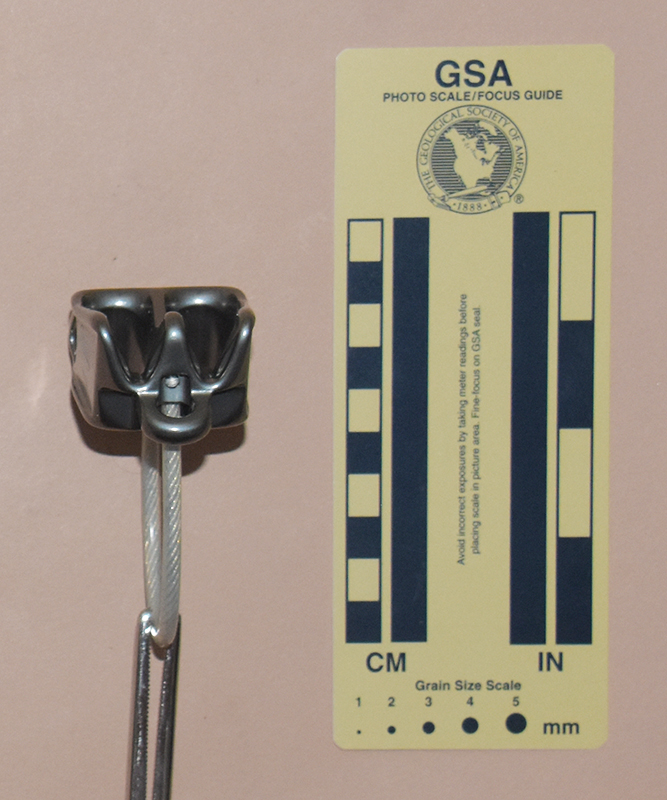
The Petzl Reverso is a notched belay tube. It is forged from aluminum alloy and then hard anodized. The Reverso features two slots with ribbed v-grooves, a carabiner eye, a release hole, and a plastic-covered cable keeper. Mine is 89 mm. long, 39 mm. wide, 81 mm. high, and weighs 58 g. The slots are 35 mm. long and 14 mm. wide. The top of the Omega oval carabiner that I use for comparing belay tubes sits 20 mm. below the ends of the slots.
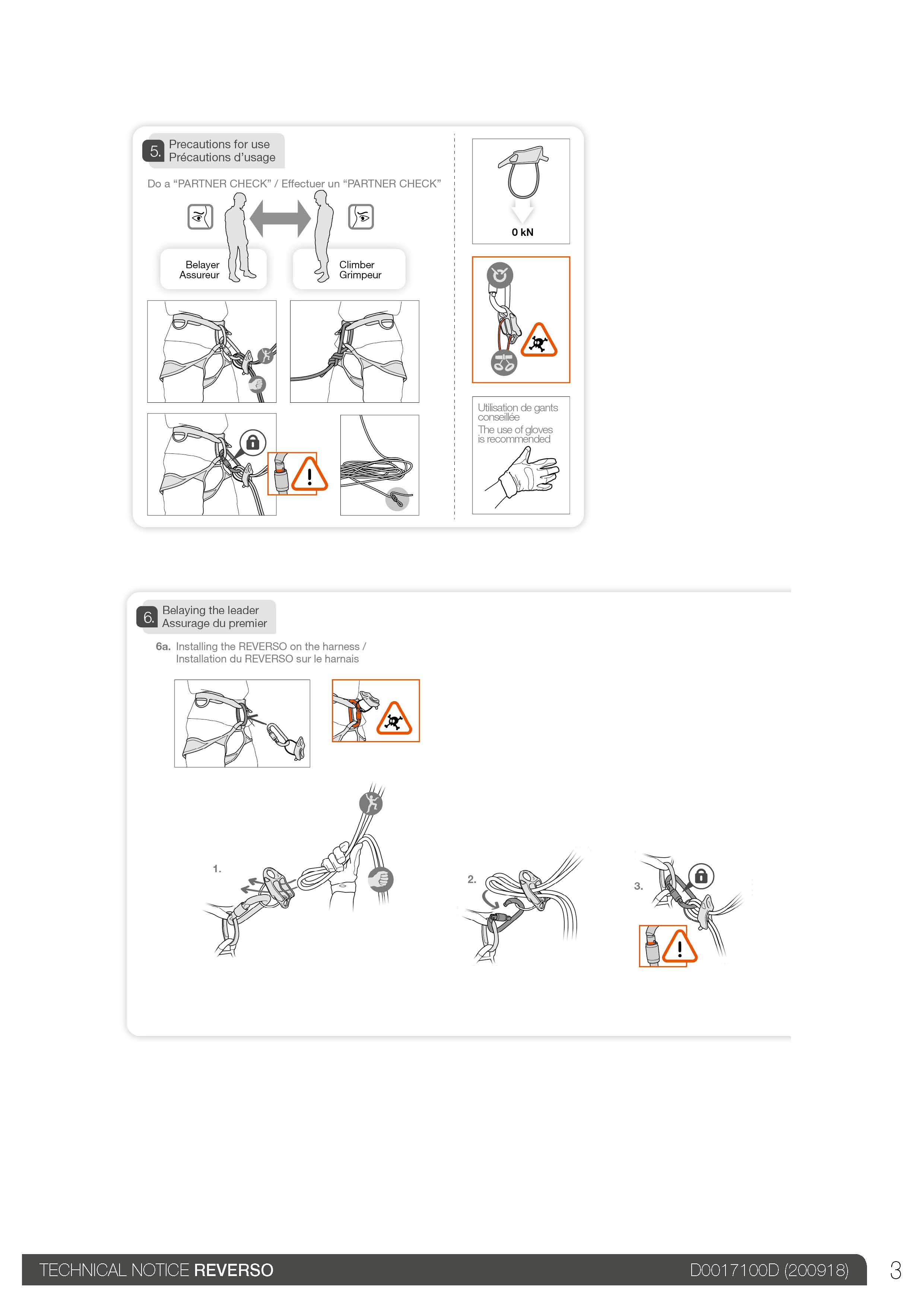
One side of the Reverso is etched with " 8.5<Ø<11," "1/2" inside a circle followed by "7.1<Ø<9.2," a Hopf link inside a circle followed by "7.1<Ø<9.2," a climber icon, the Petzl logo, "REVERSO," and a hand-holding-a-rope icon. The other side is etched with an illustration of rigging from a top anchor. a book-with-an-"i" icon, "EN 15151-2," "UIAA," a scanner code, "18311Q0237," and "Patented."
The Reverso followed the Reverso 4, but Petzl decided to recycle the original Reverso name rather than following the sequence and calling this the Reverso5. Performance is similar to the Reverso 4.
This model Reverso received U.S. Patent #D875,507S in 2020.
 |
 |
 |
 |
 |
 |
 |
 |
[ Top | Reverso 3 | Reverso 4 | Reverso | Universo | Verso, v. A | Verso, v. B | Return to Tube Belayers ]
|
|
 |
 |
| Front | Rear | Top |
 |
 |
 |
| Left | Right | Bottom |
I acquired my Petzl Unireverso from Expé-Spelemat in 2014.
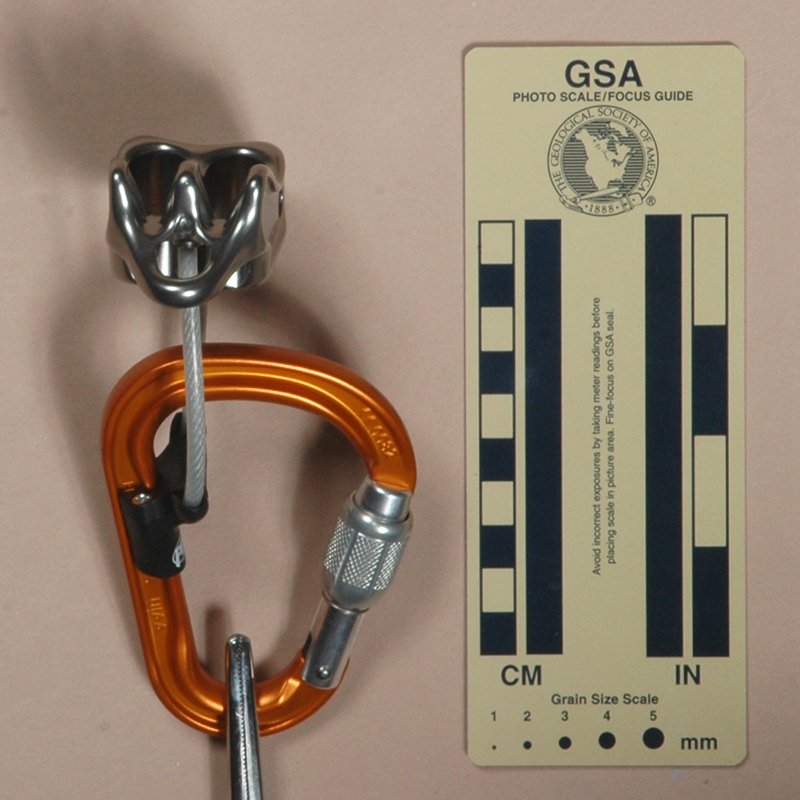
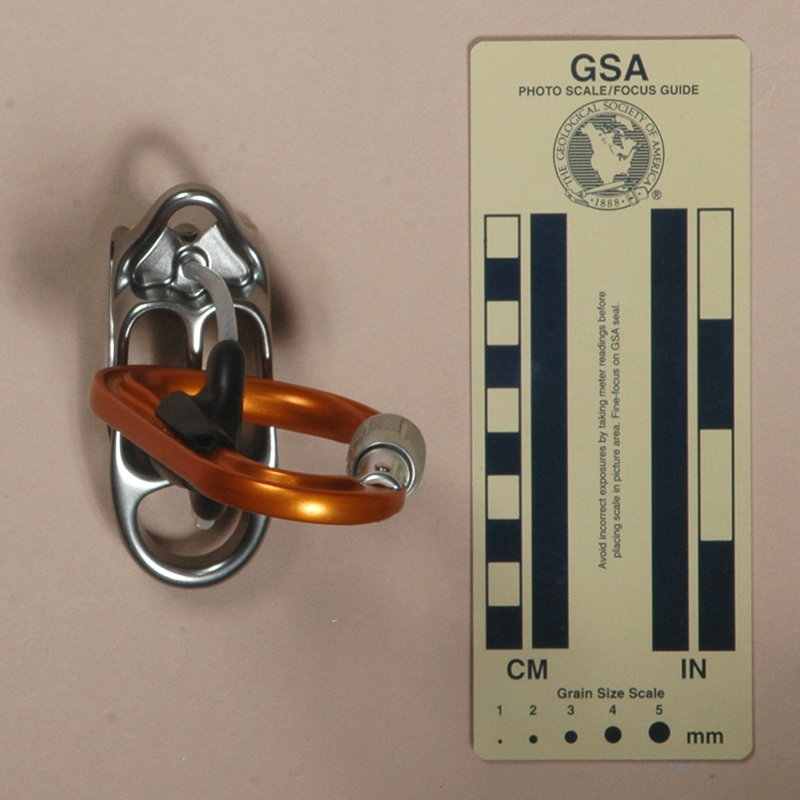
The Petzl Unireverso consists of a Petzl Reverso 4 permanently attached to a Petzl Attache carabiner with a plastic slider attached around the keeper. The combination is 38 mm. long, 95 mm. wide, 157 mm. high, and weighs 123 g. The slider is made from two pieces of injection-molded plastic assembled with two Philips-head screws.
One side of the Petzl Reverso 4 has a rigging diagram for the guide configuration, "Reverso 4," and "Patented." The other side has a book-with-an-"i" icon, a climbing figure, the Petzl logo, a hand-holding-a-rope figure, and "13322QA0225." The slider has the Petzl Logo printed on the front and "Patented" molded on top. The carabiner has a scanner code, "SL," a book-with-an-"i" icon, and "14028/00729" printed on one side. The same side has "PAT.," an "H" inside a circle, and "PETZL ATTACHE" in raised forged symbols. The other side has "CE 0082," "kN↔22 ↕7," an open carabiner icon followed by "6," and "UIAA," all in raised forged symbols.
By permanently attaching the carabiner to the Reverso 4 with a sliding link, Petzl found a reliable solution to something that I thought was a nonexistent problem. Plan on carrying one more carabiner on your climbs.
[ Top | Reverso 3 | Reverso 4 | Reverso | Unireverso | Verso, v. A | Verso, v. B | Return to Tube Belayers ]
|
|
 |
 |
| Front | Rear | Top |
 |
 |
 |
| Left | Right | Bottom |
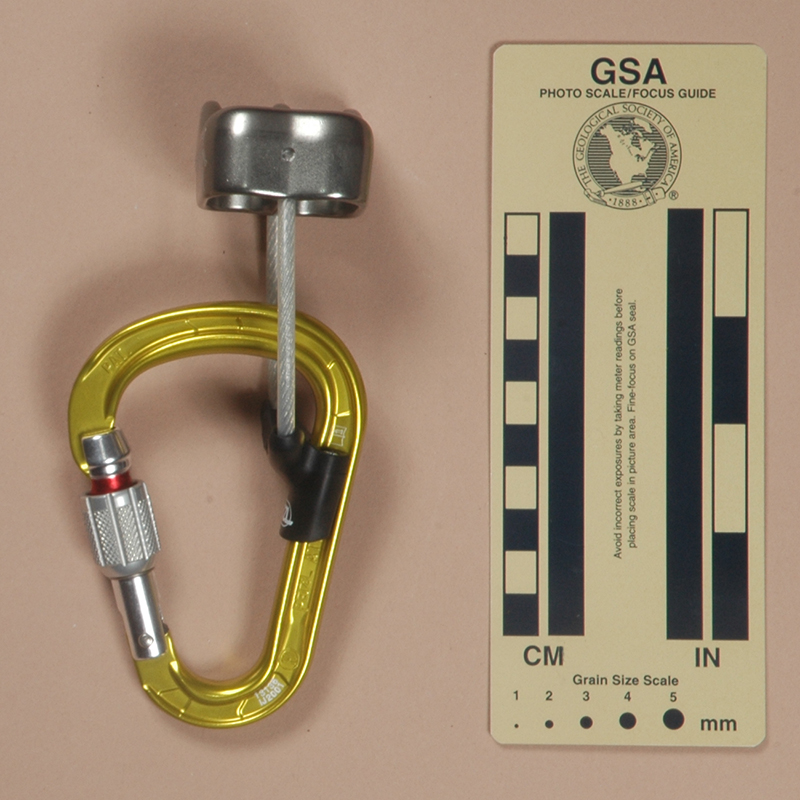
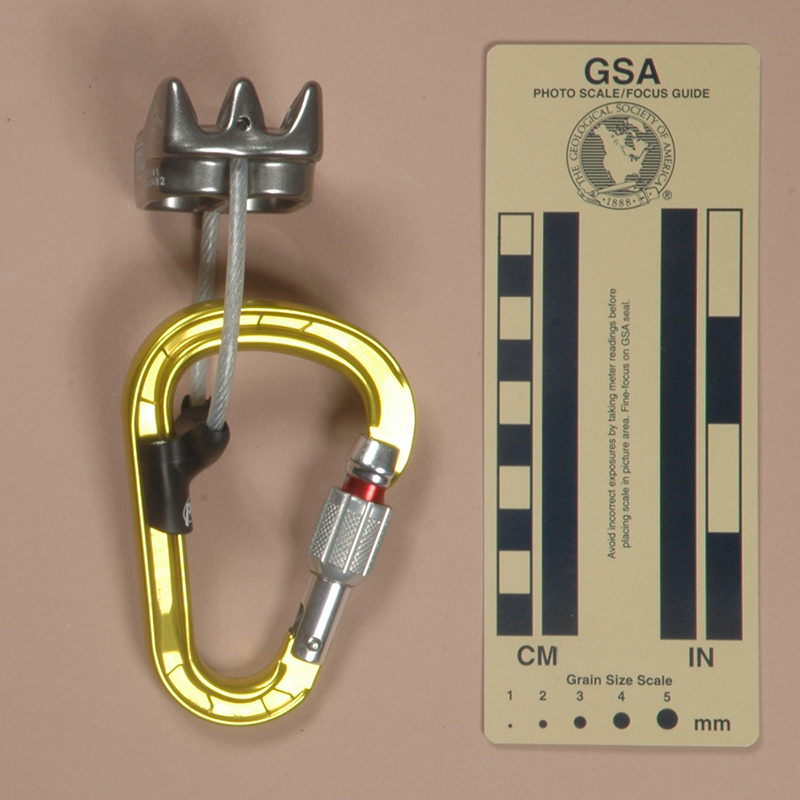
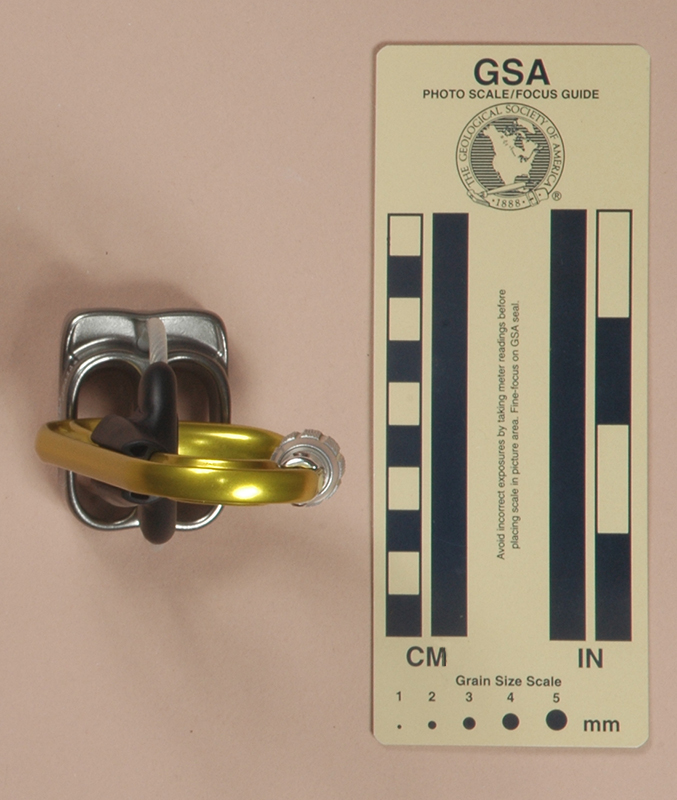
I acquired my Petzl Universo from Banana Fingers in 2015.
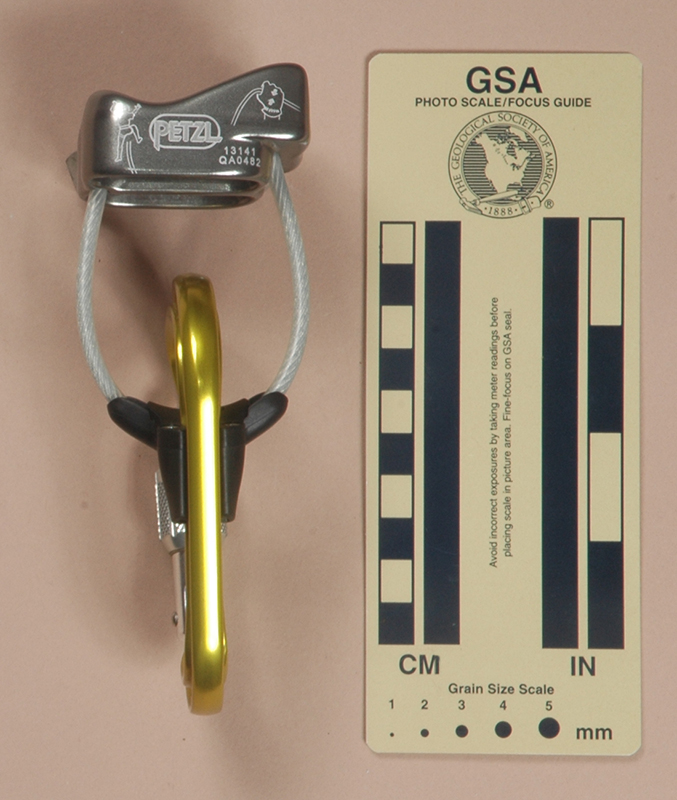
The Petzl Universo is a notched belay tube. The Petzl Universo consists of a Petzl Verso permanently attached to a Petzl Attache carabiner with a plastic slider attached around the keeper. The combination is 70 mm. long, 52 mm. wide, 124 mm. high, and weighs 112 g. The slider is made from two pieces of injection-molded plastic assembled with two Philips-head screws.
Each side of the Petzl Verso has a rigging diagram consisting of a climbing figure, and a hand-holding-a-rope figure. One side also has the the Petzl logo, "13141," and "QA0482." The other side has "VERSO" and a book-with-an-"i" icon.
The slider has the Petzl Logo printed on the front and "Patented" molded on top. The carabiner has a book-with-an-"i" icon, "13136," and "IJ2001" on one side. The same side has "PAT.," an "H" inside a circle, and "PETZL ATTACHE 3D" in raised forged symbols. The other side has "CE 0082," "kN↔22 ↕7," an open carabiner icon followed by "6," and "UIAA," all in raised forged symbols.
By permanently attaching the carabiner to the Verso with a sliding link, Petzl found a reliable solution to something that I thought was a nonexistent problem. Plan on carrying one more carabiner on your climbs.
[ Top | Reverso 3 | Reverso 4 | Reverso | Unireverso | Universo | Verso, v. B | Return to Tube Belayers ]
|
|
 |
 |
| Front | Rear | Top |
 |
 |
 |
| Left | Right | Bottom |
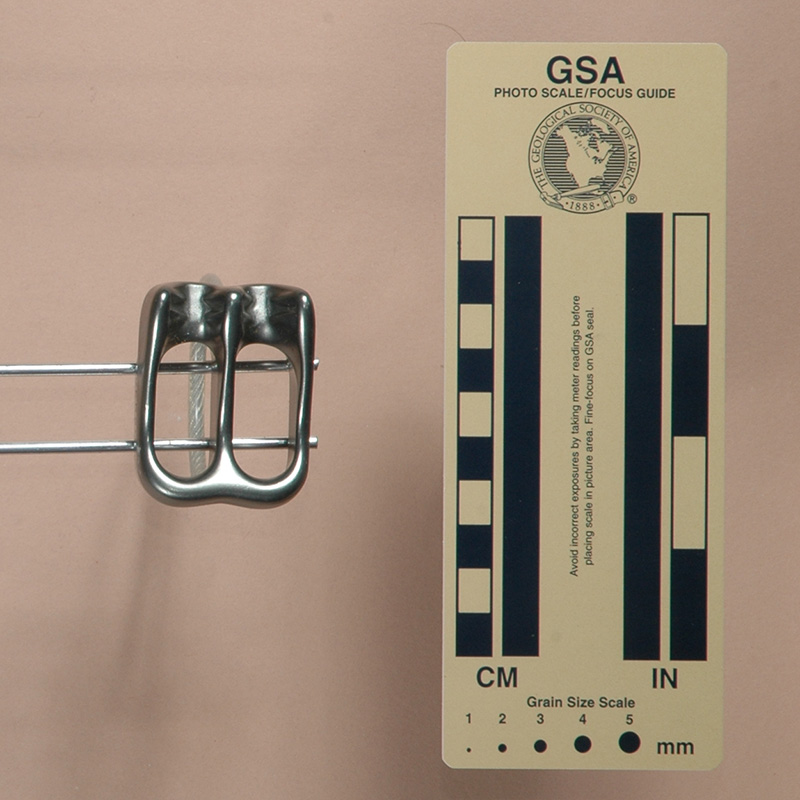
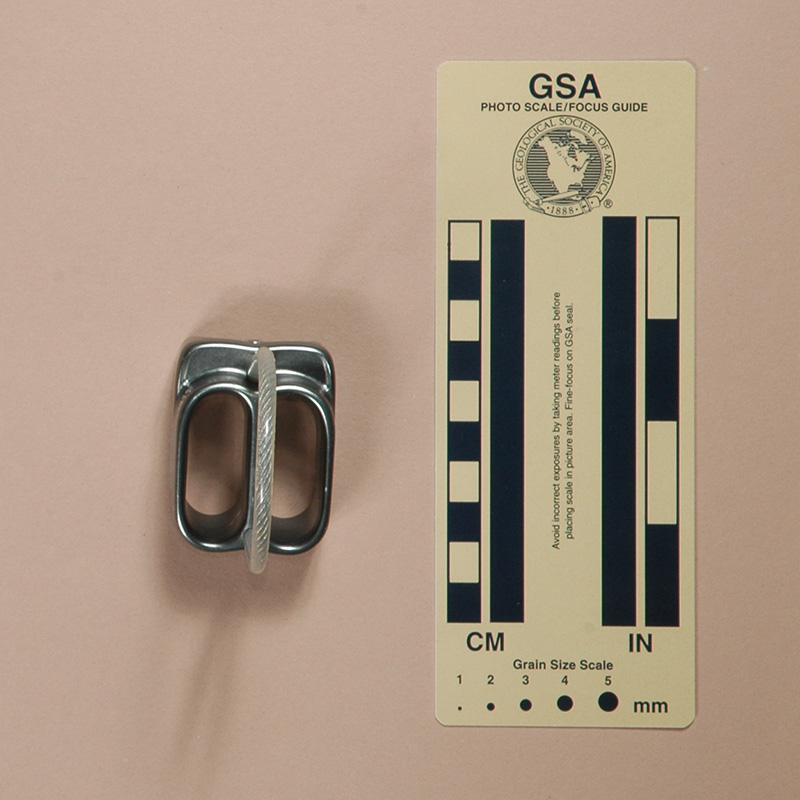
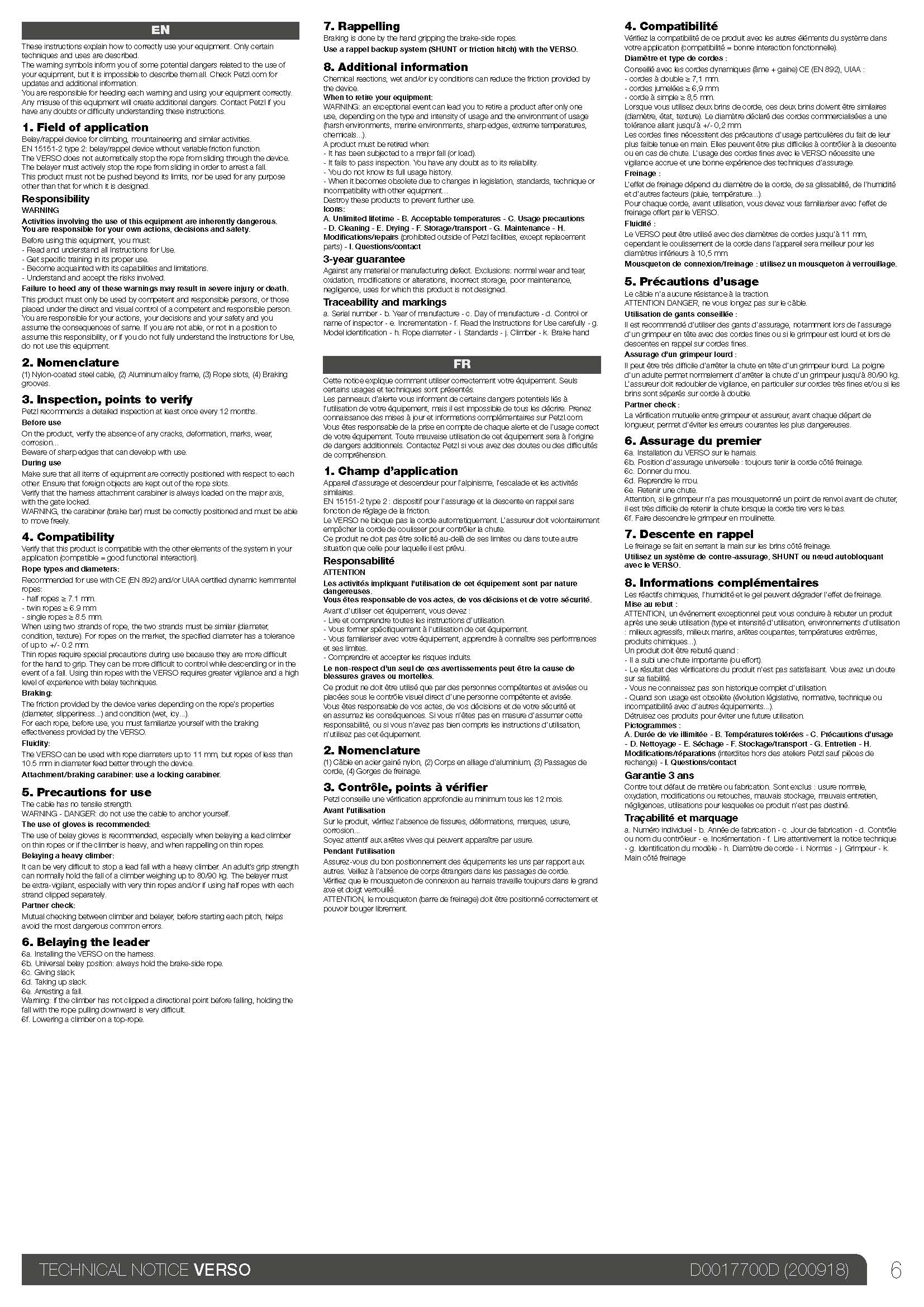
I acquired this Petzl Verso from Expé-Spelemat in 2009.
The Verso is a notched belay tube. It is forged from aluminum alloy and then hard anodized. Mine is 51 mm. long, 40 mm. wide, 84 mm. high, and weighs 54 g. The slots are 31 mm. long and 14 mm. wide. The top of the Omega oval carabiner that I use for comparing belay tubes sits 9 mm. below the ends of the slots.
The Petzl Verso has two slots with ribbed V-grooves at one end. It also has a stiff, plastic-covered cable keeper.
Each side of this Verso has a rigging diagram consisting of a climbing figure, and a hand-holding-a-rope figure. One side also has the the Petzl logo, "09028," and "QA1411." The other side has "VERSO" and a book-with-an-"i" icon.
The Petzl Verso is more conventional than the Reverso 3, and I might compare it to the Black Diamond ATC-XP, DMM V-Twin, and similar devices. The teeth are deep enough to efficiently increase friction, and the cable is stiff enough and short enough to stay out of the way.
 |
[ Top | Reverso 3 | Reverso 4 | Reverso | Unireverso | Universo | Verso, v. A | Return to Tube Belayers ]
|
|
 |
 |
| Front | Rear | Top |
 |
 |
 |
| Left | Right | Bottom |
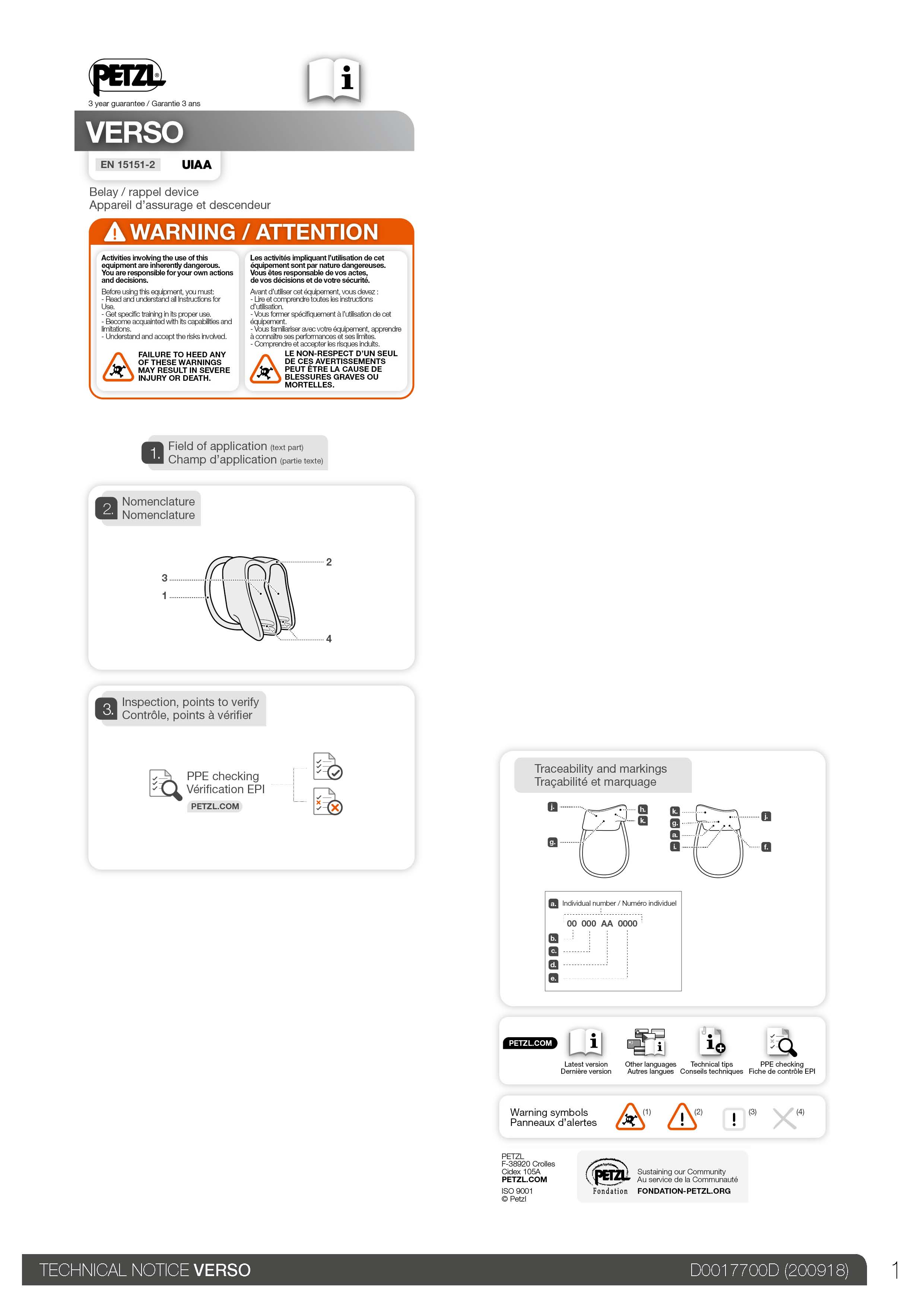
I acquired my Petzl Verso, Version B from on eBay from Silas Dean Pawn in 2019.
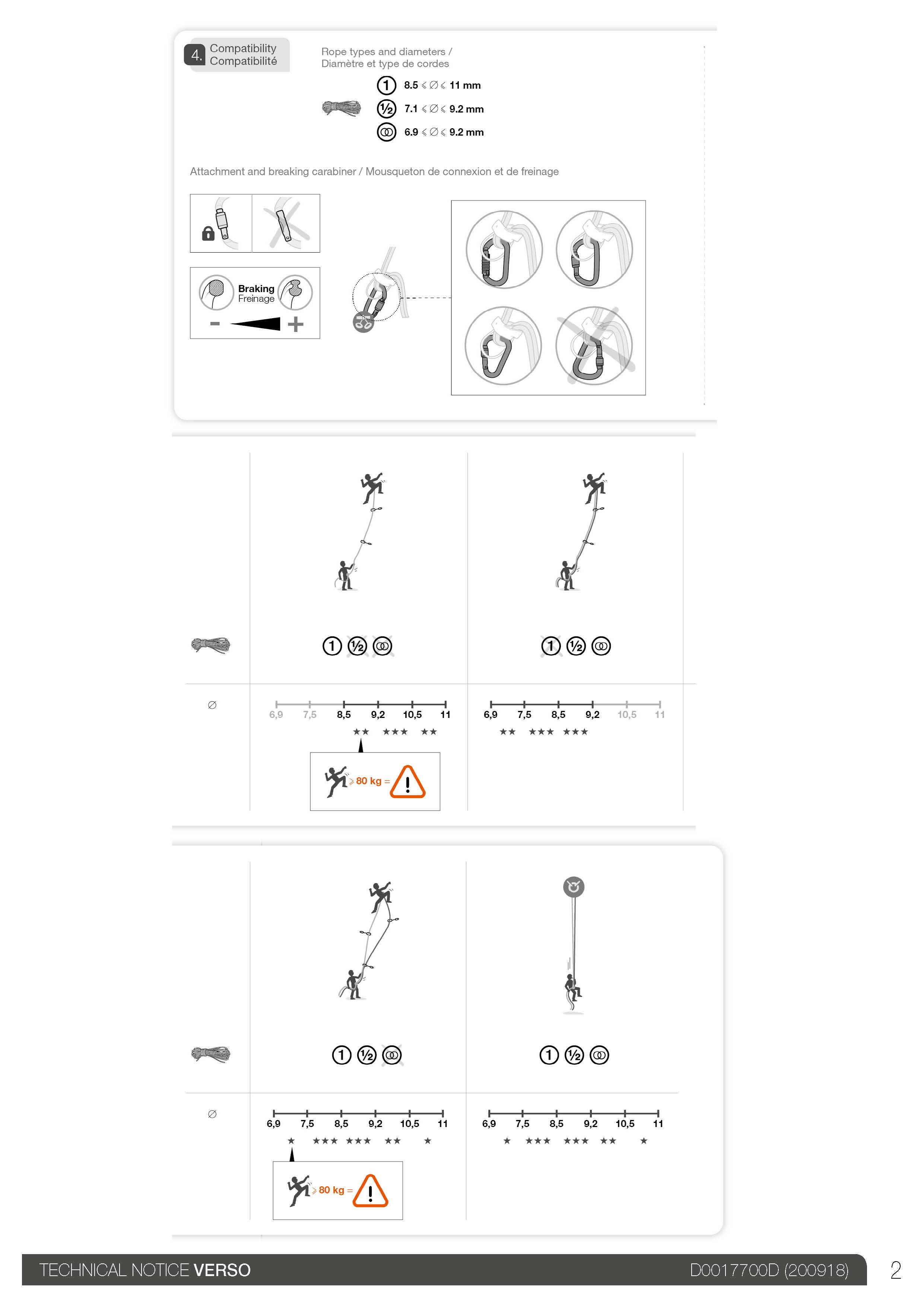
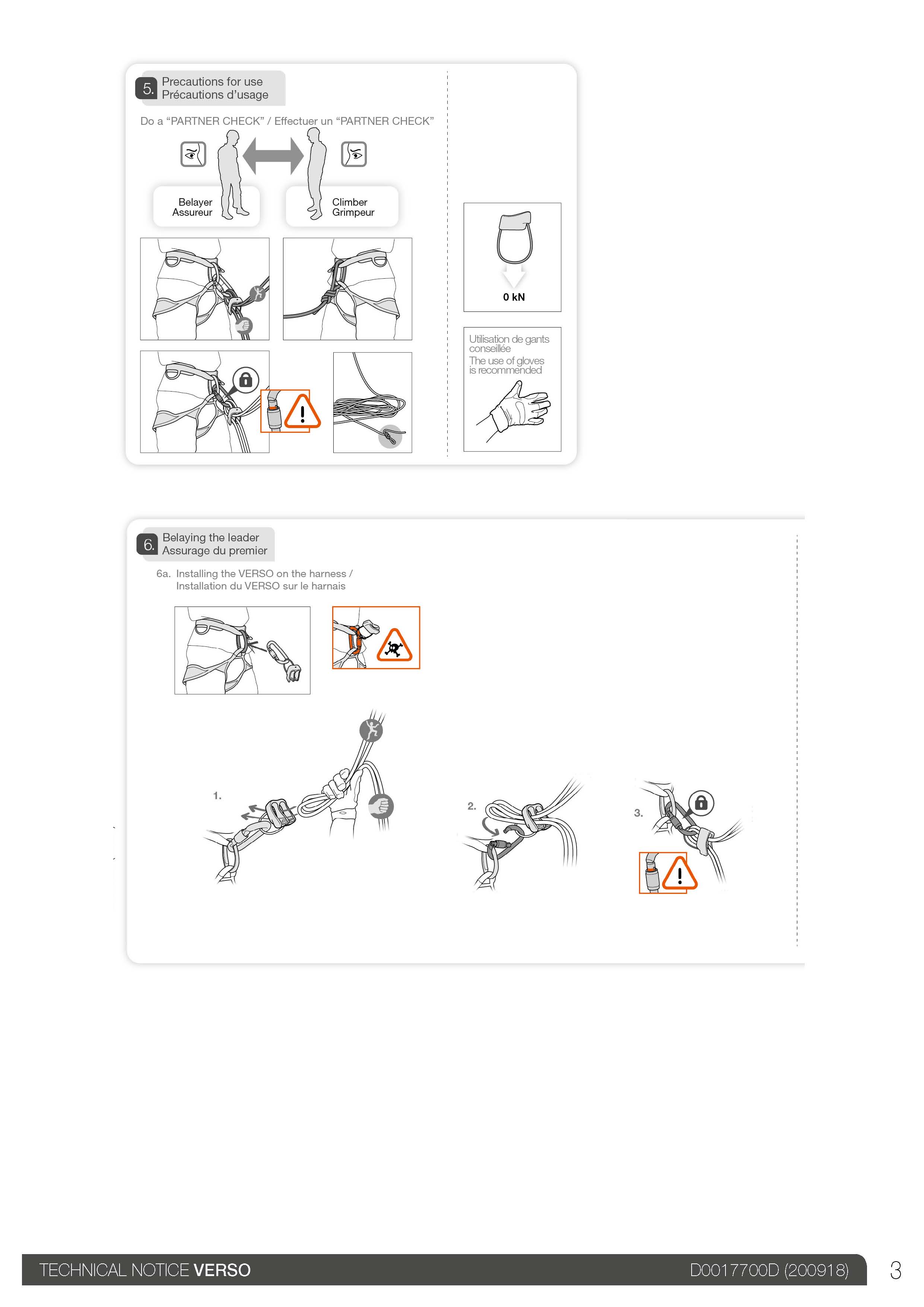
This version is a notched belay tube. It is forged from aluminum alloy and then soft anodized. It features two slots with ribbed v-grooves and a plastic-covered cable keeper. Mine is 52 mm. long, 42 mm. wide, 81 mm. high, and weighs 59 g. The slots are 31 mm. long and 14 mm. wide. The top of the Omega oval carabiner that I use for comparing belay tubes sits 17 mm. below the ends of the slots.
Each side of this Verso has a rigging diagram consisting of a climbing icon and a hand-holding-a-rope icon, as well as the Petzl logo and "VERSO." One side also has "EN15151-2," a "19016Q0376," a scanner code. "UIAA," and a book-with-an-"i" icon.
There are minor shape differences between the two Verso versions, but their performance is essentially identical.
 |
 |
 |
 |
 |
 |
[ Top | Reverso 3 | Reverso 4 | Reverso | Unireverso | Universo | Verso, v. A | Verso, v. B ]