

This page will not fit into a tiny viewport. Please choose a full-size monitor with a full-width window or select the abridged New Wave pages.

 Gibbs
Quick

Version A

Version B
|
|
|
| Version A | Version B |
Peter Gibbs wrote the following in his company history:[1]
Vertical spelunking can be cold, wet, and extremely exhausting. Often the cave explorer is forced to rappel down a waterfall to get into a pit and then to ascend the rope, getting soaked and risking hypothermia. Early cavers used Prusik knots, inefficient, muscularly taxing knots that don’t hold well on wet rope.
In 1965 my brother, Charles, showed me a mechanical ascender he had built. I set out to manufacture it. I built 65 ascenders and sold a few of them to friends for places like Neff’s Cave.
That fall, at the National Speleological Society convention in Lovell, Wyoming, Charles entered a rope climbing contest. Using the newly minted Gibbs Ascenders, he cut the record time in half. I sold out that afternoon. Word spread rapidly and orders began coming in, but it was a very small market.
George Lowe, well known mountain climber and fellow physics student at the University of Utah, started using Gibbs Ascenders on his expeditions and writing them up in climbing magazine articles because they held well on ice cover ropes and were easy on the rope. That spread word around the world and opened up a second, larger market.
The cam in the first model Gibbs Ascender swung freely. Rock climbers wanted it spring loaded. Thus the second model was born.
Soon mountain rescue crews were using them for raising litters and ski resorts were using them to extract customers from stalled lifts. For their use, I added a stainless steel model and thicker aluminum model. And to give them more holding power, I put indents in the shell of the ascender.
Fire departments and rescue crews often use ropes more than half an inch thick so I added three quarter inch models next.
Over time Gibbs Ascenders found many niches to fill besides ascending ropes, including setting up rigging for rock concerts and protecting tree trimmers. There have been many modifications for specific markets but the basic design remains unchanged.
[ Top | Version B | Return to L.C. Ascenders ]
Version A|
|
 |
| Front | Rear |
 |
| Open for Rigging |
I acquired two of these from J. E. Weinel Inc. and a third one from Inner Mountain Outfitters in 1991 (which I donated to Artyom Babin (Артём Бабин) in 2021). I won a pair as a door prize at the 1992 Speleofest. I acquired another pair in 2017 as part of Bob Thrun’s collection.
The Gibbs Quick is 93 mm. tall, 87 mm. wide, 57 mm. thick, and weighs 268 g.
The frame on this ascender consists of two pieces milled from aluminum extrusions, then joined at the spine with a long roll pin to form a hinge. The result is a frame that can be opened to insert the rope from the side. The cam and spring assembly are identical to the standard Gibbs of the same vintage.
Aside from the sticker, there are no markings on this ascender.
This ascender is larger and bulkier than the standard Gibbs, and does not track as well on rope. Opening the ascender is awkward. The web keeper on the quick release pin is too short to completely remove the pin, so it stays in the way. The moving frame piece tends to catch on the cam and bind. The spring ensures that the cam will be in the wrong place, so one must move the cam out of the way first. Once open, the cam will fall off the quick release pin, and the spring will ensure that it flops around instead of getting out of the way. If one tries to close the empty ascender, the cam will again be in the wrong place (thanks to the spring), so it must be moved. Of course, one could insert a rope and have it block the frame open instead. One method to deal with these difficulties is to simply thread the end of the rope into the ascender at the bottom of the pit, then when you reach the top, take your harness off until the rope is derigged. Its almost worth doing it that way.
I can appreciate the desire to have a side-open Gibbs, but there are better ways. Without any doubt in my mind, this ascender wins a lemon award.
 |
 |
 |
 |
 |
[ Top | Version B | Return to L.C. Ascenders ]
Version B|
|
 |
| Front | Rear |
 |
 |
 |
| Side | Top | Open for Rigging |
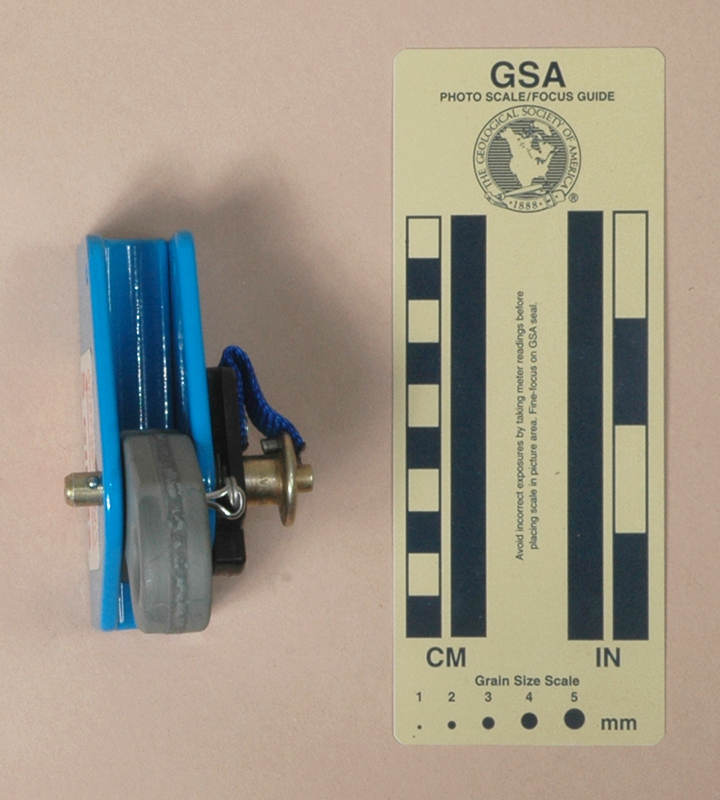
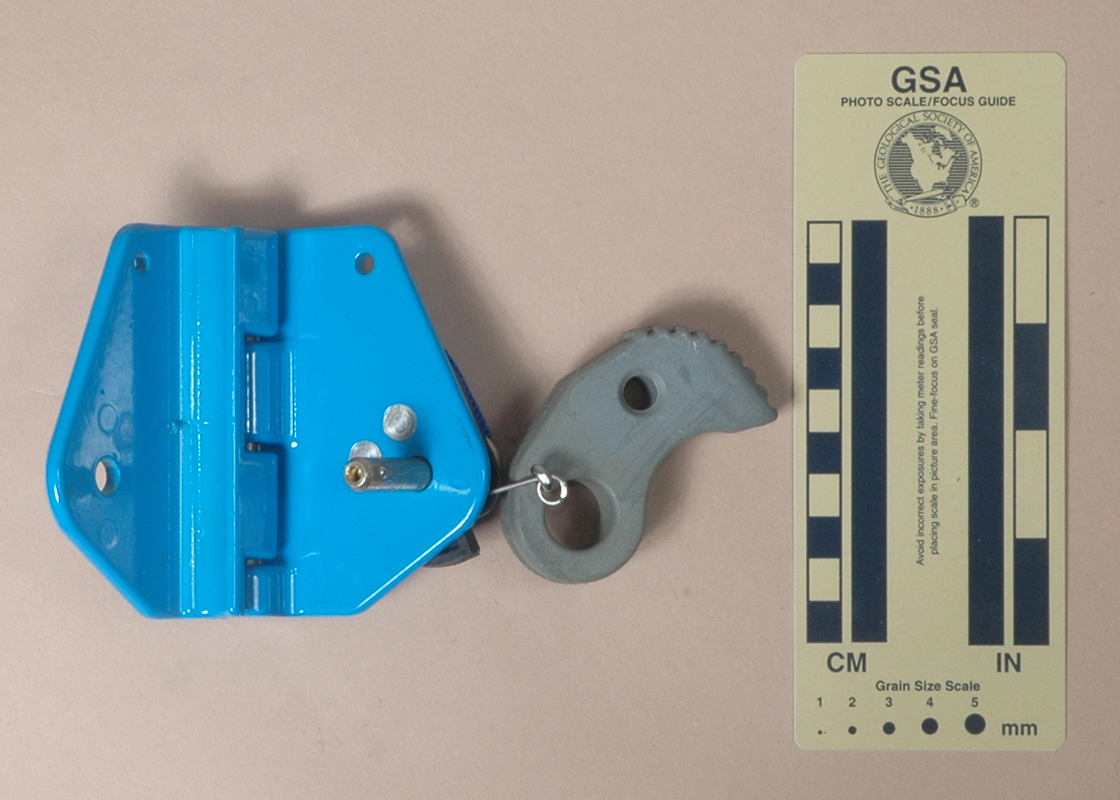
I acquired my Gibbs Quick 1/2 inch, Version B in 2017 as part of Bob Thrun’s collection.
The Gibbs Quick 1/2 inch, Version B is 92 mm. tall, 91 mm. wide, 57 mm. thick, and weighs 280 g.
This version has a forged cam similar to one on one of my #2 stainless steel Gibbs, only without the goo.
Aside from the stickers, there are no markings on this ascender.
This modification does nothing to save the Gibbs Quick. The only reason I see to acquire a Gibbs Quick is to keep someone else from using it. Once again and with no reservation, this ascender wins a lemon award.
[ Top | Version A | Version B ]