

This page will not fit into a tiny viewport. Please choose a full-size monitor with a full-width window or select the abridged New Wave pages.


3/4"

3/4" QR Spring-Loaded,
Version A

3/4" QR Spring-Loaded,
Version B

3/4" QR Spring-Loaded,
Version C
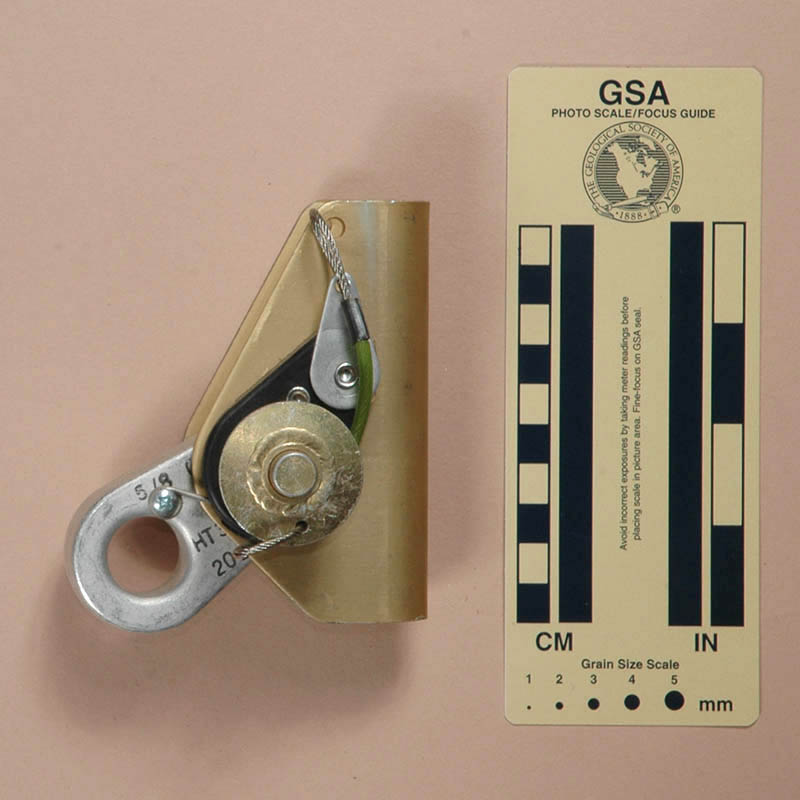
#3 v. A
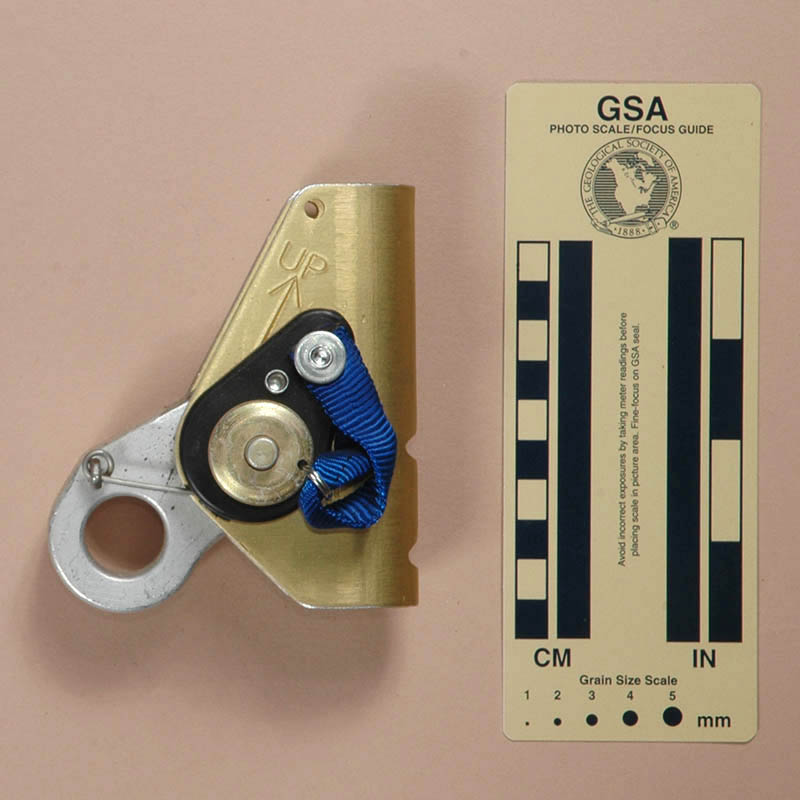
#4 v. A

#4 v. B
|
|
|
|
|
| 3/4" | 3/4" QR Spring-Loaded, Version A |
3/4" QR Spring-Loaded, Version B |
3/4" QR Spring-Loaded, Version C |
|
|
|
|
| #3 v. A | #4 v. A | #4 v. B |
Peter Gibbs wrote the following in his company history:[1]
Vertical spelunking can be cold, wet, and extremely exhausting. Often the cave explorer is forced to rappel down a waterfall to get into a pit and then to ascend the rope, getting soaked and risking hypothermia. Early cavers used Prusik knots, inefficient, muscularly taxing knots that don’t hold well on wet rope.
In 1965 my brother, Charles, showed me a mechanical ascender he had built. I set out to manufacture it. I built 65 ascenders and sold a few of them to friends for places like Neff’s Cave.
That fall, at the National Speleological Society convention in Lovell, Wyoming, Charles entered a rope climbing contest. Using the newly minted Gibbs Ascenders, he cut the record time in half. I sold out that afternoon. Word spread rapidly and orders began coming in, but it was a very small market.
George Lowe, well known mountain climber and fellow physics student at the University of Utah, started using Gibbs Ascenders on his expeditions and writing them up in climbing magazine articles because they held well on ice cover ropes and were easy on the rope. That spread word around the world and opened up a second, larger market.
The cam in the first model Gibbs Ascender swung freely. Rock climbers wanted it spring loaded. Thus the second model was born.
Soon mountain rescue crews were using them for raising litters and ski resorts were using them to extract customers from stalled lifts. For their use, I added a stainless steel model and thicker aluminum model. And to give them more holding power, I put indents in the shell of the ascender.
Fire departments and rescue crews often use ropes more than half an inch thick so I added three quarter inch models next.
Over time Gibbs Ascenders found many niches to fill besides ascending ropes, including setting up rigging for rock concerts and protecting tree trimmers. There have been many modifications for specific markets but the basic design remains unchanged.
[ Top | 3/4" Spring v. A | 3/4" Spring v. B | 3/4" Spring v. C | #3 v. A | #4 v. A | #4 v. B | Return to L.C. Ascenders ]
|
|
 |
| Front | Rear |
 |
| Open for Rigging |
I acquired my Gibbs QR (3/4) from John E. Weinel, Inc. around 1989.
The Gibbs QR (3/4) is 105 mm. tall, 84 mm. wide, 76 mm. thick, and weighs 407 g. The shell is made from 4 mm. aluminum sheet. The cam is cast aluminum. The QR pin is 12.6 mm. in diameter. A tear-drop metal piece riveted to the shell holds a cable keeper for the QR pin. A webbing cam keeper held under the teardrop connects to a screw in the top of the cam.
Each side of the shell is stamped with "UP," an up-pointing arrow, and "GIBBS®" with a double underline. The QR pin is stamped "AVIBANK PUSH," and "BLS8B1.3Sl5."
For some reason, there was sufficient demand from the "bigger is better" crowd to justify a Gibbs Ascender for 3/4-inch rope. This is the basic model.
[ Top | 3/4" | 3/4" Spring v. B | 3/4" Spring v. C | #3 v. A | #4 v. A | #4 v. B | Return to L.C. Ascenders ]
|
|
 |
| Front | Rear |
 |
| Open for Rigging |
I acquired my Gibbs QR (3/4), Stainless Steel from John E. Weinel, Inc. in 1989.
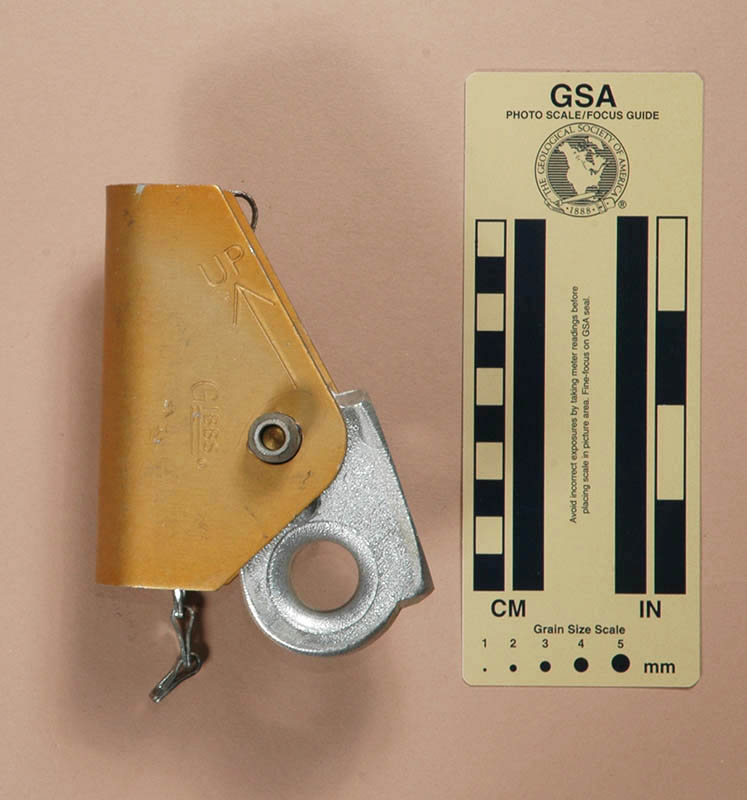
I acquired my Gibbs (3/4) QR Spring-Loaded, Version A from John E. Weinel, Inc., but I do not have a record of when I acquired it.
Version A is 105 mm. tall, 87 mm. wide, 76 mm. thick, and weighs 400 g. The shell is made from 4 mm. aluminum sheet. The cam is cast aluminum. The QR pin is 12.4 mm. in diameter. The cam is spring-loaded with a coil spring that is attached to the cam with a Phillips head screw. The other end has a split ring that can be placed over a tab pressed out of the shell. A chain on the split ring provides for a better grip. A tear-drop metal piece riveted to the shell holds a cable keeper for the QR pin and a second chain to the split ring.
Each side of the shell is stamped with "UP," an up-pointing arrow, and "GIBBS®" with a double underline. The QR pin is stamped "AVIBANK PUSH," and "BLS8B1.3Sl5."
The first spring-loaded 3/4-inch Gibbs ascenders used a coil spring.
[ Top | 3/4" | 3/4" Spring v. A | 3/4" Spring v. C | #3 v. A | #4 v. A | #4 v. B | Return to L.C. Ascenders ]
|
|
 |
| Front | Rear |
 |
| Open for Rigging |
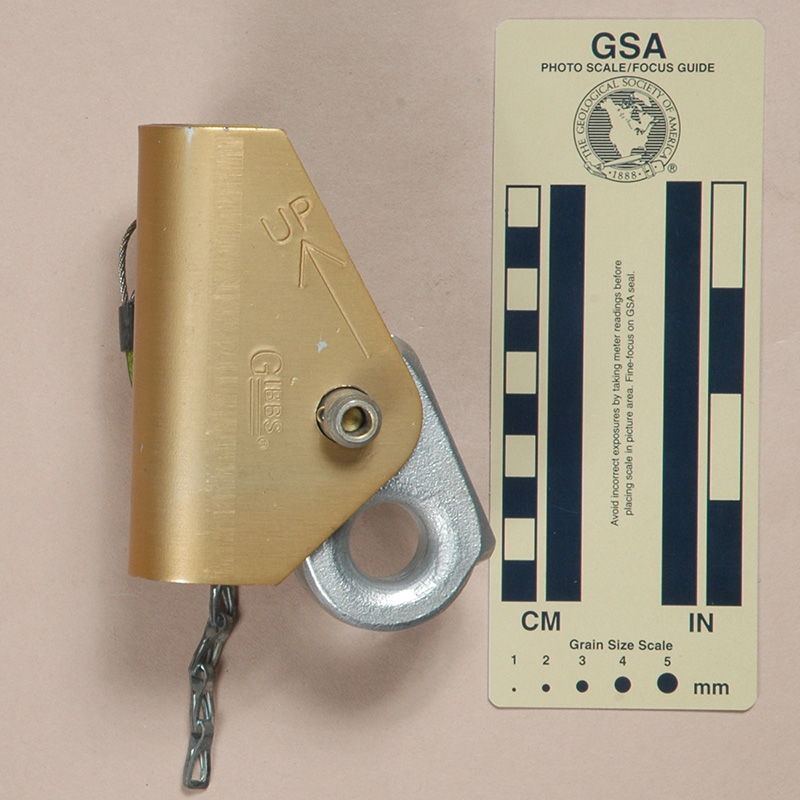
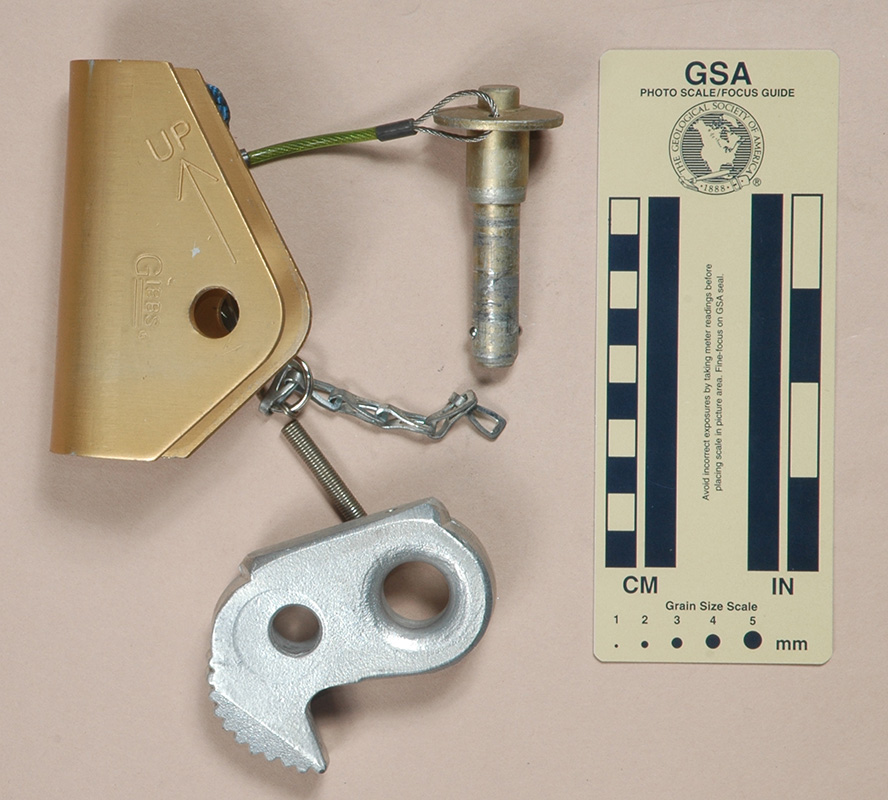
I acquired my Gibbs (3/4) QR Spring-Loaded, Version B as new old stock from Speleoshoppe in 2012.
Version B is 116 mm. tall, 86 mm. wide, 75 mm. thick, and weighs 398 g. The shell is made from 4.15 mm. aluminum sheet. The rope channel is 24 mm. wide.
The cam is cast aluminum. The cam radius increases from 24 to 39 mm. over an angle of 86°, giving a 17° cam angle.
The Gibbs QR (3/4), Stainless Steel is 105 mm. tall, 81 mm. wide, 76 mm. thick, and weighs 500 g. The cam is spring-loaded with a coil spring that is attached to the cam with a Phillips head screw. The other end has a split ring that can be placed over a tab pressed out of the shell. A chain on the split ring is attaches to a rivet on the shell, and a second chain on the ring provides for a better grip.
The QR pin axle is 12.6 mm. in diameter. A tear-drop metal piece riveted to the top of the shell holds a cable keeper for the QR pin.
Each side of the shell is stamped with "UP," an up-pointing arrow, and "GIBBS®" with a double underline. The QR pin is stamped "AVIBANK PUSH," and "BLS8B1.3SL5."
The rivets for the keepers extend well into the rope channel. The rope can rub against these, possibly causing rope damage, and more likely, causing rivet damage as well.
[ Top | 3/4" | 3/4" Spring v. A | 3/4" Spring v. B | #3 v. A | #4 v. A | #4 v. B | Return to L.C. Ascenders ]
|
|
 |
| Front | Rear |
 |
| Open for Rigging |
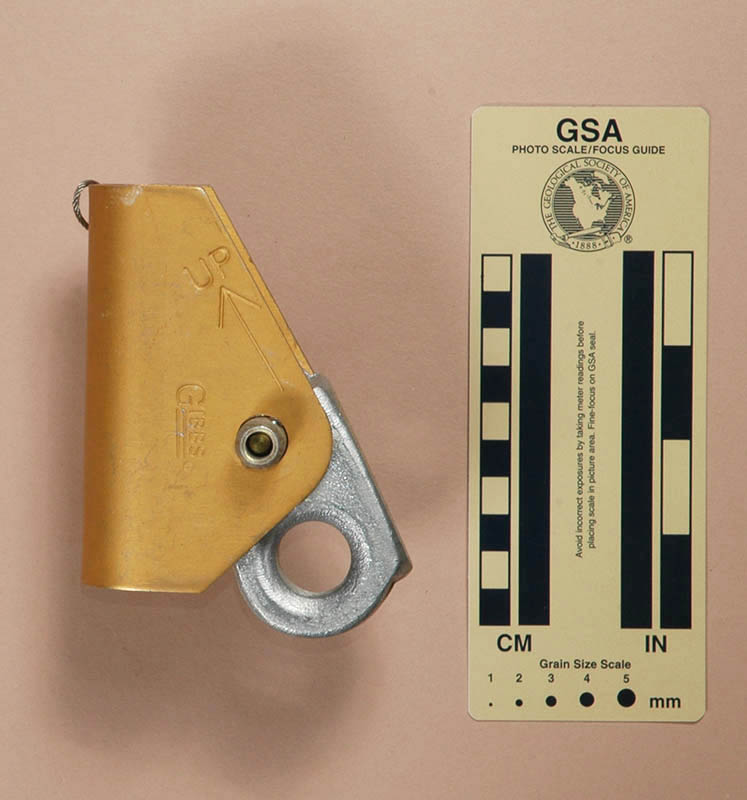
I acquired my Gibbs (3/4) QR Spring-Loaded, Version B from Bob & Bob at the 1989 Old Timers Reunion.
Version B is 105 mm. tall, 87 mm. wide, 76 mm. thick, and weighs 383 g. The shell is made from 4 mm. aluminum sheet. The cam is cast aluminum. The QR pin is 12.4 mm. in diameter. The cam is spring-loaded with a wire spring that is attached to the cam with a Phillips head screw. The other end wraps around the QR pin and then slips under a machine screw and a rivet in the shell, above the QR pin. A tear-drop metal piece riveted to the shell holds a cable keeper for the QR pin.
Each side of the shell is stamped with "UP," an up-pointing arrow, and "GIBBS®" with a double underline. The QR pin is stamped "AVIBANK PUSH," and "BLS8B1.3Sl5."
Later spring-loaded 3/4-inch Gibbs ascenders used a wire spring.
[ Top | 3/4" | 3/4" Spring v. A | 3/4" Spring v. B | 3/4" Spring v. C | #4 v. A | #4 v. B | Return to L.C. Ascenders ]
|
|
 |
| Front | Rear |
 |
| Open for Rigging |
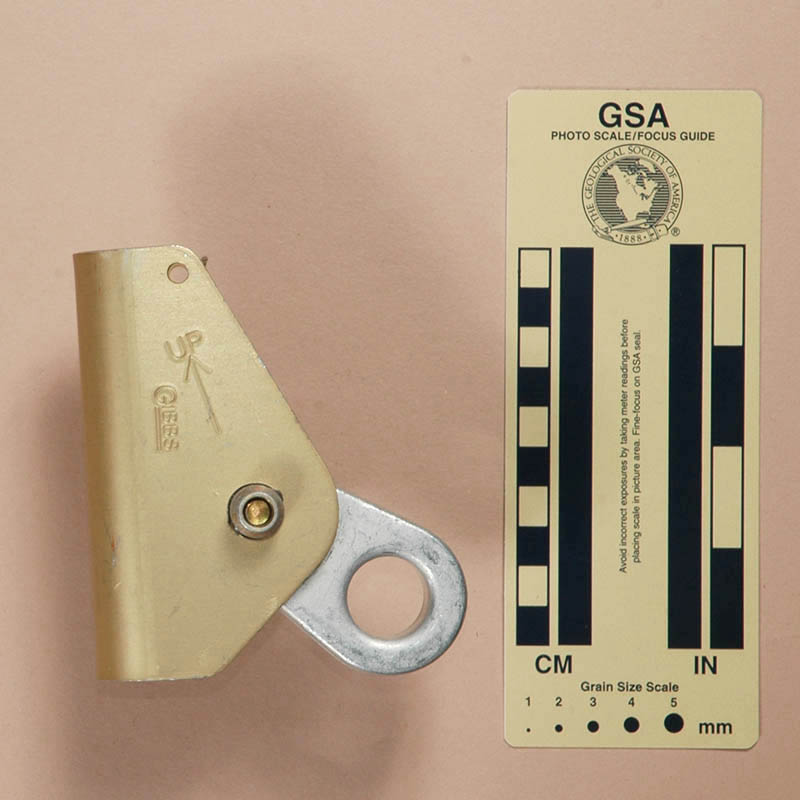
I acquired my Gibbs #3, Version A from William Deaton on eBay in 2009.
Version A is 104 mm. tall, 90 mm. wide, 72 mm. thick, and weighs 311 g. The shell is made from 3.1 mm. aluminum sheet, and does not have dimples.
The cam is forged from 2024-T6 aluminum plate. The cam radius increases from 20 to 42 mm. over an angle of 91°, giving a 26° cam angle. The QR pin is 12.4 mm. in diameter. The cam is spring-loaded with a wire spring that sits in a plastic housing. A tear-drop metal piece riveted to the spring housing holds a cable keeper for the QR pin.
Each side of the shell is stamped with "UP," an up-pointing arrow, and "GIBBS" with a double underline. The Cam is printed with "5/8 CAM NC," C/F, "HT34946A," "2024-T6," and "CF" and "199" inside a circle. The QR pin is stamped "AVIBANK," "PUSH," and "BLS8B12SL5A6."
This is a nicely-made Gibbs, but a bit too large for practical caving or climbing use. It is larger than #3, Version B (listed with the 5/8" Gibbs), but a bit smaller than the others on this page. I listed it here because the cam is essentially identical to the #4, Version A cam.
[ Top | 3/4" | 3/4" Spring v. A | 3/4" Spring v. B | 3/4" Spring v. C | #3 v. A | #4 v. B | Return to L.C. Ascenders ]
|
|
 |
| Front | Rear |
 |
| Open for Rigging |
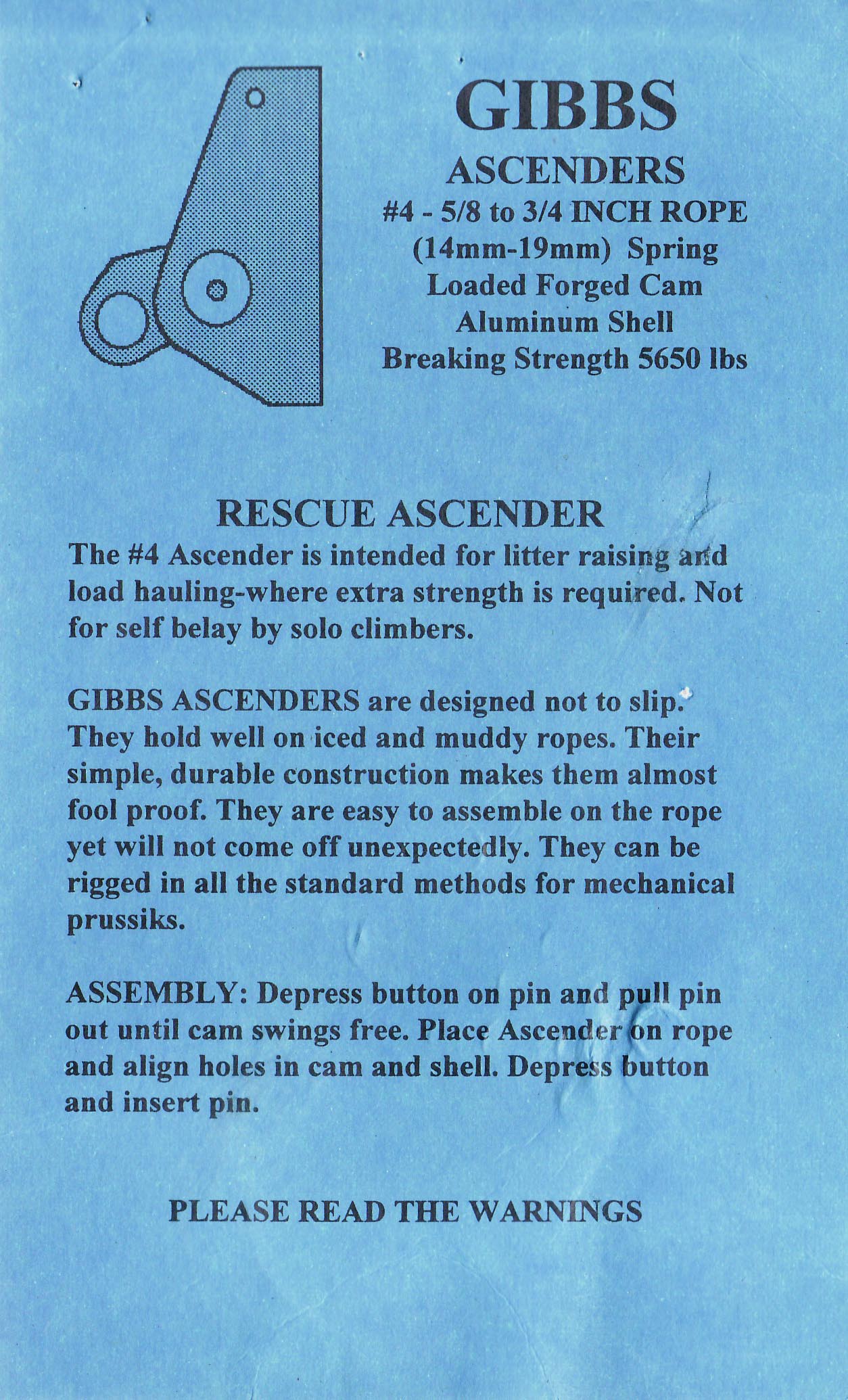
I acquired my Gibbs #4, Version A from John E. Weinel, Inc. in 1999, and a second from Jonathan M. White on eBay in 2021.
The Gibbs #4, Version A is 105 mm. tall, 91 mm. wide, 64 mm. thick, and weighs 438 g. The shell is made from 3.1 mm. aluminum sheet, and does not have dimples. The cam is forged from aluminum alloy and the teeth are covered with goo. The QR pin is 9.5 mm. in diameter. The QR pin is 12.4 mm. in diameter. The cam is spring-loaded with a wire spring that sits in a plastic housing. A strip of webbing riveted to the spring housing and a split ring form a keeper for the QR pin.
Each side of the shell is stamped with "UP," an up-pointing arrow, and "GIBBS" with a double underline. The QR pin is stamped "AVK PUSH" and "BLS6B13S."
The #4 Gibbs has dimples in the shell that provide more holding power. The cam is forged, and partially covered with goo, much like the #2SS is. I suspect the goo is similar, even though the #2SS goo is gray and the #4 goo is black. All of the goo comments I made for the #2SS apply to the #4 as well, but at least there is more logic for the #4, since it is obviously too big for any rational person to use as an ascender: it must be designed for hauling systems.
Gibbs should decide whether they are making ascenders, fall arrestors or rope grabs. The attempt to meet all three needs with one device only compromises all functions. I also believe that something that is too big ends up being left behind. I leave these ascenders behind.
 |
 |
 |
[ Top | 3/4" | 3/4" Spring v. A | 3/4" Spring v. B | 3/4" Spring v. C | #3 v. A | #4 v. A | Return to L.C. Ascenders ]
|
|
 |
| Front | Rear |
 |
| Open for Rigging |
I acquired my Gibbs #4, Version B from On Rope 1 in 2009.
This Gibbs #4, Version B is 103 mm. tall, 91 mm. wide, 63 mm. thick, and weighs 309 g. The shell is made from 4.9 mm. aluminum sheet and has two dimples opposite the cam face. The rope channel is 20 mm. wide. The cam appears to be cast. The cam radius increases from 17 to 40 mm. over an angle of 101°, giving a 27° cam angle. The QR pin is 9.4 mm. in diameter. The cam is spring-loaded with a wire spring that sits in a plastic housing. A piece of webbing riveted to the spring housing acts as a keeper for the QR pin.
The left side of the shell is stamped with "UP," an up-pointing arrow, and "GIBBS" with a double underline, "NOT FOR SELF BELAY," and "USE ONLY ON NON METAL ROPE FROM 5/8 TO 3/4." The right side is stamped with "GIBBS" with a double underline. There are no marks on the QR pin.
This Gibbs is larger than necessary, requires impractically large ropes, and is too heavy for normal caving or climbing use, but it is probably the best of the Behemoths on this page.
 |
 |
 |
[ Top | 3/4" | 3/4" Spring v. A | 3/4" Spring v. B | 3/4" Spring v. C | #3 v. A | #4 v. A | #4 v. B ]