

This page will not fit into a tiny viewport. Please choose a full-size monitor with a full-width window or select the abridged New Wave pages.

 Prusik
Knot

 The Prusik knot is THE climbing knot that everything else is compared to. Under most conditions, a standard four-coil Prusik (as shown at left) is the standard choice. One of the nice features of the Prusik knot is that there is no need to worry about adjusting how tight the knot is - like the Hedden, this occurs automatically. Other knots, such as the Helical and French Prusik, are somewhat sensitive to being tied with the proper slack.
The six-coil Prusik (tied with three passes instead of two) holds more securely but does not release as easily.
The pictures here show left-handed knots. On right-lay rope, the right-handed version holds better but the left-handed version is easier to release. On braided ropes, there is no difference.
Karl Prusik (1896–1961) was an Austrian mountaineer. Prusik served twice as President of the Austrian Alpine Club (AAC) and is credited with establishing over 70 ascents and routes. He is generally recognised as the inventor of the Prusik knot[1][2].
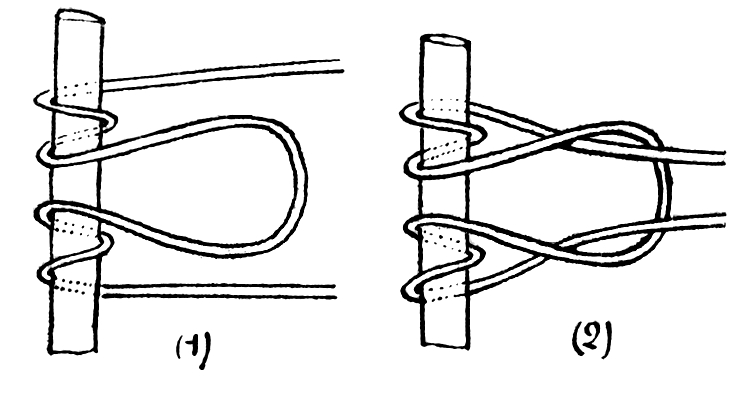 It's not that simple. The knot has been known since antiquity, although not for ascending climbing ropes. E. Gérard had described "his" knot for climbing ropes before Prusik[3]. It seems likely that Prusik had seen Gérard's article.
But Gérard's knot is not exactly Prusik's knot. Darn close, though.
 |
Note: The performance of any ascending knot depends on the diameter, material, construction, and condition of both the main line and the ascender knot sling material. It may also depend on exactly how one ties the knot. Your knot’s performance can easily differ from mine. |
|