

This page will not fit into a tiny viewport. Please choose a full-size monitor with a full-width window or select the abridged New Wave pages.

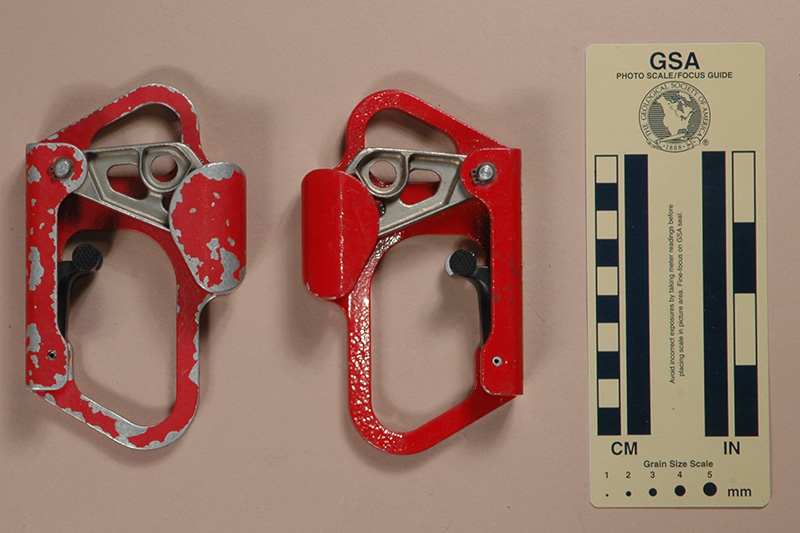
Version A
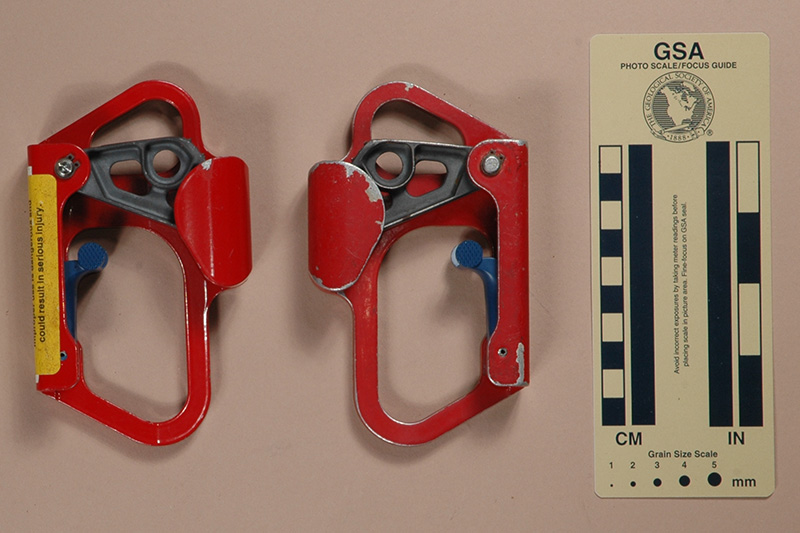
Version B
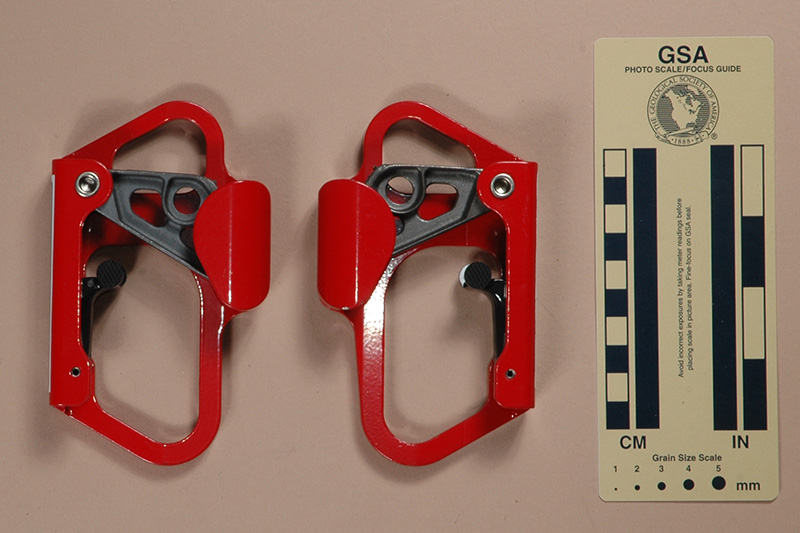
Version C
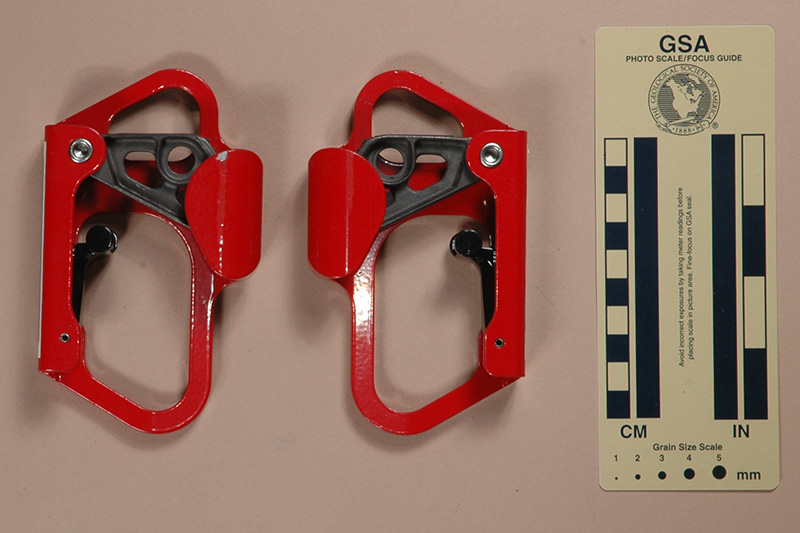
Version D
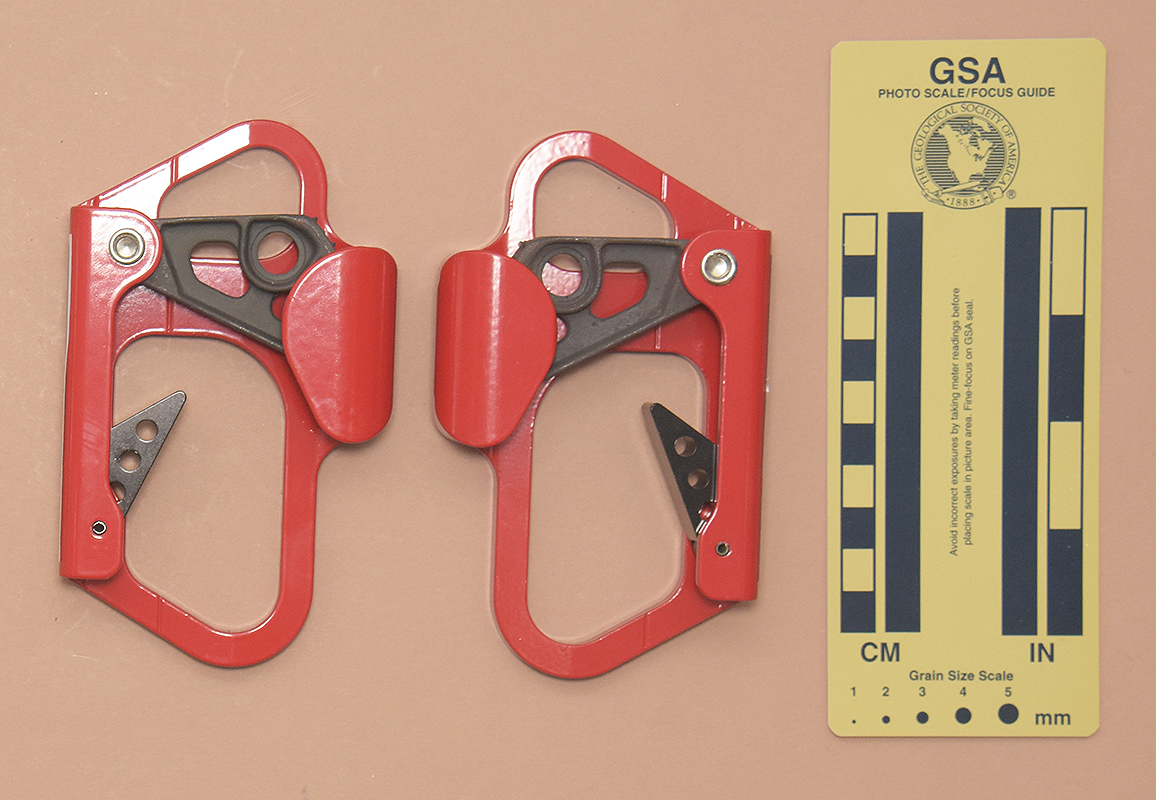
Version E
|
|
|
|
| Version A | Version B | Version C |
|
|
|
| Version D | Version E |
CMI has been making products for climbers, mountaineers, arborists, ropes course professionals, and fire service and industrial safety experts since 1964.
Minnesota native Gregg Blomberg moved to Denver, Colorado to attend a two-year college to study gunsmithing. He caught the climbing bug and decided to use his knowledge about metalworking to manufacture pitons. Up to that time, a few climber/blacksmiths in America were forging and selling “hard metal” reusable pitons from alloy steels. Gregg thought he could improve on the design of the piton and began manufacturing out of a garage in Denver in 1963. Gregg then designed and manufactured the first American-made piton hammers. He founded Colorado Mountain Industries (CMI) in 1964. After selling about 450 piton hammers, Gregg realized the market in the US was saturated, so he licensed a West German company, Salewa, to manufacture his designs in Europe. In 1966, Gregg decided to sell CMI to Redfield Gunsight Company, also in Denver.[1]
In 1972, CMI was still a division of the Redfield Gunsight Company and was managed by Don Burris. In 1971, he left Redfield to start his own company, Burris Optics, so it was decided to arrange for the sale of the CMI division. Bev Feldstein, an ambitious outdoor enthusiast and owner of The Speleo Alpine Shop in Cincinnati, became excited about acquiring CMI and moving it to Ohio. By early 1973, Bev had formed a corporation of five people: herself, daughter Linda, Joe Day, Todd Tomlinson, and Ethan Becker. Ethan had the financial resources and became the owner. By the summer of 1973 CMI had moved to the eastern Cincinnati suburb of Fairfax. Ken Macke joined the team as a designer and production manager.[1]
In 1975, CMI also began to produce some private label climbing gear for other suppliers. They were approached by Ron Kirk to manufacture a set of five wedge-shaped chocks, like the “Gendarme Nuts.” The relationship between CMI and Ron quickly grew. By 1976, CMI was losing money at a steady pace, and Ethan’s accountant convinced him to scale back operations and to find a buyer for CMI. [1] Ron Kirk purchased CMI in 1978 and moved the company to Franklin West Virginia. It remains there, family owned and operated under Ron Kirk's leadership.
[ Top | Version B | Version C | Version D | Version E | Return to H.E.C. Ascenders ]
|
|
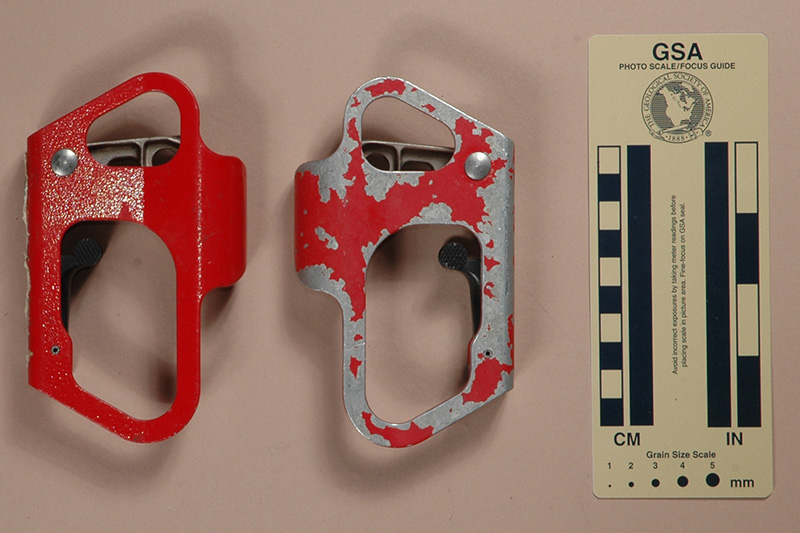 |
| Front View: Closed | Rear View: Closed |
 |
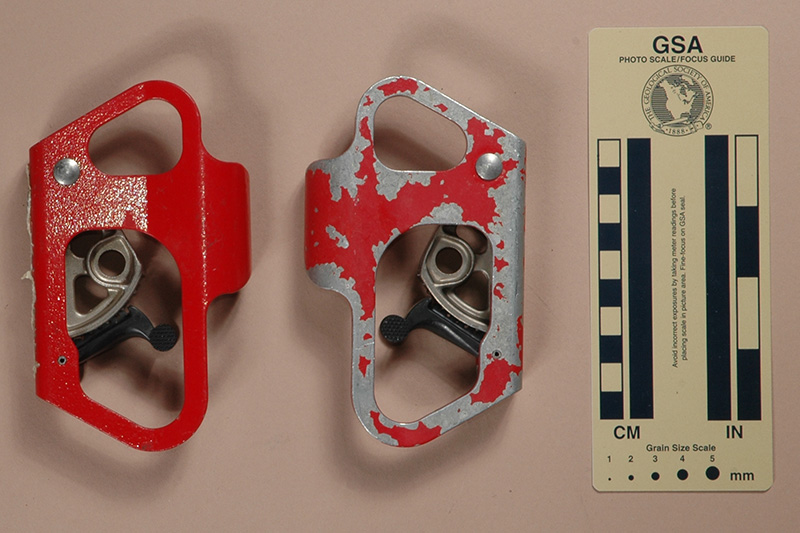 |
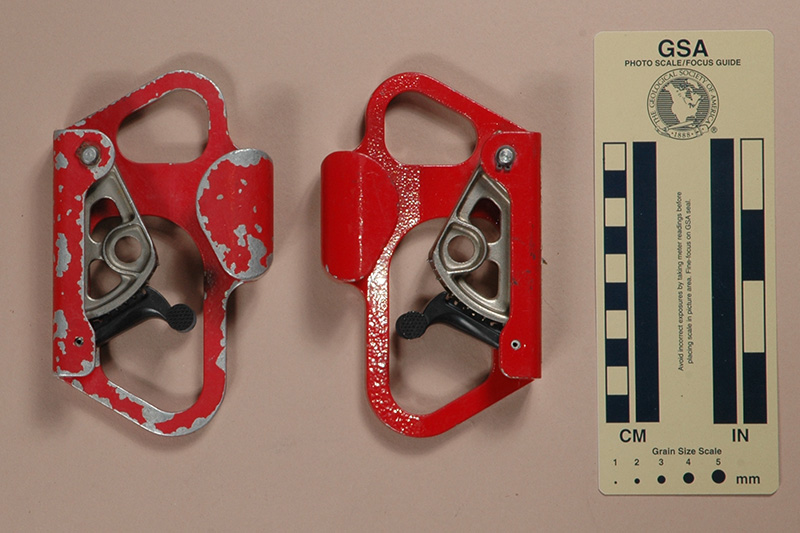
| Front View: Open for Rigging | Rear View: Open for Rigging |
 Technical Details
I acquired my Version A from J. E. Weinel, Inc. in June 1989.
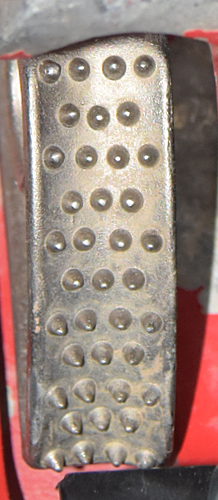
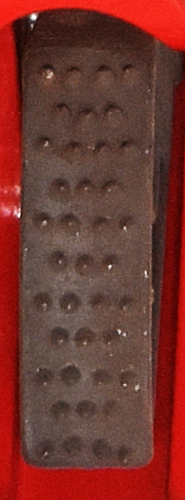
Version A is 129 mm. tall, 78 mm. wide, 29 mm. thick, and weighs 187 g. The rope channel is 18 mm. wide. The cam radius increases from 41 to 57 mm. over an angle of 42°, giving a 25° cam angle. The tooth pattern is (4.3)^5(4).
This ascender is milled from the same shape extrusion as the large UltrAscender. The obvious difference is that the small version is much more compact. The handle is much smaller, and the two bottom attachment holes have been eliminated to further reduce the overall size. The upper attachment hole has been enlarger into a 33 by 26 mm. rounded right triangular opening. The cam and cam safety are identical to those on the large UltrAscender, but the hand grip has been eliminated for lack of space.
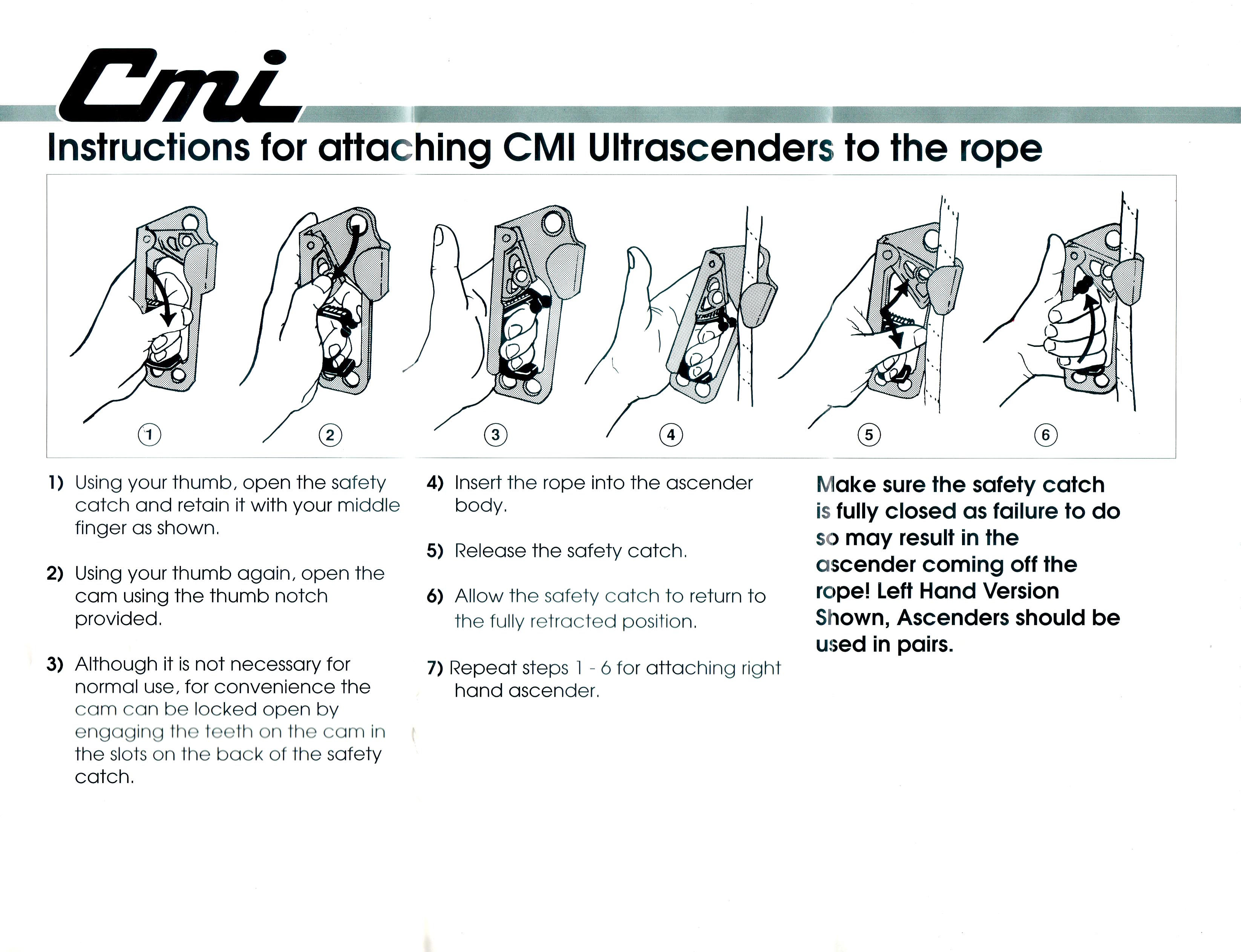
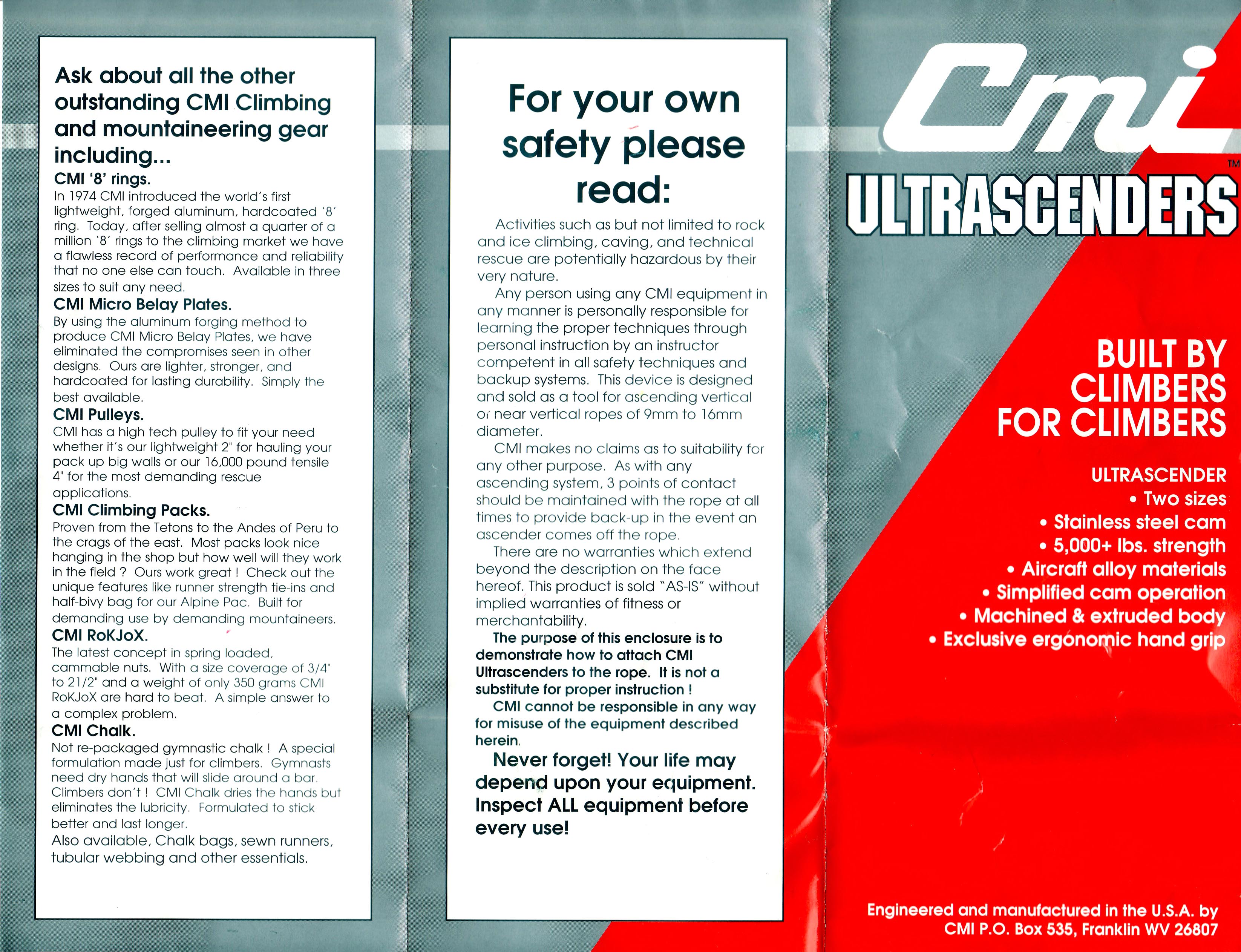
Upon receiving this pair of ascenders, I immediately added some 6 mm. slings and put the pair into my vertical caving pack for normal use. I did this without any testing whatsoever. Needless to say, I usually don't react that way to a new piece of hardware. These are perhaps the nicest ascenders I've ever seen, and with my change to the safety (see Version E) they prove be truly outstanding. It took 15 years from the time that Bob Thrun described the Jumar as "needlessly bulky" until some small handled ascenders appeared on the market. Sometimes I don't mind the bulk of a full size ascender, so for heavy use I don't completely replace my main ascenders with a compact model; on the other hand, there are a lot of occasions where weight and bulk are important, and in these cases the CMI small UltrAscender is a fine choice. The size of the ascender has been reduced by 30%, but there is still room to use the frame as a handle for three fingers if desired. This is the one of the lightest handled ascenders in my collection. The S.R.T. Climber has a slightly smaller standard volume, but most people perceive the CMI as the smaller of the two.
The frame design of the CMI UltrAscender is its strong point, both literally and figuratively. The frame is much more substantial than the shells on most sheet metal handled ascenders. The handle is still large enough for three of my large fingers if desired. The enlarged hole above the cam is much easier to grasp than the small hole in the large UltrAscender, so the small model makes a better lower Mitchell system ascender. Slings can be tied directly through the "handle," and the slope in the bottom of the handle keeps the sling attachment close to the main rope so the ascender remains vertical when loaded.
I have two suggestions for improving this ascender. First, fix the cam safety deficiencies noted in the large UltrAscender discussion. This is exactly what I did to make my modified version. CMI made the change with their Version E. Second, the inside of the handle and upper hole could be rounded for sling attachment. Using a file or a concave cutter on the milling machine would provide the desired effect. The small UltrAscender would get three stars if CMI would make these changes.
 |
 |
[ Top | Version A | Version C | Version D | Version E | Return to H.E.C. Ascenders ]
|
|
 |
| Front View: Closed | Rear View: Closed |
 |
 |
| Front View: Open for Rigging | Rear View: Open for Rigging |
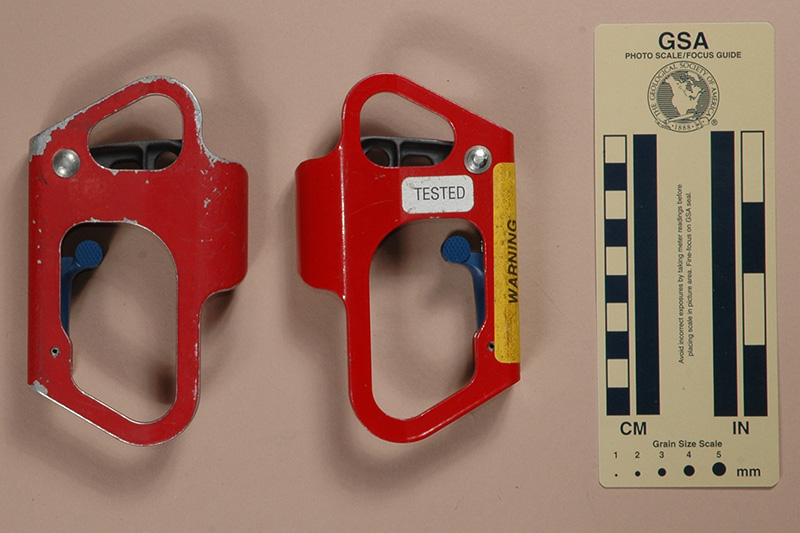
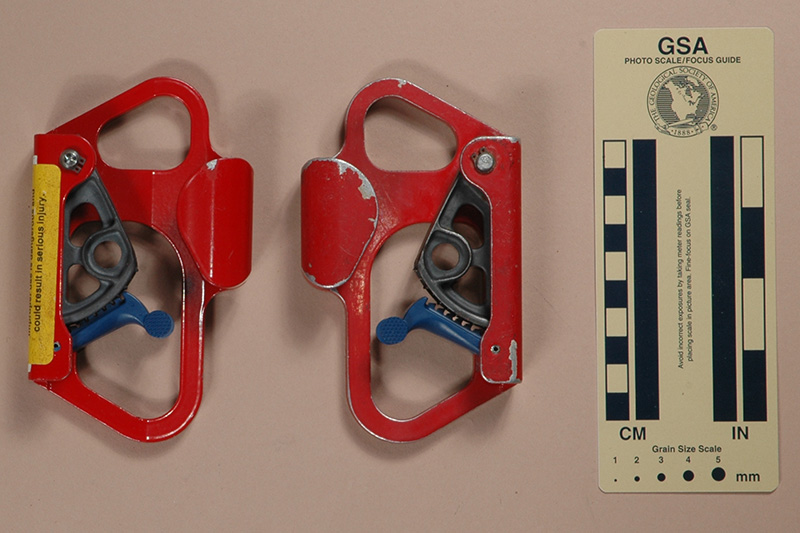
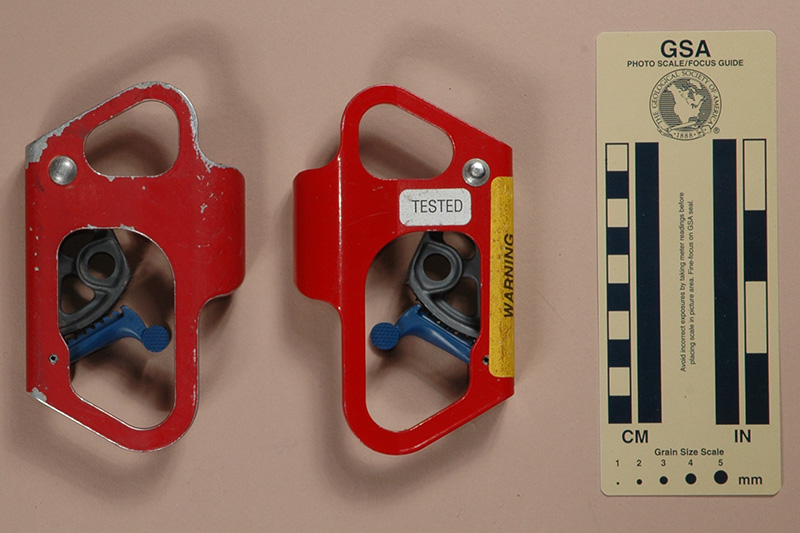
 I acquired my Version B pair from Inner Mountain Outfitters in 1991. On Rope 1 donated another left-hand ascender in 2021.
Version B is 129 mm. tall, 78 mm. wide, 29 mm. thick, and weighs 187 g. The rope channel is 18 mm. wide. The cam radius increases from 41 to 57 mm. over an angle of 42°, giving a 25° cam angle. The tooth pattern is (4.3)^5(4).
Version B does not have any stampings on the frame.
The only difference between Version A and Version B is that Version A has a bright steel cam, and Version B has a dark steel cam. Functionally, Version A and Version B are identical.
[ Top | Version A | Version B | Version D | Version E | Return to H.E.C. Ascenders ]
|
|
 |
| Front View: Closed | Rear View: Closed |
 |
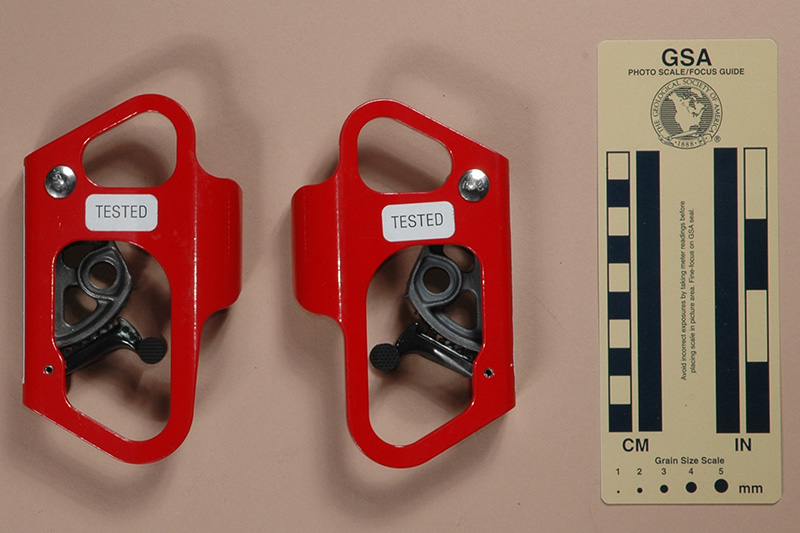 |
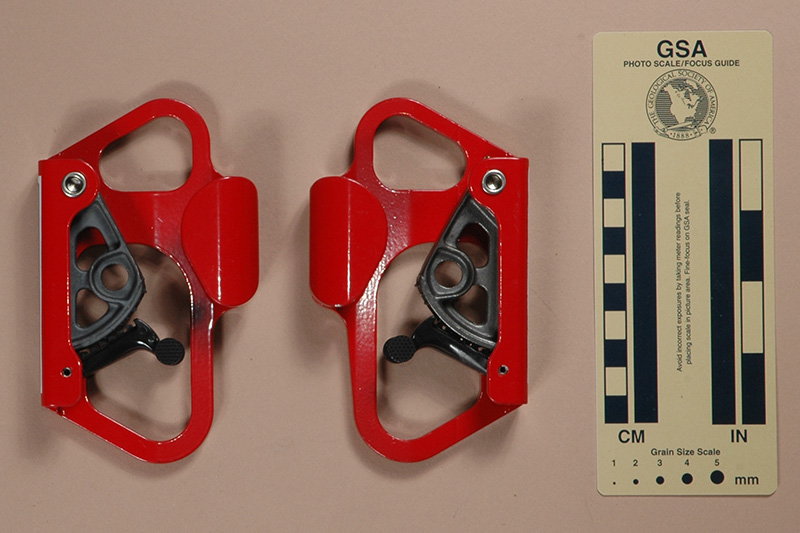
| Front View: Open for Rigging | Rear View: Open for Rigging |
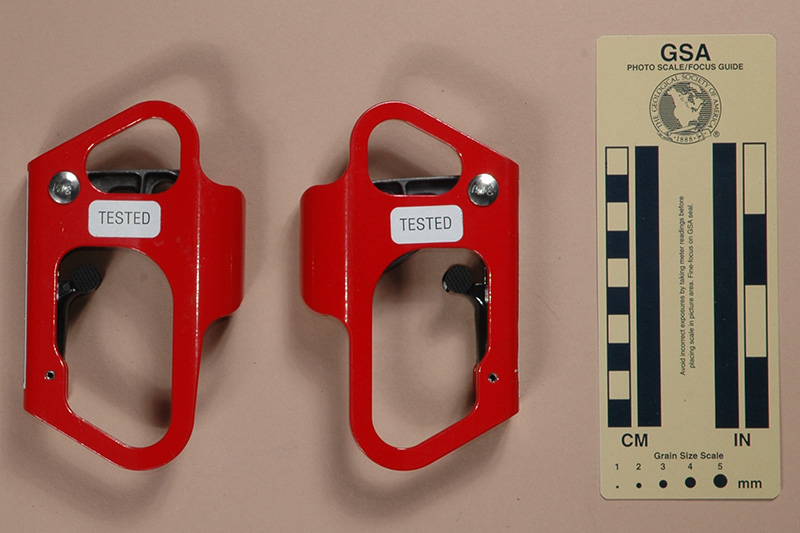
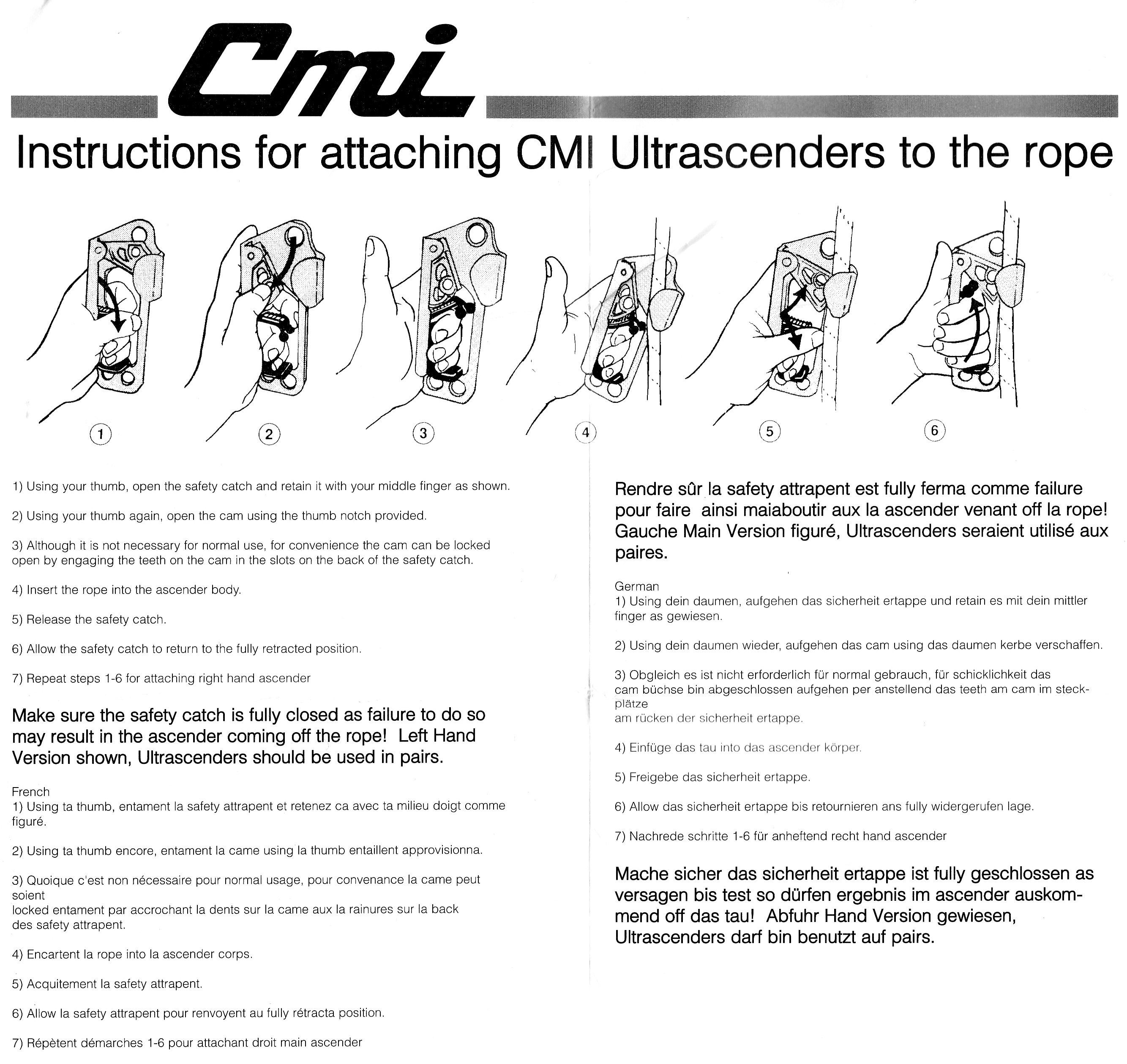
I acquired my CMI Small UltrAscender, Version C from On Rope 1 in 2009 UIS/NSS Convention. I acquired another pair in 2017 as part of Bob Thrun’s collection.
Version C is 130 mm. tall, 77 mm. wide, 28 mm. thick, and weighs 183 g. The rope channel is 18 mm. wide. The cam radius increases from 41 to 57 mm. over an angle of 42°, giving a 25° cam angle. The tooth pattern is (4.3)^5(4).
The only difference between Versions B and C is that the cam pivots on a pin in Version B and a rivet in Version C. I much prefer the earlier design, since it facilitated user maintenance.
[ Top | Version A | Version B | Version C | Version E | Return to H.E.C. Ascenders ]
|
|
 |
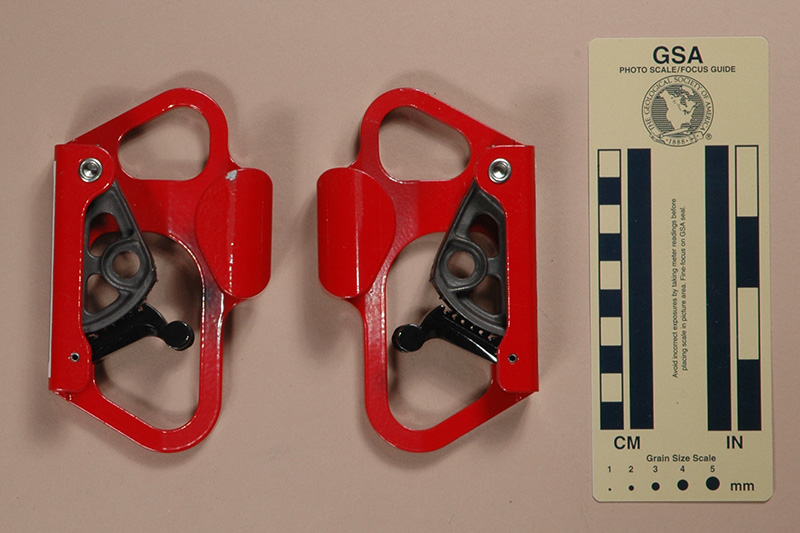
| Front View: Closed | Rear View: Closed |
 |
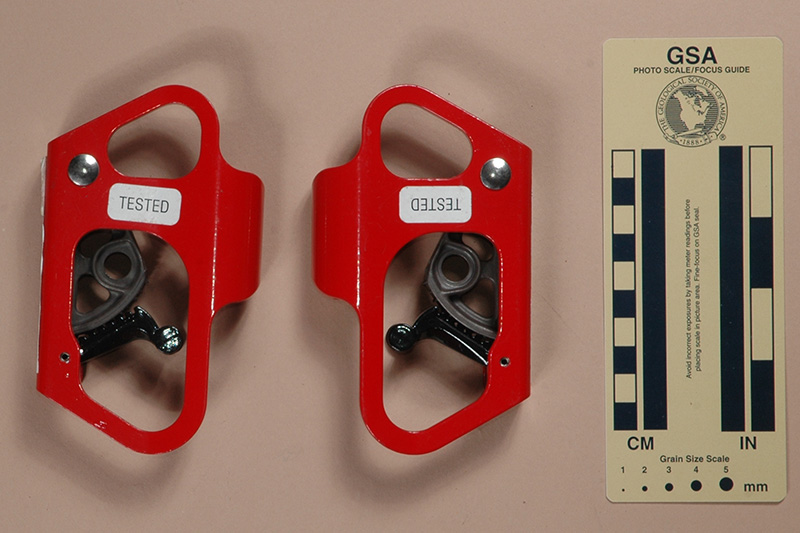 |
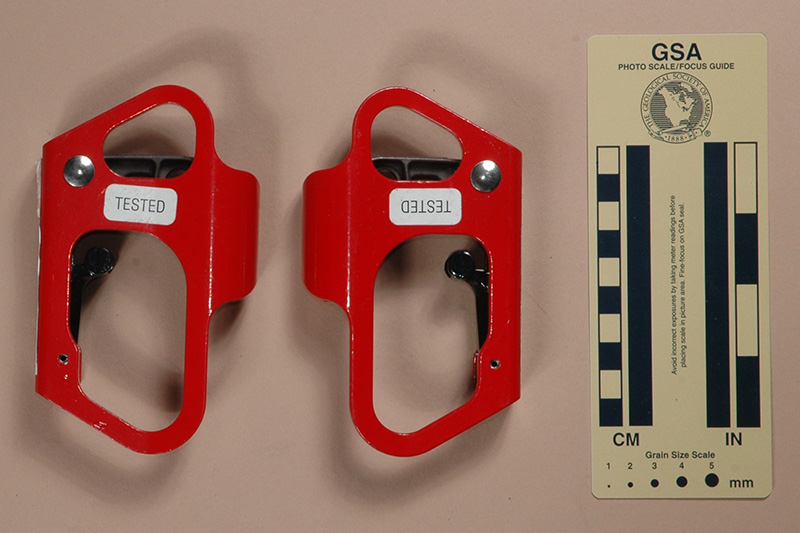
| Front View: Open for Rigging | Rear View: Open for Rigging |
 I acquired my Version D from On Rope 1 at the 2007 NSS Convention. Jay Kennedy gave me a blue right-handed one at the 2022 NSS Convention.
Version D is 130 mm. tall, 77 mm. wide, 28 mm. thick, and weighs 189 g. The rope channel is 18 mm. wide. The cam radius increases from 41 to 57 mm. over an angle of 42°, giving a 25° cam angle. The tooth pattern is (4.3)^5(4).
Version D has a semi-tubular rivet for a cam axle, which makes it harder to replace the cam.
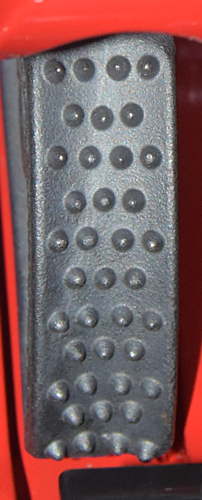
Version D has a metal safety. The safety on Version D has a smoother finish than the earlier ones, and it is missing the checkered surface on the safety’s tabs. A thick layer of black paint covers the safety.
Version D does not have any stampings on the frame.
The safety design is similar to the earlier versions, so it is still somewhat awkward. The lack of checkering makes the safety more slippery than the older plastic ones, but at least the tabs should not break off as easily. It is a shame that CMI did not completely overhaul the safety design instead, so I did that myself.
 |
 |
 |
 |
[ Top | Version A | Version B | Version C | Version D | Return to H.E.C. Ascenders ]
|
|
 |
| Front View: Closed | Rear View: Closed |
 |
 |
| Front View: Open for Rigging | Rear View: Open for Rigging |
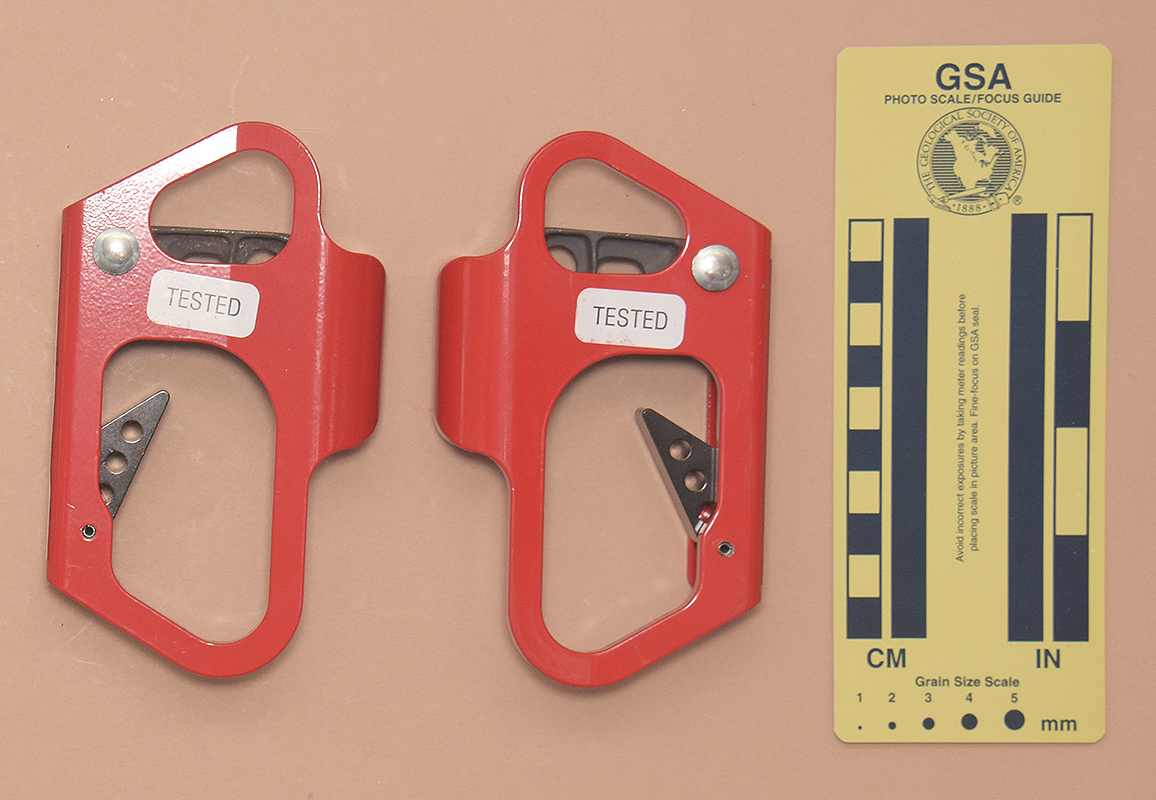
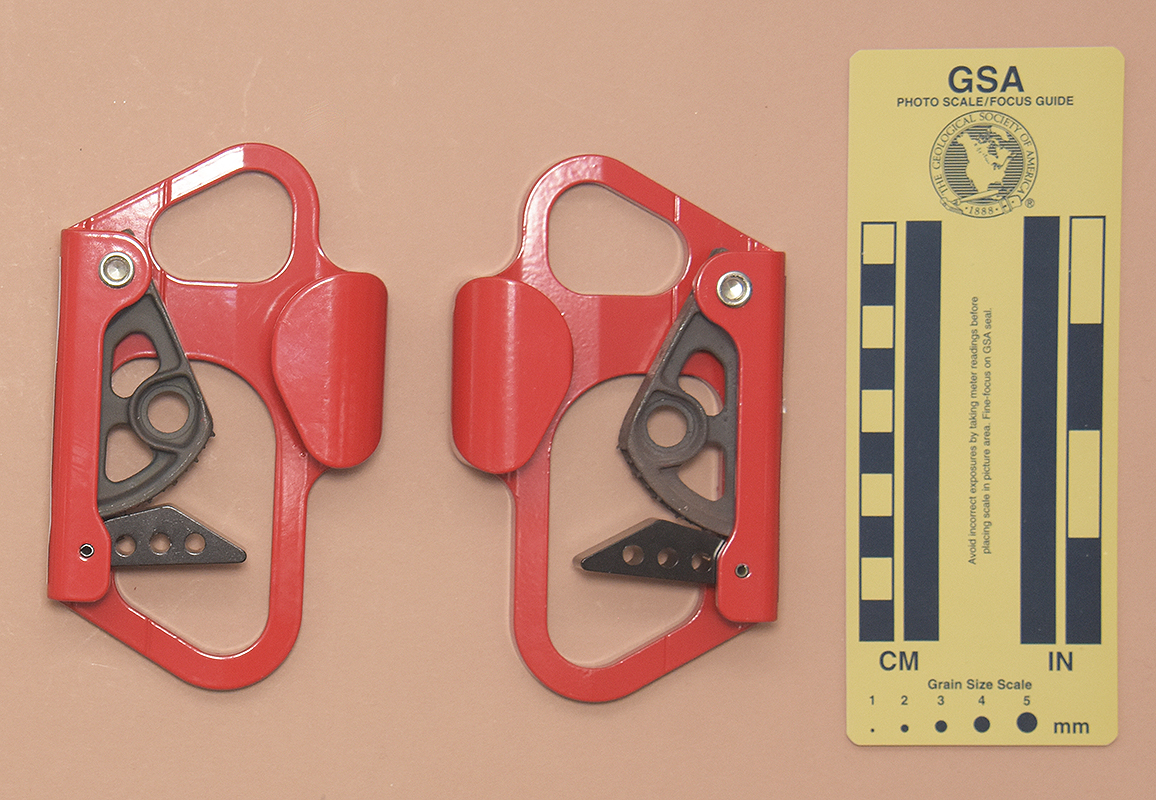
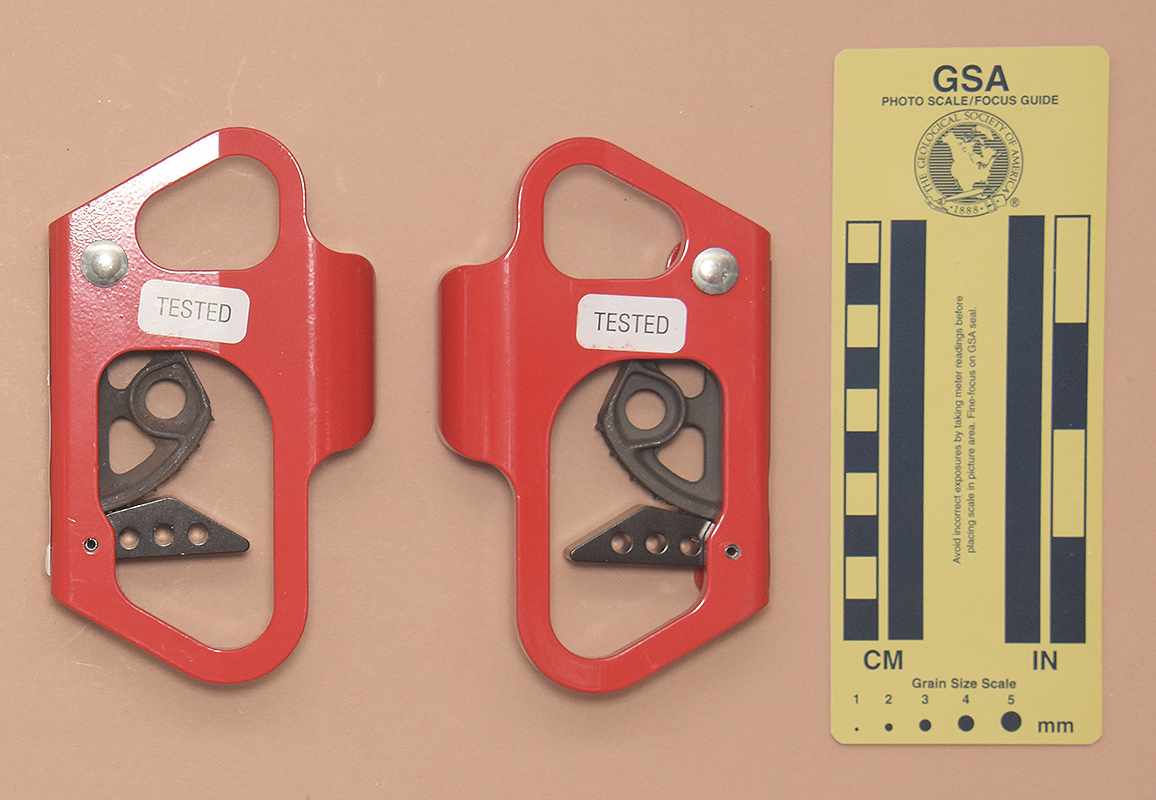
 Kris Kirk of CMI sent me this pair of ascenders in 2023.
Version E is 130 mm. tall, 77 mm. wide, 28 mm. thick, and weighs 189 g. The rope channel is 18 mm. wide. The cam radius increases from 41 to 57 mm. over an angle of 42°, giving a 25° cam angle. The tooth pattern is (4.3)^5(4).
Version E has a semi-tubular rivet for a cam axle, which makes it harder to replace the cam.
Version E has a redesigned metal safety milled from aluminum alloy.
Version E does not have any stampings on the frame.
When I visited CMI in 2017, I showed Kris and Ron Kirk the modified safety that I had been using on my CMI UltrAscenders since 1991. After demonstrating its advantages, Kris asked me to send him a drawing. I did so shortly afterward, and also sent a "prototype" copied from the ones that I've been using for years. In March 2023, Kris sent me the a note saying that CMI had adopted my design. He wrote:
"I remember having you here and passing along the idea about your safety. I set it on my filing cabinet and never forgot about it. We had to get through our current run of old safeties before we could implement the new design you submitted. Long story short, all large and small UltrAscenders will now have these safeties in them. I wanted to thank you for bringing us this idea as the old safeties were outsourced and were cast and these new safeties are now made in house which is a huge plus for us as we can make them in much smaller batches now."
It was my pleasure to be able to help.
|
|
|
|
|
[ Top | Version A | Version B | Version C | Version D | Version E ]