

This page will not fit into a tiny viewport. Please choose a full-size monitor with a full-width window or select the abridged New Wave pages.

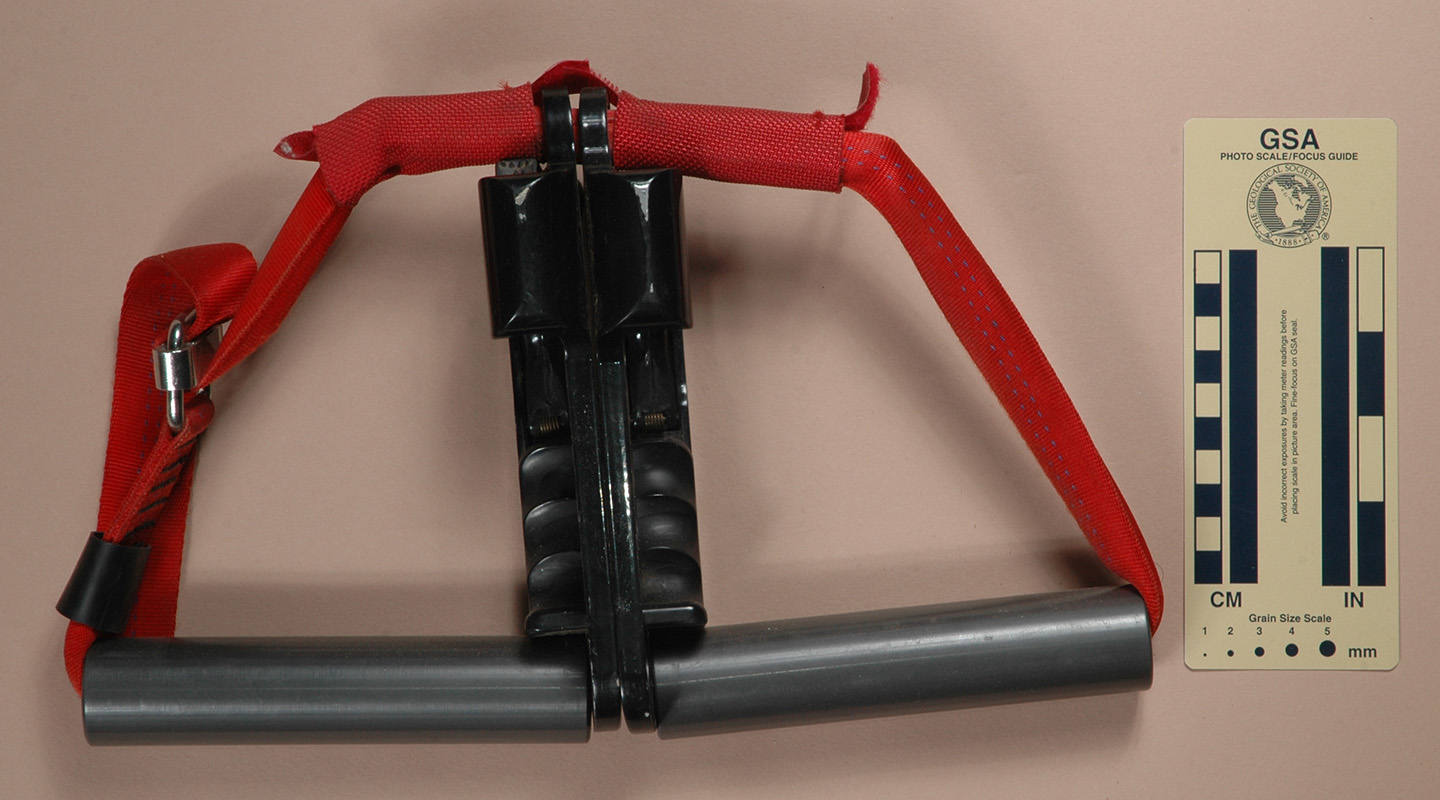
Version A
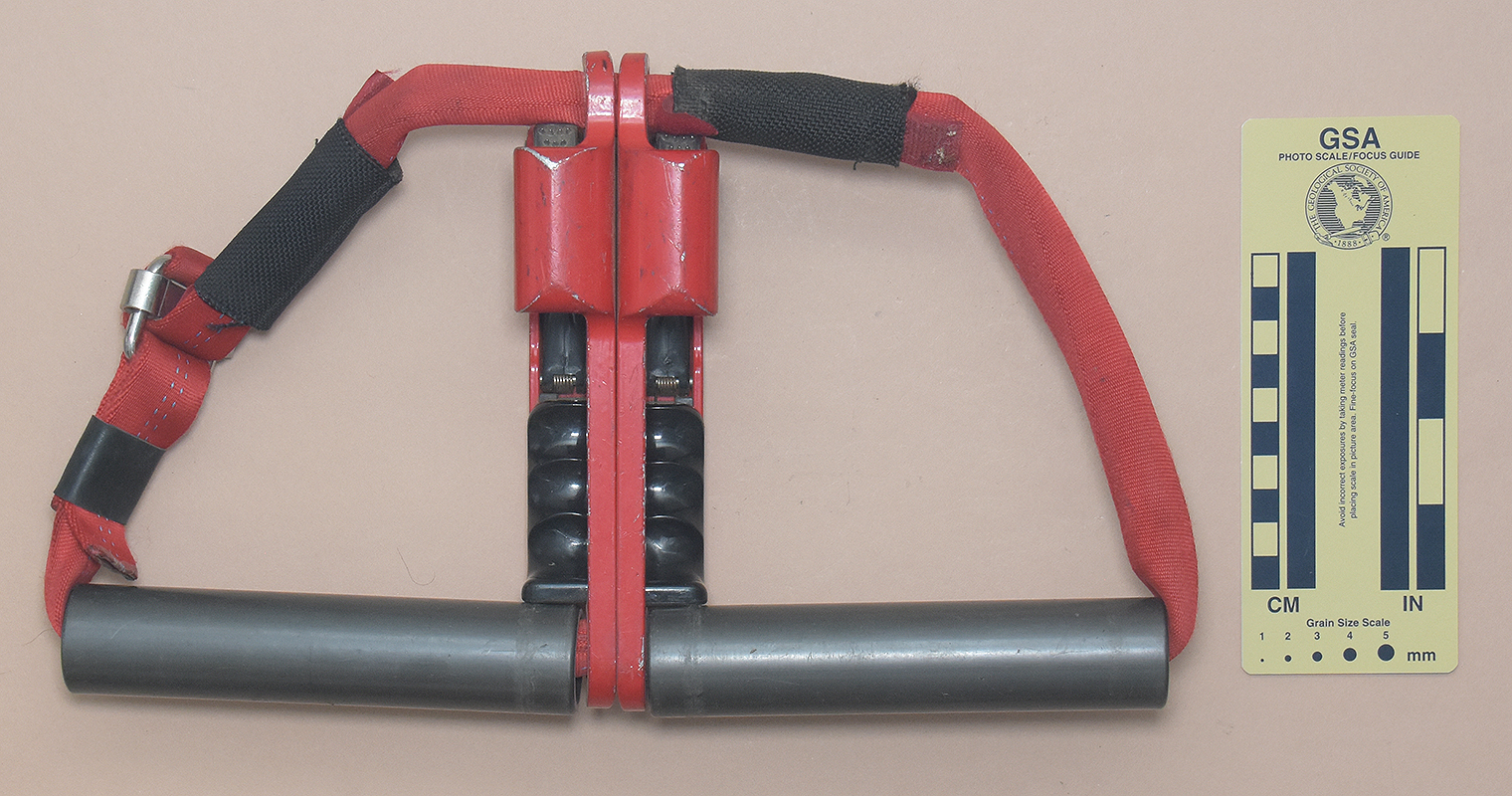
Version B
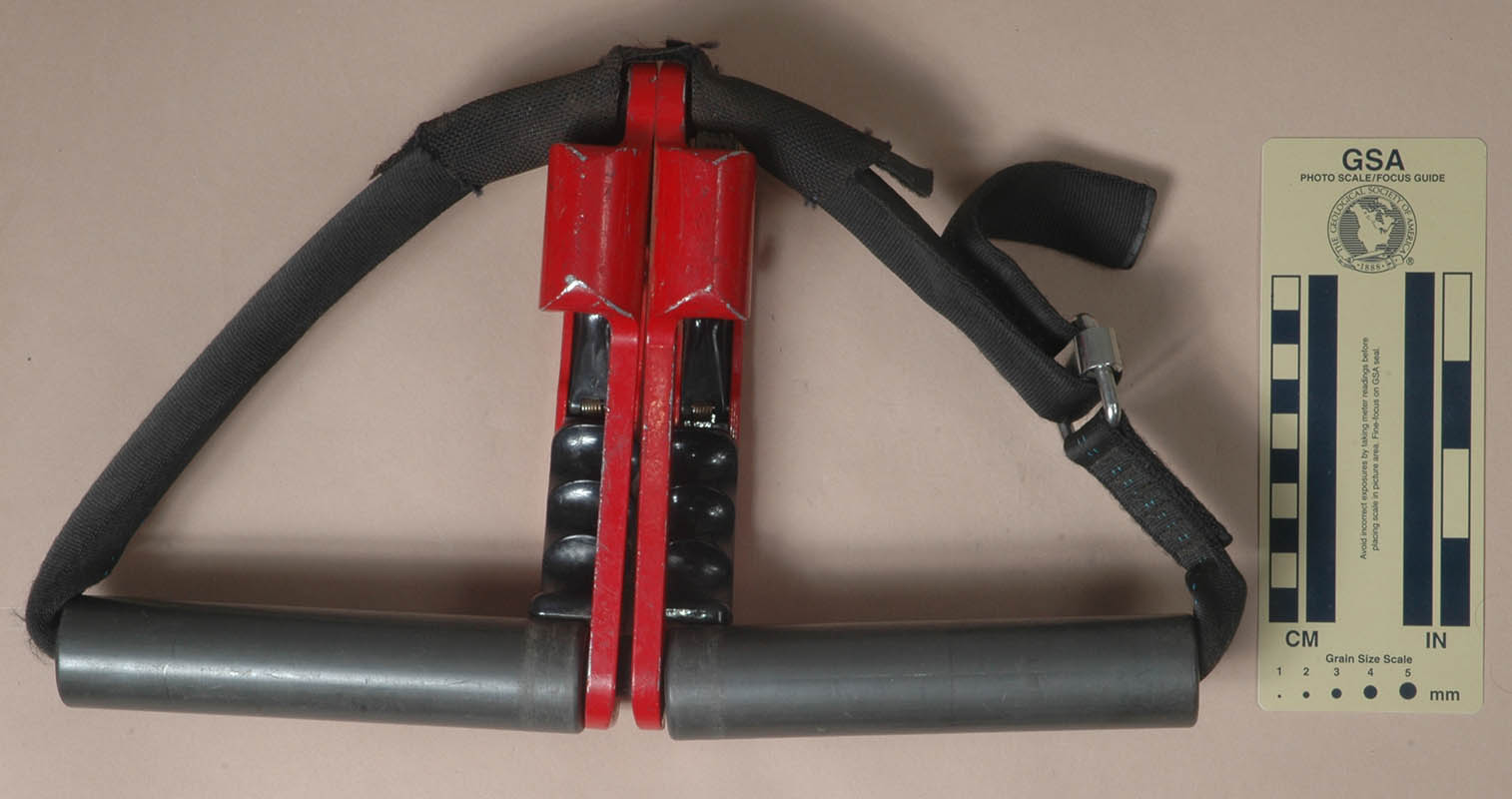
Version C
|
|
|
|
| Version A | Version B | Version C |
For 130 years (since 1896), Buckingham has been a trusted manufacturer and distributer of safety equipment for linemen, arborists, and telecom professionals. Buckingham is in Binghamton, New York.
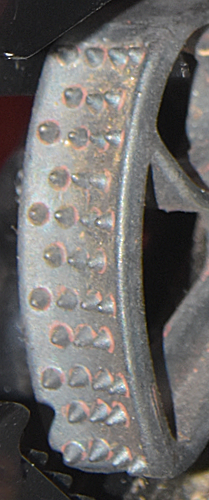
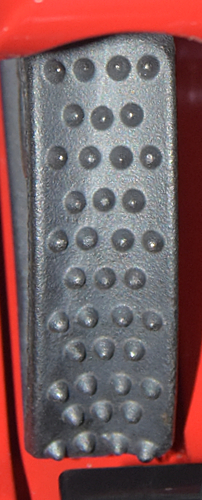
My Buckingham Mar-Bars use CMI ascenders.
CMI has been making products for climbers, mountaineers, arborists, ropes course professionals, and fire service and industrial safety experts since 1964.
Minnesota native Gregg Blomberg moved to Denver, Colorado to attend a two-year college to study gunsmithing. He caught the climbing bug and decided to use his knowledge about metalworking to manufacture pitons. Up to that time, a few climber/blacksmiths in America were forging and selling “hard metal” reusable pitons from alloy steels. Gregg thought he could improve on the design of the piton and began manufacturing out of a garage in Denver in 1963. Gregg then designed and manufactured the first American-made piton hammers. He founded Colorado Mountain Industries (CMI) in 1964. After selling about 450 piton hammers, Gregg realized the market in the US was saturated, so he licensed a West German company, Salewa, to manufacture his designs in Europe. In 1966, Gregg decided to sell CMI to Redfield Gunsight Company, also in Denver.[1]
In 1972, CMI was still a division of the Redfield Gunsight Company and was managed by Don Burris. In 1971, he left Redfield to start his own company, Burris Optics, so it was decided to arrange for the sale of the CMI division. Bev Feldstein, an ambitious outdoor enthusiast and owner of The Speleo Alpine Shop in Cincinnati, became excited about acquiring CMI and moving it to Ohio. By early 1973, Bev had formed a corporation of five people: herself, daughter Linda, Joe Day, Todd Tomlinson, and Ethan Becker. Ethan had the financial resources and became the owner. By the summer of 1973 CMI had moved to the eastern Cincinnati suburb of Fairfax. Ken Macke joined the team as a designer and production manager.[1]
In 1975, CMI also began to produce some private label climbing gear for other suppliers. They were approached by Ron Kirk to manufacture a set of five wedge-shaped chocks, like the “Gendarme Nuts.” The relationship between CMI and Ron quickly grew. By 1976, CMI was losing money at a steady pace, and Ethan’s accountant convinced him to scale back operations and to find a buyer for CMI. [1] Ron Kirk purchased CMI in 1978 and moved the company to Franklin West Virginia. It remains there, family owned and operated under Ron Kirk's leadership.
[ Top | Version B | Return to Foot Ascenders ]
|
|
 |
| Front | Rear |
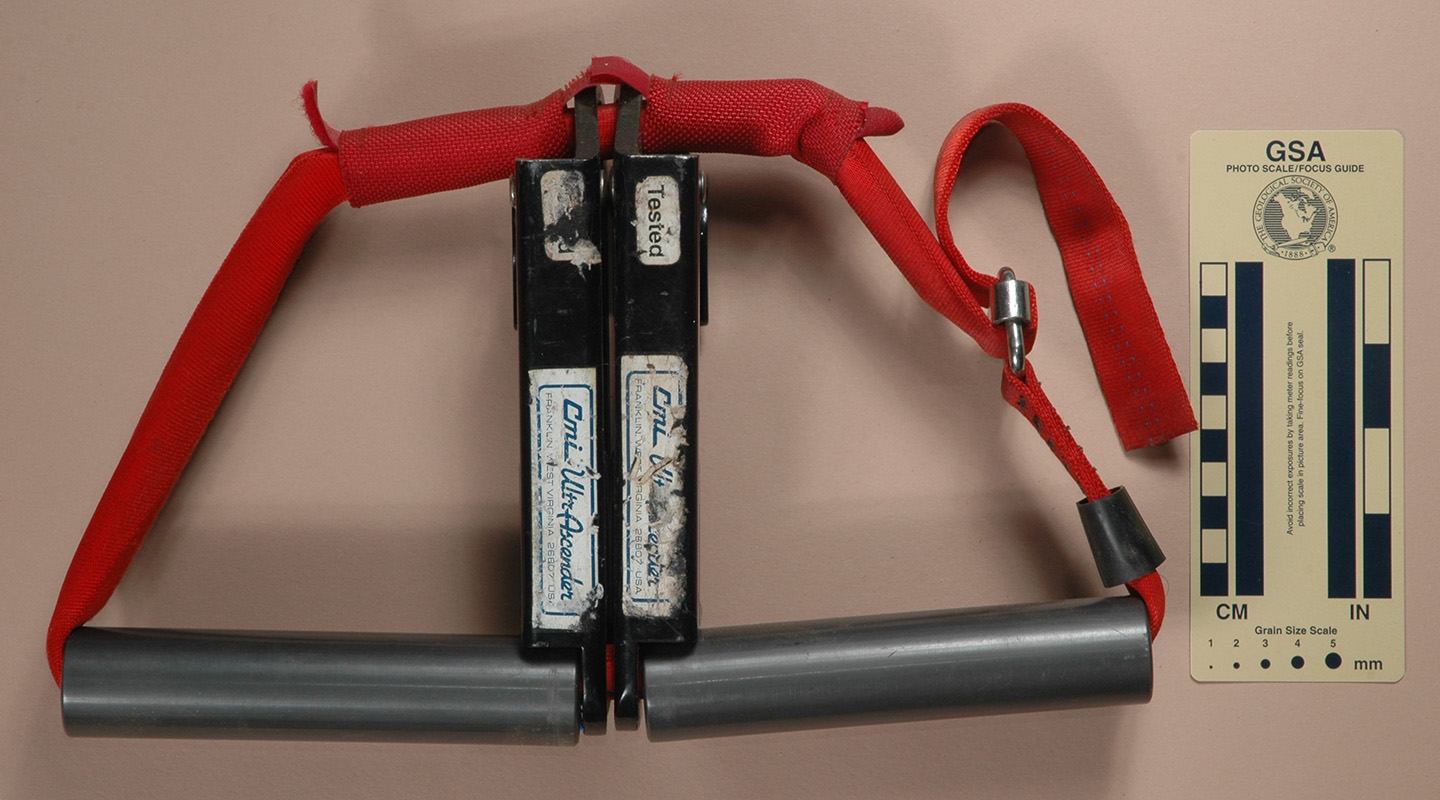
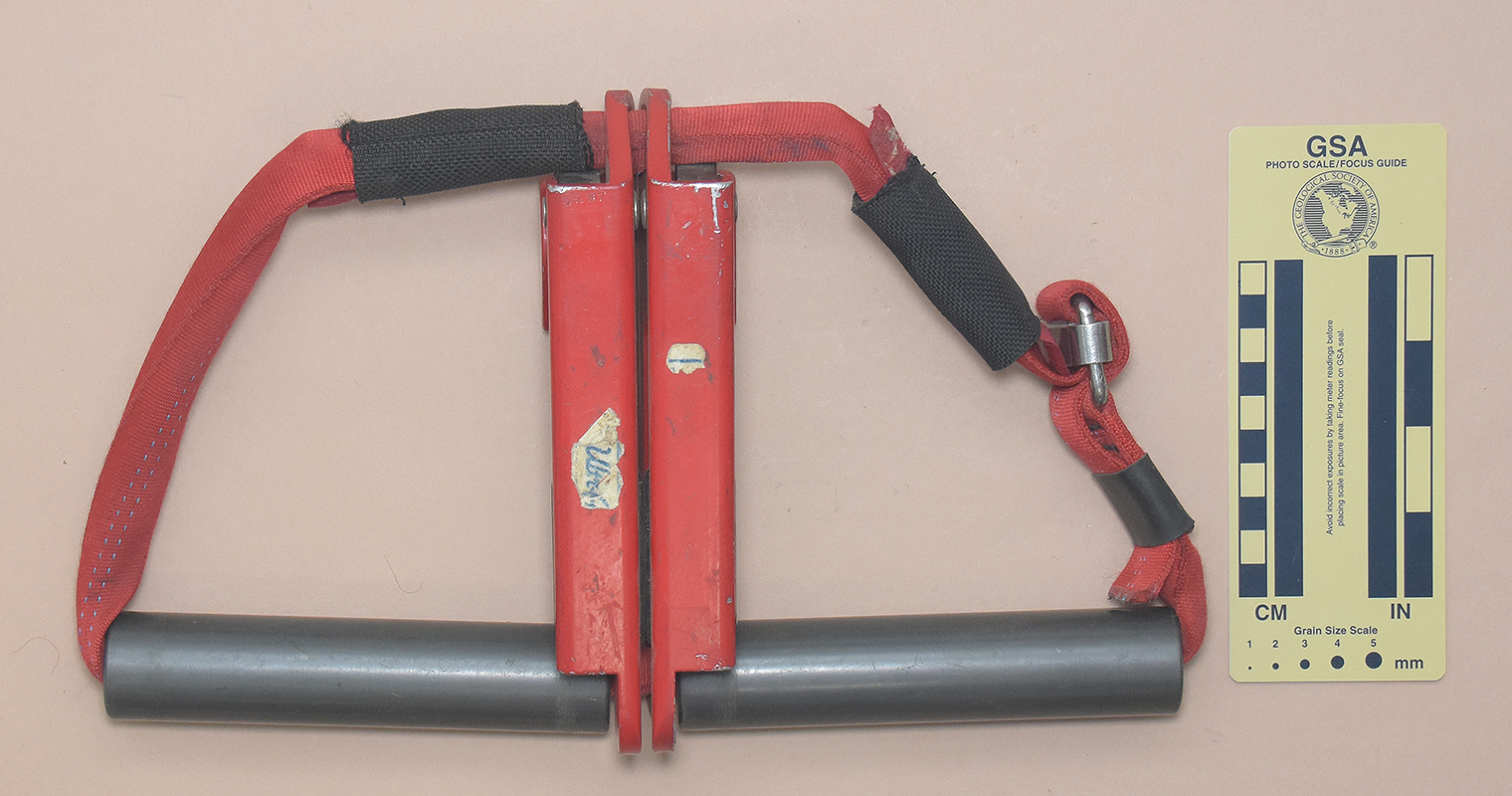
 I acquired this Buckingham Mar-Bar from Tetyana Zurigat in 2007.
This version is 193 mm. tall, 320 mm. wide, 78 mm. thick, and weighs 1071 g.
The Buckingham Mar-Bar starts with a pair of large CMI UltrAscenders (like my #0217). A 300 mm. rod goes through the bottom rear attachment holes, and a 140 mm. rod passes through the top holes. A 150 mm. piece of flexible tubing forms the left side of the rig (right side in the photo), and a shorter piece stiffens the opposite side, above the buckle. A piece of 25 mm. chain-stitched webbing starts at a sewn in buckle on the left, passes through a rubber ring and then through a 145 mm. long piece of 32 mm., 4.7 mm. wall PVC tubing and over the lower rod, through the ascender holes and another piece of PVC tubing, over the right side flex tubing, over the upper rod and through the upper ascender holes, and then down over the final flex tubing piece to the buckle. Finally, two more pieces of coarse webbing cover the upper horizontal section of the webbing frame.
The Mar-Bar (short for Jumar-Bar) was first conceived as part of the Inchworm climbing system, an interesting historical innovation that allowed for relatively efficient, hands-free, sit-stand climbing, even for unskilled climbers. Cavers invariably used it as a single rope technique, so doubled ascenders were not necessary. The system all but disappeared from caving scenes in the 1970s, so it is interesting to see the Mar-Bar idea revived by arborists, even if they do not use it in an inchworm system.
[ Top | Version A | Version C | Return to Foot Ascenders ]
|
|
 |
| Front | Rear |
 I acquired this Buckingham Mar-Bar in 2017 as part of Bob Thrun’s collection.
This version is 193 mm. tall, 320 mm. wide, 78 mm. thick, and weighs 1071 g.
The foot rod on Version B goes through the lower front holes of the ascenders as opposed to the rear holes on Version A.
Putting the foot rod through the front holes brings the rope closer to the body. This is desirable, provided the rope does not drag, and that depends on where the climber places their feet. The climber should place their feet as far back as possible without having the rope drag. I doubt that many people would notice the difference climbing with Version B versus Version A.
[ Top | Version A | Version B | Return to Foot Ascenders ]
|
|
 |
| Front | Rear |
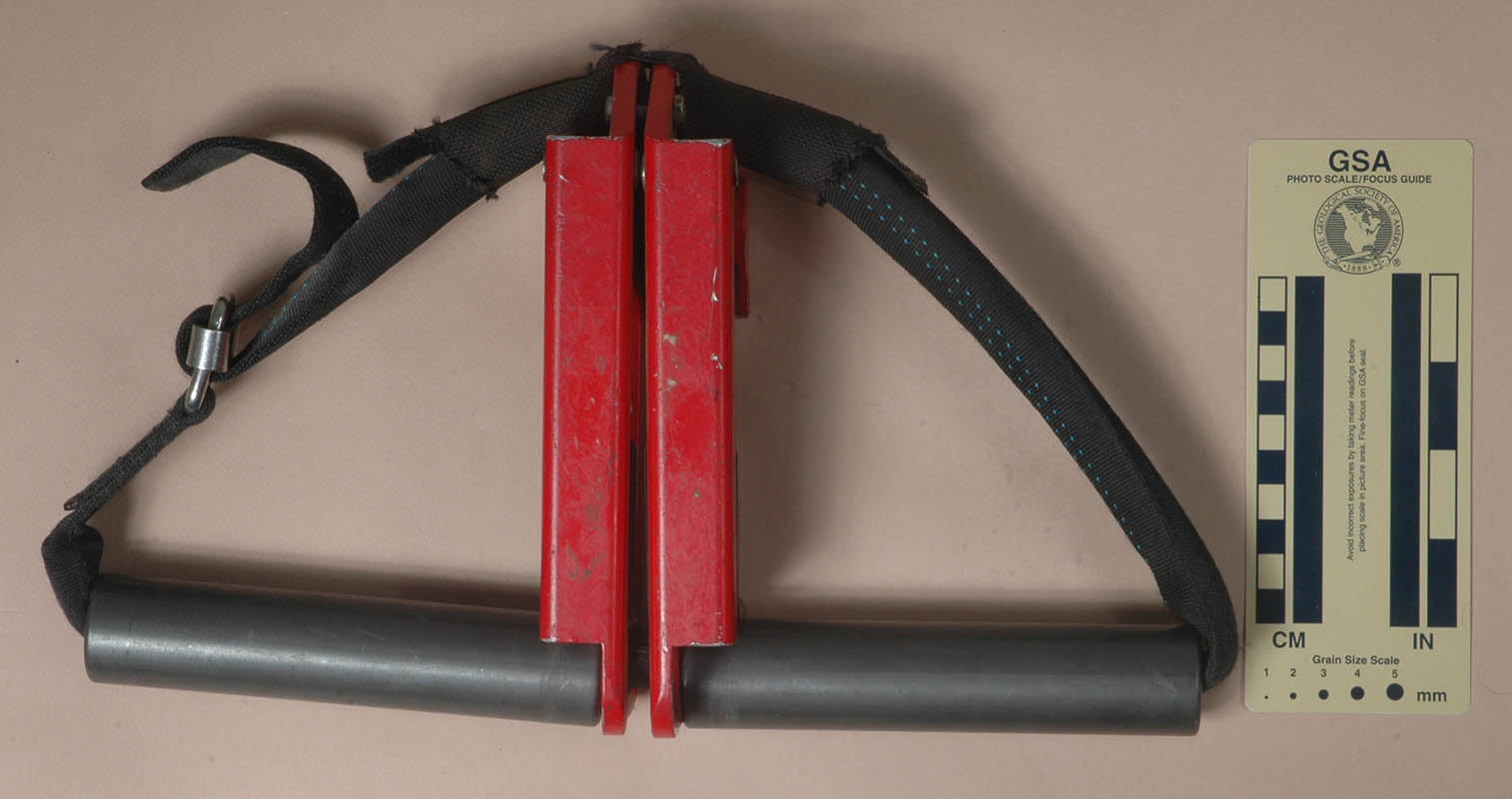
I acquired this Buckingham Mar-Bar as part of Bob Thrun’s collection.
This Mar-Bar is 192 mm. tall, 327 mm. wide, 77 mm. thick, and weighs 1018 g.
Aside from the color of the ascenders and webbing, the only difference between this version and Version B is that the top of the ascenders on this version are drilled and bolted together with a #10-24 Machine screw and hex nut.
The machine screw was probably added by a prior owner. I don't see that the machine screw makes much difference.
[ Top | Version A | Version B | Version C ]