

This page will not fit into a tiny viewport. Please choose a full-size monitor with a full-width window or select the abridged New Wave pages.

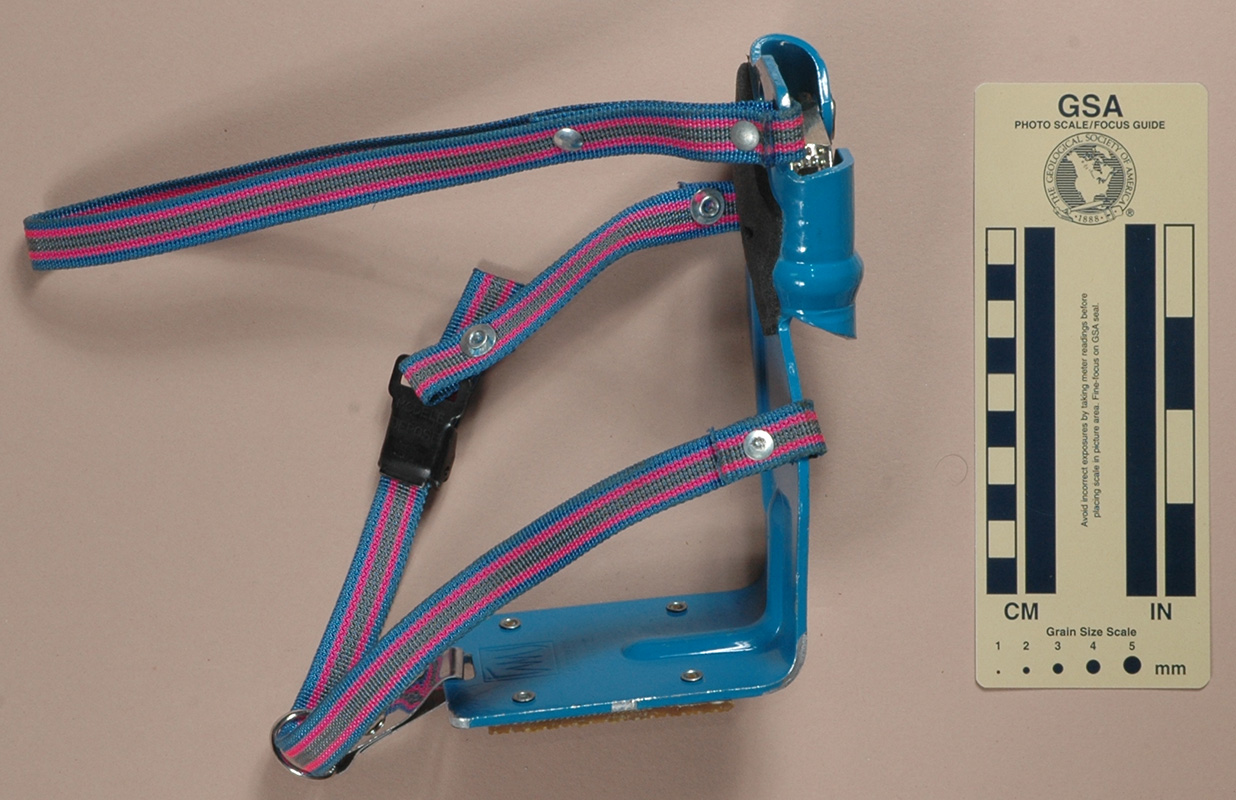
|
|
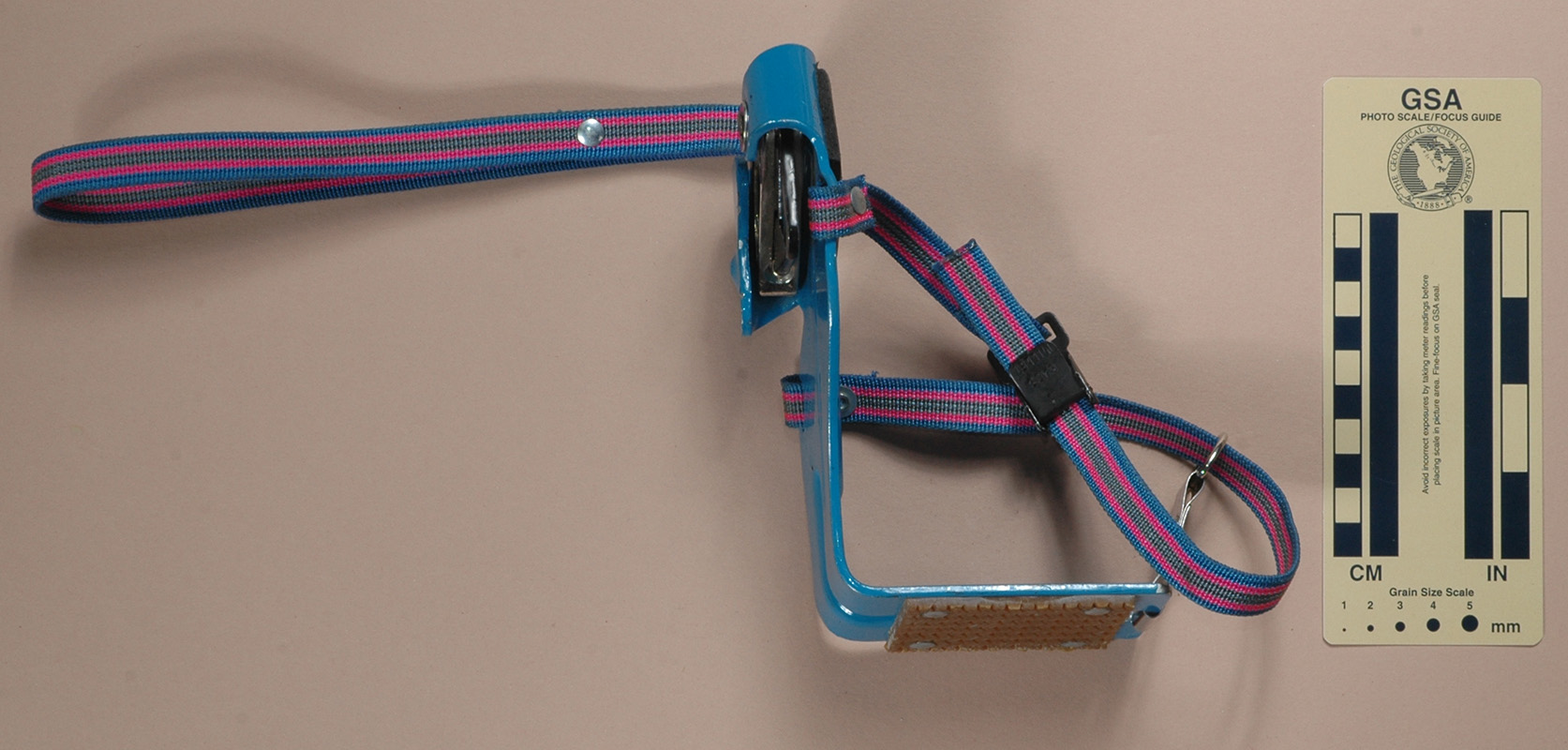 |
| Front | Rear |
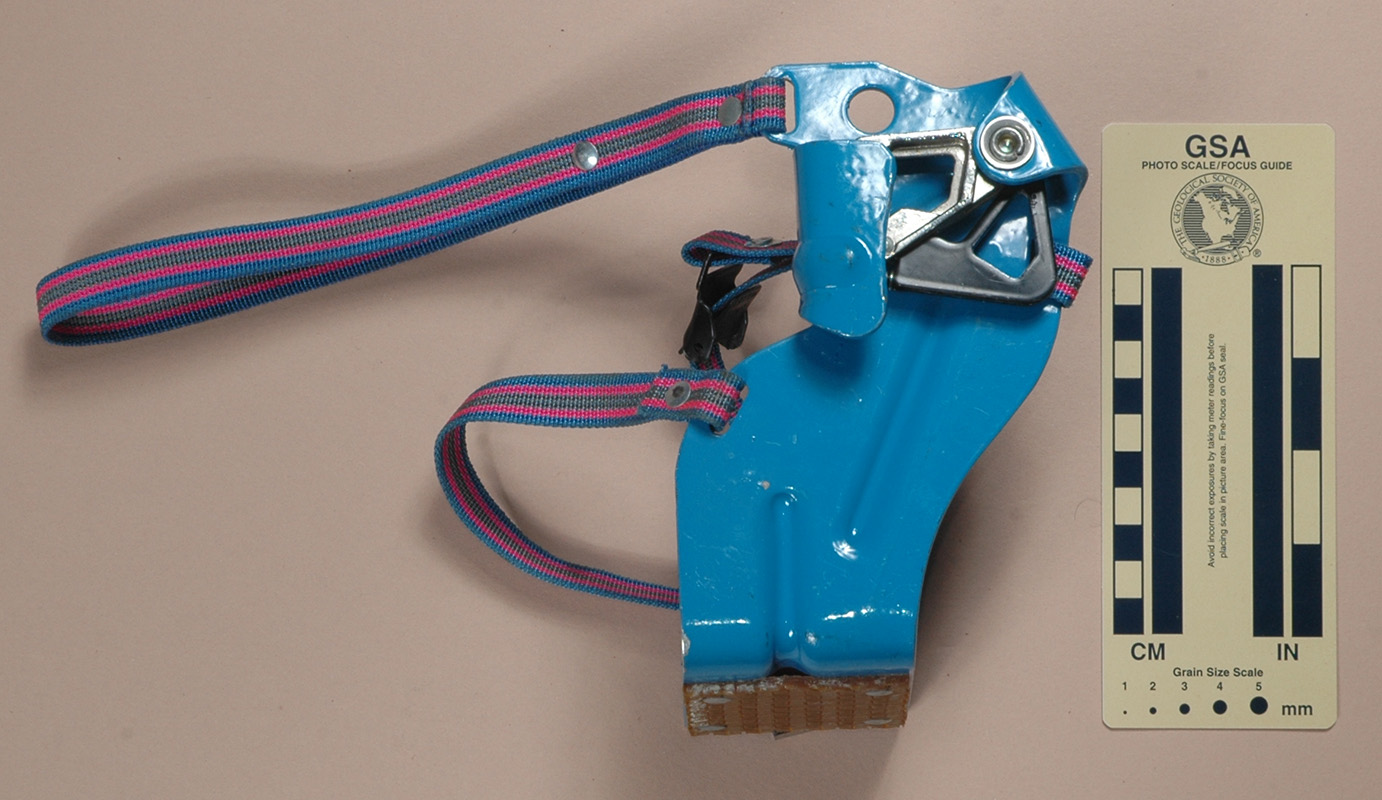 |
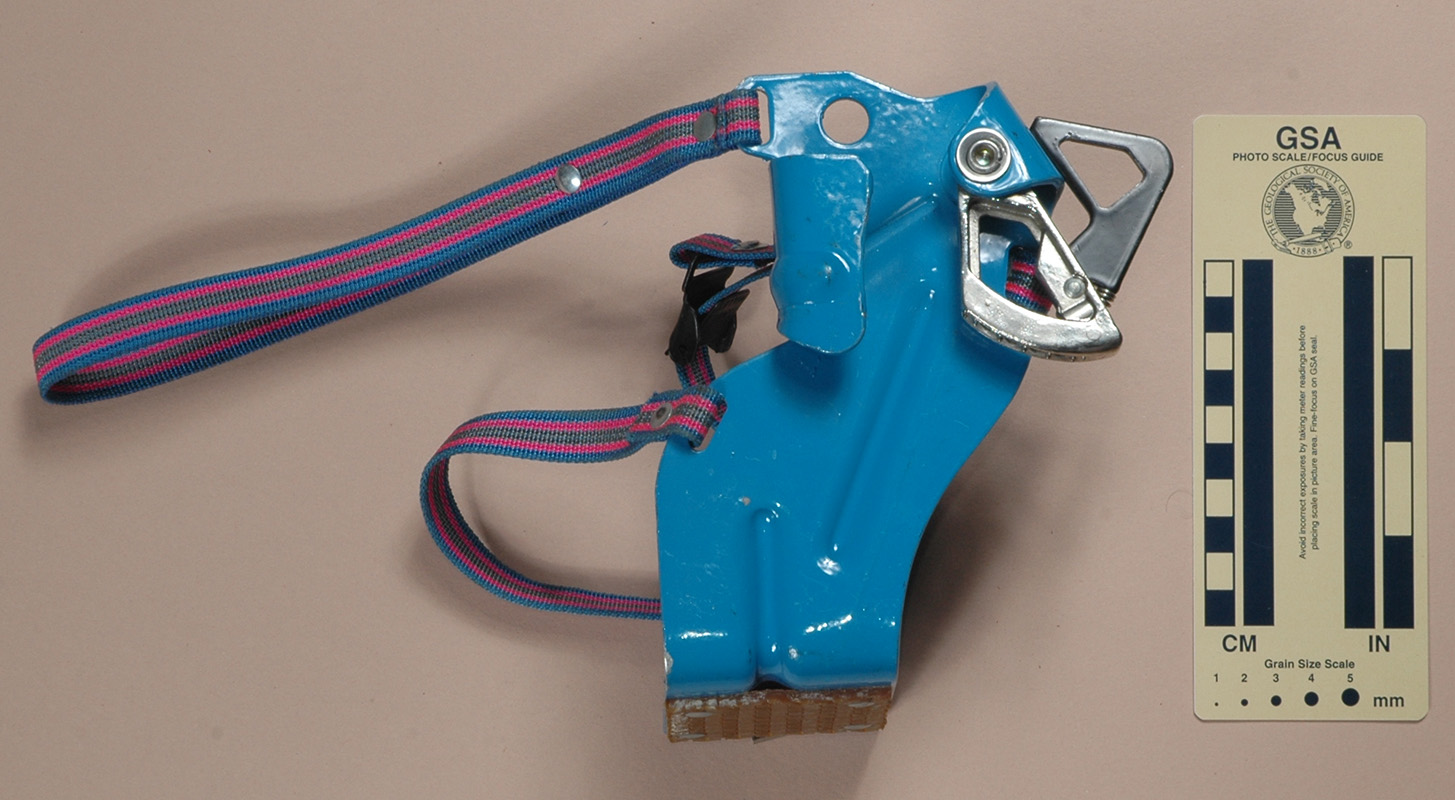 |
| Side | Open for Rigging |
 I acquired my Millet 9400 Aphanicé-Boulourd in 1990. I acquired another in 2017 as part of Bob Thrun’s collection.
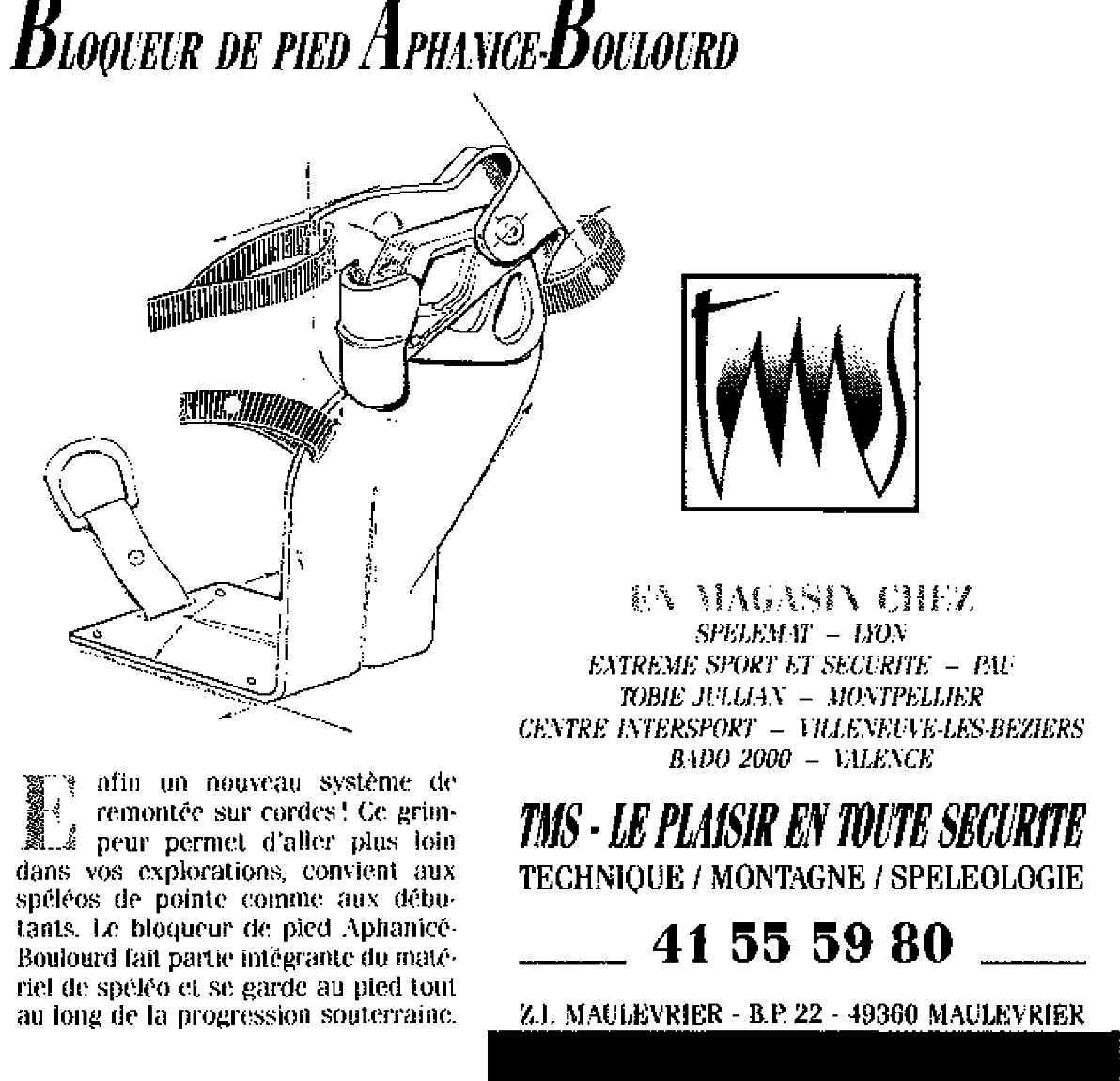
The Aphanicé-Boulourd is 157 mm. tall, 108 mm. wide, 119 mm. thick, and weighs 273 g. The rope channel is 16 mm. wide. The cam radius increases from 35 to 56 mm. over an angle of 43°, giving a 33° cam angle. The tooth pattern is (3.2)(1S1)^2(2S2.1S1)^2(2.3). The ascender consists of a stamped shell with an eccentric cam and foot harness attached. The shell is L-shaped, with the lower portion of the shell passing underfoot. A urethane pad is riveted to the bottom beneath the foot. This provides for some traction on rock that the metal shell would not. The vertical portion has a U-shaped rope channel and a cam pivot channel bent into it. Several reinforcing detents are present. The cam is essentially identical to the cam on the Bonaiti Cam-Clean, but the safety is larger. The harness consists of a metal strap with an attached D-ring attached to the lower end of the frame, and three nylon webbing straps connected to the vertical portion of the frame.
The bottom is stamped with the Millet logo, "BREVETE," and "FRANCE."
No instructions were provided on how to attach the ascender to the foot, but the user can usually figure it out in a minute or two. I found it difficult to adjust the ascender to fit my feet, which are at the large end of the normal range. Once on rope, the ascender works well, but like most foot rigs, there is a strong tendency to turn the ankle. Unless one is wearing stiff boots, the strain on the ankle can soon become uncomfortable. For this reason, and because of its unwieldy size and shape, I don't use this ascender.
Thank you to Bernard À Floreffe for sending me the following illustrations:
 |
 |
 |
Millet was founded in 1921 by Marc and Hermance Millet. It all began with the making of shopping bags and grocery sacks in their small grocery store in Saint-Fons, near Lyon. In 1929, Marc’s frail health prompted the family to move to Annecy, renowned for its pure air. Surrounded by mountains, they crafted ski bags, beach bags, and bicycle panniers. So in 1960, the Millet brothers decided to focus entirely on making mountaineering backpacks. Upon retiring in 1980, they agreed to sell the company.
Jean-Pierre Millet, Raymond's son, was a teenager when the Millet brothers sold the company, and one idea never left him: someday he would bring Millet back into the family. For many years he maintained ties with the company through successive management teams, keeping alive the dream of its return. In 2006, he acquired a stake in Lafuma, the publicly traded company that had bought Millet in 1995 when it was struggling, and joined its board. He gradually increased his stake but failed to gain control several years later when Swiss group Calida acquired Lafuma, but Jean-Pierre remained on the board. Years passed and he persevered. On Christmas Eve 2021, Jean-Pierre announced to his tearful family: "We did it. We've signed the buyback."
Millet's primary products are clothing, backpacks, shoes, sleeping bags, and accessories designed for climbers and other outdoors enthusiasts.